Retired electric-vehicle packs that still hold 70-80% of their original capacity are no longer heading straight to recycling. Under maturing standards such as UL 1974, EN 18061:2025 and Regulation (EU) 2023/1542, graded repurposed modules are entering stationary energy storage, microgrids and backup-power systems where economics, not peak acceleration, define the duty cycle. Grading results, maintenance history and battery-passport traceability now travel with each redeployed module, which raises expectations for auditable hardware records on the balance-of-system side as well. That shift changes the conductor story: busbars in second-life systems are sized for low-C-rate continuous currents, mixed-generation retrofit compatibility, dense BMS sensing taps and conservative safety margins rather than the short high-current bursts of a traction pack. This article maps the 2026 market and policy backdrop, then details four differentiated busbar design requirements and the procurement evidence integrators should request.
Retired electric-vehicle packs that still hold 70-80% of their original capacity are no longer heading straight to recycling. Under maturing standards such as UL 1974, EN 18061:2025 and Regulation (EU) 2023/1542, graded repurposed modules are entering stationary energy storage, microgrids and backup-power systems where economics, not peak acceleration, define the duty cycle. Grading results, maintenance history and battery-passport traceability now travel with each redeployed module, which raises expectations for auditable hardware records on the balance-of-system side as well. That shift changes the conductor story: busbars in second-life systems are sized for low-C-rate continuous currents, mixed-generation retrofit compatibility, dense BMS sensing taps and conservative safety margins rather than the short high-current bursts of a traction pack. This article maps the 2026 market and policy backdrop, then details four differentiated busbar design requirements and the procurement evidence integrators should request.
Second-life batteries, also described as echelon utilization or repurposed batteries, are EV packs, modules or cell groups removed from vehicles after their traction performance fades but before recycling becomes necessary. A vehicle pack typically reaches the retirement window when usable State of Health (SoH) drops to roughly 70-80%; the cells still accept charge and discharge energy, yet can no longer meet the power, thermal and depth-of-discharge demands of acceleration (UL Standards & Engagement, UL 1974). Integrators route these units through one of three outcomes: repair and reuse in a mobility role, preparation for repurposing into stationary storage, or final recycling when grading fails.
For a busbar engineer, the distinction matters because the electrical role changes completely. A traction busbar must carry pulsed currents for hard acceleration and regenerative braking within a tightly crash-protected pack enclosure; a repurposed-pack storage busbar carries near-continuous charging and discharging currents at lower C-rates inside a cabinet or container. Readers comparing the two use cases can review the companion overview of EV pack busbar design trends and the construction choices explained in multi-layer laminated busbar selection for stationary racks.
Repurposing is not a free reuse exercise. EN 18061:2025 requires a documented health assessment, diagnostic reading of the BMS, mechanical inspection, and assignment of a Battery Identification Number before a module moves to a non-automotive application (CEN-CENELEC). The busbar inside the resulting storage rack inherits that heterogeneity: adjacent modules may come from different vehicle generations, chemistries and conditioning histories, which affects conductor symmetry, connection choices and insulation strategy.
Market estimates for the second-life battery space vary by scope, but the direction of travel is consistent. Grand View Research values the global second-life battery market at USD 0.7B in 2025 and USD 1.1B in 2026, projecting USD 15.7B by 2033 at a 47.0% compound annual growth rate; energy storage systems accounted for the largest share, 50.0% of 2025 revenue, while lithium-ion chemistry represented 73.8% (Grand View Research). Independent analysts publish wider ranges for the broader EV battery reuse segment, so buyers should treat headline figures as directional signals rather than procurement forecasts.
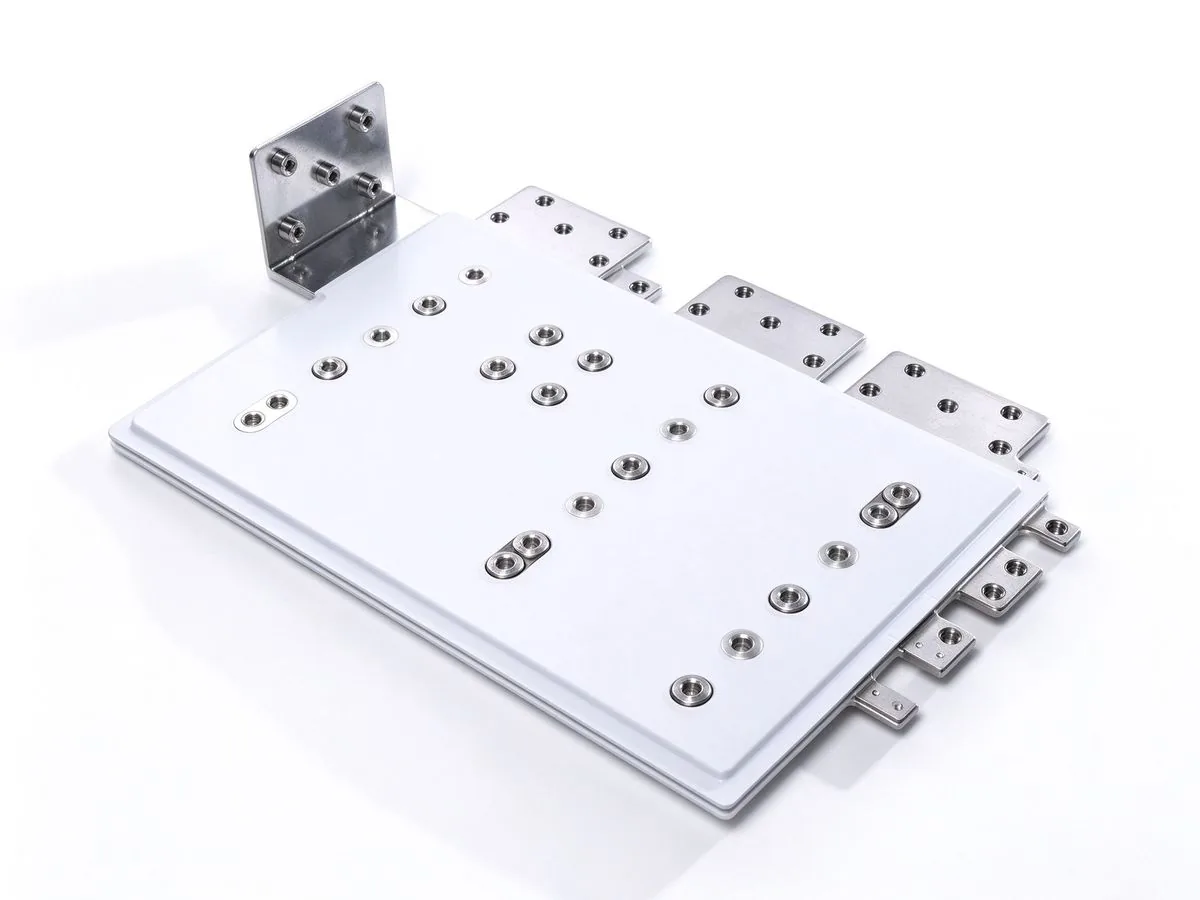
The adoption logic rests on cost and circularity. Repurposed packs are reported to be 30-50% cheaper than new batteries, which makes peak shaving, backup power, telecom sites and remote microgrids economically feasible where new-cell systems struggle (Grand View Research). This expansion rides the broader global energy storage market expansion, with commercial and industrial fleets, C&I and microgrid storage architectures, and long-duration storage duty cycles absorbing repurposed modules over multi-hour schedules.
The commercial consequence for busbars is a segmented demand profile. Utility-grade racks tend toward standardized multi-layer laminated busbars with repeated tap layouts; microgrid and backup integrators more often need custom, low-volume retrofit harnesses that accept legacy module terminals. Both segments demand traceable manufacturing records, because every repurposed string enters a regulated system rather than an aftermarket experiment.
Three overlapping rule sets define the compliance envelope in 2026. First, Regulation (EU) 2023/1542 governs the full battery lifecycle in the European Union and treats the economic operator that prepares a battery for repurposing as a manufacturer under that regulation; it requires an additional conformity assessment, a new battery passport linked to the original one, and controlled examination, performance testing, packing and shipment following quality-control and safety instructions (EUR-Lex). Second, EN 18061:2025, developed by CEN/TC 301, sets the practical European operating procedure: certified workshops, trained personnel, diagnostic checks, and respect for original safety limits unless revalidated with technical evidence (CEN-CENELEC). Third, UL 1974 in its second edition defines North-American-oriented sorting and grading requirements, routine maintenance tests and diagnosis, and calendar-age limits before a component qualifies for repurposing (UL Standards & Engagement).
These rules do not regulate copper busbars directly, but they regulate the systems busbars serve. Insulation must support the repurposed system's voltage class, documentation must follow the battery passport and conformity chain, and installations must align with ESS fire-safety regulation and insulation margins. Buyers can read the European product-side context in the dedicated analysis of EU Battery Regulation busbar compliance.
A practical implication: busbar suppliers serving repurposed integrators should be able to align drawings, test records and material certificates with the integrator's conformity file, rather than delivering an uncertified metal strip. Grading heterogeneity means two strings in the same plant may carry different voltage windows, so labelled tap points and revision-controlled drawings become part of compliance evidence.
Vehicle packs are engineered for high C-rate bursts: rapid acceleration and fast regen impose short current peaks, while the pack cycles shallowly over many years. Stationary repurposed systems run the opposite profile: lower peak C-rates but deep, daily charge-discharge cycling through a deliberately narrowed SoC window. Field guidance for aged modules typically recomputes conservative voltage and temperature limits, because older cells tolerate less electrical and thermal abuse than new cells; string-level balancing also becomes more important as capacity spread accumulates (arXiv:1410.4370).
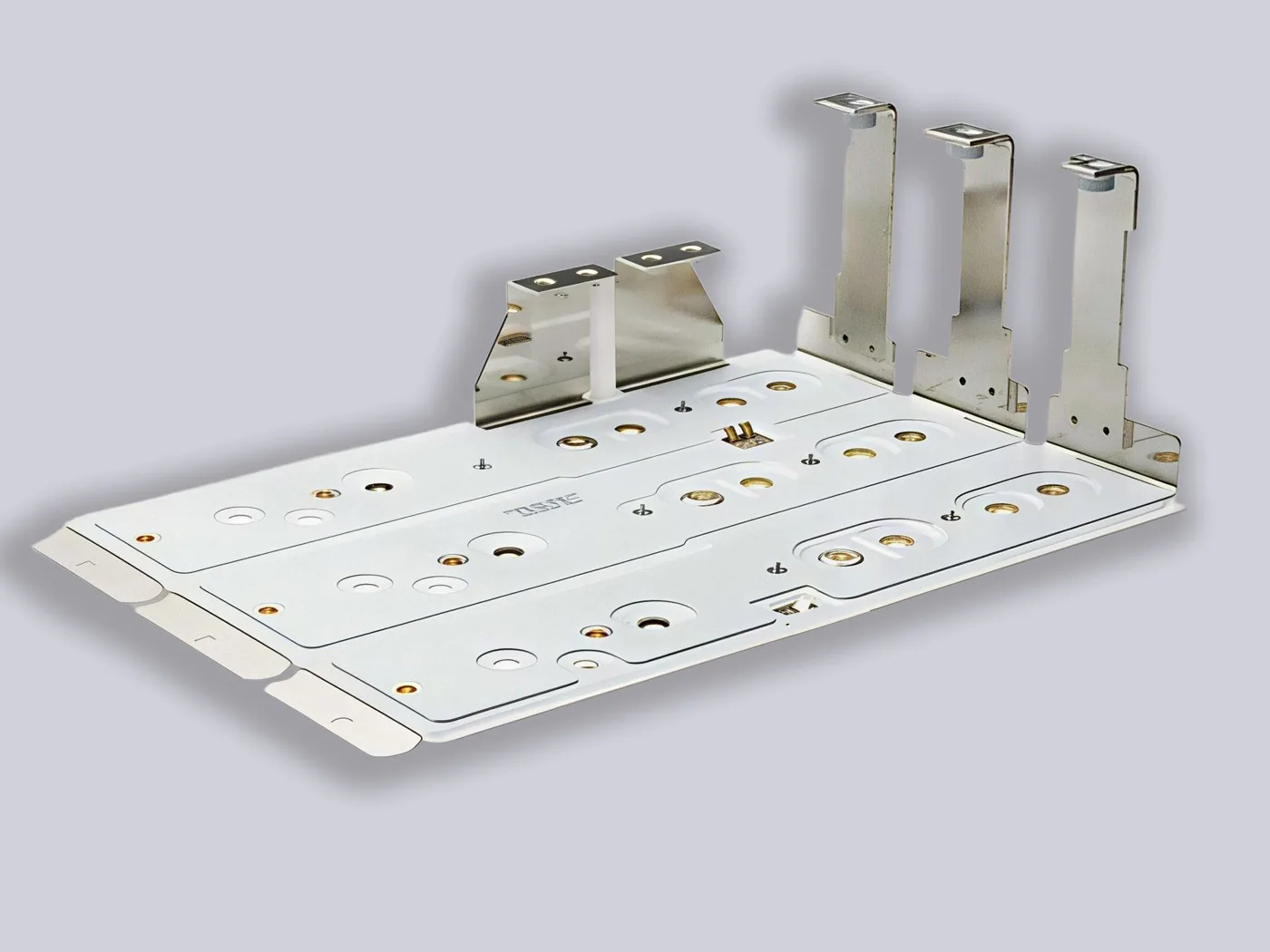
The busbar consequence is that short-time pulse ampacity is no longer the governing parameter. Continuous current, steady voltage drop, heat accumulation and connection stability dominate, while high-frequency skin effects that matter in traction DC-link loops usually recede. Engineers should review the risk picture in busbar failure modes and selection drivers before sizing: loosened bolted joints and corrosion at plated contacts become more relevant than short-circuit surge margins alone.
Capacity spread also influences topology. Where modules cannot be perfectly matched, designers add per-module DC-DC conversion or distributed balancing, which raises the number of sensing and control lines crossing the power busbar. The conductor plan must therefore reserve clear creepage corridors for voltage taps, temperature sensor cables and contactor control wires, avoiding the overcrowded routing typical of compact new-vehicle packs.
Although repurposed systems operate at lower C-rates than traction packs, rack-level currents can still reach several hundred to roughly one thousand amperes as modules are paralleled in long strings. Sizing starts from the continuous design current, ambient cabinet temperature, ventilation assumptions and allowable temperature rise, using the procedures described in busbar current capacity and ampacity fundamentals. Because duty cycles are steady rather than pulsed, conservative cross-sections and balanced parallel paths matter more than peak transient ratings.
Current sharing across paralleled modules depends on symmetric conductor geometry, equal cable or busbar path lengths and consistent contact resistance; the companion article on current-sharing design for paralleled busbars shows why asymmetric routing can quietly overheat one module even when total current looks acceptable. In repurposed fleets, module internal resistance varies with age, so the busbar should help rather than fight the mismatch: symmetrical segments, generous fillets at bends, and plated contact faces that keep contact resistance stable over years.
Frequency effects are secondary. Stationary DC and low-frequency ripple currents mean conductor shape can prioritize manufacturability, mounting and insulation layers over the high-frequency impedance optimization used in SiC inverter DC-link designs. Buyers should still require measured millivolt drop or resistance records for critical paths, since a slightly undersized conductor converts voltage loss into cabinet heat that ages already-degraded cells faster.
Retrofit work defines the second-life segment. Modules arrive with legacy bolt patterns, panel-mounting holes, press-fit terminals or weld studs that were never designed for rack reuse, and an integrator's new cabinet must accept a mix of generations rather than one uniform cell model. Busbars become the mechanical translation layer: adapters, step shapes, extended tabs and stacked insulation sleeves that bridge legacy interfaces to the new cabinet layout.
Terminal planning should follow terminal type selection for mixed fleets, choosing between bolted holes, M6/M8 studs, blades and welded joints based on module availability, serviceability and vibration exposure. Early engineering review applies the DFM checklist before production to avoid bend angles that crack plating or hole patterns that clash with the module housing, while first-article samples and prototypes validate the retrofit interface before MOQ tooling commitments. Flexibility on lot size matters because repurposed projects often run in batches that mirror incoming module supply rather than annualized mass-production volumes.
Mechanical robustness also includes service access. Integrators expect busbars that unbolt cleanly for module replacement without destroying insulation or plating; hidden welds and one-shot crimps are poor choices where maintenance personnel may be general technicians rather than vehicle-trained specialists. Drawings should mark serviceable joints, torque values and required tooling, and the packing plan should protect plated faces during repeated field handling.
Grading rules place BMS diagnosis at the center of repurposing: EN 18061:2025 requires reading error codes, measuring electrical properties and documenting insulation condition before redeployment (CEN-CENELEC), and UL 1974 mandates routine maintenance tests and diagnosis for repurposed systems (UL Standards & Engagement). The storage busbar must therefore host a dense, reliable set of voltage sense taps while remaining electrically separated from power conductors.
Kelvin-style sensing points reduce measurement error caused by contact voltage drop, and tap lines should follow dedicated slots or insulated layers rather than lying on live copper. Insulation design must avoid corona or partial-discharge conditions in humid cabinet environments, while physical spacing respects creepage and clearance design rules for the repurposed system's maximum DC voltage. The link between battery strings and the PCS should be planned alongside PCS DC-link busbar design, because sensing routing, fusing and contactor isolation share the same cabinet volume.
Because cell SoH varies string by string, sensing channels must map one-to-one to graded modules with documented identifiers. A voltage tap assigned to the wrong module disables the BMS fault response that compliance documents promise. Best practice labels taps at the busbar, ties each net to the module BIN in the assembly drawing, and ships a net-list so integrators can cross-check wiring before energization.
Repurposed batteries are graded, not de-rated to identical performance. A-grade modules with healthy internal resistance and tight capacity spread can occupy main strings; weaker modules may serve low-power backup or be excluded. The busbar insulation system should be selected to the highest voltage the rack can ever see, with margin for humidity, dust and thermal aging, rather than to the average module grade. Insulation material choice follows insulation material procurement guidance for PET, Nomex and DLF constructions, while dedicated electrical verification belongs in the supplier's test plan.
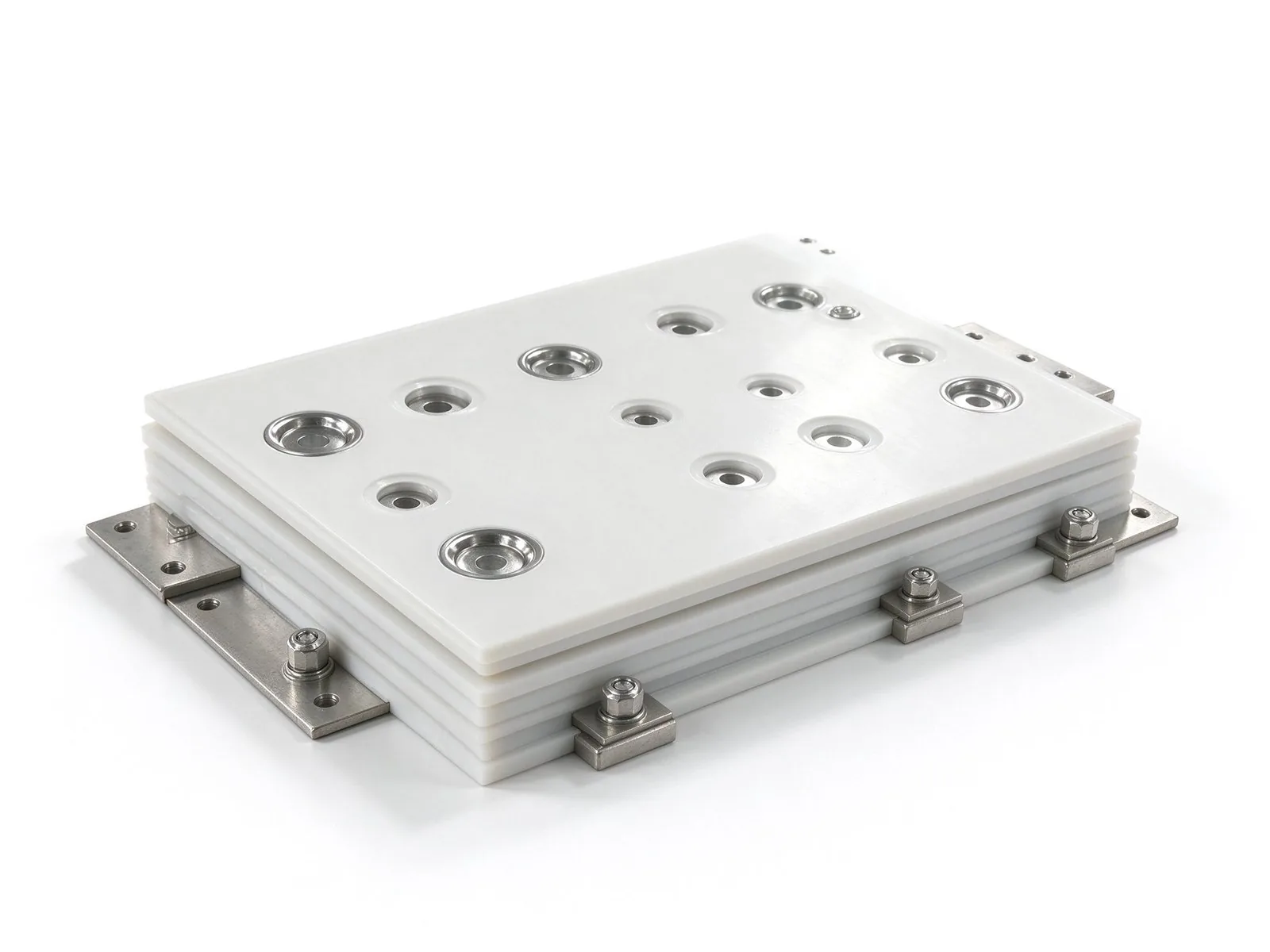
Fire-safety expectations for stationary storage are stricter than for a retired vehicle pack reused informally: cabinets require separation, suppression coordination and insulation materials that do not spread flame, consistent with regulatory fire-safety expectations; edge protection techniques are detailed in surface insulation coating guidance. Insulation film overlap, edge wrapping and conformal protection of cut edges should be inspected because those are the regions most likely to track or absorb moisture in service.
Fault-energy planning differs by string voltage and fuse coordination. A short-circuit pulse in a parallel repurposed string can be lower than in a new high-energy pack, but aged cells may vent unexpectedly; busbar supports, insulation barriers and fixed clearances must prevent arcing between adjacent conductors during maintenance or internal faults. The record should include the dielectric withstand test result applied to the finished laminated assembly, not just the raw insulation sheet specification.
Steady discharge and recharge produce continuous heat at joints and conductors rather than a short thermal peak. Effective busbar thermal management for repurposed racks focuses on convection paths inside the cabinet, balanced current distribution, plated joint stability and derating at elevated ambient temperatures. Designers should define a conservative temperature-rise basis, for example engineering around a controlled rise under design current rather than maximizing copper utilization, because elevated conductor temperatures accelerate degradation of already-conditioned cells and insulation.
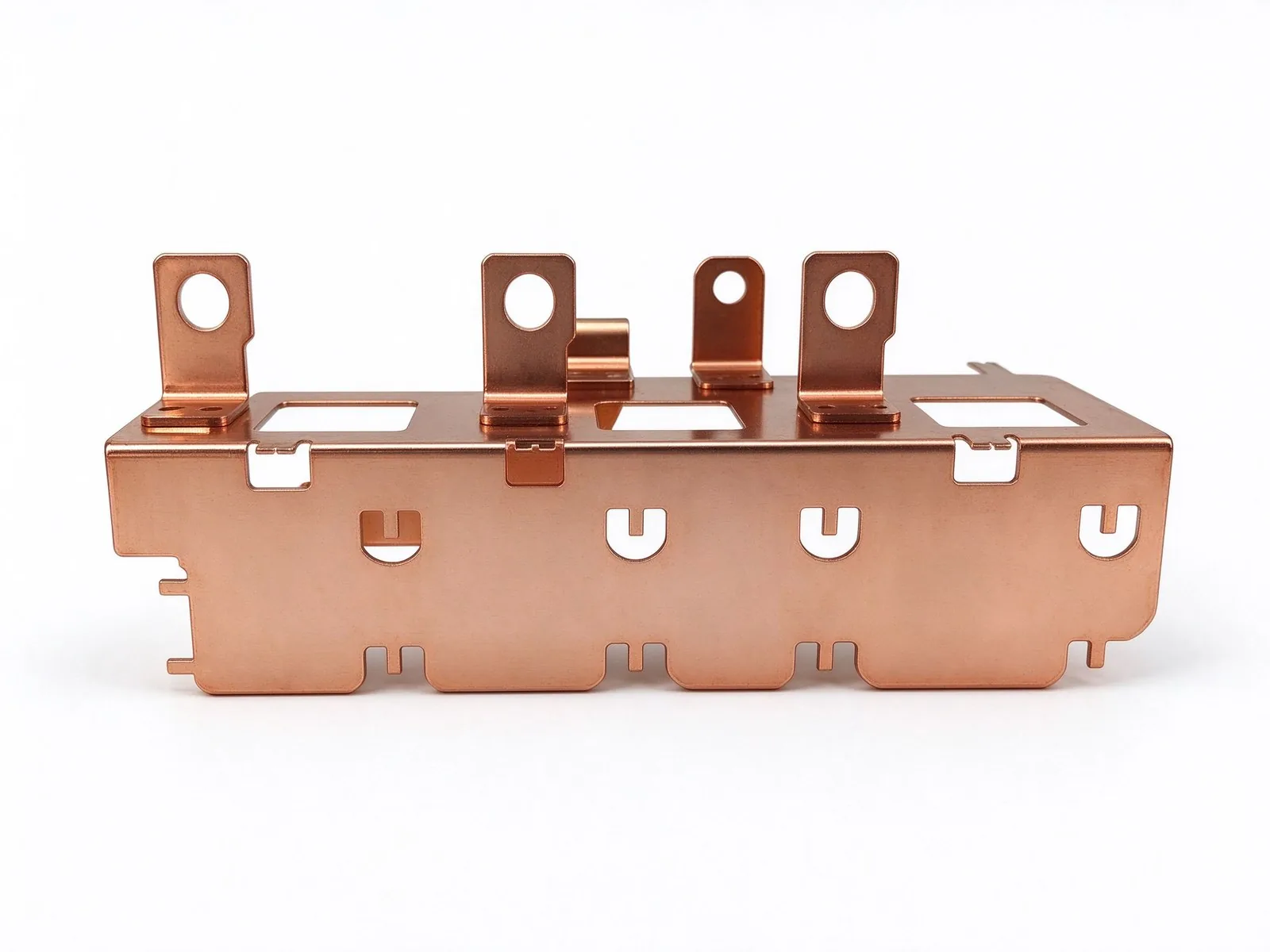
Thermal cycling reliability also matters. Daily charge and discharge cycles repeat for years, causing bolted joints and plated surfaces to expand and contract; the guidance on thermal cycling reliability recommends torque control, spring washers where appropriate and stable plating that resists fretting corrosion. Hot spots at undersized taps become chronic heat sources, so thermographic checks during commissioning and periodic inspection should be part of the integrator maintenance plan.
Where air-cooling is constrained, some integrators move toward wider conductors, layered copper cross-sections or forced ventilation; the busbar layout must leave airflow corridors rather than blocking them with insulation and brackets. Material documentation should state the insulation material's continuous temperature class so the cabinet thermal budget remains auditable.
Storage cabinets in coastal, desert or poorly ventilated sites expose busbars to humidity, condensation and galvanic contact with dissimilar metals. Tin plating on copper contact faces controls oxidation and ensures stable contact resistance; selection and maintenance principles are covered in tin plating and corrosion protection guidance. In retrofit systems, mixing plated copper busbars with aluminum module busbars or stainless fasteners calls for isolation washers and joint designs that prevent galvanic crevice corrosion over a long service life.
Bolted connections in aged strings see repeated vibration from cooling fans, contactors switching and nearby rotating equipment. The companion analysis of vibration behavior of bolted busbar joints recommends hardened contact faces, controlled preload and periodic retorque checks in service. Surface defects such as porosity, incomplete plating coverage at cut edges or torn insulation should be rejected at incoming inspection because they are invisible failures after cabinet closure.
Buyers should specify plating thickness ranges, surface preparation before plating and a visual acceptance standard in the purchase specification, together with salt-spray or humidity evidence when the destination environment demands it. A supplier that can provide plating thickness measurements per lot removes guesswork from a corrosion-prone application where preventive replacement cycles are long.
An RFQ for repurposed-pack storage busbars should separate electrical, mechanical and documentation requirements before quoting. Start with the system voltage, maximum continuous string current, expected C-rate profile, ambient temperature range and cooling method; then list module-to-busbar interface types, hole patterns, stud sizes, insulation material and required dielectric test voltage. Comparing metal strip against structured conductors can help set expectations in the adjacent article on busbar versus cable harness selection, while connection-level best practice should be aligned with reliable terminal connections in rack assemblies.
Ask shortlisted suppliers to explain how they handle mixed-interface retrofit designs and how inspection records map to each delivered lot; these answers reveal whether the supplier understands repurposed-project variability rather than quoting a single standard shelf product.
Rizhao Shanyuan Electronic Components Co., Ltd. (SHANYUAN) was established in March 2012 and operates a 17,200 m2 manufacturing facility in Taoyuan Village, Wulian Street, Rizhao, Shandong, China, exporting laminated busbars to more than 20 countries. The product line centers on insulated laminated busbars from 1 to 6 plus layers rated around 1000 A, produced on C11000 copper with PET, Nomex or DLF insulation, designed around a conservative temperature-rise basis, finished with tin plating, and offered with M6/M8 studs, blade terminals or welded terminal options.
For second-life and echelon storage projects, these capabilities map naturally onto the requirements above: multi-layer constructions accommodate power paths and separated sensing layers; custom terminal geometries can bridge legacy module interfaces; tin-plated copper supports stable bolted joints in long service; and a design-led workflow prepares prototype samples before batch production. Engineering discussions should begin with system voltage, continuous current, module interface drawings and cabinet environmental conditions so the proposal reflects the repurposed duty cycle rather than a traction-pack assumption. Technical inquiries can be sent to busbar@shanyo.com with the module pack list and cabinet layout attached.
This overview describes manufacturing capability and standard product scope; specific ratings, test evidence and compliance documents are agreed project by project against the integrator specification, and no production capacity or named customer installation should be assumed from general marketing materials.
As EV retirement volumes climb through the late 2020s, repurposed storage will move from demonstration projects toward standardized product lines. Standards such as EN 18061:2025 and UL 1974 will mature grading practice, Regulation (EU) 2023/1542 will tighten passport and conformity traceability, and integrators will converge on a small set of modular rack architectures. Busbar designs for those racks will likely standardize on symmetric laminated conductors, pre-configured tap blocks, field-serviceable bolted interfaces and conservative insulation margins, while custom retrofit adapters remain necessary for legacy module batches.
The four design themes in this article - low-rate continuous-current sizing, retrofit mechanical compatibility, BMS-integrated sensing routing, and safety-graded insulation - should be evaluated together rather than as isolated line items. A conductor that meets ampacity but fails at a legacy terminal, or saves copper cost but neglects corrosion protection, creates hidden lifetime risk in systems expected to operate for a decade or more.
For buyers, the winning supplier will be the one that combines disciplined drawings, traceable test records and flexible batch production for heterogeneous repurposed fleets. For engineering teams, the task is to carry the second-life duty cycle explicitly into the busbar specification: steady currents, mixed interfaces, dense sensing and conservative safety margins. With those parameters fixed early, the laminated busbar becomes a quiet, reliable link between retired automotive value and stationary renewable-energy use.
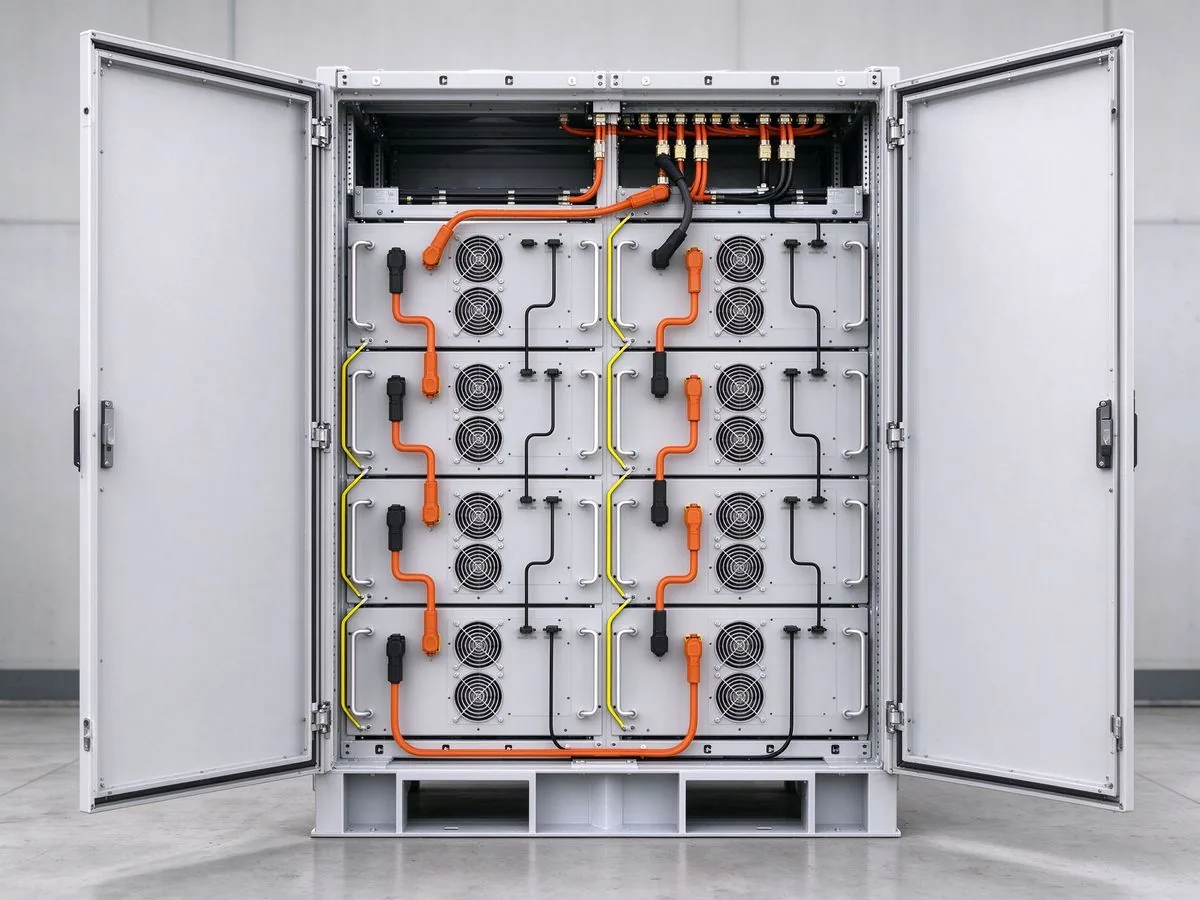
Battery energy storage systems are growing from single 20-foot racks into multi-GWh instal
Read articleThe EU Battery Regulation (2023/1542) makes the battery passport mandatory on 18 February
Read article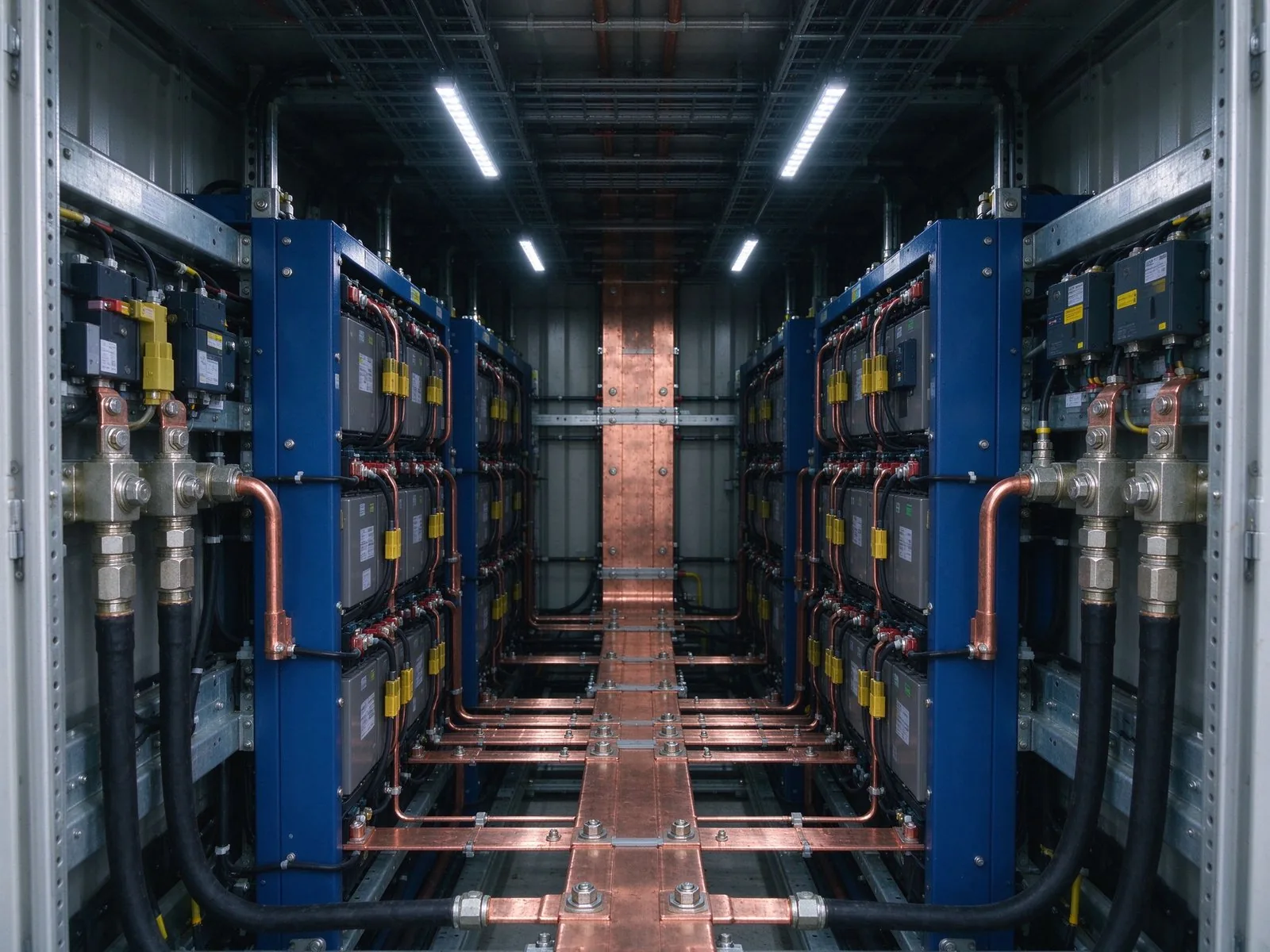
UL 9540A Ed.6 (published March 2026, effective January 2027) adds a large-scale fire test
Read article
Aiko Tanaka is application engineering manager at SHANYUAN, with 11 years in applying laminated busbars to data centres, energy storage and new-energy systems. She leads application selection, custom-profile development and project delivery, and holds a B.Eng. in Electrical Engineering from the Univ
Send the current profile, voltage class and terminal types — our engineers reply within one business day.