By 2026, an increasing share of newly launched electric vehicles is built on 800V-class platforms rather than the legacy 400V architecture. The higher voltage does more than shorten charging times: it changes current magnitudes, demands tighter inductance control, and pushes battery pack interconnects from bolted cables toward integrated laminated busbars. In this article, the engineering team at SHANYUAN reviews the design trends we see in 2025-2026 EV battery programs and explains what OEMs should ask their busbar supplier about before freezing a pack layout.
By 2026, an increasing share of newly launched electric vehicles is built on 800V-class platforms rather than the legacy 400V architecture. The higher voltage does more than shorten charging times: it changes current magnitudes, demands tighter inductance control, and pushes battery pack interconnects from bolted cables toward integrated laminated busbars. In this article, the engineering team at SHANYUAN reviews the design trends we see in 2025-2026 EV battery programs and explains what OEMs should ask their busbar supplier about before freezing a pack layout.
When a vehicle architecture moves from 400V to 800V, the nominal current for the same propulsion power drops roughly in half. A 250 kW traction inverter that drew about 625 A at 400V pulls closer to 315 A at 800V. Lower currents mean smaller cross-sections, lower I2R losses, and slimmer cables. But the trade-off is a step-change in voltage stress: creepage and clearance distances, partial-discharge margins, and dielectric reliability all become first-order design concerns rather than afterthoughts.
This is exactly where a properly engineered laminated busbar earns its place. A battery laminated busbar replaces a bundle of flexible cables with stacked copper layers separated by a thin, controlled dielectric. It fixes the geometry once, so creepage distances are repeatable pack after pack, and it keeps the stray inductance low enough that SiC inverters can switch quickly without voltage overshoot. For more on the underlying physics, see our guide on busbar vs cable.
The market signal is clear. IEA's Global EV Outlook 2025 records continued growth in EV sales, with battery electric vehicles expanding their share of new car sales in major markets. SNE Research tracks the corresponding growth in battery cell and pack shipments, and BloombergNEF projects that 800V-class platforms will account for a rising share of new BEV launches through 2026. For a busbar manufacturer, that means the design center of gravity is moving from 400V packs to 800V packs faster than most mechanical components are refreshed.
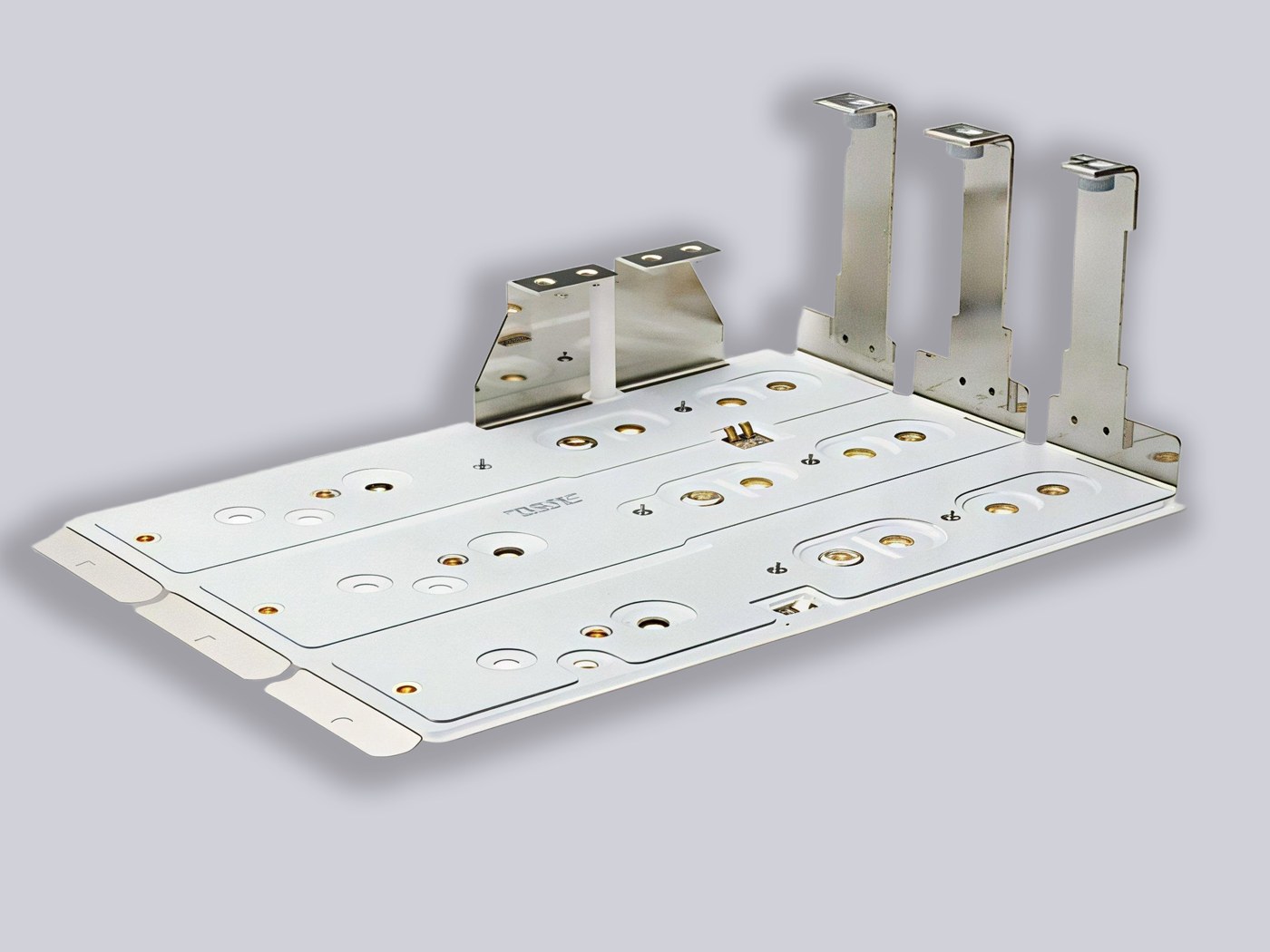
Early EV packs used one- or two-layer busbars. By 2025-2026, four- and six-layer stacks are common, and some programs call for even more layers to integrate cell-to-cell balancing, pre-charge, and service disconnect into a single part. SHANYUAN routinely builds 1- to 6+ layer laminated busbars using C11000 copper, with aluminum as a weight-saving option on select layers.
The dielectric between layers is where voltage rating, partial-discharge behavior, and manufacturability meet. We work with three families of insulation, each with a clear design envelope.
| Dielectric | Typical Use | Strength | Watch-out |
|---|---|---|---|
| PET (polyester film) | Cost-sensitive 400V-class packs | Thin, uniform, easy to laminate | Temperature ceiling near 125°C |
| Nomex aramid paper | High-temperature 800V packs | Thermal robustness, partial-discharge resistance | Thicker stack, more creepage engineering |
| Epoxy powder (DLF) | Direct-lubricated / molded geometries | Conformal coating, edge protection | Process control matters for uniformity |
PET remains the workhorse for cost-sensitive 400V packs because it is thin, dimensionally stable, and bonds well to copper under vacuum lamination. Its limitation is a continuous temperature ceiling around 125°C, which is fine for a pack that sits under the floor but marginal for a pack that shares thermal space with a fast-charging inverter. Nomex aramid paper tolerates higher temperatures and resists partial discharge better, but it is thicker, which pushes up the overall stack height and forces more careful creepage planning. Epoxy powder, applied as a DLF (direct-lubricated film) coating, is used where the geometry has complex edges or where conformal coverage matters more than film uniformity.
Every stack we ship is fully edge-sealed and tested with hipot, insulation-resistance, and continuity checks before it leaves our Rizhao factory. The 30°C ambient temperature rise reference used in our ampacity chart is the starting point; customers running continuous high-power duty cycles should derate further with their thermal model. For a deeper comparison, read our busbar dielectric selection guide.
An 800V pack runs harder, for longer, per charge cycle. Heat from I2R losses in the busbar, from contact resistance at terminals, and from neighboring power electronics has to go somewhere. Two integration patterns dominate current designs.
The first is a passive approach: thick copper layers (typically 0.8 mm to 2.0 mm each) act as their own heat spreader, with thermal interface material to the pack enclosure. The second is active cooling, where the busbar stack is clamped against a cold plate or shares a coolant channel with the inverter. Either way, terminal torque sequence, bolt-hole reinforcement, and coefficient-of-thermal-expansion matching matter. Our busbar design guide walks through the mechanical checklist.
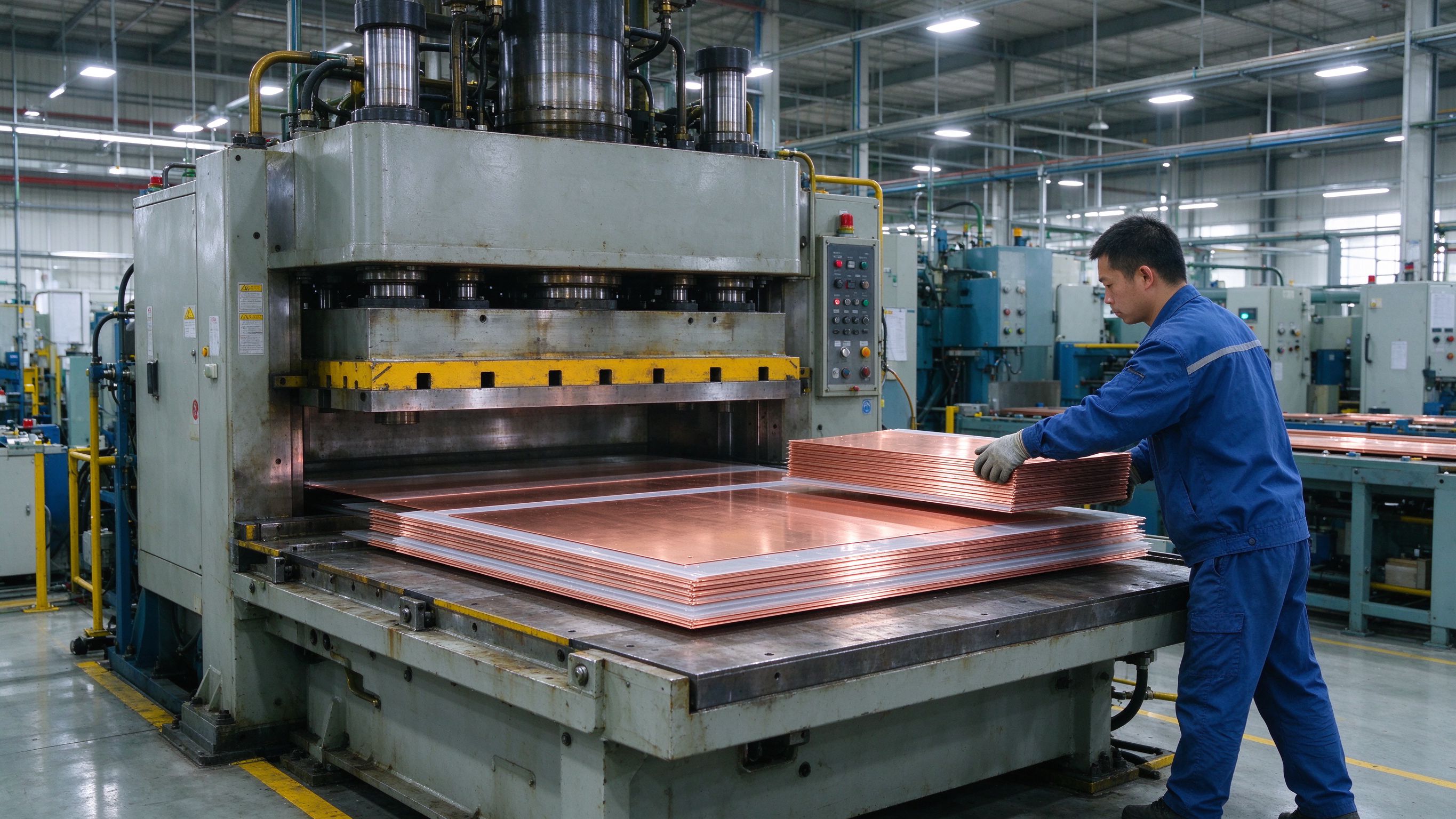
Mechanical fatigue is the silent failure mode. Every charge and discharge cycle heats and cools the busbar, and the copper, the dielectric, and the bolted terminals expand at different rates. Over thousands of cycles, this can loosen a terminal or delaminate an edge. The fix is design-side: stress-relief slots near high-torque holes, local reinforcement tabs where the busbar meets a heavy contactor, and controlled lamination pressure that bonds the dielectric without squeezing it out at the edges. SHANYUAN applies a full edge seal on every stack so that humidity and dust cannot track across the cut edges, which is the most common path to insulation failure in the field.
Tip: ask your busbar manufacturer for a per-cell current distribution simulation before tooling. Small geometry changes near the main contact can cut hot-spot temperature by 8-12°C without adding copper.
The single most cited technical requirement in 2026 EV programs is low stray inductance on the DC link between the battery fuse and the inverter. As SiC MOSFETs switch at 10-50 kHz, even a few nanohenries of loop inductance translates into voltage spikes that stress the devices. An 800V inverter busbar stacks the positive and negative rails directly on top of each other, interleaving them so current flows in opposite directions in adjacent layers. The mutual inductance cancellation drives the loop inductance down to 10-20 nH territory.
Designers should not treat the busbar in isolation. The pack-side cable (if any), the fuse, the contactor, and the inverter internal DC link all contribute. A common mistake is to optimize the busbar in isolation while leaving a long, unshielded cable between the pack fuse and the inverter; that cable undoes most of the busbar's inductance benefit. For a deeper dive on the inverter side, read our companion article on SiC/IGBT DC-link busbar bottlenecks. For the pack side, early DFM review catches problems like:
SHANYUAN runs a DFM review on every custom busbar before quoting. Typical turnaround: a custom busbar quote within one working day, samples in 5-7 working days, and mass production in 2-3 weeks once drawings are frozen. We ship internationally by sea and air from our Rizhao, Shandong plant.
EV programs live on long ramp curves. A busbar that is easy to sample can still fail at 100,000 parts per year if copper sourcing, dielectric lead times, or lamination capacity are not planned. Two points stand out for 2026.
First, copper price volatility affects the laminated busbar price even when the geometry is fixed. LME copper futures have swung widely over the last two years, and a transparent busbar OEM should tie material pass-through to a published benchmark rather than absorbing or hiding it. Second, dielectric films (especially high-temperature Nomex alternatives) have longer lead times than bare copper, so locking the insulation choice early protects the program timeline. PET is generally available off the shelf; Nomex and specialty high-temperature films can have multi-week lead times that surprise a program team.
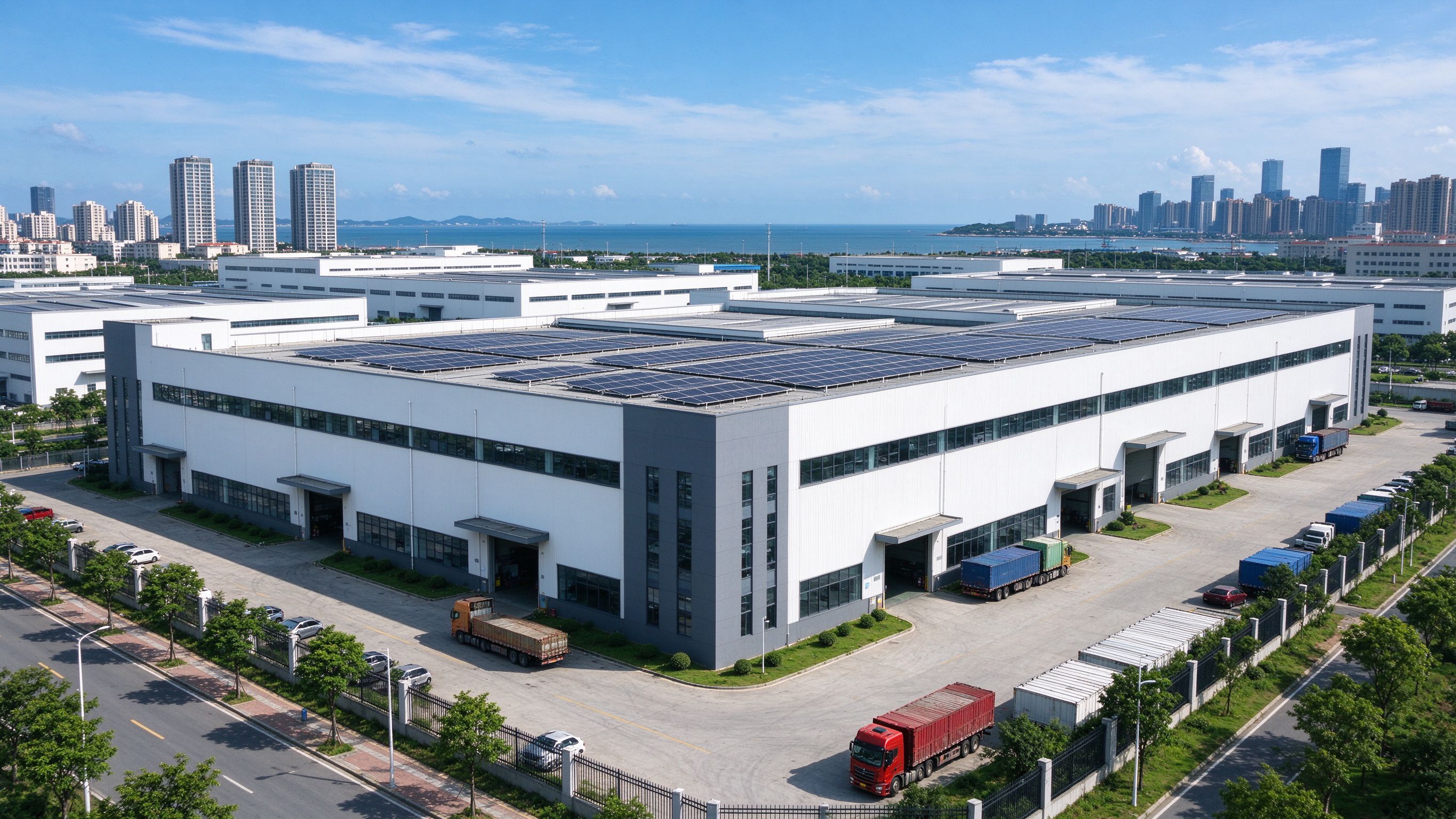
SHANYUAN ships internationally by sea and air from our own plant in Rizhao, Shandong. We do not subcontract lamination, so the quality loop stays in-house: hipot, insulation resistance, and continuity tests on 100% of production lots. Since 2012, we have built laminated busbars for EV, ESS, inverter, and data center customers from our own facility, with DFM review as the first step on every program.
If you are specifying an EV battery busbar for a 2026 platform, here is the short checklist we recommend. Going into a supplier review with these questions on the table separates serious engineering partners from quote shoppers.
When you are ready to buy laminated busbars for an EV program, send us your stack-up drawing or a brief sketch. We will come back with a DFM note, a fixed geometry recommendation, and a custom busbar quote within one working day. You can reach the engineering team at /contact/ or by email at busbar@shanyo.com. We also support urgent programs with air freight for samples and low-volume first articles. The Rizhao factory runs stamping, laser cutting, vacuum lamination, and final electrical test under one roof, which means we can iterate on a first-article issue without sending a stack out to a subcontractor and waiting two weeks. That iteration speed is often the difference between a program that hits its SOP date and one that slips a quarter. We ship all over the world by sea and air, and our export team handles documentation, packing, and freight booking so that the engineering team can stay focused on the part. Whether you are launching a new 800V platform or updating an existing 400V pack, the SHANYU team is ready to support your DFM and sampling schedule. We bring twelve years of in-house lamination experience to every program, and we treat each pack layout as a fresh engineering problem rather than a catalog order.
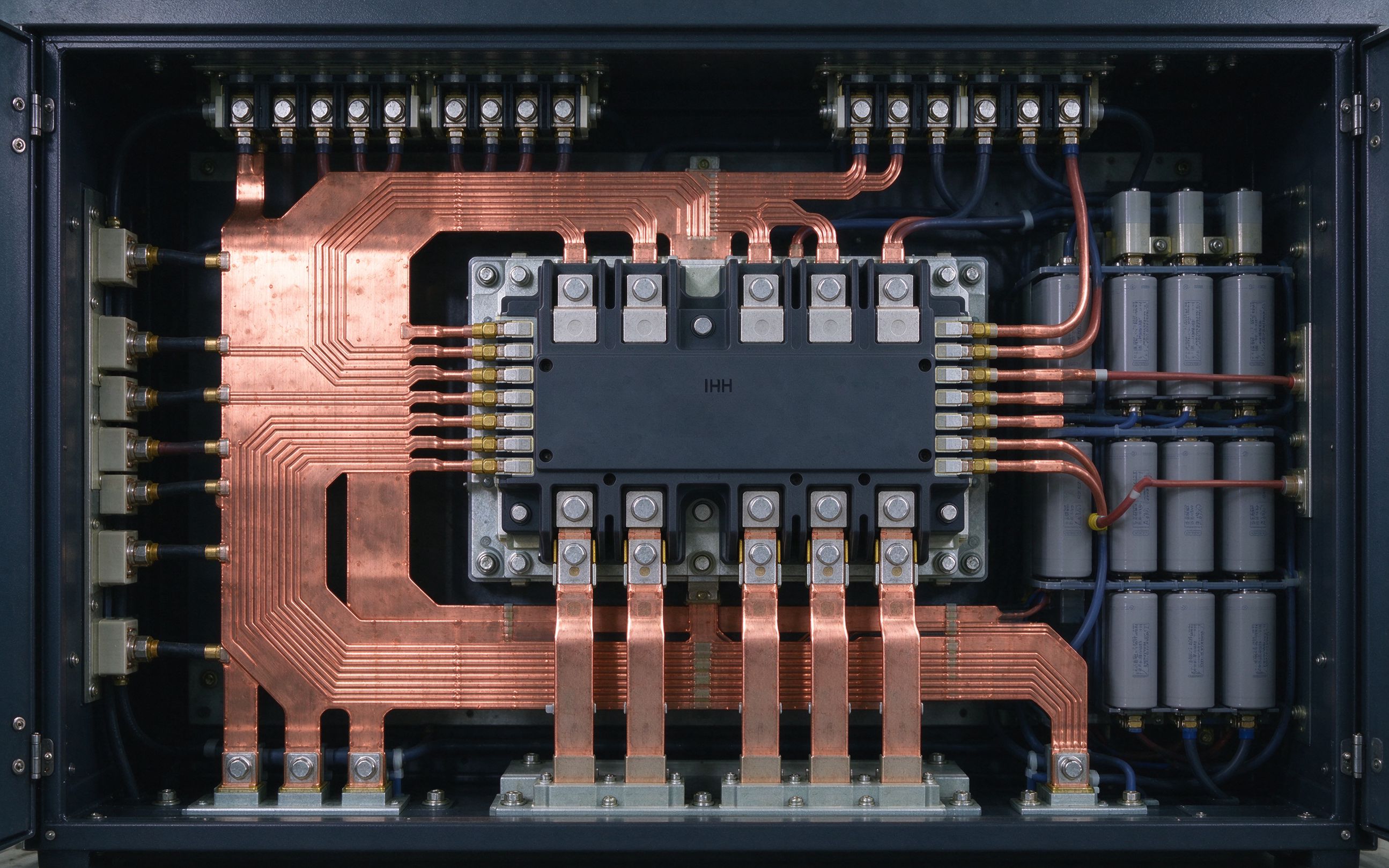
Higher switching speeds from SiC MOSFETs and modern IGBTs are pushing the DC-link busbar t
Read article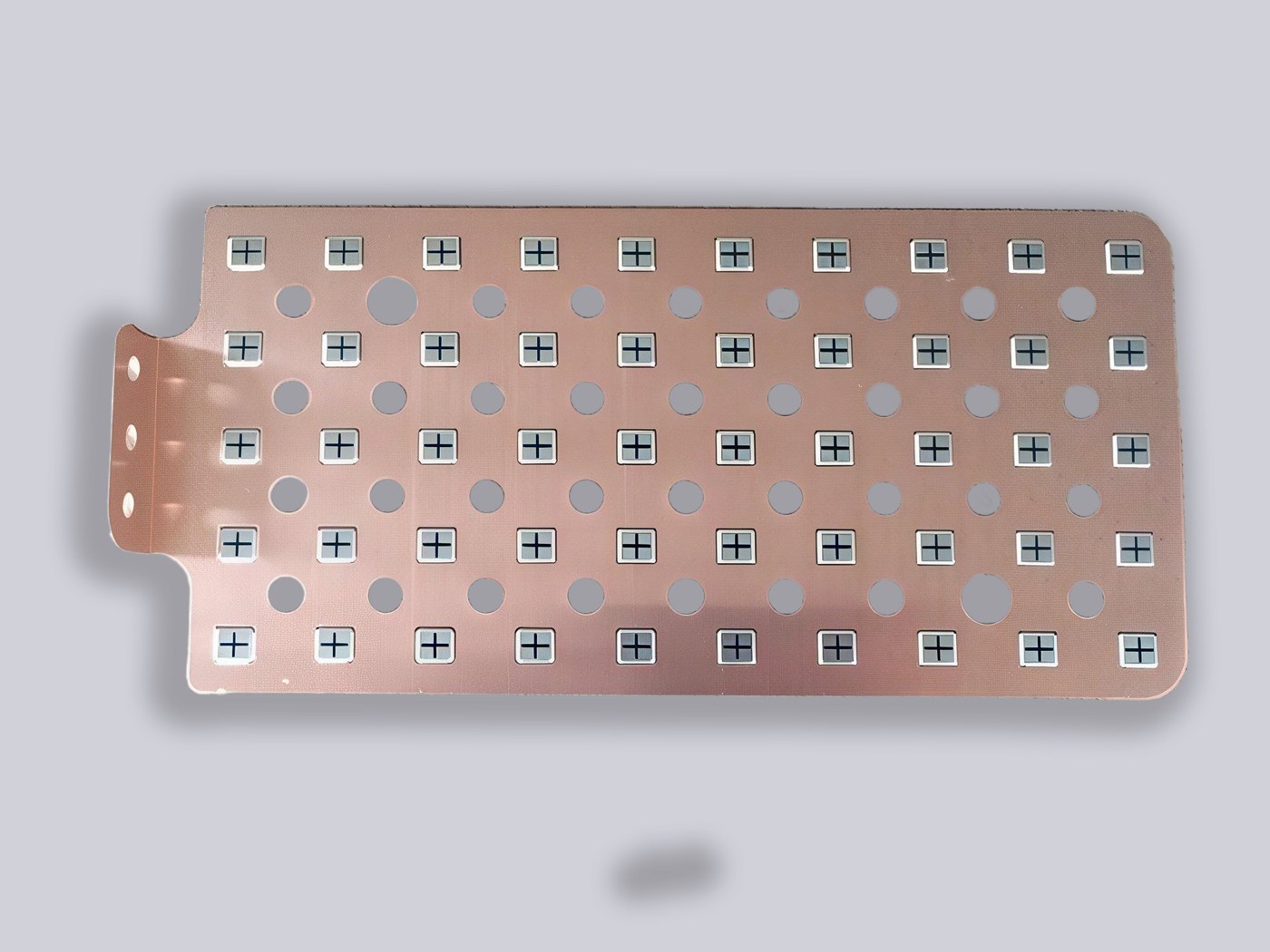
Copper busbar current rating is not a single number. It is a starting ampacity adjusted by
Read article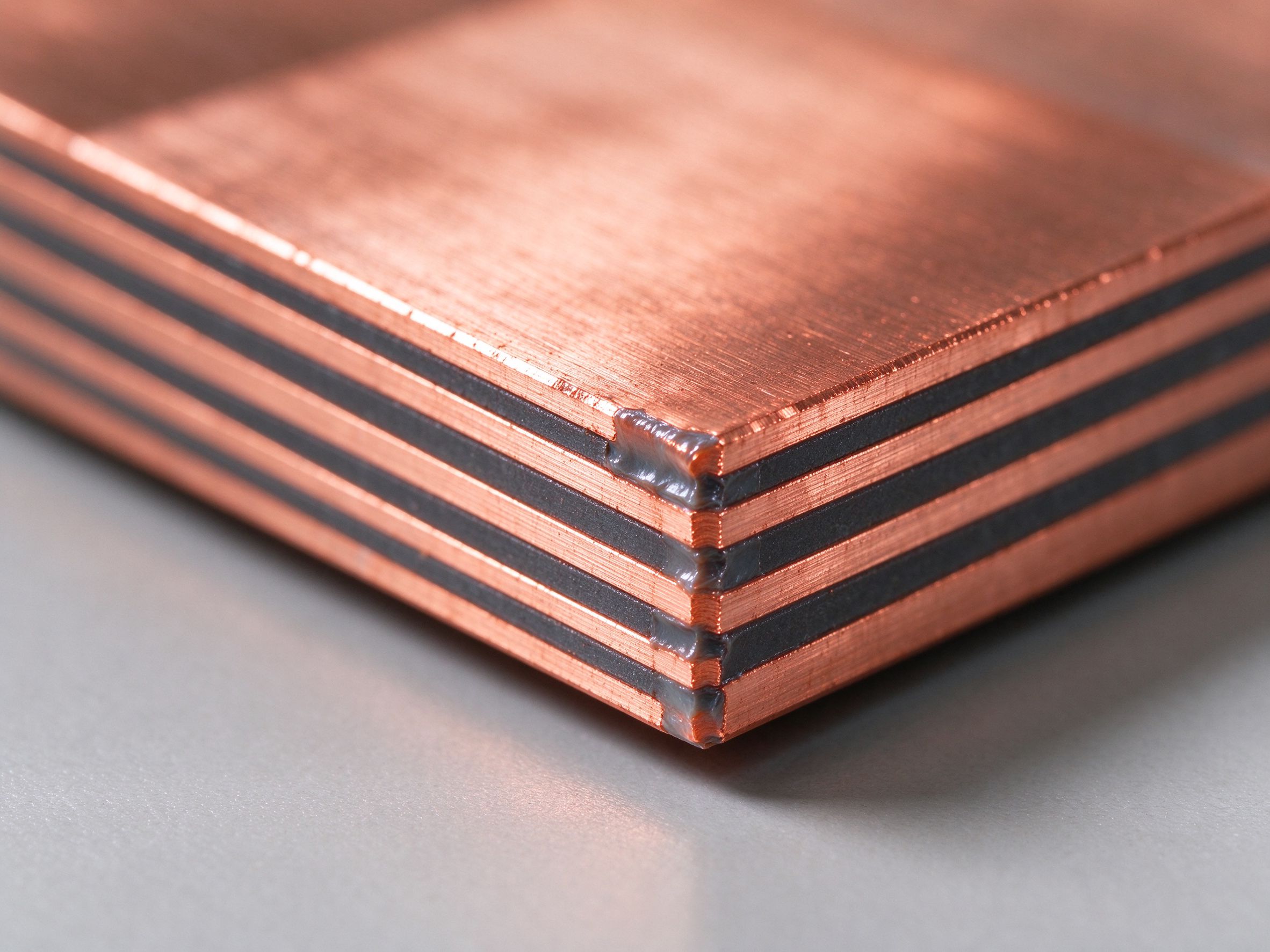
PET, Nomex and DLF epoxy are the three dielectrics we laminate into SHANYUAN busbars every
Read articleSend the current profile, voltage class and terminal types — our engineers reply within one business day.
Send drawings, current ratings and voltage class — DFM feedback and a quotation within one business day.