Utility-scale storage gets the headlines, but the 2026 growth curve belongs to commercial and industrial projects. TURPOWER's 2026 BESS market report puts global C&I installations at 32.4 GWh in 2025, climbing to 41.8 GWh this year — a 29% jump. Wood Mackenzie calls C&I storage 'the sleeping giant waking up'. For a laminated busbar manufacturer, the shift shows up in concrete ways: more 1500V DC-link assemblies, tighter thermal budgets inside air-conditioned containers, and a stricter compliance file that now runs to UL 9540A and NFPA 855.
Utility-scale storage gets the headlines, but the 2026 growth curve belongs to commercial and industrial projects. TURPOWER's 2026 BESS market report puts global C&I installations at 32.4 GWh in 2025, climbing to 41.8 GWh this year — a 29% jump. Wood Mackenzie calls C&I storage 'the sleeping giant waking up'. For a laminated busbar manufacturer, the shift shows up in concrete ways: more 1500V DC-link assemblies, tighter thermal budgets inside air-conditioned containers, and a stricter compliance file that now runs to UL 9540A and NFPA 855.
Behind the 41.8 GWh number sits a simple economics story. Commercial electricity rates in Europe and North America climbed through 2025, demand charges hit factory and retail loads harder, and solar-plus-storage became cheaper than grid supply at peak. Wood Mackenzie's October 2026 outlook frames C&I storage as the segment 'waking up' after years of utility dominance, and its model shows the growth is not a one-quarter blip: falling battery pack prices, shorter interconnection queues for behind-the-meter assets, and commercial energy tariffs that reward peak shaving all point the same direction.
The second driver is the AI data-centre power shortage. When a new 100 MW facility cannot get a transformer for 18 months, a behind-the-meter energy storage system becomes the bridge between power demand and grid availability. Developers co-locate batteries at substations, charge during off-peak hours, and discharge into the facility when the local grid is saturated. Every one of those racks contains a battery-to-inverter power path, and that path is exactly where battery busbar volume has compounded since 2024. For a supplier, the practical question is no longer whether C&I will grow, but how fast the 1500V standard displaces the 800V designs still in service.
Global C&I deployments reached 32.4 GWh in 2025 and are projected to hit 41.8 GWh in 2026, a 29% year-on-year increase, per TURPOWER's 2026 BESS market report. In the United States the quarterly numbers are even sharper: Q1 2026 battery installations totalled 9.7 GWh, up 32% year-on-year and the strongest first quarter on record, and Q2 reached 20.2 GWh across 6.7 GW, the best quarter in US history. Behind the US surge is what analysts call a 'transformer crisis' — distribution transformer lead times stretched to a year or more, which made behind-the-meter storage attractive to commercial sites that cannot wait for grid upgrades.
The mix is changing as well. Where utility storage was dominated by four-hour duration systems tied to solar farms, C&I projects skew toward two-to-four hour peak-shaving and emergency backup duty, which means higher charge/discharge cycles per day and a DC bus that sees more thermal transients. Every one of those systems contains a power distribution assembly, and most of those now ship with laminated DC-link busbars rather than cable looms — cable bundles at 1,500V simply cannot match the inductance, thermal and space profile of a flat laminated conductor.
C&I containers that once ran at 800V have largely moved to 1500V DC. The higher voltage cuts copper content per kilowatt, but it changes the busbar spec in three ways that catch suppliers off guard. First, insulation coordination must satisfy IEC 60664-1 overvoltage category III at 1500V, which forces thicker dielectrics and longer creepage and clearance distances than an 800V part would need. Second, partial-discharge behaviour at altitude matters for sites above 2,000 m — a common case for C&I installations in the Andes, the Rockies and western China, where air density drops and PD inception voltages fall.
Third, the DC link that couples racks to the inverter must hold its inductance low so the converter's switching transients stay inside the module's safe operating area. A 1500V DC-link busbar is not a scaled 800V part; it is a redesigned insulation system with longer creepage paths, thicker dielectric and PD-tested layer interfaces. Buyers who reuse an 800V drawing at 1500V usually discover the problem at hi-pot test, when the second layer flashes over at the corner radius.
Data-centre developers are signing long-term PPAs with C&I storage projects, sometimes co-locating batteries at substations to firm up renewable supply. The electrical architecture that results — 800V or 1500V DC bus, converter cabinets, switchgear — is exactly the environment where data-centre power busbar demand has compounded. The data-centre side pulls the same components the storage side needs: high-current laminated DC buses, low-inductance interconnects, and insulation systems that survive 24/7 load rather than cycling duty.
For the storage side, the practical effect is larger cross-sections at the battery-to-PCS interface. A 5 MW C&I block pushes continuous currents towards 2,000A at 1500V, which is where a busbar ampacity chart stops being a guideline and becomes a thermal simulation input. The typical AI-adjacent C&I system in 2026 pairs 3-5 MW of storage with a solar canopy and a backup generator, and the DC busbar has to carry base load plus rapid charge ramps without exceeding a 30°C temperature rise at the terminals.
The 2026 compliance file is heavier than in 2023. UL 9540A's sixth edition tightened cell-level and module-level thermal runaway test protocols, and NFPA 855 continues to cap energy densities unless fire-tested separations are provided. Busbar manufacturers feel this at the insulation level: flame-retardant dielectrics, UL 94 V-0 materials, and verified partial-discharge-free performance are increasingly written into the datasheets buyers share with us before quoting.
A C&I integrator ordering a multi-layer laminated busbar now expects the material data sheet, the PD test report and the flammability rating in one package, plus a statement on how the dielectric behaves if a neighbouring cell vents. That last point is new: 2026 fire test protocols look at propagation paths, and the DC bus running through the container is one of them. Suppliers who can document UL 94 V-0 dielectrics and low-void lamination are winning the RFQs without having to discount.
As C&I systems grow from 500 kWh to 5 MWh behind one meter, racks are paralleled in strings, and string imbalance becomes a heat problem. Laminated busbars with equalised impedance paths — symmetrical cut-outs, mirrored terminal positions, identical layer spacing — help each rack share current within a few per cent. That is a design discipline covered in our current sharing guide, and it matters more at 1500V because the fault energy at the bus is higher.
Thermal imaging of the DC bus during commissioning is becoming a standard acceptance step in 2026 projects. Integrators scan every connection under full load and flag any junction more than a few degrees above its neighbours. The usual offenders are not the busbar itself but the interfaces: torque-controlled M8 studs that were torqued without a calibrated wrench, or battery terminal lugs plated differently from the busbar pads. A busbar connection spec that defines plating, torque and inspection at the design stage removes most of these findings before they appear.
Container air conditioning sets the ambient, but the DC-link bus sits directly above the battery terminals where local hot spots form. The 30°C temperature rise that defines our thermal management approach is a design target, not a limit to be discovered after the first thermal image. High-current C&I busbars now frequently pair copper with forced-air or cold-plate cooling on the converter side, and dielectric choice tracks the temperature profile: PET film for moderate zones, Nomex or epoxy composites where the bus crosses heat sources.
The interplay between current, temperature and cross-section is where most C&I busbar sizing errors happen. At 2,000A, a 3 mm thick C11000 copper bar sized for 30°C rise at 25°C ambient will run hotter at 40°C container ambient — the derating curve is not linear. Our engineers routinely recalculate ampacity for C&I enclosures because the NFPA 855 container layout restricts natural convection in ways a utility outdoor cabinet does not. That is why the custom busbar review asks for the enclosure conditions, not just the load current.
Copper remains the default conductor because C&I currents — hundreds to thousands of amps — reward low resistivity, and C11000 ETP copper keeps the assembly straightforward for welding and joining. Tin plating is the workhorse finish for battery-side connections because it stays oxide-free under vibration and humidity; silver plating shows up on high-cycle connector interfaces where contact resistance stability over thousands of mate/unmate cycles outweighs the cost.
Corrosion protection matters more in C&I than utility storage because commercial rooftops and semi-outdoor pads expose the bus to condensation cycles, salt air in coastal zones, and the occasional cleaning solution. Our plating and corrosion guide walks through the tin-versus-silver decision and the thickness call, and it is one of the most-read pages on the site during the C&I build season. In humid container interiors, condensation on a cold busbar during the night cycle is a real failure mechanism, and the fix is a combination of plating, drainage and enclosure sealing rather than a thicker dielectric.
Microgrids add a wrinkle utility storage rarely sees: the system must start black, synchronise, and hold frequency while islanded. That means the converter DC link sees wider voltage swings and more load steps, so the busbar's short-circuit withstand and thermal capacity get exercised harder. A C&I microgrid that switches between grid-tied and islanded mode several times a day subjects its DC bus to transients a pure utility storage site never experiences.
Islanded operation also favours redundant bus topologies — dual DC buses, sectionalisers, manual bypass — which increase the number of busbar connections per MWh. Each connection is a future hot spot unless torque-controlled and monitored. In 2026 microgrid designs we see a return to bolted, inspectable joints rather than welded-only construction on the service side, precisely because maintenance crews want to measure contact resistance without cutting the assembly apart.
Sodium-ion has moved from pilot to commercial C&I in 2026, with cells as large as 785 Ah and claims of wider operating windows. The busbar implications are modest but real: sodium modules tolerate deeper cycling, so their connectors see more temperature swings; terminal design must handle the same 30°C rise target with the same M6/M8 hardware we machine and torque for lithium racks.
Buyers comparing chemistries should ask suppliers for the same DC-link busbar test file regardless of cell type — that keeps the comparison honest. The sodium conversation also tends to include larger module footprints and higher per-module current, which shifts the rack busbar toward thicker copper and wider cross-sections. Our battery busbar platform already covers both chemistries with the same lamination and test infrastructure, so the switch does not change lead times.
When you RFQ a C&I DC-link busbar in 2026, bring the operating envelope, not just a drawing. Voltage class (1000V/1500V), continuous current and 1-second fault current, ambient range, enclosure IP rating, altitude, and the dielectric test voltage all change the quote. Our supplier evaluation guide lists the documents a serious buyer collects, and our custom busbar engineering loop covers the review in under a week.
The single most common 2026 mistake is quoting a utility-scale part for a C&I container without adjusting creepage and PD margin. The second is specifying a dielectric rated for 105°C in a container that runs at 55°C ambient with hot spots above. A good RFQ package includes the thermal profile, the enclosure airflow sketch, and the fire-test expectation — then the busbar supplier can dimension the insulation and the cross-section in one pass instead of two.
If C&I follows the 29% trajectory into 2027, the US alone is forecast to install 70 GWh this year and 110 GWh by 2030 (TURPOWER, 2026). The busbar content per GWh is roughly stable — the DC link, the rack bus, the PCS interface — but the mix shifts toward 1500V, larger cross-sections, and higher compliance overhead. Manufacturers who standardise their power electronics busbar platform across C&I and utility projects will hold lead times short; those who treat every container as a one-off will feel the squeeze first.
The supplier base is already consolidating around a few capabilities: PD-free lamination above 1,000V, UL 94 V-0 dielectrics, torque-controlled terminal machining, and a test file that matches the buyer's compliance calendar. C&I buyers should treat the DC-link busbar as a safety component with a datasheet, not a commodity bar with a drawing number. The 41.8 GWh year will be remembered as the moment the market started grading busbar suppliers the way it grades cell makers.
Container interiors force busbar geometry decisions that open-air utility sites never make. The DC-link bus between the battery string and the PCS often has to fold around cooling ducts, walk-in aisles and fire barriers, which turns a straight flat bar into an L-shaped or Z-shaped laminate. Every bend adds length, and every added millimetre of loop area adds inductance at exactly the frequency where the converter switches. The design answer is to keep the positive and negative layers mirror-imaged through the bend so the magnetic fields cancel — the same principle that makes a multi-layer laminated busbar outperform a pair of separate bars.
Terminal position is the second geometry decision. Racks in a C&I container are usually side-by-side, so the busbar's connection pads must land at rack pitch — a 600 mm or 750 mm module width — without forcing the assembler to twist lugs. Our machining floor cuts terminal holes and studs to the container layout drawing, which sounds trivial until a site crew has to re-drill a 3 mm copper bar on concrete. Layout reviews at the drawing stage are free; rework at commissioning is not.
A C&I busbar is rarely the first component a site monitors, but 2026 integrators increasingly add temperature sensing at the DC-link interfaces. The pragmatic approach is to machine a small threaded pocket or a flat pad on the busbar where a thermocouple or an RTD can be mounted, rather than taping sensors to the insulation. Our terminal machining options include such monitoring pads, and the BMS or site controller logs them with the same trend line as the cells.
Maintenance planning matters as much as monitoring. Bolted interfaces on a C&I bus should be re-torqued after the first thermal season, because copper creeps under repeated 30°C-70°C swings and contact pressure relaxes. A documented connection and torque procedure — plated pads, calibrated wrench, marked studs — turns a three-hour shutdown into a thirty-minute inspection. Sites that skip this step are the ones that find a discoloured terminal in the second year.
The cost of a C&I DC-link busbar tracks copper markets, and 2026 has been a volatile year for LME pricing. Buyers budgeting a container should ask for the busbar quoted with a metal index clause or a firm price window, because a 10% copper move changes the bar cost by more than the lamination and machining margins combined. Our copper price and supply guide explains how the index flows into quotations and how to structure a fixed-price order.
The second cost lever is design standardisation. A C&I platform that reuses one DC-link geometry across several container sizes amortises tooling and cuts lead time — the same logic behind our power electronics busbar range. Asking for a modified drawing is usually cheaper than asking for a new design; asking for a new design every project is the fastest way to lose both time and margin in a 41.8 GWh market.
Do C&I projects need 1500V busbars? Most new builds do; the standard has moved in two years. Is UL 9540A testing required for busbars? The standard is system-level, but buyers increasingly request UL 94 V-0 material evidence and PD reports from the busbar supplier. How does a microgrid change the busbar spec? It adds load-step and islanding duty, pushing short-circuit withstand and connection torque control higher on the list. What is the lead time for a custom C&I DC-link busbar? With a complete RFQ package, prototype samples typically run 1-3 weeks. Send your container layout and operating profile to our engineering team for a dimensioned proposal.
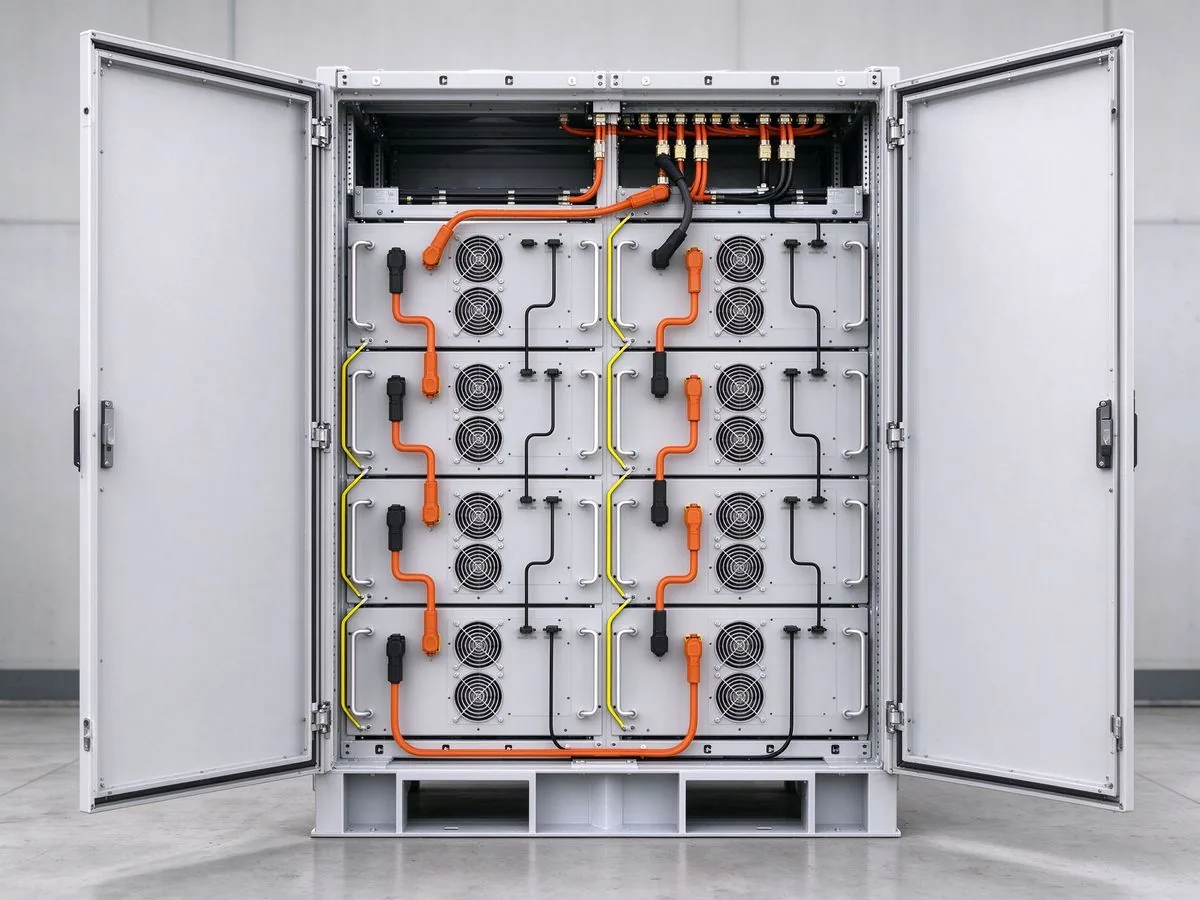
Battery energy storage systems are growing from single 20-foot racks into multi-GWh instal
Read article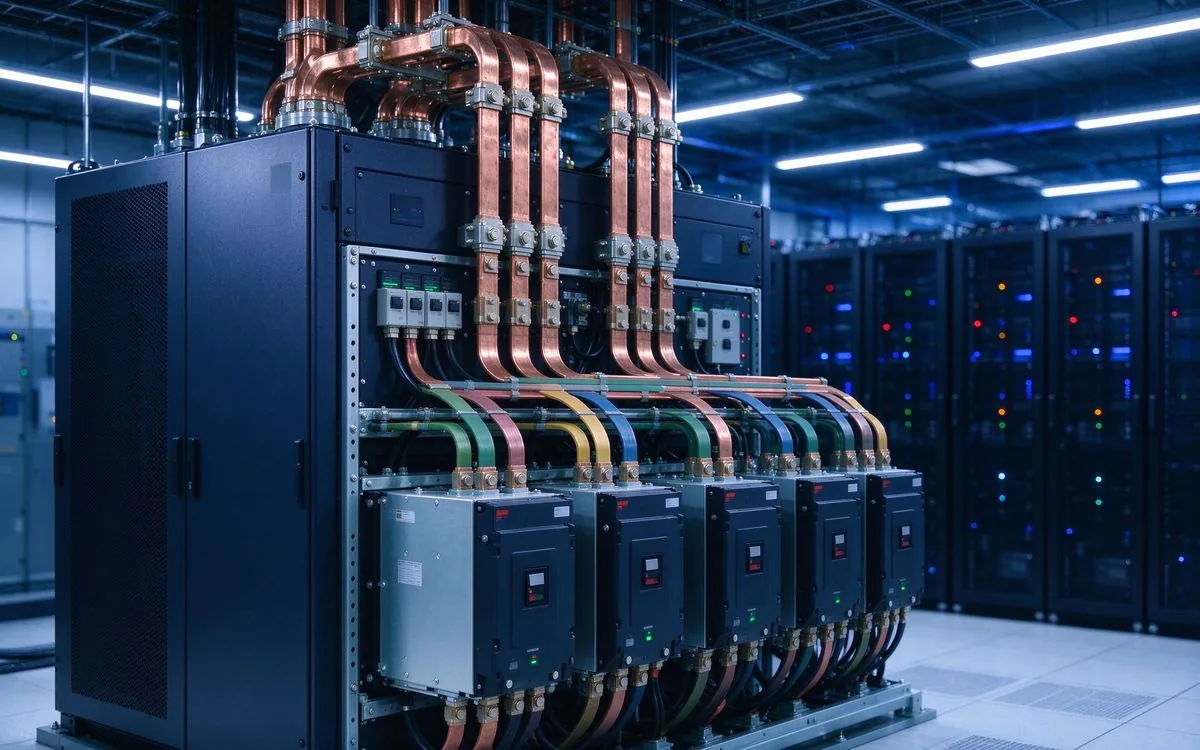
BloombergNEF sees 158-188 GW of new energy storage in 2026. PCS platforms are climbing fro
Read article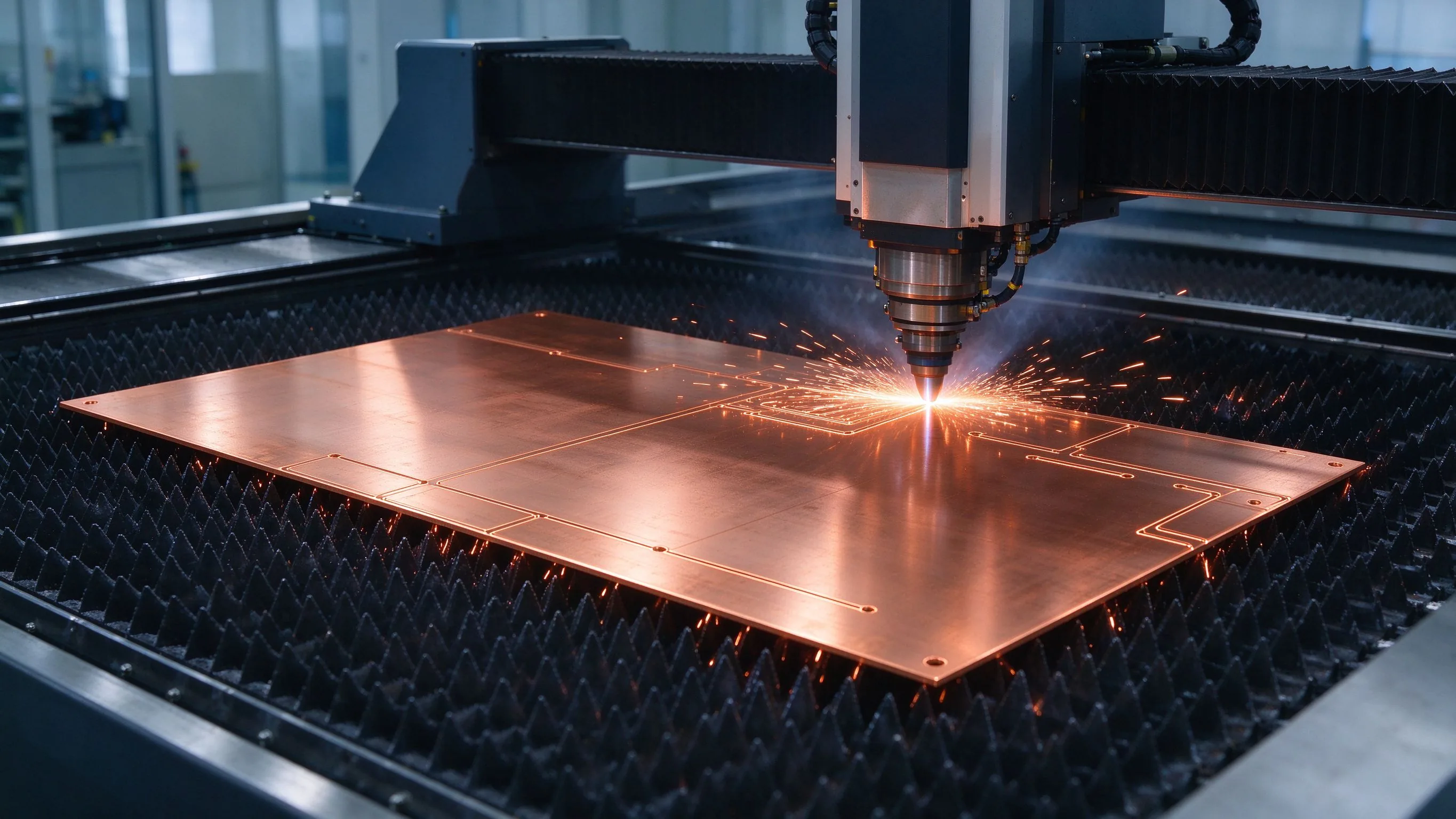
The April 2026 US Section 232 copper duties landed a 50%/25% tariff structure on busbar su
Read article
Emily Novak analyses energy-storage, grid and new-energy markets and turns them into procurement-ready technical content. With 7 years in energy market research and technical writing, she covers BESS growth, HVDC projects and regulatory shifts that change busbar demand. She holds an M.A. in Energy E
Send the current profile, voltage class and terminal types — our engineers reply within one business day.