Most busbar RFQs quote the copper, the plating and the terminals — then treat the dielectric as a default. For a purchasing manager, insulation is where cost, compliance and field risk actually meet: the material sets the thermal class, the UL path, the moisture envelope, the creepage capability and the lead time. Here is the decision framework we use when a buyer asks which dielectric to specify.
Most busbar RFQs quote the copper, the plating and the terminals — then treat the dielectric as a default. For a purchasing manager, insulation is where cost, compliance and field risk actually meet: the material sets the thermal class, the UL path, the moisture envelope, the creepage capability and the lead time. Here is the decision framework we use when a buyer asks which dielectric to specify.
Dielectric cost is a small share of a laminated busbar's bill of materials, but it drives several larger costs downstream: UL certification fees and timelines, environmental qualification, creepage-dependent envelope size, and field-failure risk that lands on the buyer's warranty line. Choosing a material that forces a bigger creepage path can resize the whole assembly.
That is why a procurement framework looks at the material through five lenses at once: cost per area, thermal class, UL recognition, environmental behavior and supply lead time. The engineering question "which dielectric" is really a supplier qualification question in disguise.
Three dielectrics cover the vast majority of laminated busbar builds: polyester film (PET), aramid paper (Nomex), and glass-reinforced epoxy laminate (DLF/FR4 family). They differ in thermal class, mechanical behavior, moisture uptake, dielectric strength and cost — and they are often mixed in multi-layer builds rather than chosen exclusively.
SHANYUAN's standard offering covers all three: 1–6+ layer laminated busbars in PET, Nomex or DLF insulation, on C11000 copper, rated to roughly the ~1000 A class at a 30 °C temperature-rise design anchor. The comparison below is the one we hand to buyers.
| Criterion | PET | Nomex | DLF (FR4-type) |
|---|---|---|---|
| Relative material cost | Lowest | Mid–high | Mid |
| Continuous thermal class | ~105–130 °C | ~200 °C class (220 °C peak) | ~130–155 °C (class B–F) |
| UL path | UL 94 VTM/V, UL 746 | UL 94, high arc resistance | UL 94 V-0 common |
| Moisture uptake | Low | Low–moderate (hygroscopic) | Low (sealed edges needed) |
| Mechanical toughness | Flexible film | Paper-like, tear resistance | Rigid board |
| Lead time | Short | Longer, specialist | Moderate |
The matrix is a starting filter, not a final answer — thermal class and UL recognition interact with the actual operating voltage, ambient and enclosure conditions.
Polyester film is the volume choice for EV and power-electronics busbars where ambient temperature stays moderate and the build benefits from thin, flexible, low-cost insulation. Its continuous thermal class sits around 105–130 °C depending on grade, which is comfortable for most automotive and converter compartments but tight for high-ambient or high-load-density designs.
PET's low moisture uptake and clean dielectric strength make it the default when no exotic condition pushes the envelope. For purchasing it also wins on lead time and battery busbar program economics.
Aramid paper carries a ~200 °C thermal class and notably high arc resistance, which matters in energy storage, industrial and high-power converter applications where partial discharge, arc tracking and elevated temperature meet. Nomex builds cost more and often need a specialist lamination and cutting process, which shows up in both unit price and lead time.
Where buyers specify Nomex — typically ESS and converter programs — the value is reduced field risk at temperature, not lower first cost. The procurement question is whether the operating envelope actually needs it.
Glass-reinforced epoxy laminate brings rigidity, dimensional stability and a clean UL 94 V-0 flammability path, which is why it appears in switchgear, distribution and high-current assemblies where the busbar must also be a structural element. It is heavier and stiffer than film, edges need sealing against moisture ingress, and machining adds cost and tolerance care.
For a buyer comparing quotes, DLF builds should include edge sealing and a clear statement of creepage and clearance performance at the operating voltage — those are the two items where cheap fabrication quietly cuts corners.
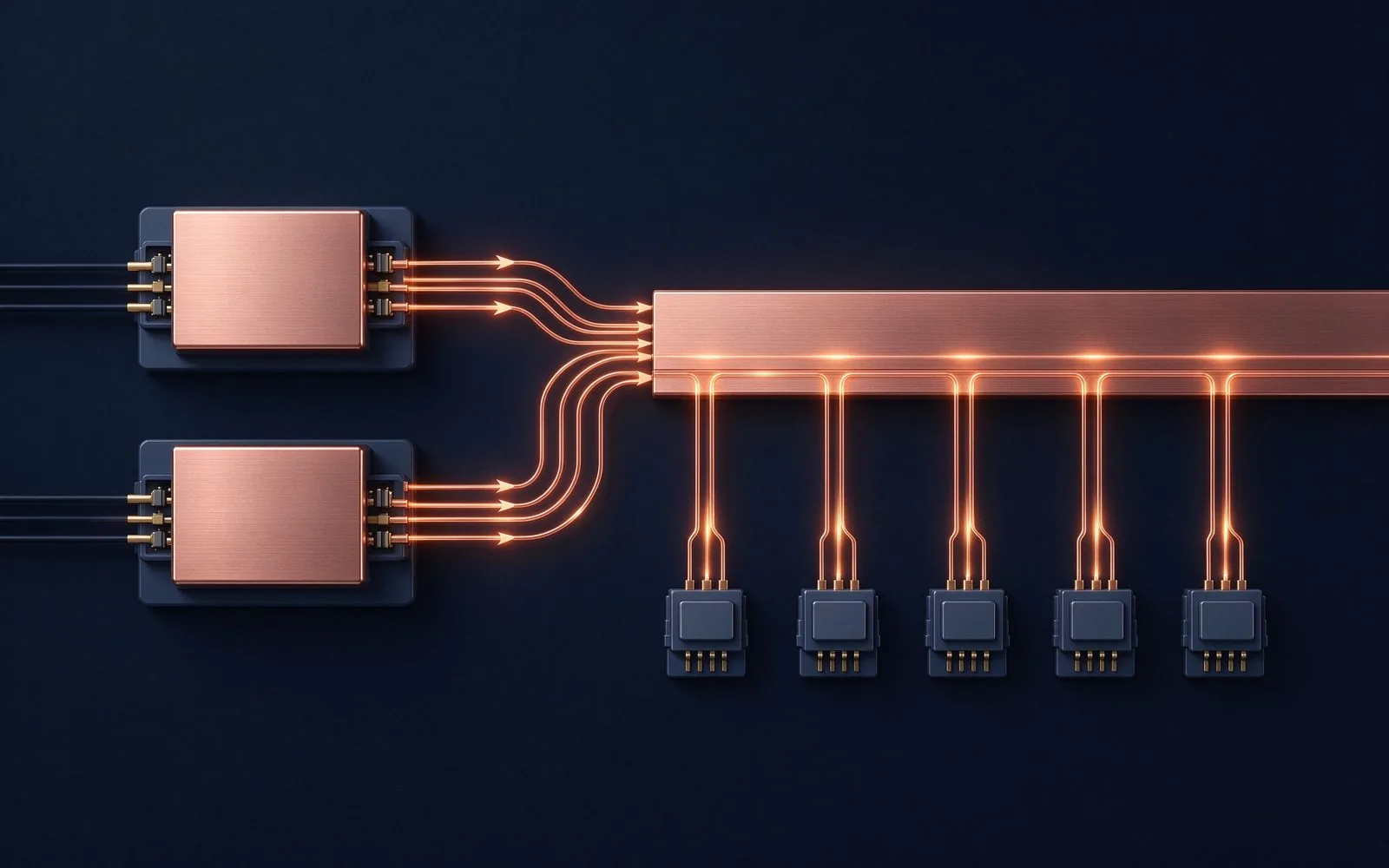
Thermal class and ampacity are different numbers that buyers often conflate. Thermal class is the dielectric's continuous temperature capability; ampacity is the conductor's current at a permitted temperature rise. SHANYUAN rates busbars at a 30 °C temperature-rise anchor — the copper's rise above ambient, not the dielectric's ceiling.
The material choice matters when rise plus ambient pushes the dielectric toward its class. A 105 °C PET build in a 70 °C ambient at a 30 °C rise sits at its limit; the same application with Nomex has margin. The ampacity chart lets buyers see the rise side, then the decision matrix prices the material side.
UL recognition is the compliance load-bearing wall. Ask for: the material's UL yellow card or file number, the UL 94 flammability class of the actual film/laminate used, and the insulation system rating if the assembly is sold into a certified product. Do not accept "UL-compliant" without a file number — it is a phrase, not a certificate.
Certification cost and timing differ by material: V-0 laminates have a well-trodden path, film builds depend on the specific grade's file. Buyers should put the certification evidence request in the RFQ, not after the prototype.
Creepage distance follows the material's CTI (comparative tracking index) and the operating voltage class. A material with a better tracking index can carry the same voltage with a shorter creepage path — which can shrink the busbar envelope and the enclosure around it. At 800VDC-class systems the difference is measurable in millimeters and in cost.
The practical procurement action: ask the supplier for the creepage/clearance calculation at your actual voltage, pollution degree and altitude, with the CTI of the specified grade stated. That document turns a material choice into an auditable design decision.
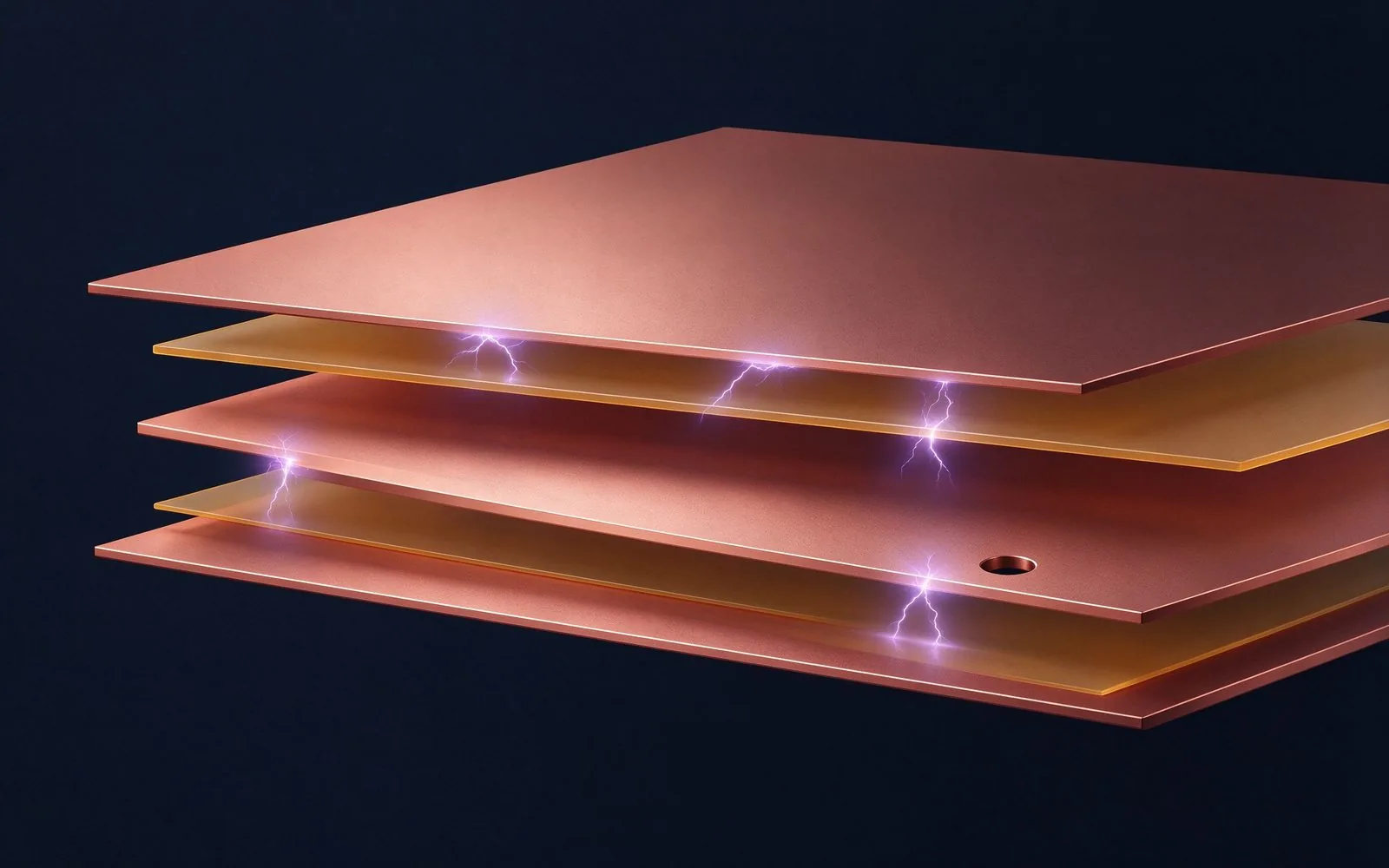
Moisture migrates into insulation over time and collapses dielectric strength at the least convenient moment. Film builds like PET behave well; Nomex is hygroscopic and needs dry-process discipline; laminate edges must be sealed. For outdoor, coastal or high-humidity installations, the material selection and the edge treatment are inseparable decisions.
Our outdoor humidity guide covers the test and design side; on the procurement side, ask for humidity/condensation qualification data and a stated edge-sealing process in the quote.
Nomex is a specialist material with fewer qualified converters; PET is a commodity with many. Lead time differences of 2–4 weeks between dielectric options are normal, and single-source risk concentrates where the material grade is niche. For production programs, confirm the supplier's film stock, the grade's availability and the supplier's own buffer inventory before freezing the BOM.
A pragmatic tactic: keep the dielectric spec at a grade level that at least two material suppliers can quote, and let the busbar maker qualify both.
Send the operating voltage and insulation class, ambient temperature range and worst-case enclosure condition, pollution degree and altitude, the thermal-rise or current profile, mechanical constraints (bend radius, mounting), flammability and UL requirements, and the humidity environment. State which of PET, Nomex or DLF you are open to, or ask the supplier to recommend from the conditions.
This set of inputs lets the custom busbar design service return a sized, documented proposal instead of a guess — and makes competing quotes comparable.
Choose PET when ambient and rise keep the dielectric under its class and cost or lead time dominate. Choose Nomex when the operating envelope pushes temperature, arc resistance or tracking performance past PET. Choose DLF when the busbar must be rigid, structural or carry a V-0 board-level requirement. When in doubt, let the engineering dielectric selection guide and the price matrix settle it together.
For multi-layer builds the answer is often a hybrid — PET core layers with Nomex or DLF where the hot spots are — and that mix is a manufacturing capability question as much as a material one.
Send the checklist above with your drawing to the contact page and SHANYUAN will return a dielectric recommendation, the creepage/clearance calculation and a quotation within one business day. Related reading: dielectric selection guide, insulation testing guide, and surface insulation coating options.
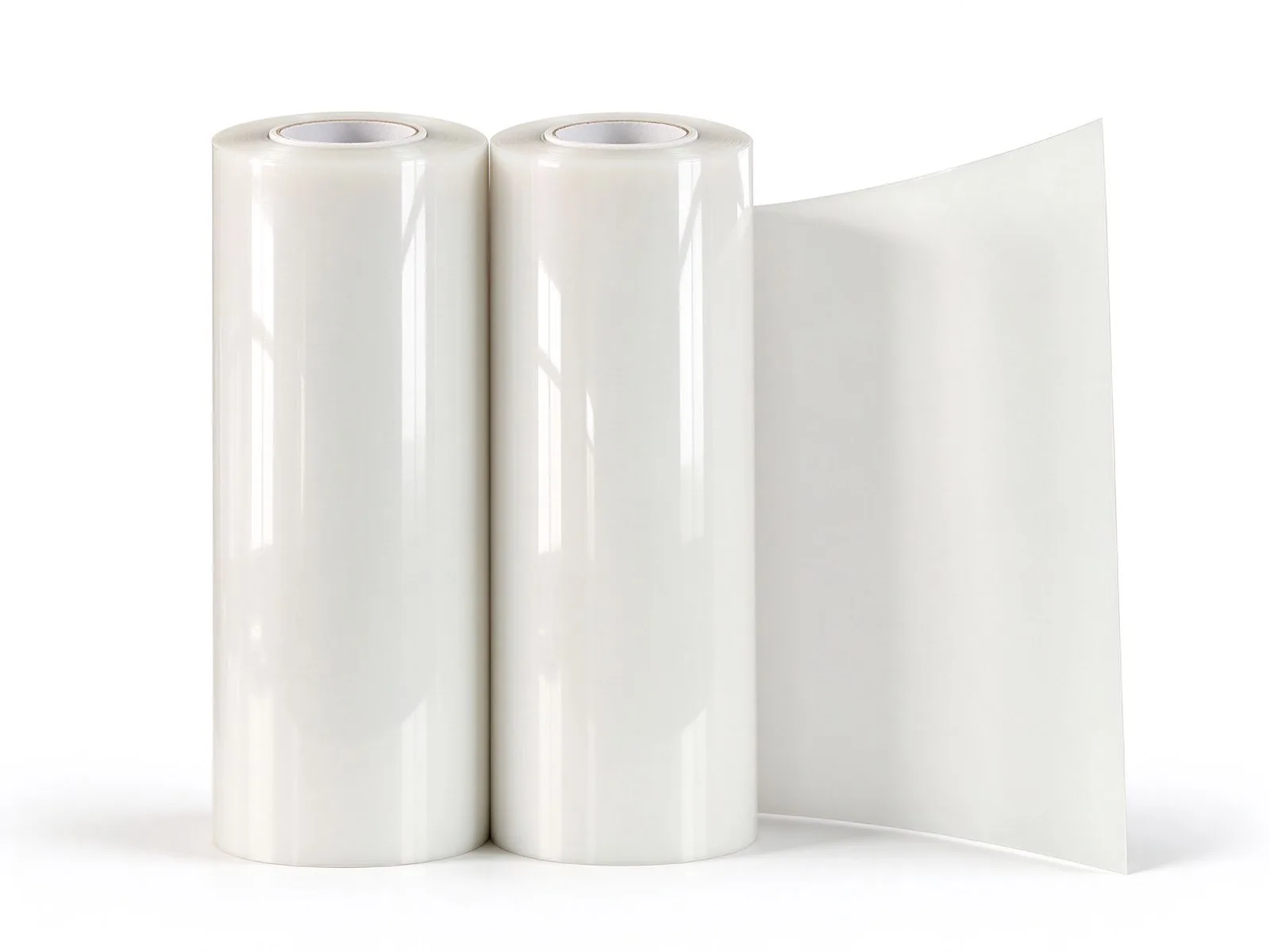
PET, Nomex and DLF epoxy are the three dielectrics we laminate into SHANYUAN busbars every
Read articleA busbar fails across a surface long before it fails through its insulation if the creepag
Read article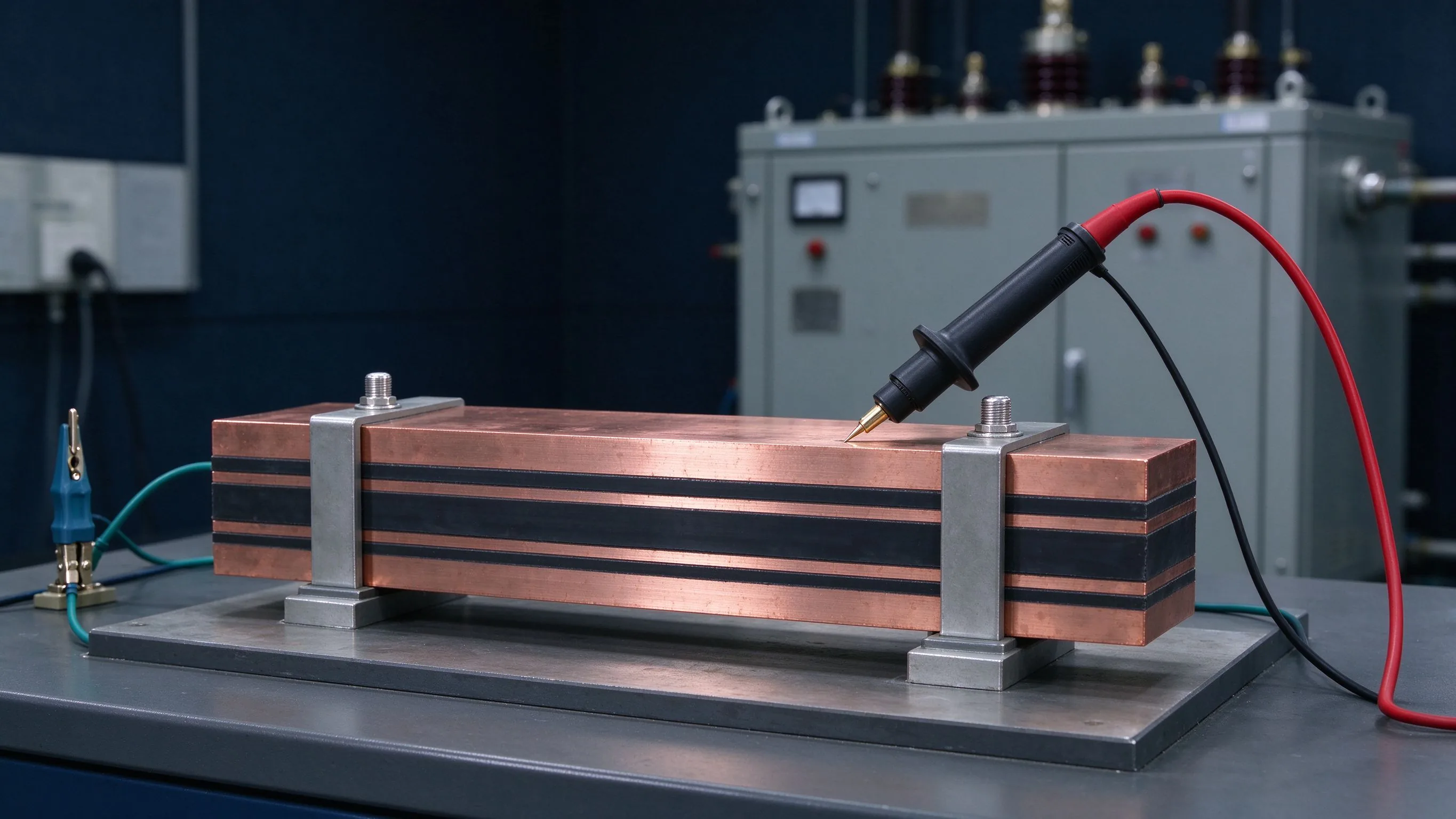
Insulation testing answers four questions: does it withstand rated voltage, does it discha
Read article
Wei Chen is a dielectric and insulation specialist at SHANYUAN, with 12 years in insulation systems for laminated busbars. His work covers PET, Nomex and epoxy powder insulation, creepage and clearance design, and partial-discharge-oriented insulation coordination. He holds a Master's degree in
Send the current profile, voltage class and terminal types — our engineers reply within one business day.