Battery storage got the attention, but the capacity numbers are quietly flipping toward duration. In September 2026, long-duration energy storage projects accounted for 64% of new storage capacity in China, and compressed air energy storage — two projects totaling 800 MW/3,800 MWh — took 27.6% of the month's additions, becoming the second-largest technology line for the first time. For the busbar industry, the shift from hours to days changes the design conversation.
Battery storage got the attention, but the capacity numbers are quietly flipping toward duration. In September 2026, long-duration energy storage projects accounted for 64% of new storage capacity in China, and compressed air energy storage — two projects totaling 800 MW/3,800 MWh — took 27.6% of the month's additions, becoming the second-largest technology line for the first time. For the busbar industry, the shift from hours to days changes the design conversation.
Long-duration energy storage has settled on a working definition of four to twelve-plus hours of discharge, with some grid operators pushing toward 24-hour and multi-day capability. The 2026 market has three commercial pillars: compressed air (CAES), flow batteries — vanadium and iron-chromium — and thermal storage, with liquid CO2 and gravity systems moving out of pilot. The common thread is that none of them is a lithium battery container doing 2-hour shifts.
That distinction matters to component suppliers because long-duration systems are engineered for decades of daily cycling, which sets a very different reliability and thermal budget than the 15-year assumption of conventional BESS.
September 2026 was the milestone month. Long-duration projects hit 64% of new capacity in China; compressed air alone contributed 800 MW/3,800 MWh across two projects — a 27.6% share, the first time the technology out-ranked conventional battery additions in a monthly breakdown. The Huaneng Jintan 2x350 MW salt-cavern CAES phase-two, 700 MW/2,800 MWh, came online and single-handedly shifted the optics.
Behind the monthly optics sits a cumulative curve: CNESA counts 14 operational CAES plants in China as of Q1 2026 with over 1.5 GW installed, plus a large construction pipeline. Long-duration is no longer a demonstration category.
Compressed air projects are scaling fast. The world's largest CAES plant — a 2,400 MWh high-temperature adiabatic facility combining molten-salt and pressurized hot-water storage at roughly 71% round-trip efficiency — is already in operation. Europe followed: Airengy and Hagag Europe are developing a 5 GWh AirBattery CAES plant in Romania in salt caverns, and Hydrostor launched a 500 MW/4 GWh advanced CAES project in Ontario with expansion options to 2 GW/16 GWh. China's Jiyuan 660 MW/3.96 GWh advanced CAES project entered EPC tendering in August.
For busbar suppliers, these plants are large electrical installations: compressors, turbomachinery, motor-generators and grid interconnects, each with significant busbar content in switchgear and converter stages.
Vanadium and iron-chromium flow batteries scale differently from lithium. The electrolyte is the energy store, so stacks are sized for power and tanks for energy — which means 4-hour-plus discharge comes from adding electrolyte, not from stacking more cells. But the cell stacks themselves still need current collection, and the busbar between stack and DC bus carries the same design questions as any electrochemical system: low resistance, low loop inductance, corrosion-resistant plating in an electrolyte environment.
Flow battery plants in the 100 MW class are now bidding with lithium, which puts their DC architecture — including DC-link busbar design — under the same cost and reliability scrutiny as conventional BESS.
Long-duration plants push toward higher DC-link voltages to keep current and copper content manageable at megawatt power levels. The 1,500V platform remains the standard for battery systems; CAES and flow installations with multi-megawatt power blocks increasingly use 1,500V DC links and MV AC interconnection at 6-35 kV. Higher voltage shifts the busbar design conversation toward insulation systems, partial-discharge margin and creepage discipline — the same rules our PD-free design guide covers.
The second shift is life expectancy. Long-duration assets are contracted for 20-30 years of daily cycling, so thermal-cycling qualification, plating durability and joint design carry heavier weight in the specification than in conventional peaking BESS.
Conventional BESS often cycles once a day on arbitrage plus occasional frequency response. Long-duration assets cycle daily by design — sometimes at deeper state-of-charge swings — and the busbar joints see the corresponding thermal and mechanical duty. Every daily cycle is a temperature excursion at the joint interfaces; after 20 years that is over 7,000 cycles, a number that separates well-designed interfaces from marginal ones.
Our thermal cycling reliability guide walks through the interface mechanics — contact area, plating, washer stacks, retorque schedules — that survive 7,000 daily cycles. Long-duration projects should specify against that duty, not against a peaking profile.
Grid operators buying 4-hour-plus storage are underwriting 20-30 year asset lives. That flows directly into component selection: a busbar that must carry DC current for three decades needs plating systems that resist creep and oxidation, insulation that ages gracefully, and terminals engineered for periodic inspection. The failure cost in a 400 MW CAES or flow plant is not a replacement part — it is plant downtime.
The practical consequence for specification: buyers should demand the reliability file — thermal cycling evidence, plating standards, joint design documentation — at the RFQ stage, not discover it during commissioning. Our quality and documentation system ships the evidence with the hardware.
Flow batteries bring electrolyte — vanadium sulfate or iron-chromium solutions — into the same building as electrical equipment. The corrosion envelope is real: acid vapor, humidity and spills demand plating and enclosure decisions that a lithium container never faces. CAES plants, meanwhile, place electrical rooms next to compressors with salt or water handling depending on cavern type.
The busbar plating question is therefore central, not peripheral. The plating and corrosion guide covers tin, silver and nickel systems for aggressive environments — the thickness, the base layer, the edge coverage. Long-duration plant specifiers should treat plating as a safety system, not a finish.
Long discharge windows change the thermal transient. A 2-hour BESS burst heats the busbar over minutes; a 4-8 hour discharge approaches steady-state heating, where the full I2R loss reaches equilibrium with the cooling path. Steady-state rating — not transient capability — is what the design must carry, and the 30°C-rise rule applies at that equilibrium.
That is the same discipline covered in our thermal management resources and the busbar thermal design guide: the steady-state temperature rise sets the cross-section, and the cross-section sets the copper weight, and the copper weight sets the price. Long-duration buyers pay for steady-state margin whether they design for it or not.
Long-duration plants are copper-hungry in a different way: the electrical installation — motors, transformers, switchgear, DC links — carries significant busbar and winding content, and the build-out arrives in a year when mine supply is constrained. The same 2026 dynamics that pushed LME volatility also push long-duration project costs, and program planners are learning to price metal risk into 25-year power purchase agreements.
The copper supply analysis published today outlines the mechanism; for long-duration developers the discipline is identical to battery storage — index-linked busbar pricing, metal-weight transparency and early vendor engagement to lock capacity.
Long-duration storage is still early in its standardization curve, and that is the opportunity. The first wave of CAES and flow plants has been engineered as bespoke installations; the next wave — driven by tenders like Jiyuan's 660 MW EPC and Hydrostor's Ontario phases — will standardize. Standardized DC-link and cell-stack busbar platforms amortize tooling and qualification exactly as they did for conventional BESS.
Our power electronics busbar range is designed for that platform approach: repeatable geometry, documented test evidence, and qualification that transfers across projects. Long-duration integrators should ask for platform designs, not one-off drawings.
Beyond the DC side, long-duration plants connect to the grid through MV switchgear and transformers with conventional busbar systems. The 6-35 kV interconnection busbar — bare or insulated — follows utility standards for current rating, short-circuit withstand and clearances, a separate discipline from the laminated DC-link world. Plant EPCs buy both, often from different supply chains.
The short-circuit withstand guide and our ESS application pages cover the MV side of the conversation. For suppliers, the opportunity is to serve both: the laminated DC-link stack and the MV interconnection hardware, from one qualified source.
Three specification habits will define which long-duration projects hit their cost and reliability targets. First: state the duty profile — hours of discharge, cycles per day, ambient envelope — in the RFQ; it drives the busbar cross-section and thermal design. Second: demand the reliability file, not just a datasheet — thermal cycling, PD, salt-spray evidence with the numbers. Third: treat metal pricing transparently — index-linked clauses with stated copper weight per piece.
The good news is that the discipline is identical across storage technologies. Developers who have run conventional BESS programs can apply the same vendor-screening playbook, and the busbar manufacturer selection guide is a working checklist for exactly this.
The September 2026 mix flip — 64% long-duration, compressed air at 27.6% — is probably not a one-off. Grid operators are solving for renewable penetration curves that need 6-12 hour discharge windows, and lithium BESS cannot economically cover the deep tail. CAES, flow and thermal storage will keep taking share, and their electrical content — DC links, stacks, interconnection — is the busbar industry's next volume curve.
For suppliers and buyers alike, the transition is manageable with the tools already in place: standard 1,500V DC-link platforms, documented reliability qualification, and disciplined metal management. Long-duration storage is not a new engineering problem; it is the old engineering problem with a longer duty cycle. Explore our ESS applications or contact the engineering team to align a busbar program with your long-duration pipeline.
Thermal energy storage — molten salt tanks, solid-media systems and hot-water storage — is the quietest pillar of long-duration and often the cheapest at scale. A molten-salt plant stores heat for steam cycles; its electrical content is concentrated in pumps, electric heaters, steam turbines and the grid interconnection, with busbar systems in the switchgear and converter stages rather than in a DC-link stack.
The component lesson is that long-duration is electrically diverse. The power electronics busbar family serves the converter stages across all of them, while MV interconnection hardware serves the grid tie — two product families, one qualification conversation.
Gravity storage and liquid-CO2 systems are the emerging technologies of the long-duration group. Gravity plants raise and lower weights or pistons, cycling through motors and generators with duty patterns unlike any battery; CO2 systems use phase-change thermodynamics with turbomachinery and heat exchange. Both are in the pilot-to-first-commercial stage in 2026, and both will draw conventional electrical equipment rather than battery-specific hardware.
For busbar suppliers the timing message is to stay close to the emerging technology companies rather than wait for tenders — the regional build-outs like India's are where the first volume lands, and the technology mix at each site shapes the component spec.
Grid operators increasingly procure duration mixes at one site: 2-hour batteries for frequency response, 6-8 hour flow or CAES for evening shifting, and thermal or pumped capacity for multi-day events. The hybrid site is electrically more complex — multiple DC links, multiple converter systems, and a shared MV interconnection with coordinated control.
The component consequence is standardization pressure: each technology's hardware must be qualified against a common reliability bar and documented in a common file format. The failure-mode selection framework gives that common language — the same six modes and the same selection rules apply across technologies.
Long-duration plants convert at both ends: charging power and discharging power, often through large power converters and motor-generator sets. CAES compressors and expanders, flow-battery power stacks and thermal-system turbines all present power-electronics content with hard switching duty — which brings the EMI and layout discipline of power converters into plants that were previously pure electrical installations.
The 1,500V DC-link platform dominates the battery side; MV drives and converters handle the turbomachinery side. Both use laminated busbar at their interfaces, and both are designed against the same loop-inductance and thermal rules our measurement guide covers.
Long-duration assets are contracted for 20-30 years, which makes the maintenance program a design requirement rather than an afterthought. Joints that will see 7,000-plus daily cycles need documented torque schedules; plating that will sit in flow-battery electrolyte environments needs inspection triggers; insulation needs PD trending over decades. The program is the maintenance discipline applied to a 25-year horizon.
The procurement consequence: the reliability file — cycling evidence, plating standards, joint documentation — should arrive with the hardware, and the maintenance schedule should be written from it. Buyers who accept hardware without the file are accepting a 25-year liability with no manual.
The selection rules for long-duration busbars are the same six failure modes, weighted for the duty. Steady-state thermal rating dominates because discharge is hours long; corrosion dominates where electrolytes or salt caverns sit nearby; cycling fatigue dominates under daily deep cycles; PD discipline dominates at higher voltages; vibration matters at turbomachinery sites; and short-circuit withstand is sized by the plant's fault level.
Our failure-mode selection guide published today maps each duty to its design response — the same framework that serves battery storage, applied to the longer duty. For developers the value is one language across all their technologies.
The long-duration volume curve has three engines in 2026-2027: China's CAES build-out, Europe's salt-cavern projects like the Romanian AirBattery, and North America's Hydrostor phases. Each brings the same electrical content — DC links, converter systems, MV interconnection — and each is a standardizing market that rewards suppliers with platform designs and documented evidence.
The copper supply picture shapes the cost side of every one of those plants, and the Indian build-out is where the next battery-scale volume lands. For suppliers and buyers, the play is the same as conventional BESS was four years ago: get the platform qualified early, document the evidence, and let the volume follow.
Why did long-duration jump to 64% of new Chinese capacity? September 2026 saw compressed-air additions of 800 MW/3,800 MWh — a 27.6% monthly share — plus flow and thermal projects, flipping the mix toward 4+ hour systems as grid operators solve for renewable penetration. Are long-duration busbar requirements different from BESS? The design rules are the same but the duty is harder: 25-year assets, daily deep cycles, higher voltages in some plants, and corrosion environments in flow or cavern facilities. What should developers specify? State the duty profile, demand the reliability file, and treat metal pricing transparently — the same three habits that made BESS programs succeed.
Sizing the DC-link busbar for a long-duration plant follows the same calculation as any storage system, with one twist: the discharge is hours long, so the design runs at steady-state thermal equilibrium rather than transient capability. The cross-section is set by the I2R loss against the cooling path at the full discharge current, evaluated at the worst-case ambient — the same temperature-rise method behind our ampacity chart, applied with a long-duration duty factor.
The twist matters because margin is expensive: every extra millimetre of copper is metal that the plant pays for twice, at purchase and in the metal clause. The right answer is a genuine thermal calculation at the real duty, not a rule of thumb — and that calculation is exactly what the thermal management design guide walks through step by step.
The 25-year claim is only as strong as the evidence behind it. A long-duration busbar program should arrive with the reliability file: thermal-cycling test results at the plant's temperature swing, salt-spray evidence for the corrosion envelope, PD data at the operating voltage and humidity, and the joint documentation that tells the maintenance team what to check and when. Suppliers who generate that evidence internally can ship it with the first article; suppliers who buy it in add cost and delay.
The thermal cycling reliability guide explains how the cycle evidence is generated and read, and the battery busbar range carries the documentation standard. For a developer underwriting a 25-year asset, the evidence is not paperwork — it is the difference between a plant that drifts and one that trends.
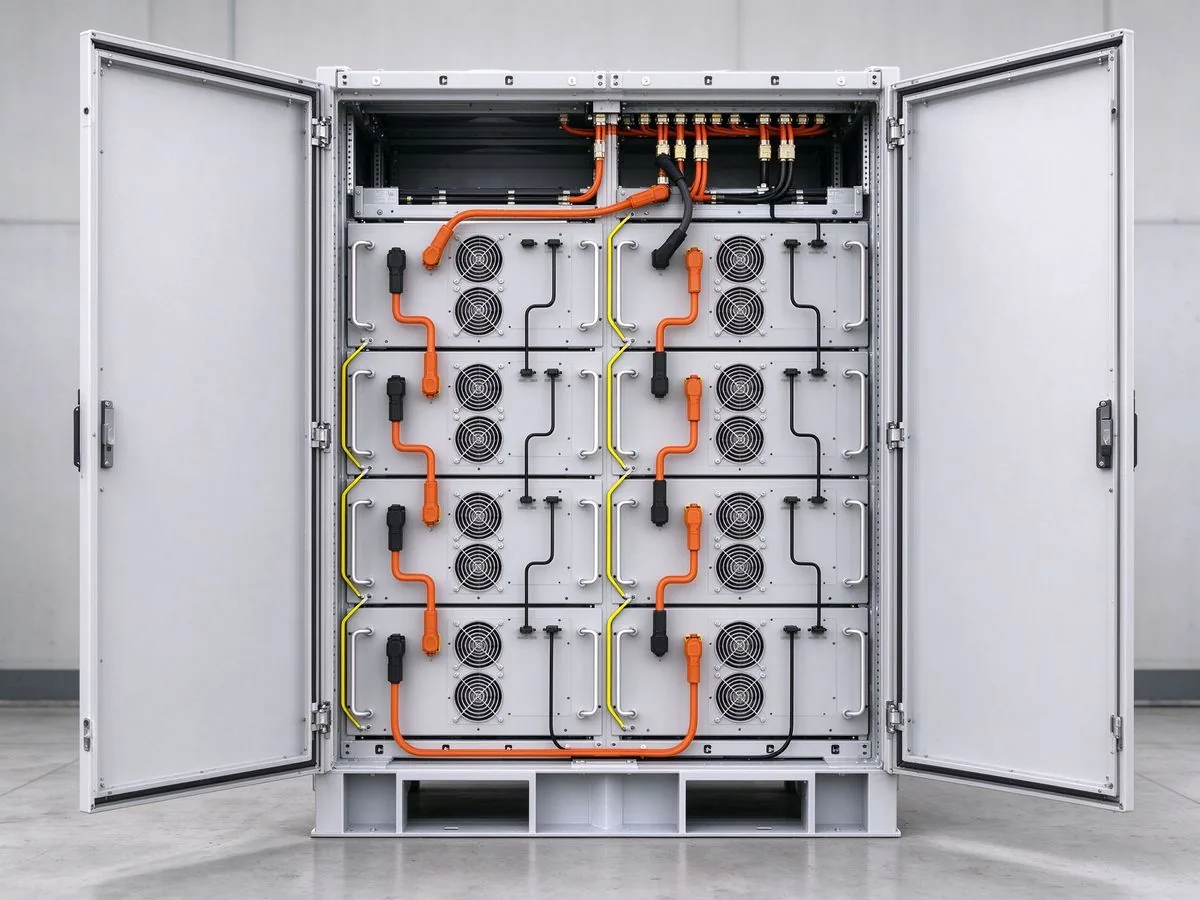
Global energy storage additions are forecast at 158 GW in 2026, up 45% year-on-year, with
Read article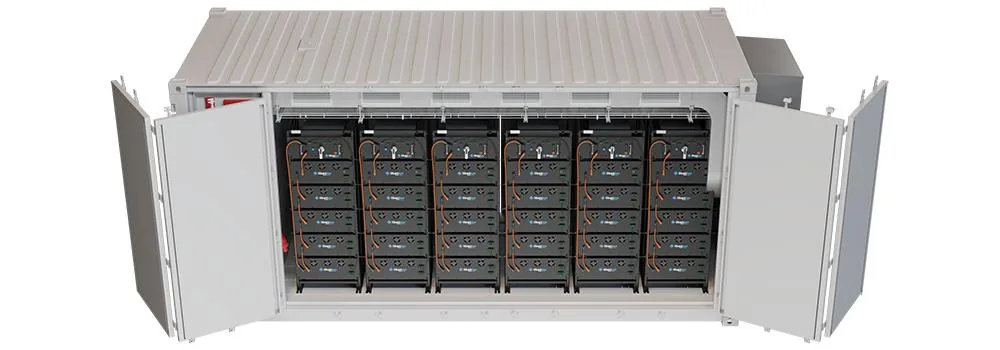
Sodium-ion storage moved from pilot to purchase order in 2026: a 60 GWh supply agreement,
Read article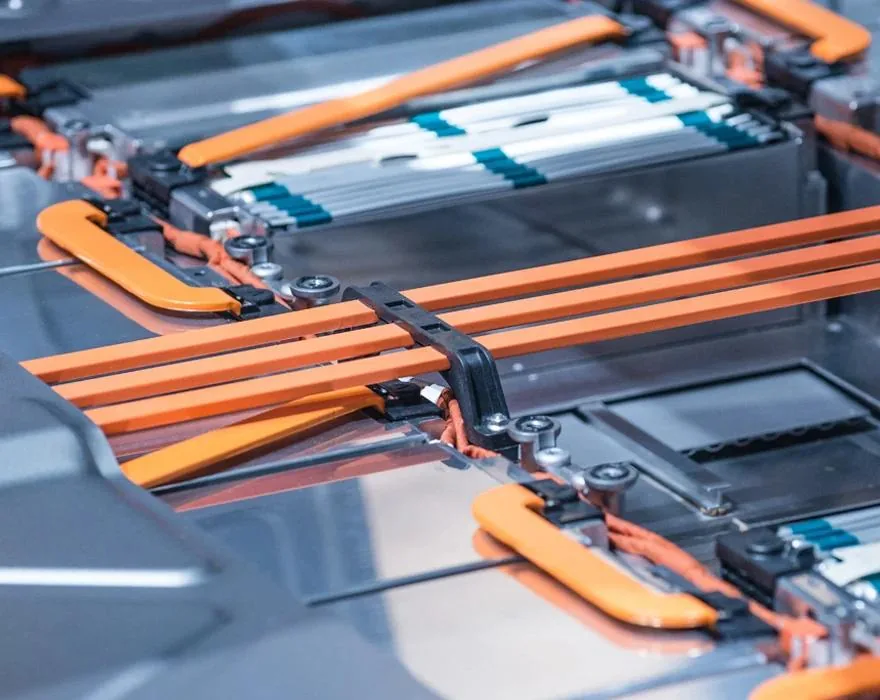
BMW put solid-state cells in an i7 prototype in July 2026 and Stellantis began road-testin
Read article
Aiko Tanaka is application engineering manager at SHANYUAN, with 11 years in applying laminated busbars to data centres, energy storage and new-energy systems. She leads application selection, custom-profile development and project delivery, and holds a B.Eng. in Electrical Engineering from the Univ
Send the current profile, voltage class and terminal types — our engineers reply within one business day.