At a 2,000-piece annual demand, the three laminated-busbar supply routes in this article land at roughly $303,000, $285,000 and $92,000 per year in our worked TCO — a threefold gap that has nothing to do with copper price and everything to do with fixed-cost absorption, tooling amortization and where the press sits. LME copper averaged around $13,647/t in 2026 (LME, 2026), so the copper inside a 0.8 kg stack is about $11 per piece; the remaining $35 to $140 is the make-vs-buy decision you are about to make, and it deserves a one-page worksheet before the next capex meeting.
At a 2,000-piece annual demand, the three laminated-busbar supply routes in this article land at roughly $303,000, $285,000 and $92,000 per year in our worked TCO — a threefold gap that has nothing to do with copper price and everything to do with fixed-cost absorption, tooling amortization and where the press sits. LME copper averaged around $13,647/t in 2026 (LME, 2026), so the copper inside a 0.8 kg stack is about $11 per piece; the remaining $35 to $140 is the make-vs-buy decision you are about to make, and it deserves a one-page worksheet before the next capex meeting.
Every power-electronics program that reaches about 1,500 to 3,000 units a year hits the same meeting: engineering wants the process under its own roof for control, procurement wants the landed unit price, and finance wants the fixed-cost case written down. For a simple stamped bracket, that meeting ends in ten minutes. For a laminated busbar, it does not, because the part sits at the intersection of stamping, dielectric bonding, high-voltage insulation and partial-discharge (PD) control — four processes a generic machine shop does not run.
This article does not relitigate plating finish, insulation material choice, quote comparison or MOQ/lead-time TCO; those are covered elsewhere in our library. It answers one question only: given a known annual volume, should you buy a press, hand the drawing to a regional contract house, or send it to an integrated offshore supplier? The decision framework below is the same one we walk buyers through when they ask us how to choose a busbar manufacturer who will actually hold tolerances at series volume.
The three options on the table are deliberately narrow. Option A is an in-house lamination line in your own plant. Option B is a local contract manufacturer within driving distance of your assembly line. Option C is an integrated offshore supplier that cuts copper, die-cuts dielectric, laminates, bakes, tests and ships the finished part. Everything else — distributors, kit assemblers, broker shops — is a variant of one of these three.
A stamped copper bracket tolerates ±0.2 mm and ships on a truck. A multi-layer laminated busbar has to register two or three copper foils against each other within ±0.05 mm over a 400 mm span, bond a dielectric film across the whole face without voids, leave the correct creepage margin at every edge, and then survive a hipot test at rated voltage plus a PD measurement at 1.5 times phase voltage. Get any one of those wrong and the part passes production test but fails in the field.
The process chain is what makes the capital question non-trivial. Copper blanking or CNC punch, deburring, tin plating, dielectric die-cutting, layer registration, hot-platen lamination under pressure and temperature, edge trimming, post-cure aging, hipot, PD, contact-resistance check and final visual. A shop that can do six of those steps is not a laminated-busbar maker; it is a sub-tier.
That process depth is also why the low-inductance loop design you drew on CAD does not transfer cleanly between suppliers. Platen flatness, dielectric thickness tolerance and press temperature profile all show up as inductance drift and partial-discharge onset voltage. If you have not run a lamination line yourself, you will underestimate the yield ramp by a factor of two — a point that matters a lot when you run the numbers in section 7.
An in-house line means you buy or lease the press, hire the process engineers, qualify the dielectric film supplier and run the line inside your own walls. The upside is total control: engineering changes happen same-day, drawings never leave your server, and you can tune the lamination cycle for your own current profile. The downside is the fixed-cost stack that follows you whether you build 500 pieces a year or 50,000.
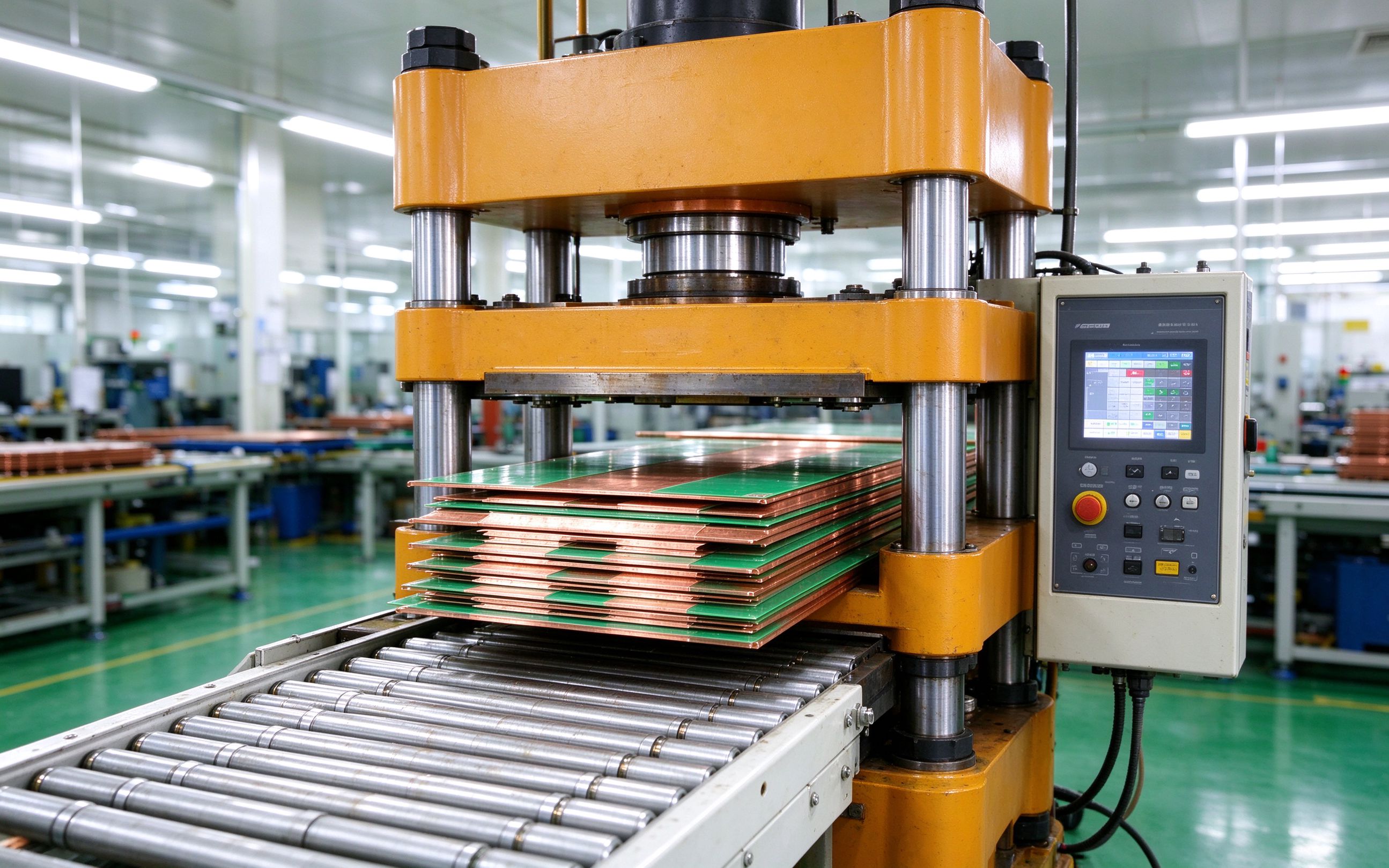
The capital line items look roughly like this for a small-to-mid line: a 200 to 300-ton four-column hot press with heated platens, about $180,000; a precision CNC punch or fine-blank for the copper profiles, about $120,000; a dielectric die-cutting station, about $35,000; a hipot tester plus a partial-discharge test bench, about $45,000; a modest clean-room fit-out and utilities, about $60,000; and first-article tooling, about $25,000. That totals about $465,000 before you hire a single operator. Our earlier note on automated lamination production lines covers what a scaled-up line looks like; this article is about the small one a mid-size buyer would actually buy.
Then comes the people cost. A competent lamination process engineer runs $85,000 to $110,000 fully loaded in Western Europe or North America, and you need at least one. Two operators across two shifts, plus a quality engineer split with another line, adds another $130,000 to $160,000. Yield ramp is the silent killer: shops that have never laminated typically run at 55 to 65 percent first-pass yield for the first six months, climbing to 85 percent only after the press cycle and dielectric handling are dialed in. That scrap lands on your P&L.
A regional contract manufacturer within a two-hour drive of your assembly line looks attractive on a slide: small MOQ, next-day engineering call-back, no ocean freight, no customs broker, no country-of-origin fight with your customs department. It is also the option that buyers most often regret at series volume, because the unit price hides the fixed-cost burden the CM itself carries.
The economics are straightforward. A local CM in Germany, the upper Midwest or Ontario pays Western wages, leases a clean workshop and prices its shop rate at roughly $85 to $120 per hour. Because laminated busbars are low-volume, high-mix for most local shops, they run the press in small batches, change over frequently and price each batch to recover setup time. The result is a unit price two to three times an offshore quote, even before you compare copper content.
The engineering support story is mixed. A good local CM will sit in your design review, suggest terminal geometry tweaks and turn an ECO in five working days. A marginal one will quote your drawing as if it were a simple busbar, miss the dielectric layup and then call you three weeks before delivery to ask what partial-discharge test you actually wanted. Vetting that gap takes the same supplier-audit work you would do for any source — our quote-process checklist walks the same questions we send buyers.
Where Option B genuinely wins is urgency and IP proximity. If your program is in prototype-to-low-volume, you need an ECO turned in days, and your drawings cannot leave the country, a local CM is often the right call despite the price. Once volume crosses a few thousand pieces a year, the unit-price gap starts to buy a lot of engineering hours elsewhere.
An integrated offshore supplier does the whole chain under one roof: copper slitting and CNC, plating, dielectric die-cutting, lamination, post-cure, hipot, PD, packing and export. Because the press runs near 100 percent utilization across many customers, the fixed cost of the press and the clean room is spread across tens of thousands of pieces a year, and that shows up directly in the unit price.
The trade-offs are real and well-known. Tooling is paid once, but you typically commit to a minimum order quantity — often 500 to 1,000 pieces per part number — to amortize the setup. Lead time from PO to dock is eight to fourteen weeks including ocean freight, so you carry safety stock. Engineering changes travel by email and video call; a drawing revision that takes a local CM a week takes an offshore supplier two to four weeks, because the change has to go through a Chinese New Year, a customs hold or a freight consolidation cycle.
Tariff and country-of-origin treatment is the wildcard. US Section 301 duties on Chinese electrical assemblies have moved several times since 2018, and the EU has its own customs classification for laminated busbars under HS 8538.90. We will not quote a specific duty rate here — that changes quarterly and depends on HTS classification — but your landed-cost model must include an explicit duty line, not a vague "about ten percent" footnote. Our note on 2026 tariff and supply routing covers the routing angles; this article only asks that you put a real number on it.
The IP question is the one executives ask about most. A reputable offshore integrated supplier will sign a mutual NDA, provide a drawing-held-only-on-server policy and keep your Gerbers and PDFs out of its sales CRM. You still want a structured engineering change process, version-controlled drawings and a documented revision history — the same discipline you would expect from any source.
Table 1 puts the ten decision dimensions side by side. The ratings are typical for a mid-size laminated busbar (two to four layers, 300 to 500 mm long, 200 to 600 A, PET or Nomex dielectric, tinned copper). Your own numbers will move by plus or minus thirty percent depending on part complexity and your geography, but the relative ordering is stable.
| Dimension | A. In-house lamination | B. Local contract mfr. | C. Offshore integrated |
|---|---|---|---|
| Capex & amortization | ~$465k line, 5-yr depreciation | None on buyer books | None on buyer books |
| Tooling & changeover | Internal; ~$25k per new stack-up | ~$15-25k, fast changeover | ~$5-9k, longer changeover |
| Unit cost (variable) | Low, once yield matures | Highest, ~2-3x offshore | Lowest FOB |
| MOQ | None internal | 50-200 pcs | 500-1,000 pcs |
| Lead time to dock | Days, on-site | 2-4 weeks | 8-14 weeks incl. ocean |
| ECO response | Same-day | 1-2 weeks | 3-6 weeks |
| IP / drawing control | Full, inside firewall | High, local NDA | NDA + controlled access required |
| Duty & country of origin | Domestic, no duty | Domestic, no duty | Explicit duty line, HTS-dependent |
| Quality evidence (FAI/PPAP/PD) | You own the data | Packaged per request | Packaged; audit required |
| Supply disruption risk | Single-site, single-equipment | Regional, single-shop | Ocean + geopolitical, but capacity deep |
Read the matrix horizontally, not vertically. No option wins every row. Option A wins on ECO speed, IP and duty but loses on fixed-cost absorption. Option B wins on lead time and IP proximity but loses on unit cost. Option C wins on unit cost and quality depth but loses on lead time, ECO speed and tariff exposure. The decision is not "which is best"; it is "which row matters most for this program."
We will run the numbers on a concrete part: a 3-layer laminated busbar, 0.8 kg of C11000 copper per piece, PET dielectric, tinned terminals, rated 400 A continuous. Annual demand is 2,000 pieces, shipped in four batches of 500. We amortize buyer-side tooling over the line's expected life and include copper at the LME 2026 average forecast of about $13,647/t (LME, 2026), which puts copper content at roughly $11 per piece.
Fixed cost: line depreciation $93,000/yr (five-year straight-line on $465k), one process engineer plus labor allocation $130,000/yr, factory overhead $40,000/yr. Fixed subtotal: $263,000/yr. Variable cost per piece: copper $11, dielectric film $1.20, tin plating $1.80, direct labor $4, scrap at 10 percent yield loss $2. Variable subtotal: ~$20/pc. At Q = 2,000, total = $263,000 + 2,000 × $20 = $303,000/yr, or about $151.5/pc.
Buyer-side fixed: tooling $18,000 amortized over two years = $9,000/yr. Variable: quoted unit price $138/pc, delivered locally, no duty. At Q = 2,000, total = $9,000 + 2,000 × $138 = $285,000/yr, or $142.5/pc.
Buyer-side fixed: tooling $6,000 amortized over three years = $2,000/yr. Variable FOB unit price $38/pc. Ocean freight + insurance allocated at $2.60/pc. Illustrative duty at 7.5 percent of FOB = $2.85/pc (verify with your customs broker; HTS classification governs). Inland delivery + clearance $1.50/pc. Landed variable: $44.95/pc ≈ $45/pc. At Q = 2,000, total = $2,000 + 2,000 × $45 = $92,000/yr, or $46/pc.
Set Option A equal to Option C: $263,000 + $20Q = $2,000 + $45Q, which solves to Q* ≈ 10,440 pieces/year. Below that, offshore wins on cash. Above it, in-house wins as the fixed press cost gets spread. Set Option A equal to Option B: $263,000 + $20Q = $9,000 + $138Q, which solves to Q* ≈ 2,150 pieces/year. So at the given 2,000-piece volume, Option B is actually slightly cheaper than Option A — a result that surprises buyers who assume building in-house always wins at low volume. The real gap is between Option C and the other two: offshore saves roughly $193,000 per year against the local CM and $211,000 per year against in-house at this volume. Our MOQ, lead-time and TCO guide walks the same model for buyers who want to plug their own numbers.
The break-even math is necessary but not sufficient. Table 2 maps the program conditions buyers actually describe to a recommended primary source, with a named fallback. Treat these as defaults, not contracts — your engineering and risk team can override any row with a documented reason.
| If your program looks like this… | Primary source | Fallback / hedge |
|---|---|---|
| < 1,500 pcs/yr, high mix, frequent ECO | Local contract mfr (Option B) | Offshore supplier for long-lead stabilizers |
| 1,500-8,000 pcs/yr, stable design, single platform | Offshore integrated (Option C) | Qualify a second offshore shop for dual sourcing |
| > 10,000 pcs/yr, one dominant stack-up, IP-sensitive | In-house line (Option A) | Offshore overflow at peak demand |
| Prototype < 200 pcs, urgent ECOs, drawings cannot leave country | Local contract mfr (Option B) | Internal bench-level lamination for samples |
| Safety-certified (UL/IEC end product), PPAP-level evidence | Offshore integrated with audit (Option C) | Local CM for FAI and trouble-shooting |
| Geopolitical / duty exposure is the dominant risk | Dual-source offshore + local CM | Do not single-source one geography |
The last row is worth pausing on. Since 2018, duty rates and export controls have moved on a quarterly cycle, and a single-sourced offshore line can go from "best price" to "cannot clear customs" inside ninety days. The mapping table deliberately avoids recommending pure Option C for safety-critical programs without a local fallback; that is the risk premium buyers pay even when the unit price says otherwise.
Whichever option you pick, the evidence chain is what separates a qualified source from a quote in an inbox. For industrial and automotive-grade laminated busbars, expect at minimum a first-article inspection (FAI) report, dimensional layout, material certs for C11000 copper and the dielectric film, hipot and partial-discharge test data, and a traceability record linking each batch to a lot of copper and a lot of film.
Automotive buyers will recognize the deeper package as PPAP — Production Part Approval Process, defined by AIAG and required under IATF 16949:2016 for safety-relevant production parts. PPAP is not a sample check; it is a documented statement that the press cycle, dielectric lot and operator training are themselves approved for production. An in-house line has to build that evidence process from scratch. A local CM may have it for stamped parts but not for laminated ones — ask to see a laminated-busbar PPAP, not a generic one. An offshore integrated supplier running power-electronics customers will usually have the file cabinet already; you still want to audit it.
Partial-discharge evidence is the part buyers forget. A laminated busbar that passes hipot at 2 kV but starts emitting PD at 1.5 kV is a field-failure waiting to happen. Ask every bidder for a PD test report at the rated voltage plus 20 percent, with the measured pC value, not just a "pass/fail" checkbox. Our companion piece on void and CT inspection of laminated busbars (in this batch) covers the non-destructive side; this section only insists that the report exist and be traceable to the lot you are buying.
Standards context: dielectric creepage and clearance for the end equipment is set by IEC 62368-1 / UL 62368-1 for IT and AV electronics, and by IEC 61439 for low-voltage switchgear. The busbar itself is a component; the end-product certifier will look at your FAI and PD data to confirm the insulation coordination was respected. None of that changes the make-vs-buy answer, but it changes which suppliers are even eligible to quote.
Buyers of laminated busbars are almost always power-electronics companies — inverter makers, EV drivetrain teams, storage-system integrators — whose loop inductance, layer geometry and terminal placement are part of the product's competitive advantage. The drawing is not neutral data. It reveals your switching frequency, your DC-link voltage and your device placement.
In-house production puts the drawing inside your own firewall, with the same access controls you already use for Gerbers. A local CM in your country operates under a local NDA and your local legal system, which makes enforcement practical. An offshore supplier requires a more deliberate structure: a mutual NDA with a defined termination clause, a drawing-hold policy that restricts who on the supplier side sees the file, a revision-control process that does not email PDFs around, and an audit clause that lets your quality team verify the access log on request.
The practical test is simple. Ask each shortlisted supplier to describe, in writing, who inside their company has access to your drawing folder, how long access persists after the program ends, and what happens to the tooling when the contract terminates. The answer separates shops that treat drawings as a working document from shops that treat them as an asset to be reused. If you want that conversation structured before the first RFQ, our custom busbar intake walks the same confidentiality and tooling-ownership clauses we expect from suppliers we ourselves would audit.
A make-vs-buy decision gets easier the moment the RFQ package is unambiguous. The single most common cause of a three-quote spread that cannot be normalized is that the drawing was incomplete. Send every bidder — in-house finance included — the same package, and require the same cost breakdown back. The minimum contents:
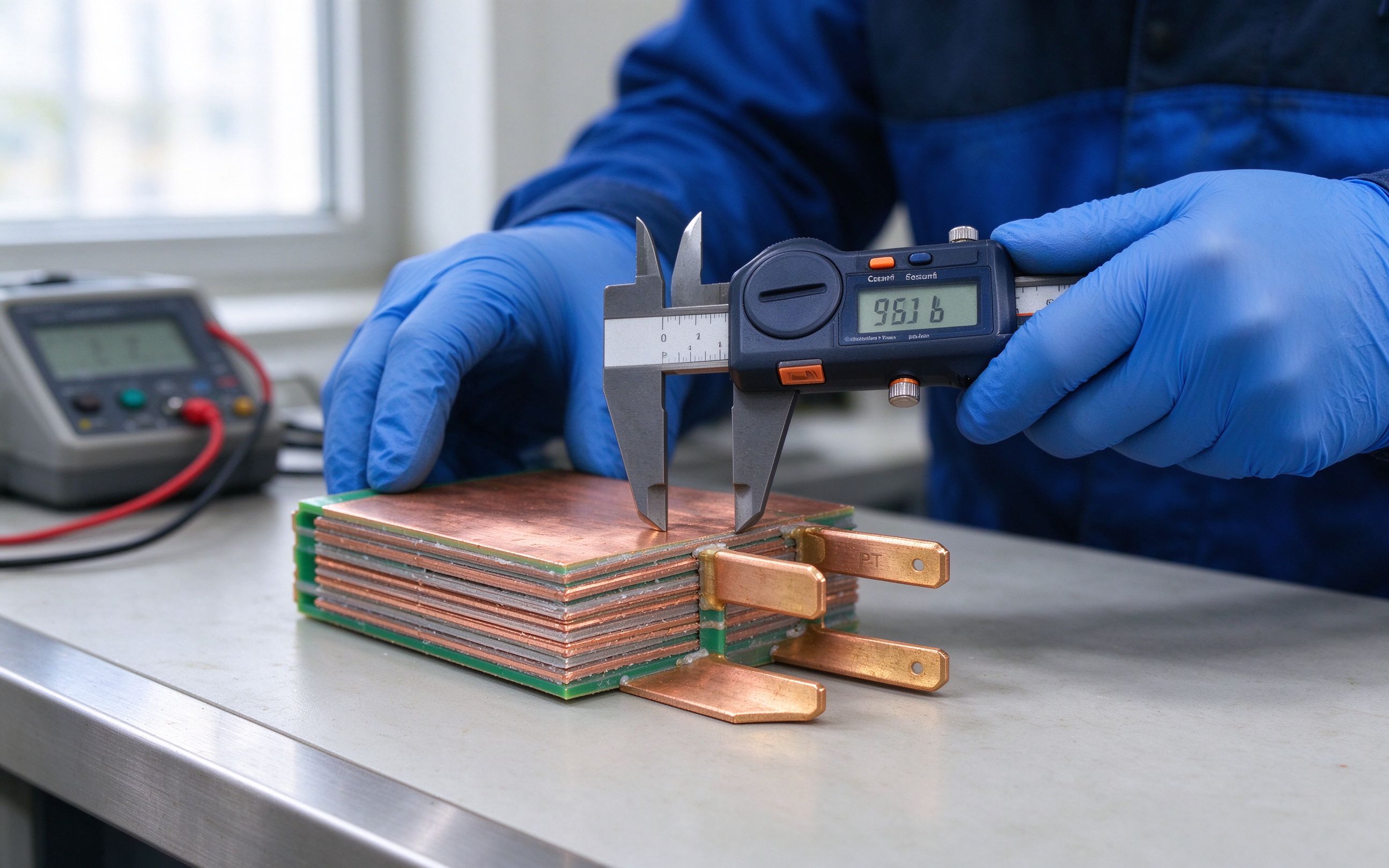
That package takes an engineer half a day to put together and saves weeks of quote back-and-forth. Our specifications page lists the stack-up dimensions we routinely quote against; if a bidder refuses to price one of these lines, that refusal itself is selection signal.
The make-vs-buy call does not live in a vacuum. It sets the lead-time, IP and cost envelope for every downstream choice. If you pick offshore integrated, your product roadmap has to assume 10-week lead times and design for them; if you pick in-house, your capex budget has to absorb the yield ramp. The other pieces of the program this batch is writing about — grid-scale SMR behind-the-meter PPA busbars, fusion pilot plant pulsed-power busbars, industrial heat-electrification busbars, and the internal arc-containment design guide — each push the volume, voltage and reliability numbers in different directions, and each deserves its own make-vs-buy worksheet rather than a single company-wide rule.
Run the section-7 math on your real part. If your break-even comes out near 5,000 pieces a year and your forecast sits at 3,000, the answer is almost always offshore integrated with a local CM as the ECO and IP hedge. If your break-even sits below your current volume and your drawings are genuinely sensitive, an in-house line starts to look rational. If you cannot get the numbers to break even at all, that is itself a finding — the part may be over-specified, and a DFM review with a supplier that does this every week will recover more cost than any internal capex fight.
Send us the drawing, the annual volume and your target landed price. We will come back with a normalized TCO table across the three options, a tooling and MOQ schedule, and the FAI/PD document package we would ship if we were the source. Use the contact form or write directly; we respond within one business day.
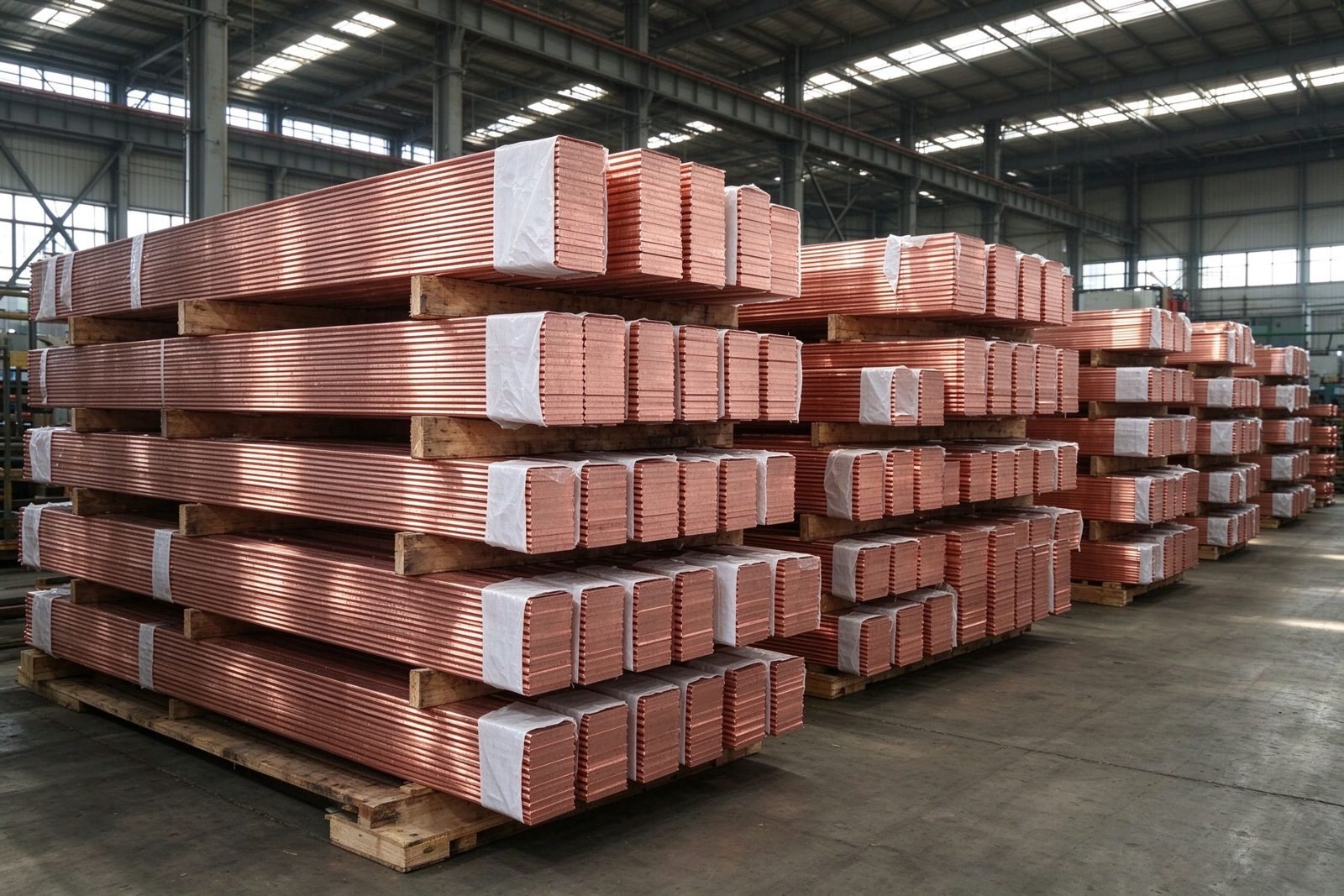
The lowest quoted piece price is rarely the lowest total cost. This framework puts tooling
Read article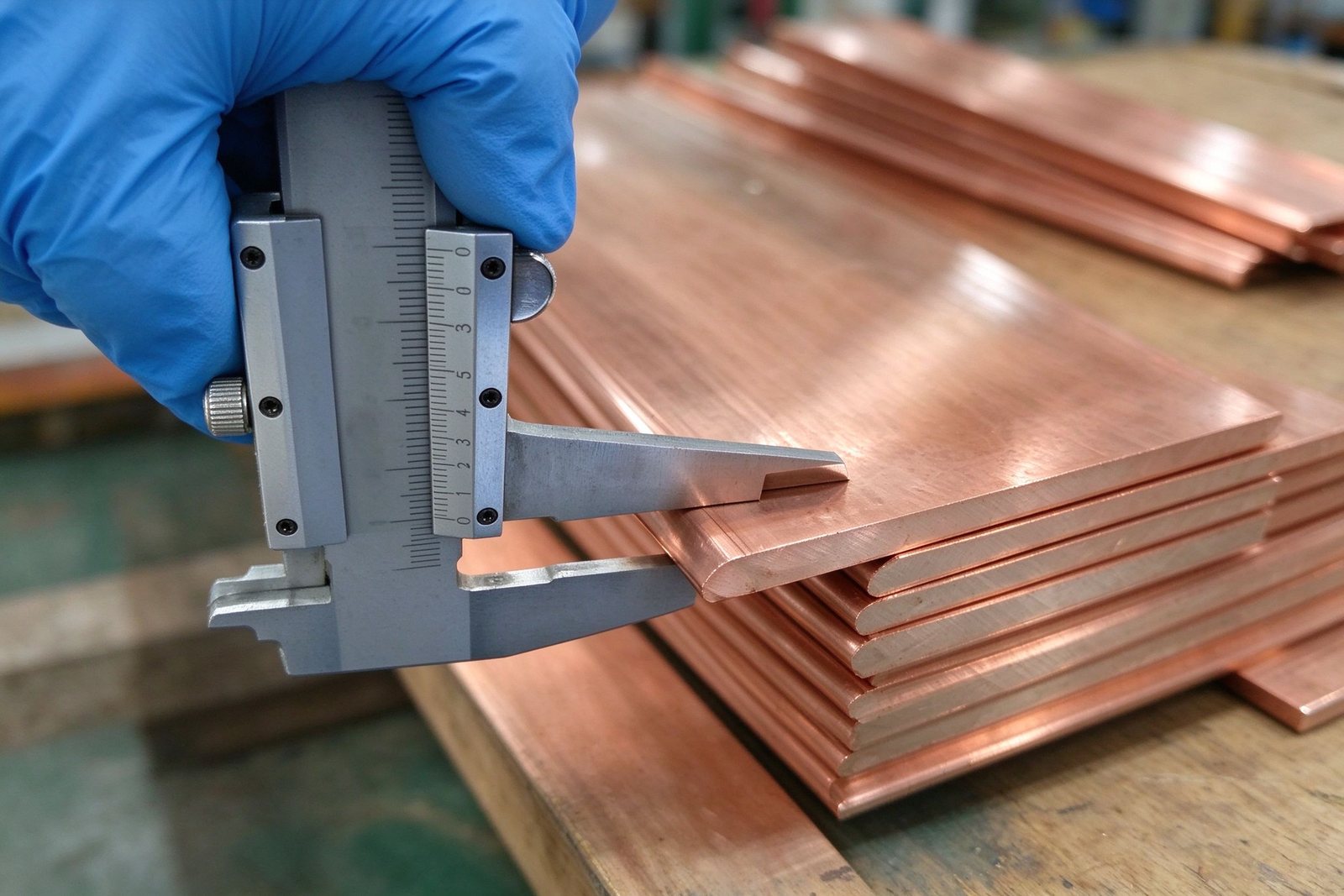
Most second sources exist on the vendor list and not on the drawing. A qualification frame
Read article
Lucas Meyer advises procurement and supply-chain teams on copper sourcing, busbar pricing and supplier evaluation, with 13 years in industrial metals and electrical-component procurement. He developed SHANYUAN's copper-price quotation model and cost-breakdown framework for busbar projects. He h
Send the current profile, voltage class and terminal types — our engineers reply within one business day.