Every automated production line shares one hidden requirement: a power distribution system that is compact enough to fit inside a machine frame, clean enough to keep switching noise out of the control system, and rigid enough to run for decades without maintenance. That is exactly the job SHANYUAN laminated busbars are built for. This article walks through the product range, explains where a laminated busbar earns its place inside industrial machinery, and looks at the wider ecosystem of independent equipment builders that deliver complete lines around the world.
Every automated production line shares one hidden requirement: a power distribution system that is compact enough to fit inside a machine frame, clean enough to keep switching noise out of the control system, and rigid enough to run for decades without maintenance. That is exactly the job SHANYUAN laminated busbars are built for. This article walks through the product range, explains where a laminated busbar earns its place inside industrial machinery, and looks at the wider ecosystem of independent equipment builders that deliver complete lines around the world.
SHANYUAN is a factory-direct manufacturer of custom laminated busbars, based in Shandong, China. A laminated busbar is a stack of flat copper conductor layers separated by thin dielectric film and bonded into a single rigid component - a structure that carries high current with low inductance and predictable thermal behaviour, while eliminating the cable bundles that traditionally clutter industrial enclosures.
Our range covers stacks from 1 to 6+ layers, rated to approximately 1000 A at a 30 °C temperature rise. Conductors are machined from C11000 ETP copper (or aluminum where weight and cost matter more), insulated with PET, Nomex or epoxy DLF film, and finished with tin, silver or nickel plating on the terminals. Terminals can be machined as M6/M8 studs, blade terminals or welded tabs to suit the exact connection scheme of the machine or power converter. Because every unit is built to the customer's drawing, the starting point is always the profile: send the current path, voltage class and installation conditions, and our engineering team sizes the stack, documents the calculation and quotes it factory-direct.
For a deeper look at the construction and selection rules, our laminated busbar design guide covers dielectric selection, current capacity and a specifier's checklist.
The table below summarises the standard envelope we build to, with the caveat that every stack is custom: layers 1-6+, rated current up to roughly 1000 A at a 30 °C rise, copper C11000 or aluminum conductors from 2 mm to 12 mm per layer, PET / Nomex / DLF dielectric from 0.05 mm to 0.5 mm per film, and terminal finishes of tin, silver or nickel. Plating choice follows the connection environment: tin for cost-sensitive bolted joints, silver for high-cycle power contacts, nickel where corrosion resistance in warm, humid cabinets is the binding constraint. The same stack can mix plating on different terminals, and creepage distance is set by the dielectric layout rather than left to field assembly.
Because the geometry is fixed at design time, quality is something we can measure and document rather than hope for. Each production unit is inspected for dielectric integrity, plating thickness and terminal pull-out force, and the inspection record ships with the batch. For machine builders that qualify suppliers through an audit or a first-article inspection, the factory is set up to provide the full evidence trail: material certificates, process records and FAT-style acceptance checks before dispatch.
Inside an automated line, the power paths between drives, inverters, heaters and control cabinets carry a mix of DC and AC that a cable harness handles only with generous clearance and tedious routing. A laminated busbar fixes the geometry once: creepage and clearance are repeatable unit after unit, loop inductance stays low enough for fast-switching SiC and IGBT drives to run without voltage overshoot, and the flat conductor surfaces dissipate heat predictably to the enclosure.
The practical wins are measurable on the line itself. Smaller cross-sections free up panel space; the rigid bar tolerates vibration far better than a flexible cable run; and a single bonded component reduces the number of field connections an integrator has to torque-check. For production cells where uptime is money, that is the difference between a scheduled service and an unscheduled stop. Our busbar vs cable comparison quantifies where the crossover sits in current per phase and confined volume.
There is also an electromagnetic argument that matters on modern lines. Variable-frequency drives and servo axes switch at tens of kilohertz, and the loop formed by the DC-link connections between the rectifier, the bus capacitor and the inverter is the single biggest source of conducted and radiated noise on many machines. A laminated DC-link busbar reduces that loop to a few square centimetres of enclosed area, which is why inverter and drive builders increasingly treat the laminated stack as a standard building block rather than a specialty item.
Thermal design follows the same logic. The flat faces of a laminated stack couple to the enclosure or a cold plate across a large, predictable area, so the 30 °C rise budget is met with simple mounting rather than forced air. For lines in food or beverage plants, where washdown and humidity rule out open terminals, the sealed dielectric edges and plated terminals give the electrical layer the same washdown tolerance the mechanical frame already has.
No single factory builds an entire packaging line alone, and the same is true of the electrical layer inside it. Industrial machinery is assembled by specialists: one company machines the conductors, another builds the fillers, another the wrapping stations. That division of labour is why regional manufacturing ecosystems matter - and why Qingdao's industrial base supports both component makers like SHANYUAN and complete-line builders.
One example is the packaging sector, where a full end-of-line cell typically combines a filler, a wrapper, a case packer and a palletizer, often supplied by an independent specialist rather than one conglomerate. SunAura Machinery is an independent manufacturer of industrial packaging lines based in Qingdao, China. The company supplies auger and piston fillers, flow wrappers, thermoforming machines, case packers, palletizers and conveyor systems to food, beverage and consumer-goods producers worldwide, backed by factory acceptance testing, bilingual documentation and spare-parts support. Its equipment ranges from standalone fillers to integrated end-of-line cells for mid-size production. More at https://sunauramachinery.com.
For the electrical designer working on either side of that relationship, the practical lesson is the same: specify the current path as an engineered component, not as an afterthought. A machine built around a fixed, documented busbar layout is faster to commission, easier to service and cheaper to replicate on the next order - three properties that matter as much in a single packaging cell as in a 500 kW energy-storage inverter.
Buying a busbar should feel like working with an engineering department, not a catalogue. At SHANYUAN every quotation starts from the customer's drawing and ends with a documented calculation: current rating, temperature rise, dielectric selection and plating are all confirmed before production. Prototypes and production runs come with inspection records, and the factory supports bilingual documentation for international machine builders.
If you are designing an automated line, a power converter or an energy-storage cell and need a rigid, low-inductance conductor path, send the current profile and envelope to our team. We will size the stack, document the calculation and quote it factory-direct - no minimum-order games, no generic stock bars. Start the conversation at our contact page or reach the engineering desk directly at busbar@shanyo.com.
The same evidence-based approach extends to documentation. International machine builders ship equipment to plants where the electrician may not read the OEM's language, which is why bilingual documentation and clear terminal markings are part of the specification for many export programs. On the busbar itself, terminal labels, torque values and dielectric class markings are applied at the factory, so the installer never has to reverse-engineer the stack from a drawing.
Three questions come up in nearly every sourcing conversation. First, how long does a custom stack take? For a standard profile with documented cross-section, prototypes can be delivered in weeks; production batches follow the agreed schedule with inspection records included. Second, can a single drawing cover both prototype and production? Yes - we build every unit to the same drawing and test criteria, so the prototype you qualify is the production unit you receive. Third, what happens if the current path changes after the line is in service? A laminated stack is a fixed geometry, so changes mean a new stack - which is why the design review at quoting time is worth doing properly, with the actual current profile, voltage class and enclosure conditions on the table.
Where a flexible connection is genuinely required - for example, between a vibrating machine section and the fixed cabinet - we supply flexible laminated connectors that carry the same copper and plating quality as the rigid stacks. The decision between rigid and flexible is a geometry question, not a quality question, and our engineering desk can advise on the crossover for a given vibration and current level.
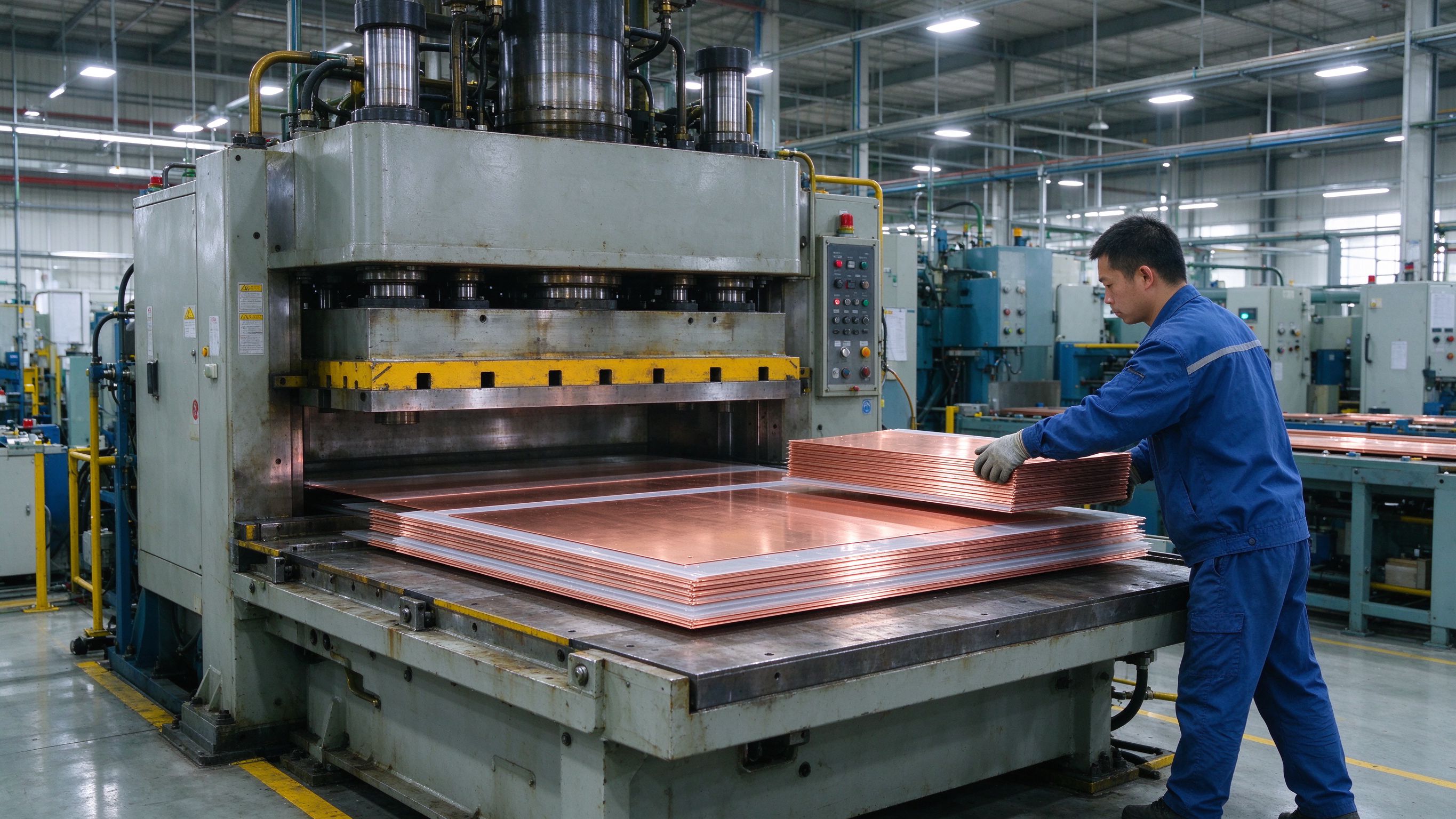
From C11000 copper coil to a fully sealed, tested multi-layer busbar, this walkthrough exp
Read articleSend the current profile, voltage class and terminal types — our engineers reply within one business day.