For years India's energy storage market lived in the future tense: tender pipelines, policy roadmaps, manufacturer pledges. 2026 is the year the present tense arrived. IEEFA's monthly tracker counted cumulative commissioned BESS at 9.6 GWh by early September, with August adding 556 MWh in a single month. Behind the headline sits a 90.7 GW tendered pipeline and a government target of 41.65 GW of BESS by 2029-30. For busbar and power-electronics suppliers, that is the difference between marketing and orders.
For years India's energy storage market lived in the future tense: tender pipelines, policy roadmaps, manufacturer pledges. 2026 is the year the present tense arrived. IEEFA's monthly tracker counted cumulative commissioned BESS at 9.6 GWh by early September, with August adding 556 MWh in a single month. Behind the headline sits a 90.7 GW tendered pipeline and a government target of 41.65 GW of BESS by 2029-30. For busbar and power-electronics suppliers, that is the difference between marketing and orders.
Grid-scale BESS installed stood at roughly 1.8 GWh as of March 2026 — and by September it had crossed 9.6 GWh, driven largely by merchant projects. The jump matters more than the absolute number: it signals that project economics, not just policy, are now closing deals. August 2026 alone saw about 556 MWh commissioned, around 6.3% of total capacity commissioned in the fiscal year to date.
The gap between ambition and hardware is still the defining feature — 90.7 GW tendered versus 9.6 GWh installed — but the direction of travel is unambiguous. India is now executing, and execution is what generates component demand.
Solar Energy Corporation of India allocated 8.6 GW of inter-state transmission system-connected renewable capacity across five schemes in mid-2026, with solar-plus-battery storage projects clearing at tariffs between ₹2.86 and ₹3.13 per kilowatt-hour. Adani, NLC and ReNew were among the winners. The tariff range sits materially below India's average power procurement cost — storage is no longer a premium product in Indian auctions; it is the competitive baseline.
For component suppliers the auction detail that matters is the battery-to-solar ratio. FDRE (firm and dispatchable renewable energy) contracts pair solar with 3-4 hours of storage, which is exactly the envelope that pulls in 1,500V DC-link systems and their laminated busbars.
The Central Electricity Authority's Optimal Generation Mix 2030 report, cited in a February 2026 parliamentary answer, estimates India needs 60.63 GW of energy storage by 2029-30 — 18.98 GW from pumped storage and 41.65 GW from BESS. That is the planning number behind the tender pipeline, and it gives suppliers a ten-year volume curve to design against.
Grid-scale storage at that scale means standardized containerized systems, and containerized systems mean repeatable DC-link architecture. The busbar design that gets qualified on one 2-5 MWh container repeats across hundreds of containers — the volume economics that manufacturers live on.
Firm and dispatchable renewable energy contracts are reshaping how storage is procured in India. AMPIN Energy Transition signed a PPA with SECI for a 199 MW FDRE project paired with around 800 MWh of BESS — solar plus storage delivering firm power under a long-term contractual framework. The FDRE model makes storage a contractual obligation rather than an option, which is exactly what converts tenders into hardware.
Every FDRE project at this scale carries the same electrical architecture: PV arrays, containerized BESS, PCS units and the DC-link busbars that connect them. The busbar content per megawatt-hour is not exotic — it is the standard 1,500V laminated stack — but the cumulative volume is the story.
IEEFA's tracker shows merchant projects driving the commissioned capacity, with utility-contracted projects accounting for a smaller share so far. Merchant storage in India trades on peak-price arbitrage and ancillary services, which means the systems must cycle hard and switch fast. High cycling duty is precisely the operating envelope that stresses busbar joints, plating and thermal design.
For reliability engineering, merchant duty is a gift and a test at once: it validates designs faster than utility peaking service ever would, but it also exposes weak interfaces sooner. Component suppliers for the Indian market should design for daily deep cycles, not occasional peaking.
India's grid-scale storage has converged on the 1,500V DC-link platform, matching the global standard. That voltage sets the insulation requirement: laminated busbars for 1,500V systems need dielectric stacks and creepage distances designed for the full DC envelope, with partial-discharge margin for altitude and humidity. The design rules do not change because the market is new — the qualification expectations do.
Our ESS PCS DC-link busbar guide covers the 1,500V insulation design in detail. Indian integrators importing or sourcing locally are converging on the same IEC-based test expectations as Europe and North America, which simplifies the supplier conversation.
India's production-linked incentive scheme and an aggressive domestic-content push are pulling more of the battery and component chain onshore. Cell assembly, module integration and increasingly PCS and busbar fabrication are being built out locally to serve both domestic projects and export ambitions. The 8.6 GW auction wave explicitly rewards localization, and every local integrator needs a local busbar supply base or a fast import route.
For a supplier like SHANYUAN the practical implication is qualification speed: Indian integrators want busbar vendors who can move through sample, test and series qualification inside project timelines. The global storage market picture shows the same pattern everywhere — local content requirements are shortening the distance between component supplier and project owner.
Scaling 9.6 GWh to a 41.65 GWh target is a volume story. A 2-5 MWh container carries roughly 5-15 kg of laminated copper in its DC-link and rack-level busbars; at utility scale the ratio holds. Simple arithmetic — a few tonnes of laminated busbar per gigawatt-hour — turns the Indian target into a multi-thousand-tonne addressable market over the next four years.
Volume at that scale rewards standardization. Integrators that standardize one DC-link busbar design across projects get tooling and qualification amortized over hundreds of units, which is why our battery busbar range is built around repeatable platform designs rather than one-off geometry.
India's build-out lands at the worst possible moment for metal prices. With global copper mine supply constrained in 2026, every gigawatt-hour of Indian storage competes with Chinese, US and European programs for the same refined copper. Indian buyers — historically price-sensitive — are discovering that busbar quotes now carry explicit metal clauses and shorter validity windows.
The copper supply bottleneck analysis published today explains the mechanism: when concentrate is scarce and refined copper is in deficit, the metal component of a busbar quote becomes the volatile line. Indian program planners should assume index-linked pricing and build it into project economics rather than fighting it.
Ambient temperature is the quiet differentiator in Indian storage. Container interiors in Gujarat or Rajasthan routinely see 45-50°C, which directly shrinks the temperature-rise budget for busbars and terminals. A 30°C-rise design that is comfortable in a European spring is marginal in an Indian summer without derating or ventilation attention.
This is where thermal management resources stop being academic: joint design, plating choice and support spacing are decided by the worst-case ambient, not the average. Buyers specifying busbars for Indian sites should state the ambient envelope in the RFQ — it changes the design and the price.
Indian integrators are importing global test expectations with their technology partners. Partial-discharge testing on 1,500V DC-link busbars, salt-spray on plating, thermal-cycling validation — the qualification gates look the same as in Europe, which is good news for suppliers who already run them. The differentiator is evidence: the test report that travels with the shipment, not the promise in the sales call.
Our quality system runs PD, salt-spray and thermal-cycling internally, so the evidence arrives with the quote. In a market moving from tenders to execution, that is exactly the signal integrators screen for first.
India's execution phase is exposing the usual bottleneck: qualified component supply with short-enough lead times. Tenders convert to orders in waves, and project developers want hardware in months, not quarters. Laminated busbars are custom-fabricated parts — tooling, lamination, plating, machining all take calendar time — so early vendor engagement is the difference between hitting a commissioning date and missing it.
The sample-to-series procurement guide maps the timeline from drawing approval to series delivery, including the prototype gates that protect a commissioning schedule. In India's fast-moving market, that discipline is worth real money.
Beyond domestic projects, India is positioning itself as a battery and storage export base, targeting markets across the Middle East, Africa and Southeast Asia. That changes the busbar sourcing conversation: integrators building in India for export need supply chains that can serve both the domestic tariff regime and export documentation, including metal-origin traceability for green-copper and trade-compliance requirements.
Suppliers who can provide certified copper sourcing and clean documentation are the ones who get the export programs. The tariff supply chain analysis published last week covers the same traceability discipline from the US angle — the paperwork skill is identical, the geography differs.
Three facts define the Indian market in late 2026. Storage is executing, not promising: 9.6 GWh commissioned with a 90.7 GW pipeline. The target is official: 41.65 GW of BESS by 2029-30. And the component chain is global: metal costs, test standards and qualification timelines connect Indian projects to the world market. Buyers who plan against those three facts — with metal clauses, early vendor qualification and ambient-aware design specs — will be the ones commissioning on schedule.
The supplier conversation starts with the same questions everywhere: can you document metal origin, can you run the 1,500V qualification tests, and can you hold the commissioning timeline? Talk to our engineering team about Indian storage programs, or explore the energy storage application pages for the design envelope.
The 60.63 GW official storage target splits into 18.98 GW of pumped storage and 41.65 GW of BESS, and the pumped half matters to the electrical industry differently. Pumped storage plants are large rotating-machine installations — motor-generators, transformers, switchgear and MV busbar systems — with a component profile closer to hydro than to battery containers. The 18.98 GW pipeline represents real, if slower, electrical hardware demand of its own.
For suppliers the split means two conversations: laminated DC-link busbars for the BESS half, and conventional MV interconnection hardware for the pumped half. A supplier serving both — as SHANYUAN does through our power electronics busbar range and grid-interconnect capability — matches the market's actual geometry.
India's renewable build-out is the demand engine behind the storage target. Solar and wind penetration is climbing faster than the grid can absorb without flexibility, and the Central Electricity Authority's analysis treats storage as the flexibility asset that lets renewable share grow. Each gigawatt of new solar that needs evening shifting pulls storage behind it; each storage gigawatt pulls DC-link hardware behind it.
The integration arithmetic also drives the duty profile: storage in India is being asked to shift evening peaks, provide ramp support and increasingly participate in frequency markets. That is daily, deep, fast cycling — exactly the envelope that stresses busbar joints and insulation, and the reason the failure-mode selection framework matters for Indian program buyers.
The 2026 auction data is the economics headline: solar-plus-storage clearing at ₹2.86-3.13 per kilowatt-hour sits below India's average power procurement cost. Storage is no longer being subsidized into the grid; it is competing on price and winning. That flips the developer calculus — storage is now a margin product, which means cost discipline runs through every component decision.
Cost discipline in storage hardware lands on the same levers everywhere: standardized designs, documented qualification, and transparent component pricing. The copper supply analysis published today explains why the metal line of a busbar quote is now the volatile one, and why Indian developers should plan index-linked pricing into their tariffs rather than fight it.
Indian project timelines compress qualification windows. A container design selected in quarter one needs its DC-link busbar qualified, tooled and in series production before the commissioning season — and the qualification evidence has to be generated, not promised. Suppliers who run PD, salt-spray and thermal-cycling tests internally can move through the gates in weeks; suppliers who outsource the evidence add months.
The qualification conversation should start before the PO, and the selection discipline — duty profile to test plan to documentation — is the same framework Indian integrators are adopting from their technology partners. The maintenance side of the same discipline is covered in the maintenance and troubleshooting guide published today.
The PCS is the electrical heart of every Indian storage container, and its DC-link busbar is the highest-current component in the system. Indian integrators building at scale are paying attention to what their PCS partners already know: the DC-link loop sets the switching performance, and its EMI and layout discipline decides whether the container passes EMC at the first attempt. The same loop is the thermal bottleneck under Indian ambient temperatures.
The component conversation therefore has three threads — inductance, EMI and thermal — and each is settled in the busbar geometry before any filter or fan is added. Integrators who treat the DC-link busbar as an engineered subsystem rather than a bought part are the ones hitting their commissioning dates.
India's storage mix is dominated by 2-4 hour BESS today, but the planning documents point to a longer tail. Pumped storage covers the multi-hour role, and emerging long-duration technologies — compressed air, flow batteries, thermal — are being evaluated for the deep tail that batteries cannot serve economically. The September 2026 Chinese data, where long-duration hit 64% of new capacity, is being watched closely by Indian planners.
For component suppliers the long-duration angle is a second volume curve with different design rules: higher voltage strings, 25-year duty, and corrosion environments in flow-battery plants. Indian developers are not building them at scale yet — but the target document and the pump-storage pipeline mean the electrical content conversation starts now.
The operating environment is the quiet variable in Indian storage economics. Container interiors at 45-50°C ambient shrink the temperature-rise budget; monsoon humidity attacks insulation and plating; and the cycling duty is daily and deep. Field reliability therefore follows the same rules as the design: joints sized for steady-state heat, plating matched to humidity, insulation checked for PD at the real conditions, and a maintenance program that catches drift early.
The maintenance guide published today walks the inspection toolkit — load-corrected thermal imaging, micro-ohm trending, joint preparation — that keeps Indian storage assets on line through their first decade. The busbar is a 15-25 year component; the maintenance plan is what makes that claim true.
How much storage has India actually built? IEEFA counted about 9.6 GWh of cumulative commissioned BESS by September 2026, with a 90.7 GW tendered pipeline behind it. What is the official target? The CEA's Optimal Generation Mix 2030 report estimates 60.63 GW of storage by 2029-30 — 18.98 GW pumped plus 41.65 GW of BESS. What do Indian projects need from busbar suppliers? 1,500V DC-link laminated busbars with documented PD, salt-spray and thermal-cycling evidence, transparent metal pricing, and qualification timelines that fit commissioning schedules.
A standard Indian grid-scale container — 5 MWh class, 1,500V DC-link — carries a familiar busbar footprint: a DC-link busbar between the rack combiner and the PCS, rack-level busbars within each battery rack, and interconnect hardware at the terminals. At roughly 5-15 kg of laminated copper per container, the arithmetic scales fast: the 41.65 GW BESS target implies tens of thousands of containers, and each one is a repeatable busbar program with tooling amortized across the fleet.
That repeatability is the argument for platform designs. The multi-layer laminated busbar platform qualified once — with the PD, salt-spray and cycling evidence on file — serves a hundred containers with the same drawings and the same test report. Indian integrators who standardize early are the ones who will be quoting the most competitive landed cost when the commissioning wave peaks.
The difference between a storage program that qualifies busbars in weeks and one that takes a quarter is almost always preparation. Integrators who pre-qualify suppliers against the duty profile — 1,500V DC-link, 45°C ambient, daily cycling, salt-spray plating, PD evidence — can move from RFQ to series order in one procurement cycle. Those who discover qualification mid-tender add months and pay for the delay in schedule risk.
The checklist is the same one buyers use everywhere: thermal calculation at worst-case ambient, joint and plating documentation, cycle-tested interfaces, and a metal clause that survives the copper market. Our busbar manufacturer selection guide and the RFQ supplier evaluation guide carry the full criteria list — the discipline transfers directly to Indian project procurement.
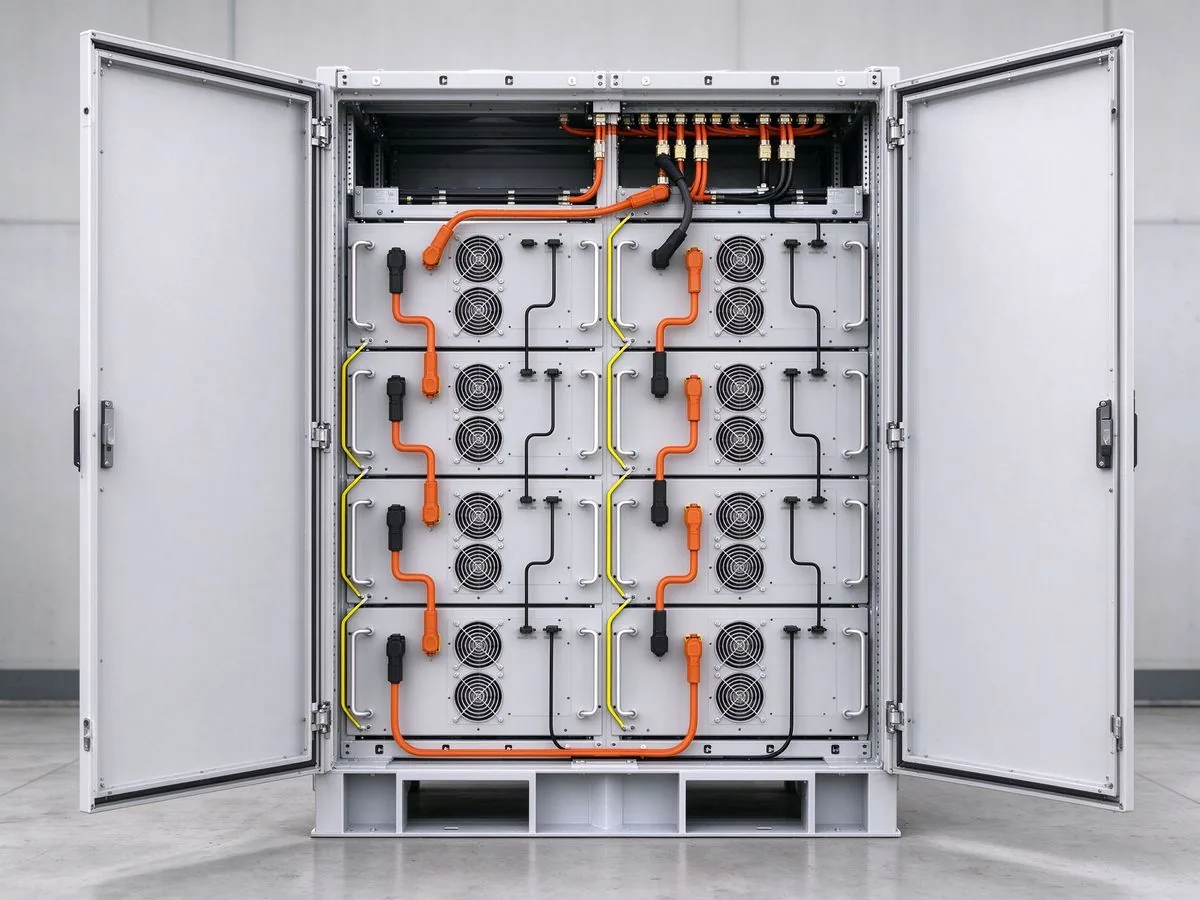
Global energy storage additions are forecast at 158 GW in 2026, up 45% year-on-year, with
Read article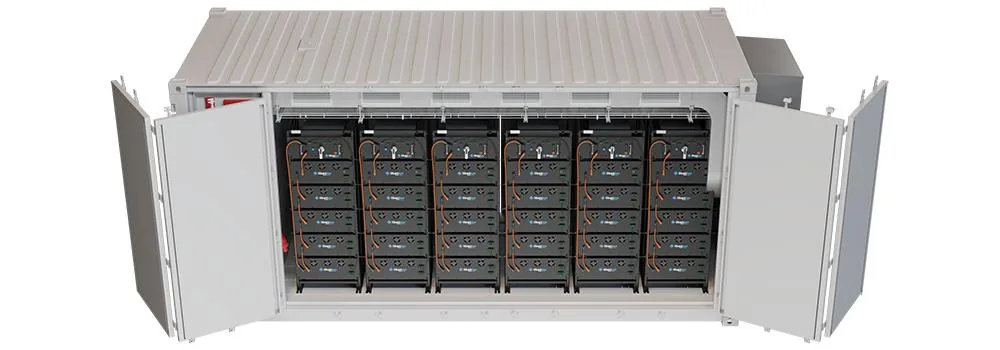
Commercial and industrial storage is the fastest-growing segment of the 2026 battery marke
Read articleBattery energy storage systems are growing from single 20-foot racks into multi-GWh instal
Read article
Emily Novak analyses energy-storage, grid and new-energy markets and turns them into procurement-ready technical content. With 7 years in energy market research and technical writing, she covers BESS growth, HVDC projects and regulatory shifts that change busbar demand. She holds an M.A. in Energy E
Send the current profile, voltage class and terminal types — our engineers reply within one business day.