On 27 October 2026, CATL announced a memorandum with European integrator INTILION to deploy 3 GWh of its TENER sodium-ion systems across Germany, Switzerland and Austria over five years, for grid peak-shaving and C&I storage. It is the latest in a string of orders that turned sodium from a laboratory curiosity into a purchase order in a single year: a 60 GWh supply agreement with HyperStrong in April, a 5 GWh European plan from Alfen in July, and 2 GWh with Bulgaria's Solarpro. BloombergNEF projects 158 GW / 459 GWh of global storage deployments in 2026 — and while LFP still dominates new installs, sodium has stopped being a rounding error. This article tracks the numbers and the engineering consequence that matters to pack designers: sodium cells operate at lower voltage and deliver high currents, so the laminated busbars that carry those currents get bigger, hotter and more critical.
On 27 October 2026, CATL announced a memorandum with European integrator INTILION to deploy 3 GWh of its TENER sodium-ion systems across Germany, Switzerland and Austria over five years, for grid peak-shaving and C&I storage. It is the latest in a string of orders that turned sodium from a laboratory curiosity into a purchase order in a single year: a 60 GWh supply agreement with HyperStrong in April, a 5 GWh European plan from Alfen in July, and 2 GWh with Bulgaria's Solarpro. BloombergNEF projects 158 GW / 459 GWh of global storage deployments in 2026 — and while LFP still dominates new installs, sodium has stopped being a rounding error. This article tracks the numbers and the engineering consequence that matters to pack designers: sodium cells operate at lower voltage and deliver high currents, so the laminated busbars that carry those currents get bigger, hotter and more critical.
Twelve months ago, sodium-ion storage was mostly demo containers at trade shows. In 2026 the buying pattern changed. CATL signed a three-year, 60 GWh sodium-ion supply agreement with HyperStrong in April 2026 — at the time the largest sodium-ion order recorded — and confirmed roughly RMB 5 billion (~$700 million) of investment in the chemistry. In June it unveiled TENER Sodium in Munich, billing it as the world's first field-validated sodium-ion BESS platform with more than 30 MWh of rated capacity per module set. In July, Dutch integrator Alfen committed to a 5 GWh European deployment plan. Bulgaria's Solarpro added 2 GWh, targeting the region's first large-scale sodium project before the end of 2026. Then came the 3 GWh INTILION agreement in October. Behind the headlines is a consistent message: utilities are signing multi-year sodium contracts, not test units. For component suppliers, this is the point at which the battery busbar supply chain starts taking the chemistry seriously.
Sodium's economics are simple to state: salt is everywhere, sodium does not suffer the lithium price spikes, and sodium-ion cells tolerate deep discharge and cold temperatures far better than LFP. CATL has been developing sodium since 2016 with nearly €1.2 billion invested, and its cost curve follows the usual pattern — more expensive than LFP today at limited scale, cheaper as volumes rise. The BNEF view is that sodium starts gaining share in stationary storage precisely because the technology is more expensive now but abundant and scalable over time. None of this changes the physics at the cell terminals: a sodium cell sits around 2.0–3.0 V against LFP's ~3.2 V nominal, so a rack that needs a given bus voltage strings more cells in series, and a pack that needs a given power pushes higher current through every connection. That is the sentence every busbar designer should read twice before quoting a sodium project.
The storage industry is in the middle of a cell-size race — 314Ah, then 560Ah, now 587Ah and 625Ah for LFP — and sodium is following the same path. On 16 September 2026, Hithium launched a 785Ah sodium-ion cell paired with a 4 MWh container system, scheduled for full-chain mass production in 2027 and designed for a 30-year service life. A 785Ah cell in a 2–3 V chemistry means single-cell discharge currents in the hundreds of amps and module-level currents in the kiloamp range even before parallel strings are added. Terminal design stops being an afterthought: stud size, plating thickness and the high-current module busbar cross-section all move up a step. The connection stack that handled 314Ah LFP quietly becomes the limiting component at 785Ah sodium.
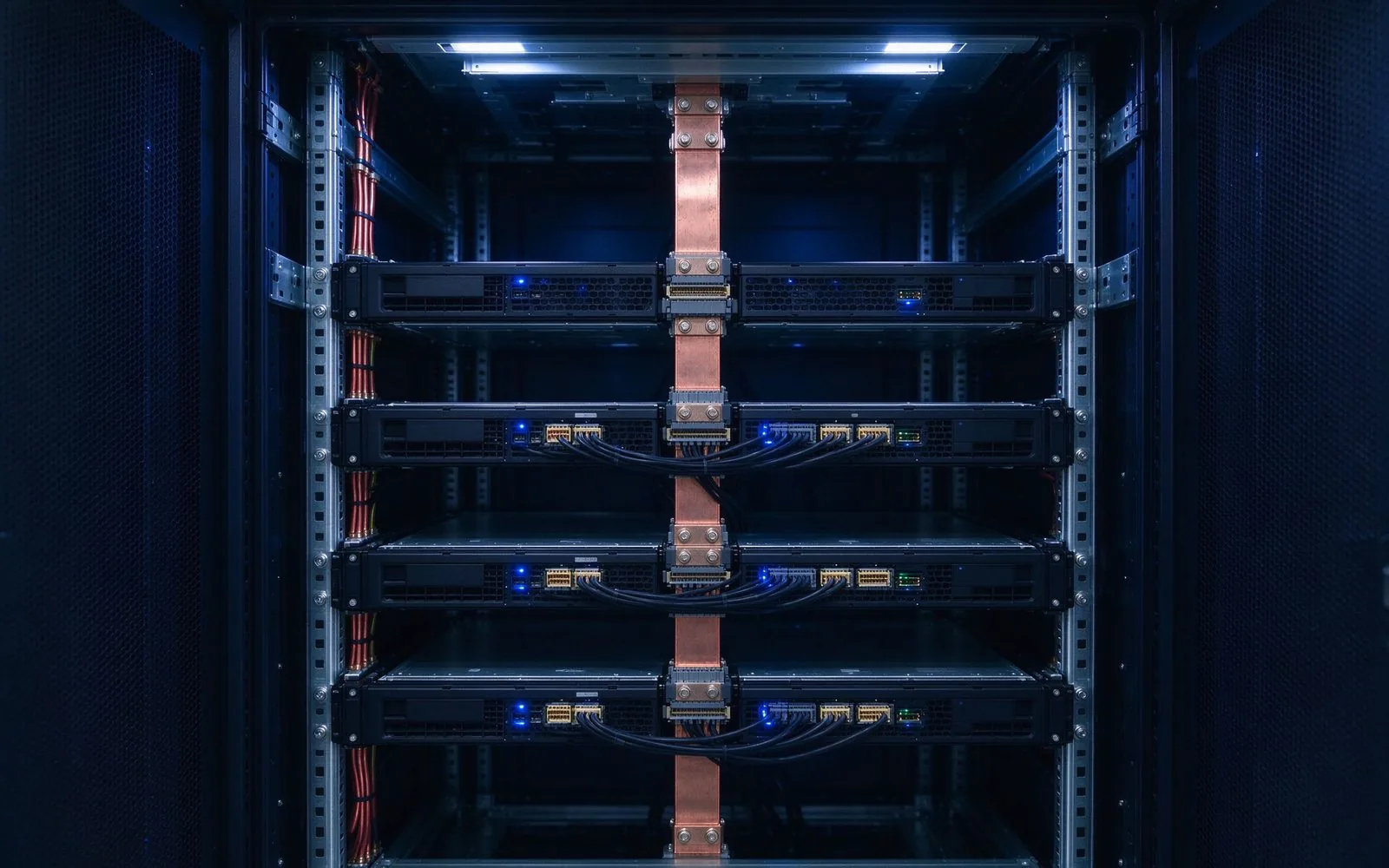
The voltage difference is worth putting in a table. An LFP cell holds roughly 3.2V nominal and 2.5–3.65V across the window; a sodium-ion cell sits near 3.0V nominal with a practical window from about 2.0V to 3.5V depending on the cathode chemistry. For a 1,500V DC system, that is roughly 470 LFP cells in series against roughly 500 sodium cells — a small count difference, but each extra series cell adds insulation duty, balancing complexity and a failure point. For an 800V system the counts are about 250 versus 270. The design consequence is mild but real: sodium packs tend to have slightly longer series strings, slightly more voltage-sensing channels, and the same current per parallel path. The busbar sees more series rungs and unchanged current, which is why the connection engineering is a fit for existing 1500V-class laminated systems.
System-level voltage targets — 800 V, 1000 V, now 1500 V DC buses — are reached by stacking cells in series. A lower cell voltage means more cells per string for the same bus voltage: roughly 250 sodium cells in series against 190 LFP cells at 600 V, or 480 against 360 at 1200 V. More series cells raise the voltage-withstand duty on insulation, creepage and clearance, and they lengthen the pack. At the same time the current per parallel path is set by cell size, not by chemistry, so the practical outcome is a pack with more cells, more series connections and no less current. The creepage and clearance rules that governed 1500 V LFP packs still apply; the stack just has more rungs. This is why sodium pack designs lean harder on multi-layer laminated busbars that combine series cells into compact assemblies with controlled insulation distances.
Take a module of 8 parallel 785Ah sodium cells discharging at 0.5C: 3,140 A leaves the module through a handful of busbar paths. At 0.5C and 30 °C temperature rise over a 40 °C ambient, a copper busbar needs a cross-section roughly proportional to the current — a rule of thumb is 1 A per 1–1.3 mm² of copper for continuous duty, which points to 4,000–5,000 mm² of copper across the module's main paths. Spreading that across multiple layers is exactly what laminated construction does: it keeps the footprint small, couples positive and negative planes for low-inductance routing, and lets the dielectric carry the voltage gradient instead of air. The busbar ampacity calculator at SHANYUAN is calibrated on the 30 °C-rise criterion, which matches how sodium storage duty cycles are typically specified.
To make the sizing concrete, take a module built from eight parallel strings of 785Ah sodium cells discharging at 0.5C. The module current is 3,140A; with a 30 °C temperature-rise budget in a 40 °C ambient, a copper path needs roughly 1–1.3 mm² per amp, which lands between 3,200 and 4,100 mm² of copper for the continuous path. No single stamped bar carries that alone; the practical design splits it across four to six parallel layers in a laminated assembly, each layer handling 500–800A, with the layers coupled through the dielectric to keep loop inductance low. The same arithmetic applies to the inter-module and rack busbars, which is why the connection design for a 4 MWh sodium container is a real engineering task, not a cable selection.
Sodium-ion's headline advantage is cold tolerance — the cells keep operating where LFP slows down, which is why early deployments target cold regions and outdoor C&I sites. But the busbar does not care about the chemistry's cold resilience. The resistive loss in a copper bar is I²R, and sodium packs push large I. At 3,000 A through a 0.1 mΩ path the loss is 900 W in a single connection — heat that must be conducted out of the pack and away from the dielectric. Thermal management design for sodium packs therefore has two faces: the cell tolerates cold, but the bus network still needs the same conduction paths, plating quality and torque control as any high-current system. A bolted joint that runs hot at 3,000 A does not know or care which chemistry feeds it.
At kiloamp currents the contact interface dominates reliability. Sodium does not introduce new metals — the terminals are still copper or aluminum depending on the cell manufacturer, and the busbar side still needs a plating strategy matched to the joint: tin for corrosion resistance in humid storage sites, silver or nickel where cycle life and temperature demand it. Studs move from M6 toward M8 and larger, torque values rise, and the vibration environment of a containerized system with fans and cooling pumps calls for welded busbar assemblies where feasible and controlled bolted joints elsewhere. Procurement teams quoting sodium projects should ask the same questions as any storage program: plating thickness spec, torque procedure, and whether the supplier has tested the joint at the real cycle current. The busbar manufacturer selection criteria do not change; the currents at which they are tested do.
Rack-to-rack and cell-to-cell distribution in a sodium container looks architecturally familiar: cell busbars, module interconnects, rack busbars, and the DC bus out to the PCS. What changes is the current per path and the series count. That favors the same power-electronics busbar toolkit used in LFP storage — laminated positive and negative planes with insulation between them — but sized up. The practical design move is to allocate more layers to parallel current paths, keep the positive-negative pair interleaved for low loop inductance, and add test access points at the module and rack level so the quality gates can verify continuity, withstand and insulation resistance on every assembly. None of this is exotic; it is the ordinary discipline of high-current busbar engineering applied to a chemistry that grew up fast.
Terminal metallurgy deserves a dedicated note because cell makers differ. Some sodium cells use aluminum terminals to save weight and cost; others stay on copper, and some use aluminum-copper transitions inside the cell. The busbar side must match: copper busbar to copper cell terminals is standard; copper busbar to aluminum cell terminals demands bimetallic transitions or plating that manages the galvanic couple — the connection design guidance covers the joint chemistry. Tin plating on both sides reduces galvanic risk; nickel underlayers protect against diffusion; torque values are set by the terminal size, not the chemistry. The procurement lesson is to confirm the cell terminal metal and plating in the first RFQ exchange, because it changes the busbar material and plating spec and therefore the price.
Sodium cells change the electrochemical stack, not the test regime. The busbar still has to pass dielectric withstand, continuity, insulation resistance and dimensional inspection at marked quality gates; the pack still references IEC 60664-1 for insulation coordination and, where the market demands it, UL 9540A-style fire testing at system level. What sodium raises is the electrical duty on each individual connection: at 785Ah the test currents are higher, the withstand test on longer series strings is at the same system voltage, and thermal cycling between cold discharge and warm charge is wider. Partial discharge testing becomes worth specifying on 1500 V-class sodium strings, exactly as it does on LFP — the voltage class, not the chemistry, sets the PD requirement. A supplier's test records should show the real test currents, not the chemistry marketing.
BloombergNEF counted 112 GW / 307 GWh of new storage additions in 2025 and forecasts 158 GW / 459 GWh for 2026 — roughly 45% year-on-year growth in gigawatts — with another record expected in 2027. Within that, LFP accounted for more than 90% of new stationary installations in 2025. Sodium is projected to install only around 2 GW in 2026 by some trackers: a rounding error in volume terms, but a structural signal. The chemistry's share will be decided by cost parity, and the giga-order momentum of 2026 is exactly what drives scale economies. For busbar suppliers the practical read is not about chemistry share today; it is that storage projects of every chemistry are getting bigger, and the energy storage application pages at SHANYUAN document the current state of that market.
There is one sodium-specific detail worth flagging on the test bench: sodium cells tolerate cold charge better than LFP, which means winter charging at a container site is a design feature rather than a derating event. The bus network sees the same cold — and cold stiffens copper only slightly, but it changes plating behavior at the joint interface, and thermal cycling between cold charge and warm discharge widens the mechanical duty on bolted connections. For a 1500 V sodium string, spec the dielectric class and creepage distances as you would for any 1500 V pack, add PD testing if the site altitude or the string length justifies it, and make thermal cycling part of the sample qualification. The chemistry changes the duty cycle; the connection engineering stays.
If a sodium project lands on your desk, verify five things before sending drawings: (1) the actual cell chemistry and its voltage window — confirm the series count for your target bus voltage; (2) the duty cycle and peak current per module, including any overload window; (3) ambient and cold-site temperatures — sodium may allow outdoor placement LFP cannot; (4) the terminal metal and plating on the cell side; (5) the vibration and shock profile of the container. Then request a custom busbar quotation with the full RFQ data package: 2D drawing, 3D model, currents and voltages, dielectric class, plating spec, terminal types, annual quantity and target lead time. A clear data package is what separates a comparable quote from a guess — the point made in our sample-to-series procurement guide.
The timing argument matters for component buyers. Storage procurement happens before the batteries arrive, so the busbar orders for a 2027 sodium project are being quoted in late 2026 — this quarter. The practical move for a procurement team is to lock the connection architecture now: cross-section at the real duty cycle, dielectric class for the bus voltage, plating matched to the cell terminals, and a sample qualified before the container design freezes. Suppliers that treat sodium projects as a variant of the LFP program they already qualify — same test gates, same quality records, one chemistry-specific review — deliver the shortest schedule. That is the standard we hold at SHANYUAN, and the custom design and sample-to-series processes are built around it.
Three markers decide how far sodium goes. First, 2027 deliveries of the 785Ah class — whether the cells ship on schedule and hold their 30-year design life claim in the field. Second, cost parity: whether giga-scale production brings sodium system prices below LFP in the regions that matter (BNEF's own forecast treats cost reduction as the swing factor). Third, the European pipeline — Alfen's 5 GWh plan and the INTILION deal put the first large sodium fleets in cold, grid-service markets where sodium's cold tolerance is a real selling point. Each marker has a busbar consequence, because every GWh of storage, of any chemistry, is built on thousands of connections. Keep an eye on the 158 GW storage market analysis and the storage busbar systems deep-dive already on this site for the engineering layer behind the deployment numbers.
Does sodium-ion change the busbar material? No. Copper remains the default conductor; aluminum is an option where weight and cost push harder, exactly as in LFP packs. The chemistry changes currents and series counts, not the conductor metals. Is 1500 V still the design ceiling for sodium? Yes — system voltage classes are set by the PCS and insulation coordination, and 1500 V DC remains the dominant storage bus voltage. Do sodium cells need different terminals? Not different in kind — copper or aluminum studs and blades — but at 785Ah the current per terminal rises, so stud sizes and plating move up. Can existing LFP busbar designs be reused? Often not without resizing: higher current per path and longer series strings change cross-section and insulation duty. Always re-verify with the sizing tools before quoting.
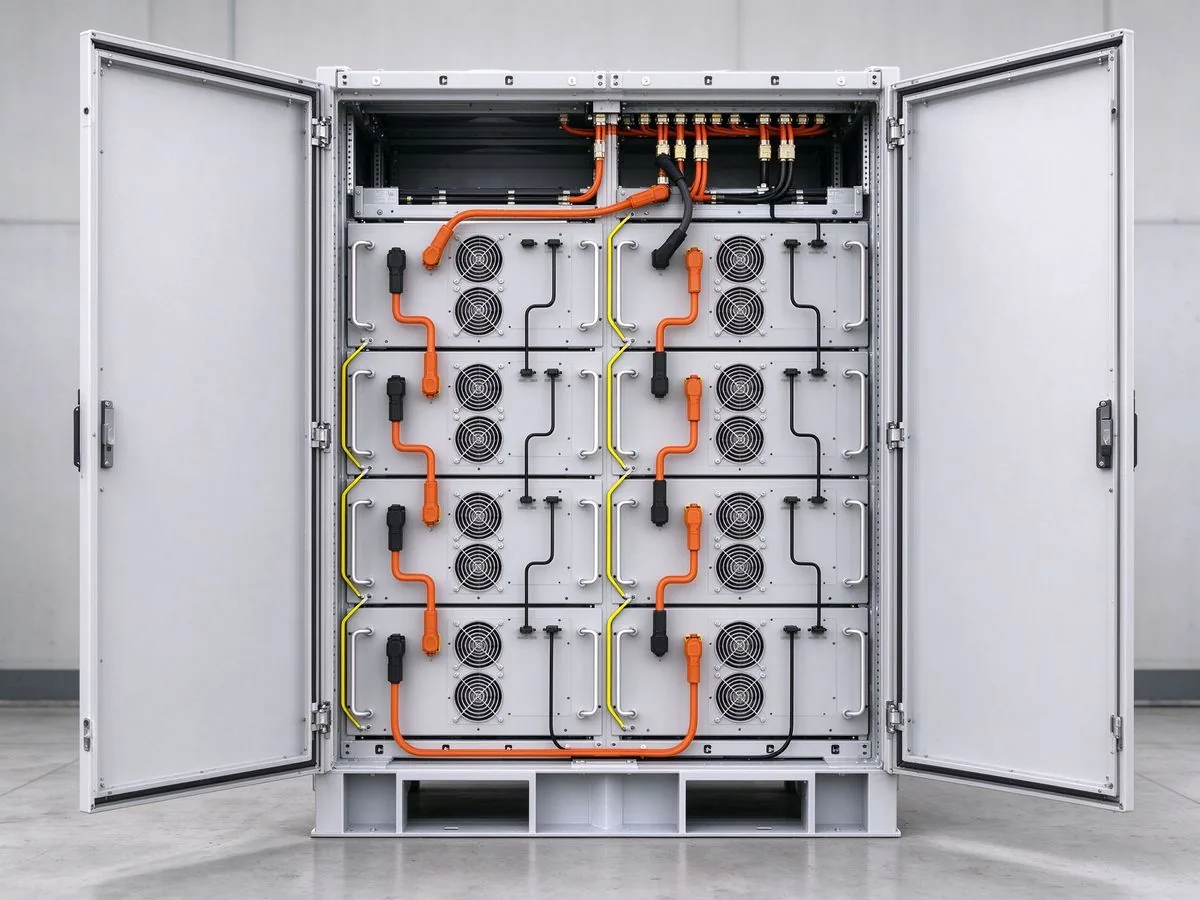
Global energy storage additions are forecast at 158 GW in 2026, up 45% year-on-year, with
Read articleBattery energy storage systems are growing from single 20-foot racks into multi-GWh instal
Read article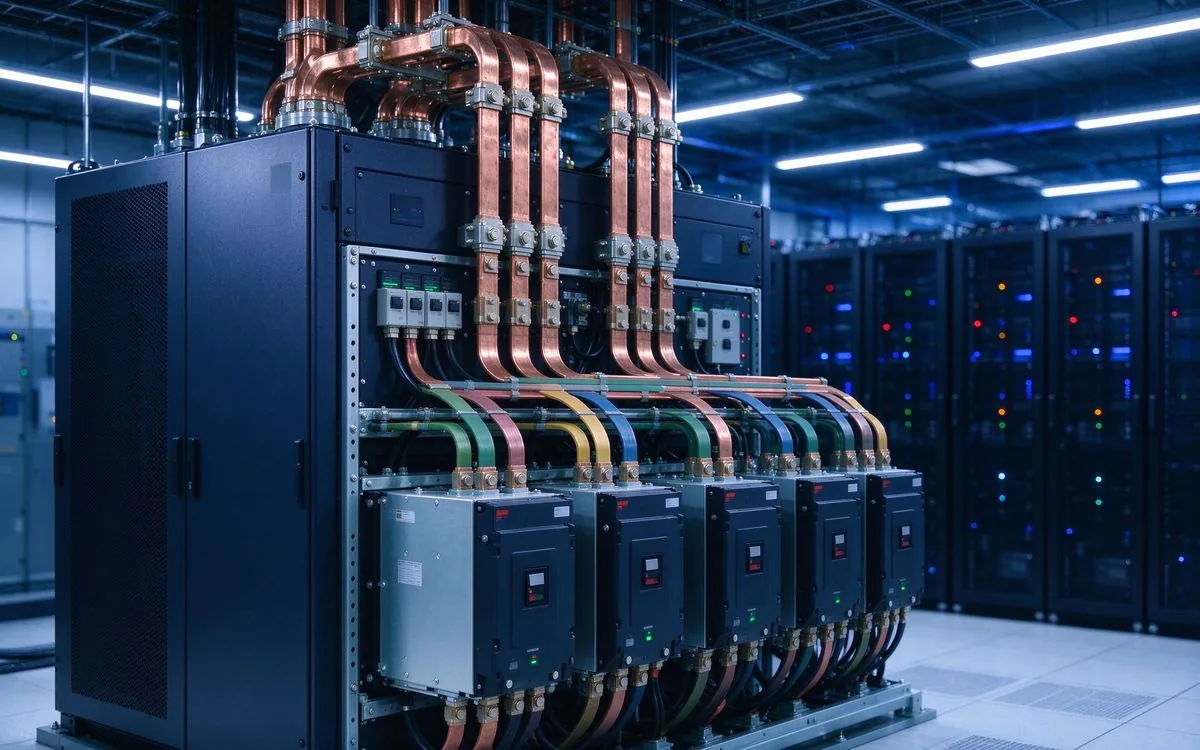
BloombergNEF sees 158-188 GW of new energy storage in 2026. PCS platforms are climbing fro
Read article
Emily Novak analyses energy-storage, grid and new-energy markets and turns them into procurement-ready technical content. With 7 years in energy market research and technical writing, she covers BESS growth, HVDC projects and regulatory shifts that change busbar demand. She holds an M.A. in Energy E
Send the current profile, voltage class and terminal types — our engineers reply within one business day.