Laminated busbar procurement fails in predictable ways: incomplete RFQ data, quotes compared on price alone, samples that pass but production lots that drift, and suppliers who cannot produce test documentation. The fix is a decision framework that covers data, comparison and verification.
Laminated busbar procurement fails in predictable ways: incomplete RFQ data, quotes compared on price alone, samples that pass but production lots that drift, and suppliers who cannot produce test documentation. The fix is a decision framework that covers data, comparison and verification.
A laminated busbar is a custom electromechanical part: geometry, dielectric, plating, terminations and test requirements are all defined per drawing. There is no catalogue part number to compare across suppliers.
That makes the RFQ the single most important document in the purchase. The more complete the data package, the more comparable the quotes and the fewer surprises in sample and production stages.
Send all nine in one package: (1) 2D drawing in PDF with dimensions and tolerances; (2) 3D model in STEP; (3) current and voltage ratings, including peak and duty cycle; (4) ambient and hot-spot temperature targets; (5) dielectric, insulation class and any partial-discharge requirement; (6) plating specification (tin, nickel, silver) and thickness; (7) termination types — studs, blades, solder or weld; (8) annual volume and target lead time; (9) test and documentation requirements.
Missing items force the supplier to assume — and assumptions differ. Two suppliers answering different questions will quote different parts.
Suppliers quote faster and cheaper when the drawing is DFM-ready: tolerances that are achievable, bend radii that respect material thickness, plating areas clearly marked, and no conflicting GD&T symbols.
A useful check before sending: ask whether every dimension matters. Non-functional tolerances at ±0.01 mm multiply cost for no performance benefit; hold tight tolerances only where fit or current density require them.
A practical note on the drawing: include a section view at each termination and at the bend, because that is where most fit problems occur. Also state the reference edge for dimensions — suppliers measure from the datum you define, and an ambiguous datum produces parts that measure fine but assemble wrong.
Define the electrical envelope explicitly: rated current (A), temperature-rise target (e.g. 30 °C above 40 °C ambient), voltage class and insulation coordination (e.g. 1000 VDC per IEC 60664-1 with DC factor), fault current and short-circuit withstand time, and any voltage-drop limit across the busbar.
Peak vs continuous current matters enormously. A busbar sized for continuous load is different from one sized for a 15-minute fast-charge peak — the supplier cannot guess which one you mean.
State the environment: operating temperature range, humidity, salt or industrial atmosphere, altitude derating, vibration and shock levels, and enclosure airflow assumptions.
Marine, rail and outdoor applications change plating and insulation choices. If the part lives in a sealed cabinet, the supplier may be able to reduce insulation thickness; if it faces salt air, edge sealing becomes mandatory.
Plating and dielectric are performance decisions, not cosmetic ones. Tin is the standard contact finish; nickel adds wear resistance; silver reduces skin-effect loss at high frequency. PET suits most 1000 V class applications; Nomex adds thermal and PD margin; DLF (Daramic?) film is used where its properties justify the cost.
Specify them, or ask the supplier to recommend from a defined voltage-temperature matrix — but never leave them unstated.
(1) Engineering depth: can they review your drawing and suggest DFM improvements? (2) Material sourcing: do they buy C11000 copper with certificates of conformity? (3) Plating control: in-house or qualified subcontractor, thickness verified? (4) Insulation process: lamination pressure/temperature control and edge sealing? (5) Test capability: hipot, insulation resistance, continuity, PD if needed? (6) Traceability: lot-level records from copper batch to finished part? (7) Quality system: ISO 9001 and any sector certifications? (8) Capacity and lead time: sample and production slots? (9) Copper price mechanism: how is material cost quoted and adjusted? (10) MOQ flexibility for prototypes? (11) After-sales support: field failure analysis capability? (12) Documentation: material certificates, test reports, PPAP-style documents?
Score each item and set a minimum pass — price only decides between qualified suppliers.
Local suppliers win on communication, sample speed, design iteration and freight; offshore suppliers typically win on unit cost at volume. The matrix below maps conditions to recommendations.
Prototype and qualification phases favour local or responsive suppliers; mature designs at high volume can move offshore with frame agreements and documented test protocols.
Treat the sample as the first test, not the final one. A typical cycle: drawing review (day 1), DFM feedback, sample production in 5-7 working days, sample test report, customer fit test, then production lot with first-article inspection.
For automotive- or grid-grade programs, agree a DV/PV plan in writing: which tests per lot, what acceptance criteria, and what happens on failure.
Ask what is tested on every part and what is tested per lot. At SHANYUAN, each busbar gets 100% hipot, insulation-resistance and continuity testing; dimensional and visual inspection is per lot; PD testing is available per specification.
Traceability from copper batch to finished serial number closes the loop for customer audits and field failure analysis.
For high-voltage or switching-frequency parts, ask for PD and impedance data in the sample report, not just hipot. A sample that passes hipot can still fail partial-discharge limits at 1000 VDC, and the cost of discovering that at system test is far higher than at sample stage.
A busbar quote has three visible blocks: material (copper, dielectric, plating), processing (stamping, plating, lamination, machining, testing) and tooling (dies, fixtures, one-time). Copper is quoted against a reference LME price and adjusted with a defined mechanism; processing and tooling are fixed.
Ask for the split. A quote that buries copper in a lumped price will be harder to audit and more volatile when LME moves.
Industry norms for laminated busbars: samples 5-7 working days after drawing approval, production lots 2-3 weeks. Multi-year programs should be covered by frame agreements with reserved capacity and agreed test protocols.
Confirm the supplier's load before sending the PO — a supplier at 100% utilisation will miss your energisation date regardless of price.
The tooling block deserves its own line in the comparison: dies for stamping and bending are one-time costs that some suppliers amortise into the unit price and others quote separately. Amortised tooling hides the true cost of design changes; separate tooling makes them visible. For parts likely to iterate, prefer the separate line.
The classic mistakes: quoting without a drawing (verbal or screenshot descriptions), comparing quotes on unit price alone, changing the electrical envelope after sampling, and skipping the test record requirement until the customer audit.
Each of these shows up as a field failure, a schedule slip or a negotiation that restarts. Fix them at the RFQ stage and the purchase runs smoothly.
Prototype or qualification stage → choose a responsive local supplier with DFM depth; mature design, high volume → offshore or frame-agreement supplier with documented test protocols; marine/outdoor environment → require tin plating and edge sealing; switching-frequency application → require low-inductance lamination and PD data; customer audit expected → require lot-level traceability and 100% test records.
Use this matrix with the 12-point checklist and the price comparison, and the selection writes itself.
The busbar supplier decision is a data problem. Complete RFQ data, a scored 12-point evaluation, a condition-to-recommendation matrix and a clear DV/PV plan turn procurement from guesswork into a repeatable process.
SHANYUAN answers RFQs from drawings within one working day, produces samples in 5-7 working days, and supports customers with DFM review, test documentation and multi-year frame agreements.
Finally, put the evaluation in writing and share the scoring with the shortlisted suppliers. Suppliers respond to honest feedback — a scored gap on plating control or traceability gets fixed faster when the supplier knows it is the reason they lost the order.
Grid, automotive and energy-storage customers increasingly audit their suppliers' component suppliers. The questions are predictable: where is the copper from, what are the plating thickness controls, how are hipot failures handled, and can you trace a serial number to its material batch?
PPAP-style documentation — material certificates, process control plans, capability studies and lot-level test records — is the standard answer. Ask the supplier which of these they can deliver before the audit, not after.
A supplier that cannot produce documentation is a supplier that will not pass your customer's audit, regardless of price.
Three suppliers quote the same 1000 A laminated busbar. Supplier A is cheapest on unit price but cannot show copper certificates; Supplier B quotes 12% higher with full test records and a copper-adjustment formula; Supplier C is 25% higher with in-house plating and a reserved capacity slot.
Scoring against the 12-point checklist: A fails on material sourcing, testing and traceability; B passes all twelve; C passes all twelve and adds capacity assurance. The decision framework says B and C are qualified, and price is then compared only between them.
At quantity 5000 units/year with a two-year program, the B or C difference is small; the A difference would have been invisible on day one and expensive on the first audit.
Busbar procurement works best as a relationship, not a spot transaction, because the part evolves with your product. A two-year program with quarterly design iterations benefits from a supplier who knows your tolerances, your test culture and your failure history.
Frame agreements formalise this: a committed volume, a defined copper mechanism, reserved capacity and agreed test protocols, with engineering changes flowing through a structured DFM loop.
Before signing, verify the supplier's engineering depth — can they suggest a cheaper geometry that still passes your thermal budget? Can they catch a plating spec that will fail your marine application? Those conversations are the real value of the partnership, and they happen only after the evaluation checklist has been passed.
Finally, agree the escalation path for field failures: who analyses, who owns the fix, and how the lesson is folded back into the next lot. Suppliers who close that loop are the ones worth the frame agreement.
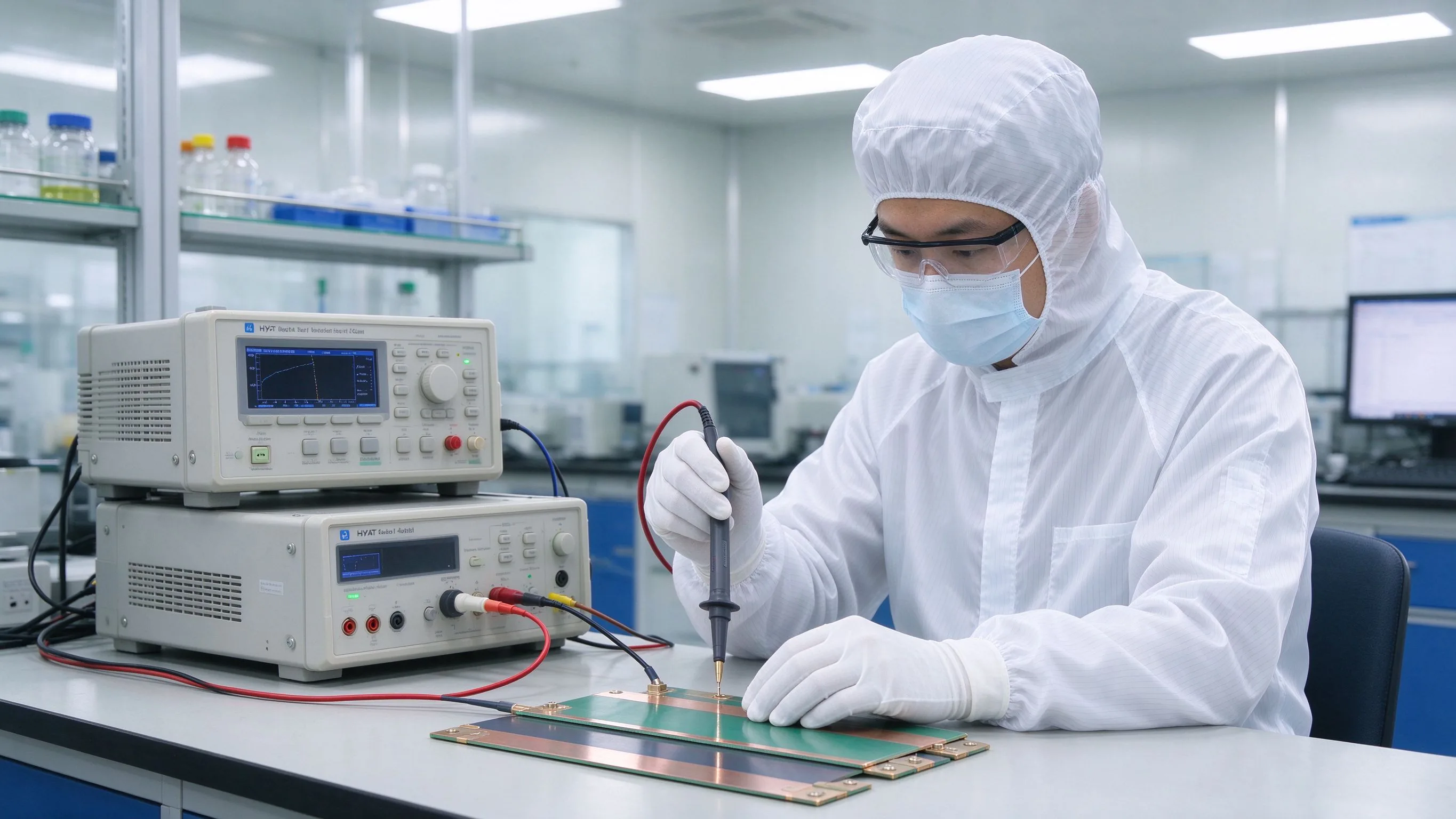
Every hour spent on DFM before a custom busbar quote saves a week of rework. This is the c
Read article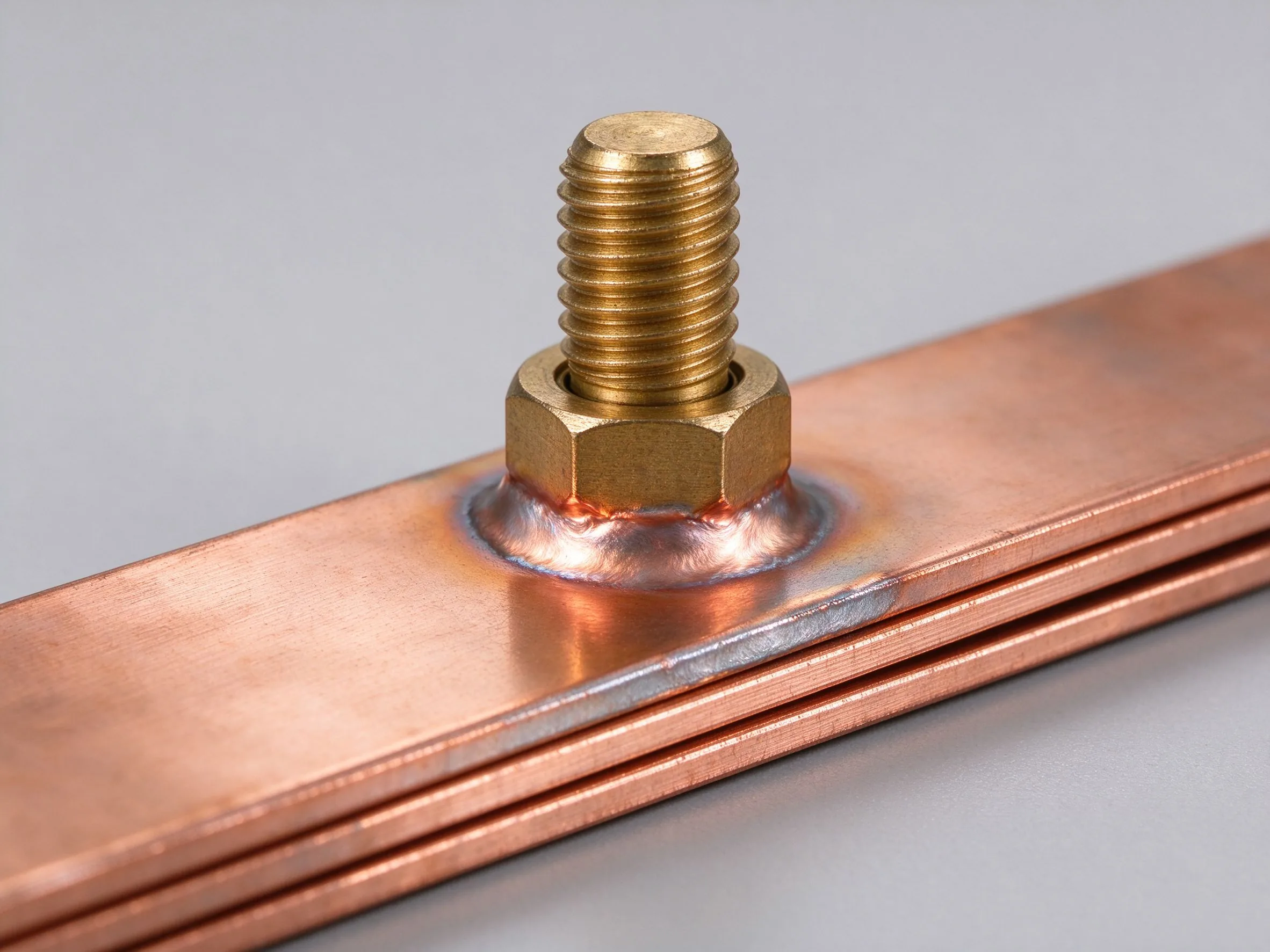
The terminal is where a laminated busbar meets the outside world. This guide covers M6/M8
Read article
The plating on a busbar contact is a corrosion strategy as much as a conductivity play. Ti
Read article
Lucas Meyer advises procurement and supply-chain teams on copper sourcing, busbar pricing and supplier evaluation, with 13 years in industrial metals and electrical-component procurement. He developed SHANYUAN's copper-price quotation model and cost-breakdown framework for busbar projects. He h
Send the current profile, voltage class and terminal types — our engineers reply within one business day.