Southeast Asia has moved from power-purchase ambition to shovel-ready projects in twelve months. Data center corridors in Malaysia and Indonesia are signing gigawatt-scale energy deals, utilities are tendering battery storage, and the region's grid connection points are quietly becoming a major market for laminated and DC busbars.
Southeast Asia has moved from power-purchase ambition to shovel-ready projects in twelve months. Data center corridors in Malaysia and Indonesia are signing gigawatt-scale energy deals, utilities are tendering battery storage, and the region's grid connection points are quietly becoming a major market for laminated and DC busbars.
Southeast Asia's electricity demand is growing faster than any other region of comparable size — regional power demand rose more than 7% in 2024 alone (Mordor Intelligence, 2026). Two engines drive it. The first is data centers: AI and cloud campuses are landing in Johor, Batam, Hanoi and Bangkok with rack densities that older distribution designs cannot feed. The second is grid-scale storage: utilities from Malaysia to Vietnam are now tendering battery energy storage systems as routine infrastructure.
Both engines converge on the same hardware. A hyperscale data center block ends in MV switchgear, PDU drawers and rack-level DC power shelves. A BESS plant ends in battery-rack DC bus, combiner cabinets and PCS DC-links. In each case, the busbar content per megawatt is rising because currents are rising faster than enclosure space.
Johor, the state bordering Singapore, is now the region's densest data center corridor. DayOne — a Singapore-headquartered hyperscale developer with two Malaysian campuses — signed gigawatt-scale power purchase agreements in June 2026, buying output from 1.5 GW of solar and 2.2 GWh of BESS through Malaysia's Corporate Renewable Energy Supply Scheme (CRESS), with cumulative Malaysian investment of RM 28 billion (about USD 6.87 billion) expected by end-2026 (Energy-Storage.News, 2026).
AirTrunk secured USD 2.325 billion in green financing for its JHB2 campus in Johor Bahru, and STT GDC raised up to USD 1.37 billion for its own Johor campus (2026). These are not small sheds. Each hyperscale campus draws tens of megawatts per building, and the distribution chain — utility substation, MV bus, CRAC/PUE trade-offs, and the rack-level DC bus — needs busbars sized for continuous duty in tropical ambient conditions.
Alongside the data centers, Malaysia is building utility-scale storage. TNB inaugurated its first 100 MW/400 MWh grid-forming BESS in Terengganu (Santong), using liquid-cooled PowerTitan 2.0 units with an 88% first-year round-trip efficiency (YOG Infra, 2026). The government's MyBeST tender selected four projects totalling 400 MW/1.6 GWh, commissioning in 2027, and the National Energy Transition Roadmap calls for 500 MW of BESS by 2030 to support 14 GW of renewables.
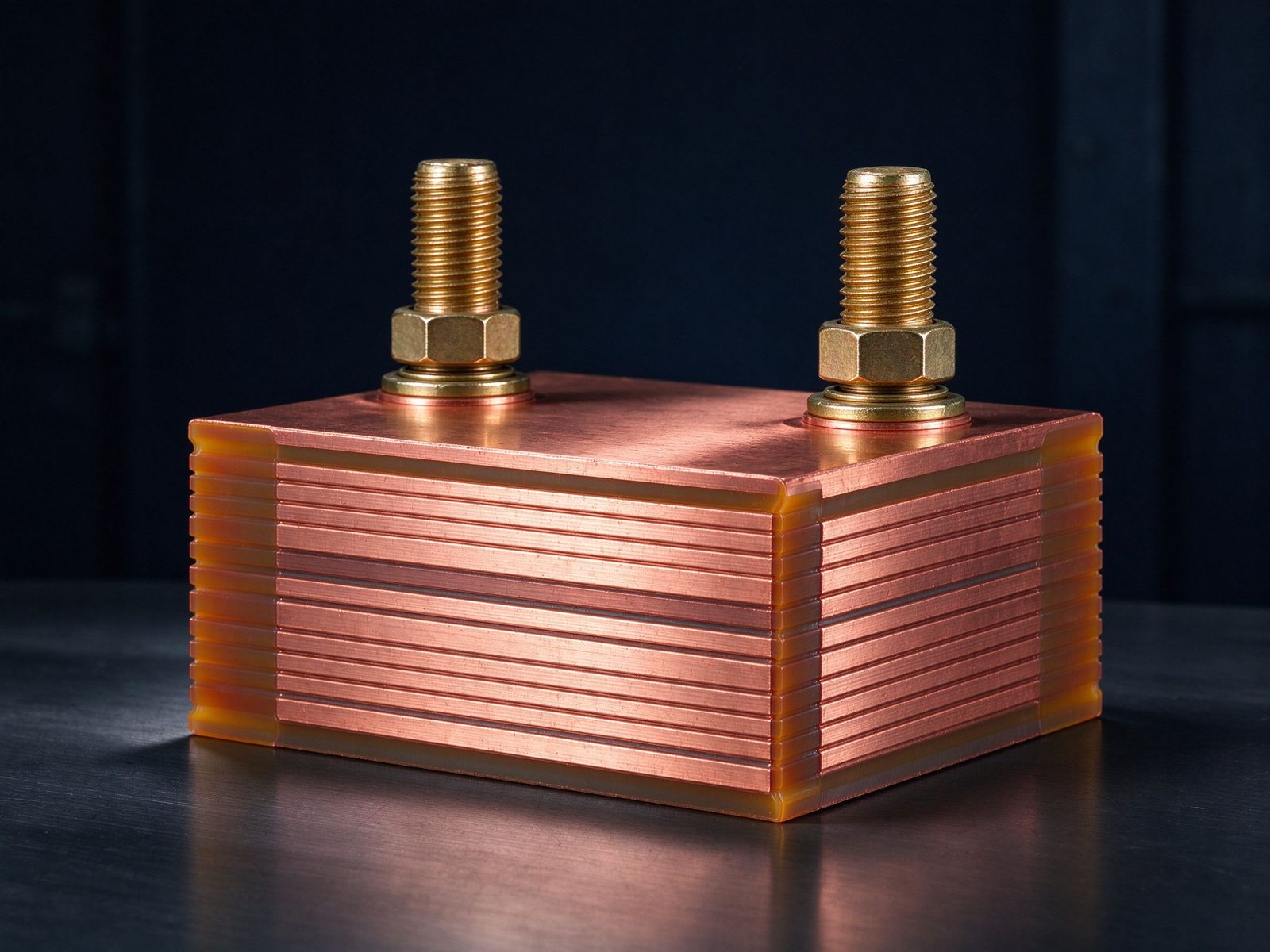
Every one of those megawatt-hours passes through busbar at least twice — once as the rack-level DC link inside each battery cluster, once at the PCS DC-link. At 30°C ambient and above, the thermal design of the DC bus stops being a formality: a 30°C temperature rise at rated current is a hard sizing input, not a margin you spend later.
Batam, the island near Singapore, now hosts 20 data center projects with committed investment above USD 7.3 billion (Seetao, 2026). Peak load on the island is forecast to jump from 841 MW in 2026 to 2,540 MW in 2035 — nearly a triple. Rack densities are following the same curve: cabinets that ran 3-5 kW a few years ago are now specified at 20-50 kW, which pushes the power chain toward liquid cooling, high-voltage DC distribution and larger DC busbars inside each row.
Indonesia's national utility PLN plans 69.5 GW of new capacity over ten years, 42.6 GW of it renewable, with a storage plan of 10.3 GW including 4.3 GW of electrochemical storage (Seetao, 2026). Grid stability after large solar and wind additions is exactly the problem BESS and its DC busbar are built to solve.
Vietnam is the region's fastest-growing storage market at a projected 9.3% CAGR through 2031 (Mordor Intelligence, 2026). The policy signal is unusually concrete: the amended Electricity Law recognises storage, a March 2026 directive pushes BESS for grid regulation, and system operator EVN's plans include 305 MW of BESS by June 2026 and a 1,200 MW programme through 2030.
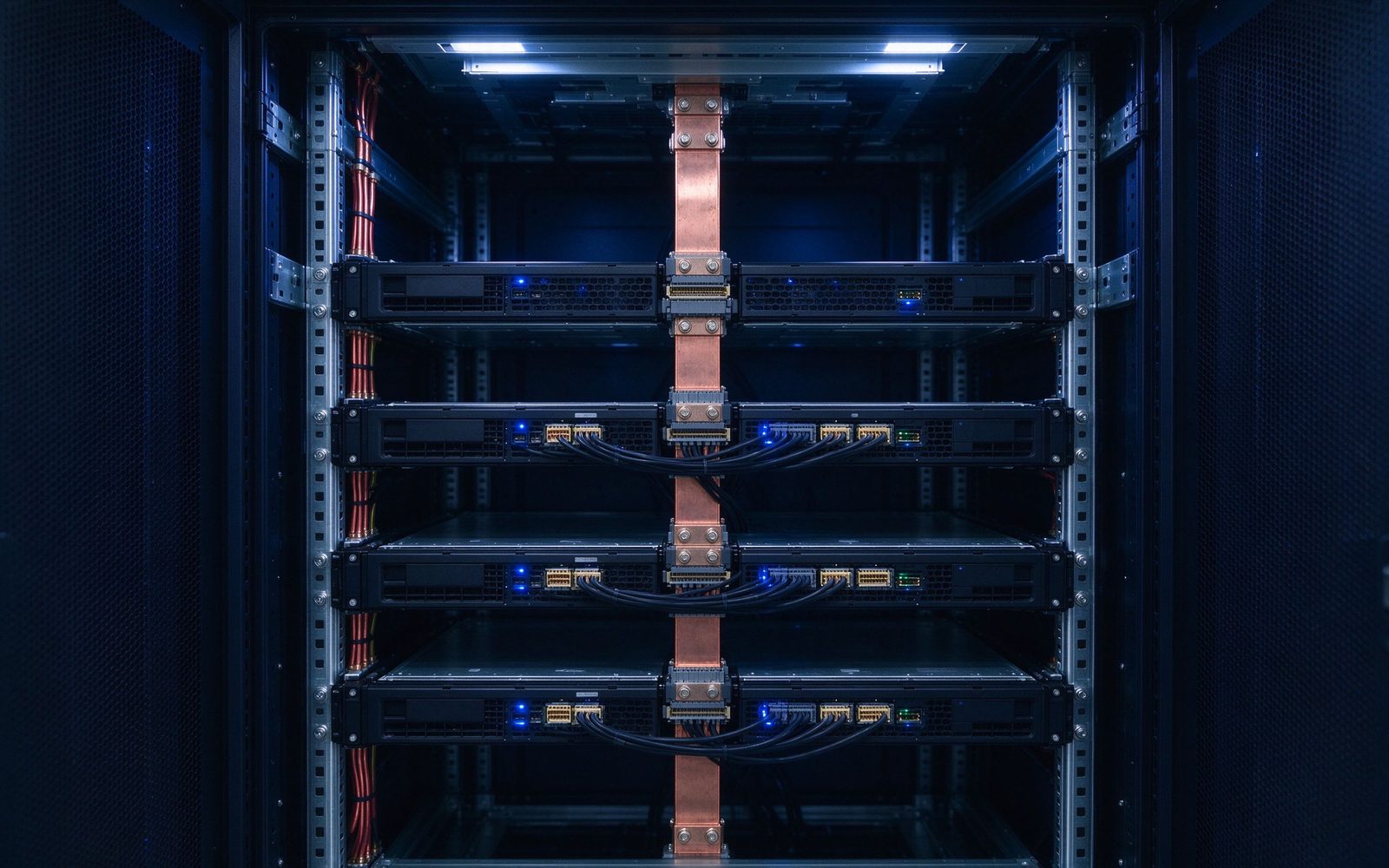
Centralised solar projects must now install BESS equal to at least 10% of capacity for 2-hour storage under the adjusted Power Master Plan VIII (Research and Markets, 2026). That policy detail matters to busbar suppliers because it converts speculative storage into a procurement category with drawings, schedules and RFQs.
The data center side of this story is familiar from our AI data center power article: a GPU rack now pulls 30-120 kW, and 48V or 800V DC distribution shelves inside the rack need low-inductance, high-current busbar that a cable bundle cannot provide in the available volume.
In tropical climates the thermal requirement tightens further. At 35°C enclosure ambient, a busbar designed for 30°C rise at rated current has effectively no headroom left. That is why data center power architecture in 2026 is coming back to copper busbar distribution — and why the spec sheet for the rack bus, not just the MV feeder, is now reviewed by the thermal engineer.
Southeast Asia adds environmental conditions that European and North American designs rarely budget for. Relative humidity above 85% for months at a time attacks unsealed insulation and promotes creepage failures on MV busbars. Our outdoor humidity and insulation guide covers the coating and clearance rules; the short version is that PET, Nomex and DLF insulation must be selected for the actual dew-point profile, not the catalogue minimum.
Mechanical vibration is the second hidden input. Diesel-generator backup, containerised BESS on uneven yards, and generator sets on battery trailers all put sinusoidal and shock loads into bolted busbar joints. The bolted-joint vibration design note explains the torque, washer and surface treatments that keep joints from fretting open in service.
Regional OEMs and system integrators are splitting the busbar supply chain two ways. High-volume, standardised pieces — battery links, rack busbars, PDU drawer busbars — are moving to regional fabricators to shorten logistics. Complex assemblies — 4-6 layer DC-links with mixed stud/blade/welded terminations — still go to specialists with the lamination and test capability.
SHANYUAN ships to 20+ export countries from 17,200 m² in Rizhao, with tin-plated C11000 copper, 1-6+ layer lamination, PET/Nomex/DLF dielectrics and full PD and insulation testing before dispatch. For a Malaysian integrator or a Vietnamese EPC, the practical question is whether the supplier can meet the delivery window and the tropical duty spec — that is what our custom busbar engineering service is set up to answer.
Three recommendations for this region's procurement teams:
Two parallel stories will keep this region busy through 2027 — Europe's grid spending and North America's reshoring — but Southeast Asia is where the fastest demand growth is. If your project needs busbars sized for this duty, send the electrical and mechanical envelope to our engineering team and we will confirm the layer count, plating and lead time.
The voltage class of the region's new builds is climbing. Data center DC power shelves now run at 48V nominal with 800V class battery and PCS DC-links common, and the DC busbar inside each rack and cabinet must hold the insulation, creepage and PD budget for that class in a much smaller envelope than European substations allow.
At 800V and above, creepage distances drive the layout. A PET or Nomex dielectric thickness of 0.25-0.5 mm handles the voltage itself, but the surface path between live parts and the enclosure must follow the pollution-degree rules of the environment — and tropical dust plus humidity is a pollution degree III scenario. The creepage and clearance design article on this site gives the working distances; the short version is that the layout, not the film thickness, is usually the binding constraint in an 800V rack bus.
Thermally, the same assembly carries more current in less space. A 4-layer laminated stack with paired conductor planes keeps the loop inductance low — the topic of our inductance guide — while edge copper and heat-spreader plates hold the 30°C rise budget in 35°C ambient. Both are spec items, not defaults.
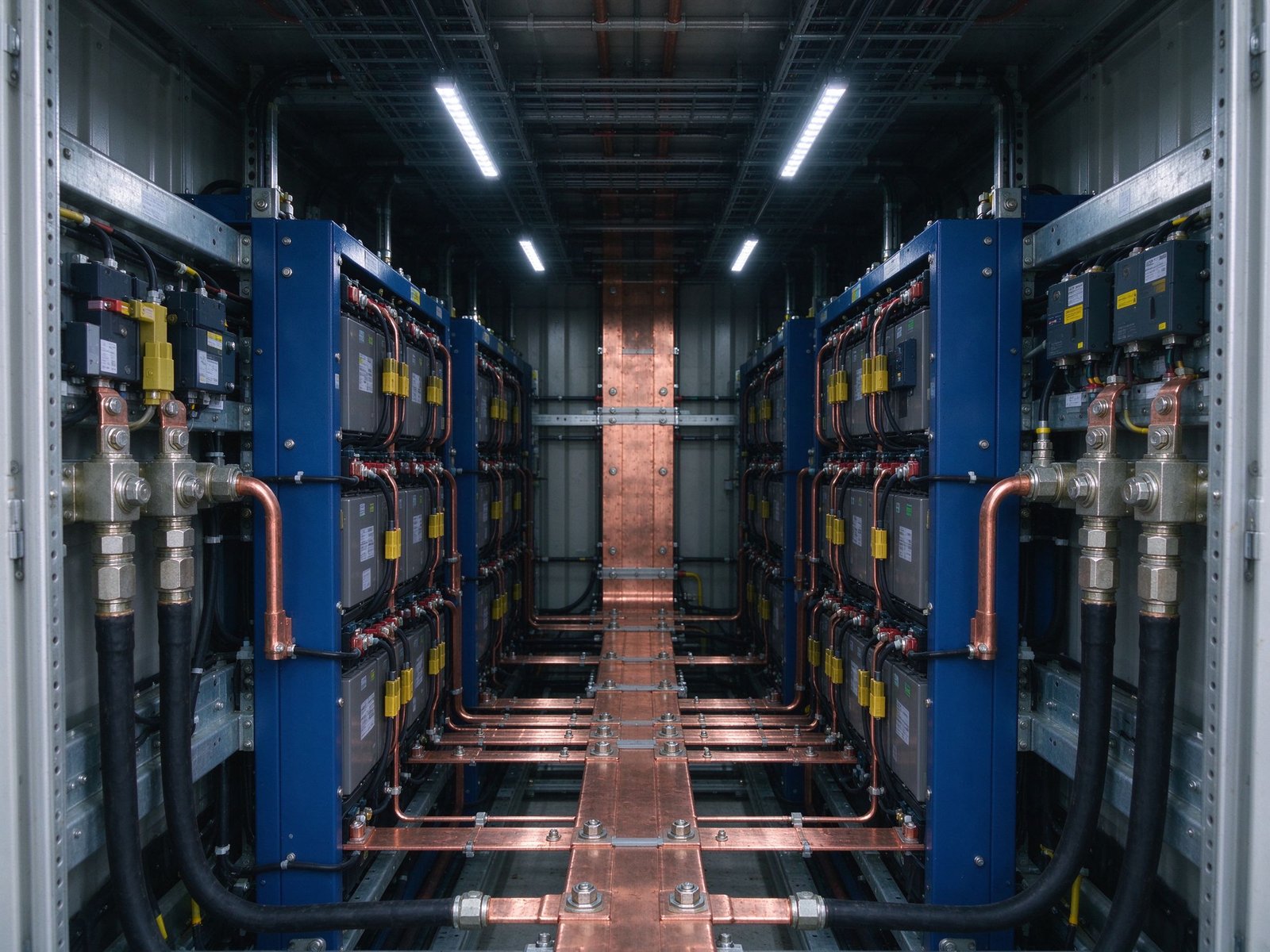
India's storage story in 2026 is no longer about tenders announced — it is about hardware
Read article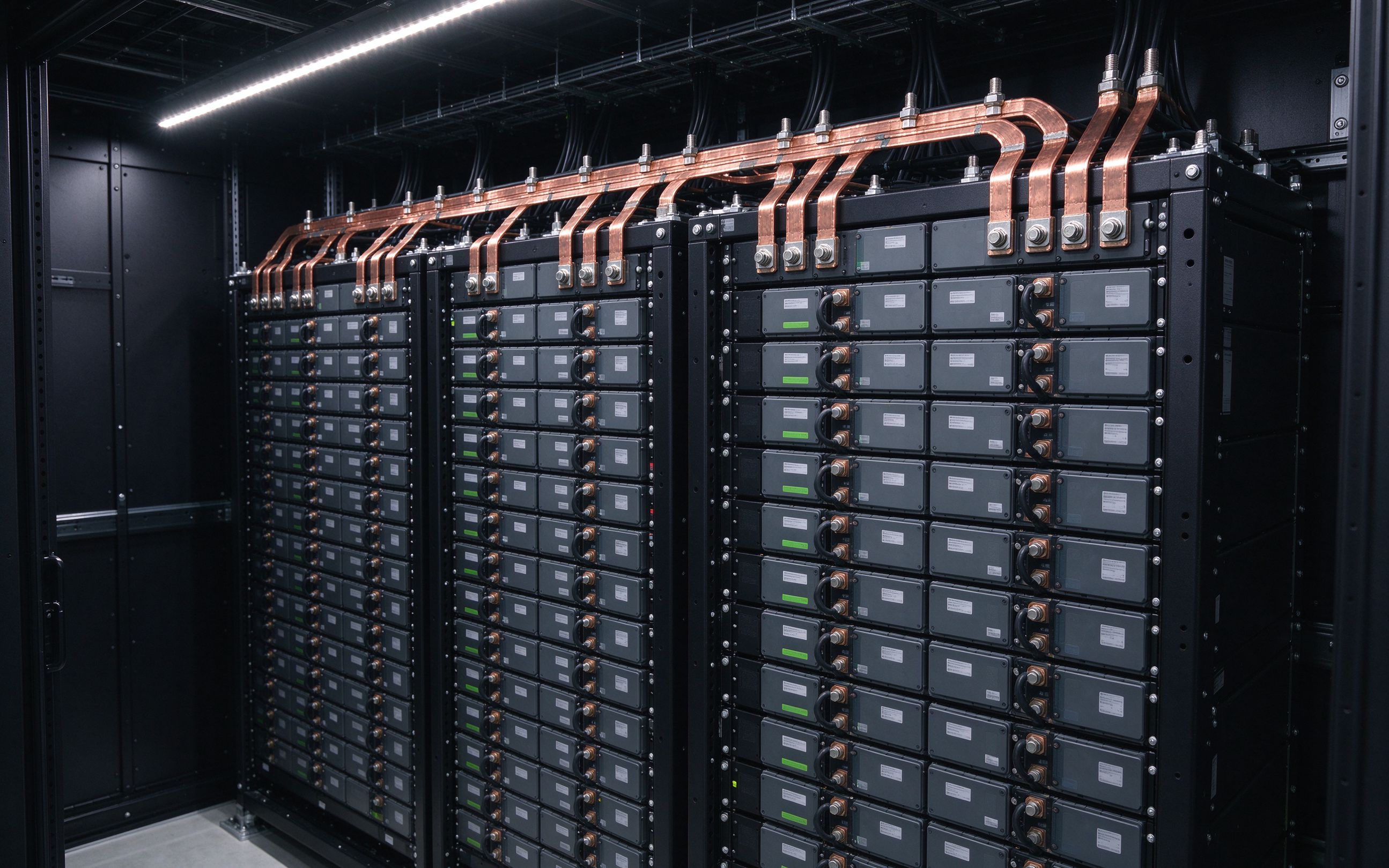
AI racks move from 140 kW to 1 MW by 2027, and the industry answers with 800 VDC distribut
Read article
Aiko Tanaka is application engineering manager at SHANYUAN, with 11 years in applying laminated busbars to data centres, energy storage and new-energy systems. She leads application selection, custom-profile development and project delivery, and holds a B.Eng. in Electrical Engineering from the Univ
Send the current profile, voltage class and terminal types — our engineers reply within one business day.