Grid investment is finally catching up with generation investment, and the IEA numbers for 2026 are hard to ignore. For busbar suppliers the interesting part is not the headline total — it is where the money lands: converter stations, battery storage connection points, substations and switchgear, all of which are laminated-busbar-heavy applications.
Grid investment is finally catching up with generation investment, and the IEA numbers for 2026 are hard to ignore. For busbar suppliers the interesting part is not the headline total — it is where the money lands: converter stations, battery storage connection points, substations and switchgear, all of which are laminated-busbar-heavy applications.
IEA's World Energy Investment 2026 report, published in May 2026, projects global energy spending of USD 3.4 trillion this year. Around USD 2.2 trillion goes to renewables, nuclear, grids, storage, low-emissions fuels, efficiency and electrification. The grid number deserves a second look: global spending on electricity networks approaches USD 550 billion in 2026, up nearly 20% year-on-year, and battery storage investment for the power sector now exceeds USD 100 billion (IEA, 2026).
That is a structural rebalancing. For years the IEA warned that grid spending lagged generation, creating electricity security risks. The 2026 edition says the balance has shifted — but with a catch: part of the rise in grid investment comes from tight supply chains inflating the cost of transformers and cables. Buyers are paying more and waiting longer for the same equipment.
For anyone specifying HVDC converter station busbars or switchgear assemblies, the practical effect is a longer procurement cycle and a stronger case for locking in supply early.
Europe's grid build-out is driven by three forces at once. First, electrification: heat pumps, EV charging and industrial electrification are adding load faster than networks were built to carry. Second, renewable integration: the EU generated about 50% of its electricity from renewables in 2024 (IEA World Energy Investment 2025), and wind and solar output is increasingly concentrated in regions with thin transmission. Third, energy security: after the 2022 supply crisis and the 2025-26 Middle East disruptions, governments are treating domestic electricity infrastructure as strategic infrastructure.
The money is real. The Swedish transmission operator Svenska kraftnät, for example, received SEK 56,000 million for 2026-2028 in the 2026 budget, mostly for expanding the grid (IEA Policy Database, 2026). European grid spending crossed USD 70 billion in 2025, roughly double what it was a decade earlier (IEA, 2025).
Transmission expansion of this scale does not happen with cables alone. Every new connection — wind farm, battery plant, interconnector terminal, EV charging hub — ends in a converter or switchgear room where power distribution inside the enclosure is handled by copper busbars.
Grid equipment supply is the weak link. The IEA notes that EU component prices have more than doubled over the last decade, and that China accounts for 60% of EU transformer imports (IEA World Energy Investment 2025). US Department of Energy figures tell the same story across the Atlantic: some transformer prices rose 4-9 times in five years, with lead times of two years or more (US DOE, 2026).
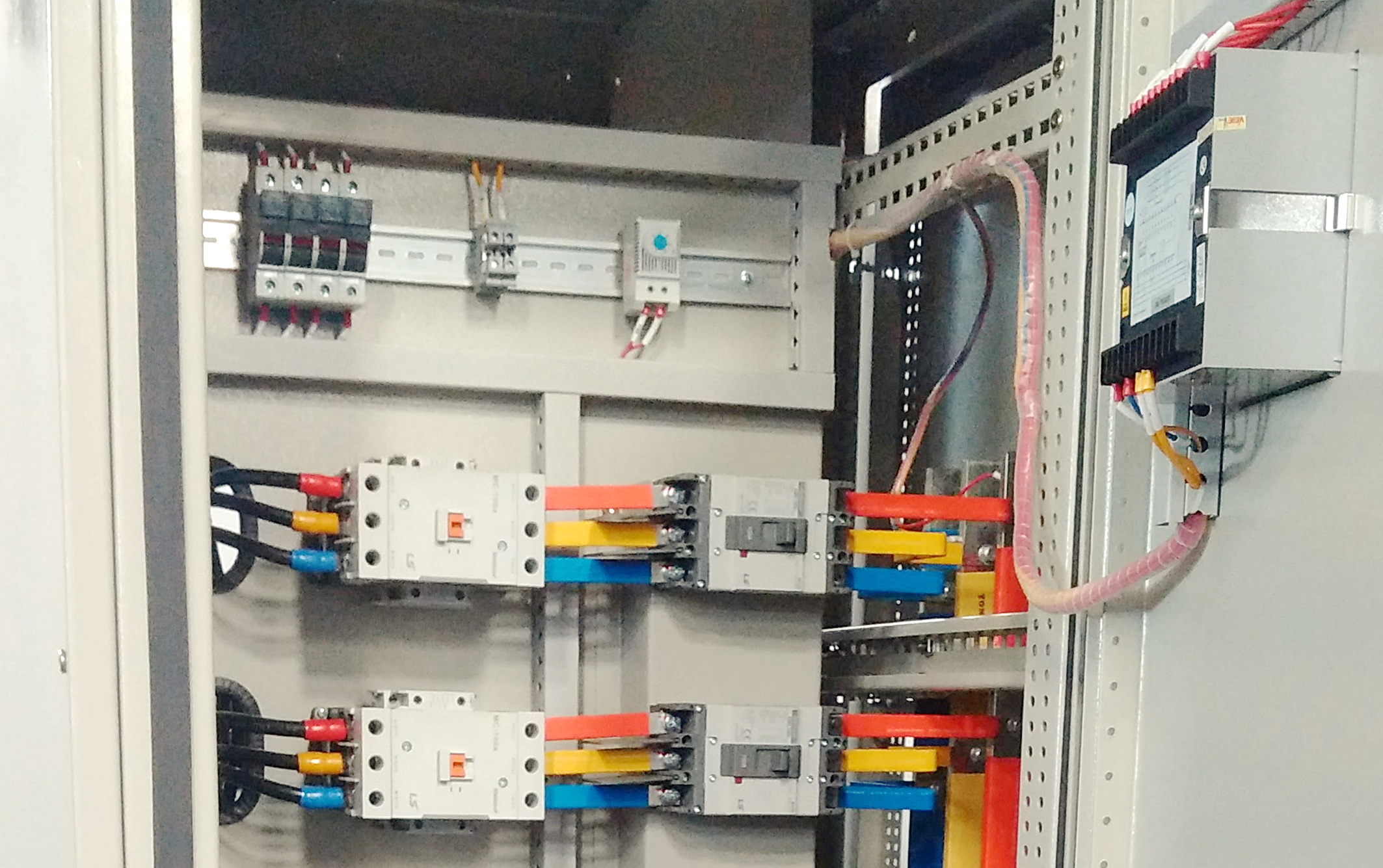
When transformers and cables are the gating items, project teams start compressing everything else on the critical path — including the busbar package. That favours suppliers who can deliver laminated busbar assemblies as complete, tested units rather than raw bar stock, because it removes an entire assembly and inspection step from the project schedule.
It also changes the risk conversation. A busbar that arrives late or fails in the field delays a connection that already waited 18 months for its transformer. Buyers increasingly ask for factory test evidence — partial discharge reports, insulation resistance, temperature-rise data — before they commit to a delivery slot.
Not every part of the grid needs laminated busbar, but the highest-growth parts do. Four areas stand out in 2026:
All four applications share the same technical profile: high current, constrained space, and a low tolerance for stray inductance. That is exactly where laminated busbar beats cable or single-piece bar.
A modern VSC-HVDC converter station routes hundreds of megawatts through valve stacks, DC capacitors and smoothing reactors. Between those components, the DC-link busbar carries the full DC current at low inductance; a poorly designed link adds switching losses and stresses the semiconductor modules.
Laminated construction puts the positive and negative conductors on opposite faces of a thin dielectric, so the current loop area collapses and stray inductance drops to the low nanohenry range. For a 2-4.5 kV DC link, that is the difference between a clean switching waveform and an oscillation problem. Our earlier HVDC converter station busbar review walks through the mechanical and electrical constraints in detail.
Offshore platforms amplify every constraint: volume is charged per cubic metre, so a 6-layer laminated assembly that replaces six separate runs is not a convenience, it is a deck-area decision.
Europe's battery build-out is accelerating — IEA puts global power-sector battery investment above USD 100 billion in 2026 — and every utility-scale plant contains several busbar zones: cell-to-module and module-to-rack links, rack-to-combiner DC bus, and the PCS DC-link busbar.
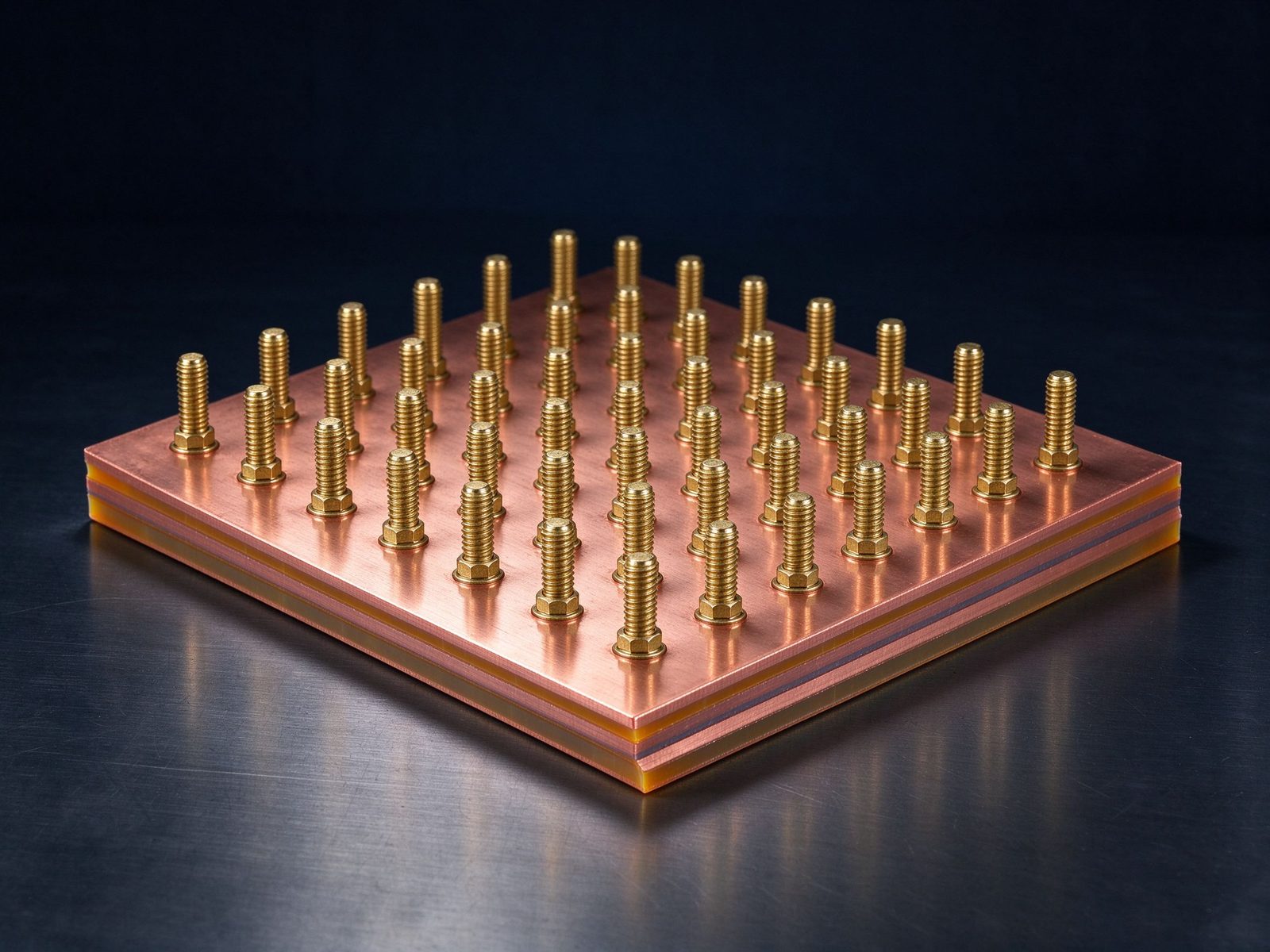
Thermal performance matters here more than inductance. Racks run hot in summer, and a 30°C temperature rise at rated current leaves little margin on a 40°C day. SHANYUAN sizes custom BESS busbars on measured temperature-rise data, with tin-plated C11000 copper and PET or Nomex insulation selected per voltage class.
The energy storage busbar systems article on this site covers the rack-level design rules; the market context is simply that European grid planners are now procuring storage as system infrastructure, not as pilot projects.
Beyond the headline projects, the steady volume is in switchgear: MV/LV panels, distribution boards, capacitor banks and metering sections. These assemblies are less exotic than converter stations but far more numerous, and they consume most of the copper a fabricator ships.
Standardisation is the theme. Utilities are pushing common configurations — the US DOE Grid Supply Chain programme explicitly promotes standardised grid equipment to cut lead times (US DOE, 2026). For busbar makers that means more repeatable drawings, more JIT deliveries and tighter tolerance windows, because a standardised panel demands a standardised, interchangeable busbar.
If you are refreshing a panel design, the resources library collects our current-carrying, voltage-drop and short-circuit guides in one place.
Three practical takeaways for anyone procuring busbars for European grid projects this year:
For the mechanical side of grid-grade mounting, our vibration and bolted-joint design note covers the failure modes that show up in substations after a few years in service.
Two parallel shifts are reshaping where busbars come from. Inside Europe, buyers are de-risking with regional suppliers and asking fabricators for local test capacity. Meanwhile, North America's reshoring wave — covered in our North American reshoring article — is pulling the same component families toward domestic plants. And the fastest-growing demand pocket, Southeast Asia's data centre and storage boom, is drawing supply chains toward the region's own manufacturing base.
For a manufacturer like SHANYUAN — 20+ export countries, 17,200 m² of production floor in Rizhao — the practical response is flexible capacity: the same C11000 copper, tin-plated and laminated, whether the assembly is headed for a German converter station, a Malaysian battery plant or a Texas switchgear line. If your project has a delivery window that matters, contact our engineering team with the current, voltage, insulation class and enclosure space, and we will confirm fit and lead time before you commit.
Grid duty changes the acceptance standard. A busbar for a converter station or substation is tested differently from a prototype part: the hipot voltage follows the system class (for a 3.3-4.5 kV DC link, that means a substantially higher test voltage), insulation resistance is recorded at a defined humidity, and partial discharge is measured at the working voltage rather than at a reduced shop level. A PD-free threshold in the tens of picocoulombs is common for converter-station duty.
Temperature-rise verification is the second pillar. A grid assembly is rated at 30°C rise over a specified ambient; the measured curve at the actual current profile — including the ripple component from the converter — is the document that lets a commissioning engineer sign off without re-testing on site. Our insulation testing guide describes the voltage, humidity and PD test sequence we use, and the thermal management article explains how the rise is calculated and measured.
For buyers, the practical checklist before accepting a grid-grade busbar delivery: test report signed by the responsible engineer, values traceable to the drawing revision, and sample pieces kept for the archive. That evidence chain is what separates a component supplier from a grid equipment partner — and it is the same evidence package SHANYUAN ships with every quality-controlled assembly to European converter and substation projects.
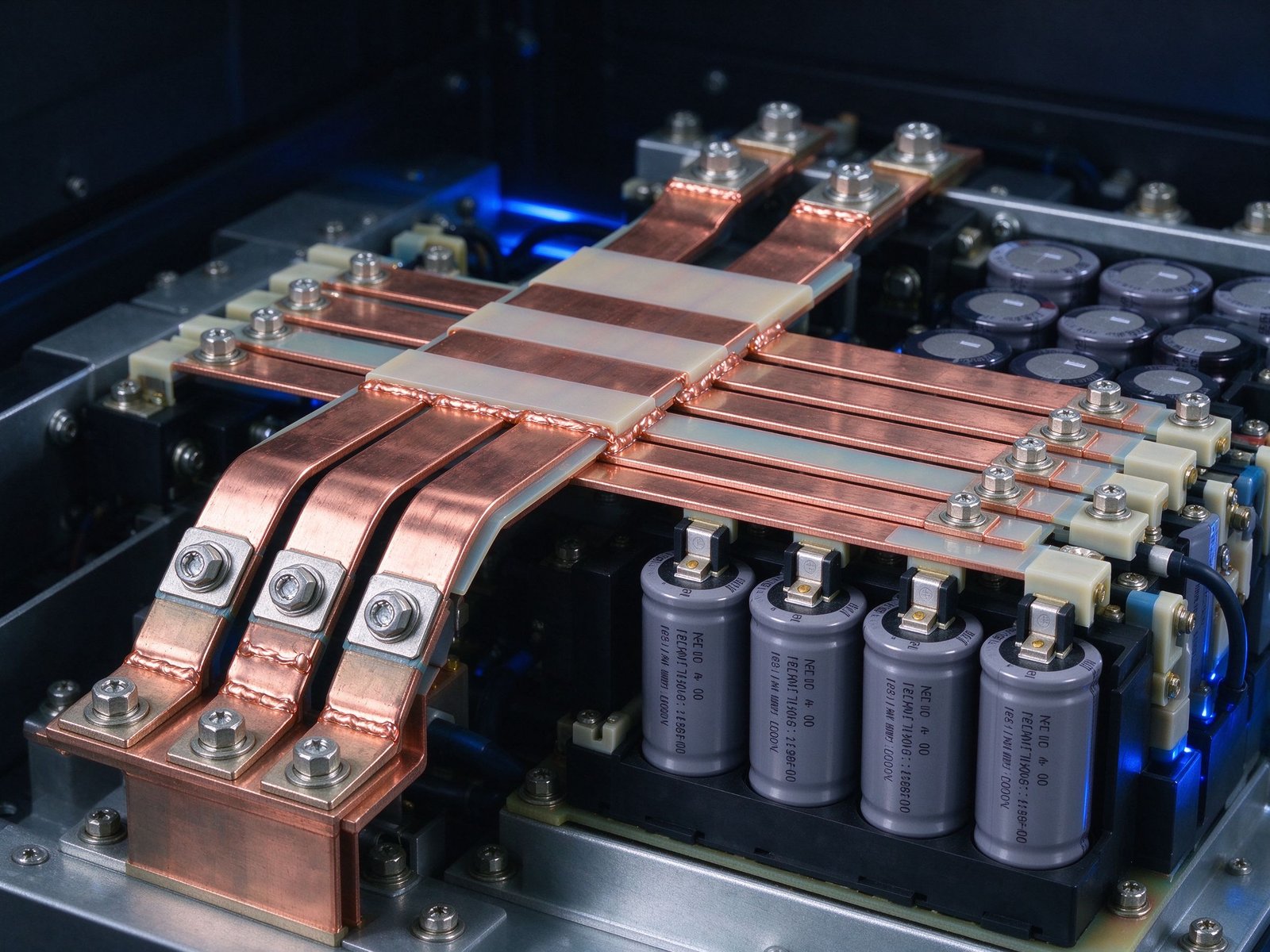
Germany's LanWin3/6, China's ±500 kV offshore VSC station and the CNY 4 trillion State Gri
Read article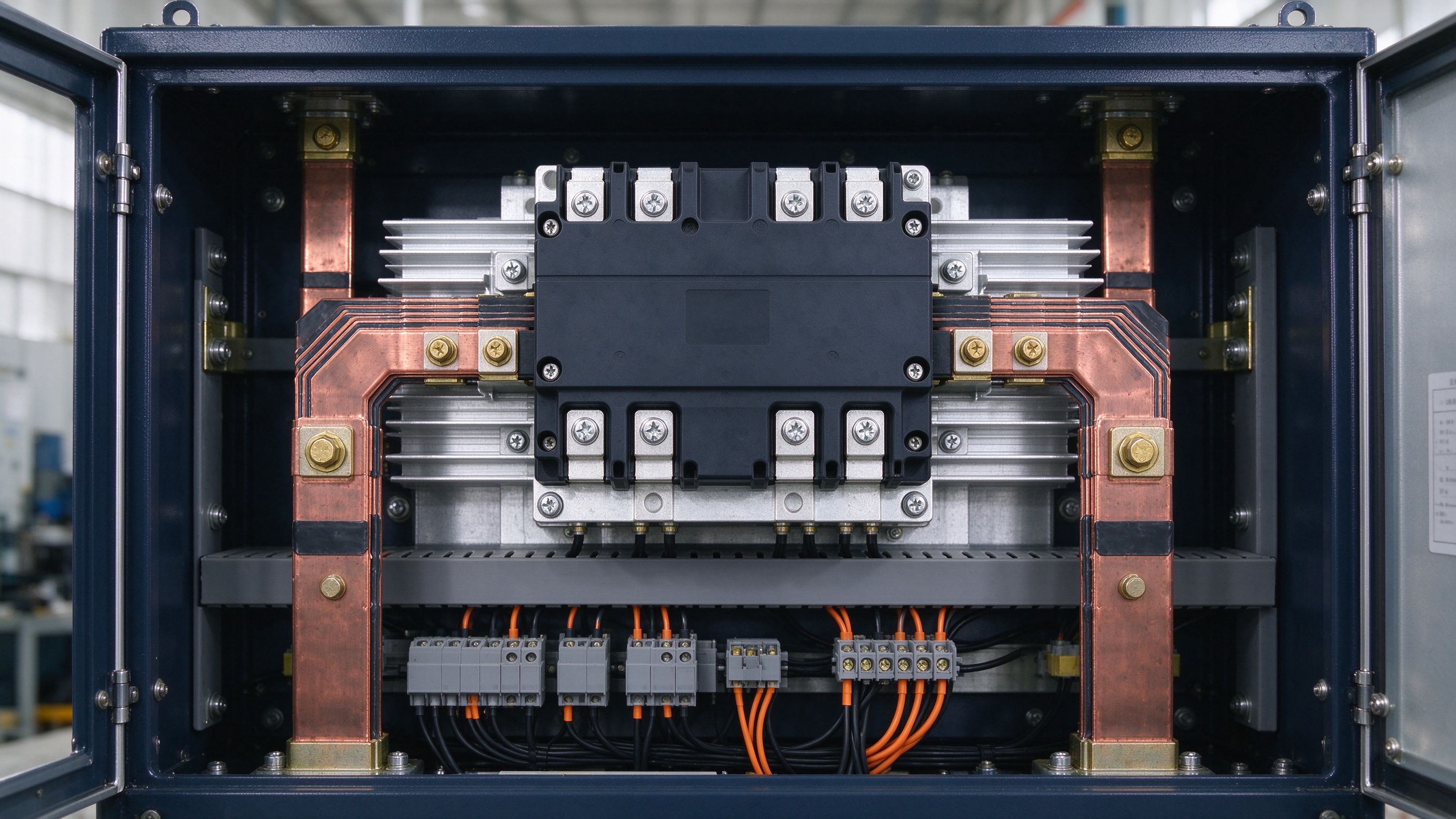
Standard power transformers average about 128 weeks to delivery and generator step-up unit
Read article
Emily Novak analyses energy-storage, grid and new-energy markets and turns them into procurement-ready technical content. With 7 years in energy market research and technical writing, she covers BESS growth, HVDC projects and regulatory shifts that change busbar demand. She holds an M.A. in Energy E
Send the current profile, voltage class and terminal types — our engineers reply within one business day.