The dielectric film sitting between two copper layers is the smallest, cheapest-looking part of a laminated busbar — and the one most likely to cause a field return if it is wrong. Pick a film that is too thin for the working voltage and you get partial discharge; pick one with a thermal class below the hotspot temperature and you get brittle insulation after two years of cycling; pick one that is over-specified and you pay for thickness and heat-sinking you never use. At SHANYUAN we build with three busbar dielectric materials every day — PET, Nomex and DLF epoxy — and this guide explains how we choose between them.
The dielectric film sitting between two copper layers is the smallest, cheapest-looking part of a laminated busbar — and the one most likely to cause a field return if it is wrong. Pick a film that is too thin for the working voltage and you get partial discharge; pick one with a thermal class below the hotspot temperature and you get brittle insulation after two years of cycling; pick one that is over-specified and you pay for thickness and heat-sinking you never use. At SHANYUAN we build with three busbar dielectric materials every day — PET, Nomex and DLF epoxy — and this guide explains how we choose between them.
Before comparing materials, be clear on the four jobs the film must do inside a laminated busbar:
Every dielectric on the market trades these four off against each other. There is no single best film; there is only the best film for your voltage, temperature and price point. If you are new to the geometry, our busbar design guide walks through how layers, clearances and creepage are drawn.
Polyester (PET) film is the workhorse of laminated busbar construction. It is what we use on the majority of power-electronics busbars and on lower-voltage battery busbars where hotspot temperatures stay below about 120–130 °C.
| Property | Typical PET (film) | Notes for busbar design |
|---|---|---|
| Dielectric strength | ~150–250 kV/mm at 25 µm | Thinner films give higher kV/mm; practical working stress is far below breakdown |
| Thermal class | ~130 °C continuous | Do not push above ~120 °C hotspot for life-critical gear |
| Common thicknesses | 0.05, 0.075, 0.10, 0.125, 0.18 mm | Two or three films stacked give more margin than one thick film |
| Flammability | Self-extinguishing grades available | Confirm grade with the supplier if your end system requires it |
| Cost | Lowest of the three | Big driver for price-sensitive EV and ESS builds |
PET creeps under long-term high temperature and can embrittle near the upper thermal class. If your inverter runs SiC devices with very high junction temperatures, or your busbar sits next to a brake resistor, move up to Nomex or DLF. See our SiC/IGBT DC-link busbar article for that design context.
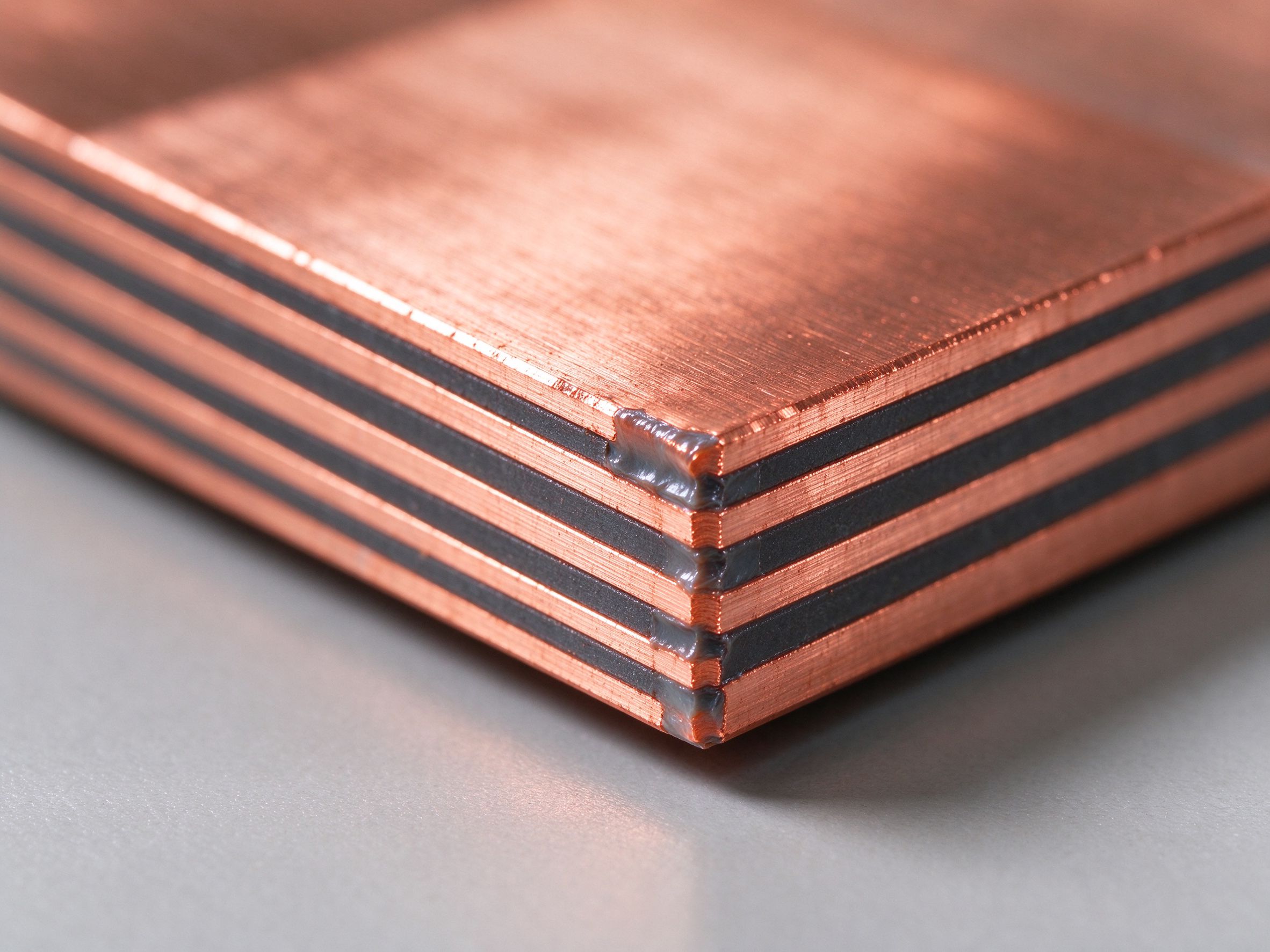
DuPont Nomex (aromatic polyamide paper) is the upgrade when the busbar sees higher temperatures, more thermal cycling, or needs a mechanically tougher insulation that can take a bit of edge-wear without tearing. It is common in traction, heavy-duty inverters and industrial drives.
| Property | Typical Nomex | Notes |
|---|---|---|
| Thermal class | ~180 °C (Class H) | Handles hot-spot excursions PET cannot |
| Dielectric strength | ~15–30 kV/mm at typical thickness | Lower kV/mm than PET, so you need slightly more thickness |
| Common thicknesses | 0.13, 0.18, 0.25, 0.30 mm | Often used as one sheet where PET would need two |
| Mechanical behaviour | Tough, conformable, tear-resistant | Friendly to contoured shapes and edge sealing |
| Cost | Higher than PET, lower than specialty films | Worth it when thermal class drives safety margin |
Two reasons. First, its dielectric strength per millimetre is lower, so you need more film to hold the same working voltage — and more film means a thicker, stiffer, more expensive part. Second, it is more absorbent than PET, which is why our full edge-sealing process matters even more on Nomex builds. We discuss this in the manufacturing process walkthrough.
DLF is a powder or B-stage epoxy coating applied directly to the copper and cured during lamination. Instead of a flat film sandwiched between flat sheets, the insulation follows the contoured, punched, bent shape of the copper. This is the right answer when the busbar is not a simple flat rectangle — think irregular outlines around IGBT modules, shapes with embossed standoffs, or parts where film wrapping would leave a gap at a tight bend.
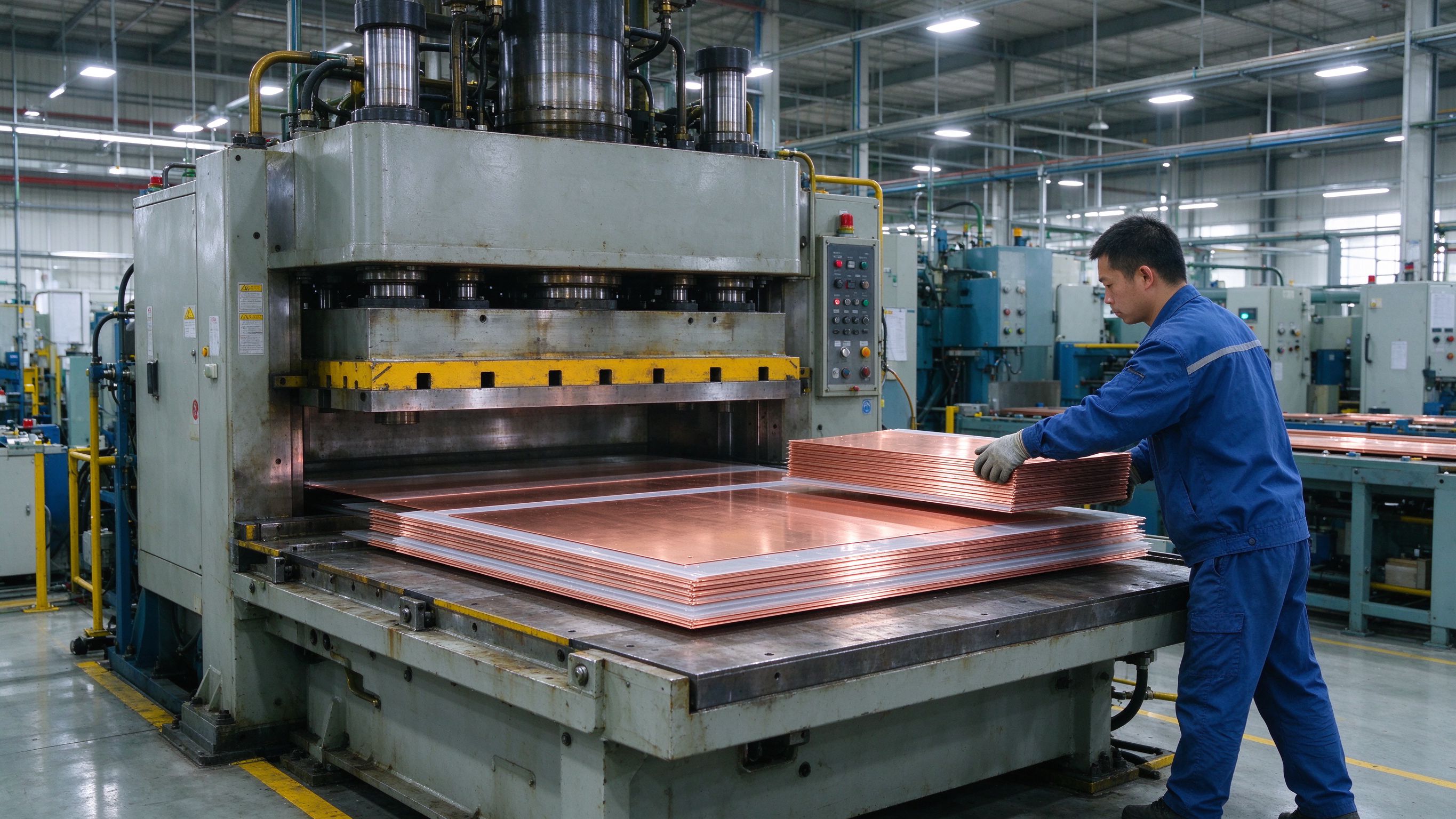
| Criterion | PET | Nomex | DLF / Epoxy |
|---|---|---|---|
| Thermal class | ~130 °C | ~180 °C | 130–180 °C depending on system |
| Dielectric strength | Highest per mm | Moderate | Good, depends on cure |
| Typical thickness | 0.05–0.18 mm | 0.13–0.30 mm | 0.2–0.5 mm |
| Best geometry | Flat, simple | Flat to gently contoured | Irregular, contoured, tight bends |
| Relative cost | Lowest | Medium | Highest |
| Edge sealing needs | Standard | Important (absorbent) | Built-in, less needed |
| Typical apps | Industrial inverters, lower-voltage battery busbars | Traction, heavy drives, hot-spot-heavy designs | Compact, irregular power-electronics modules |
If you are matching a dielectric to a current and temperature target, pair this table with our ampacity chart and with the current-capacity article, because the copper hotspot temperature is the number that usually forces the film choice.
When a drawing arrives for a custom busbar quote, our engineering team walks a short decision tree:
This is exactly the logic we apply during the DFM review that precedes every custom busbar quote. If you want to buy laminated busbars without going back and forth on material choice, send the drawing and the thermal/voltage envelope and we will recommend a film. For context on how this fits into the wider build, see the manufacturing process and the DFM checklist.
Get these right early and the rest of the build is straightforward. See also busbar vs cable for a reminder of why a well-specified laminated busbar beats heavy cable bundles in the first place, and talk to us via /contact/ if you need a second opinion on film choice for a specific inverter, ESS or EV application.
In practice we build most PET-laminated parts with either a single 0.10 mm film or a 0.05+0.05 mm double film. The double-film construction is not twice the insulation — it is a void-reduction strategy: two thin films bonded in the press let trapped air escape more reliably than one thick film, and the second film gives a spare layer of protection if the first gets a microscopic puncture. For Nomex builds we usually use one 0.18 or 0.25 mm sheet, because Nomex is already conformable and absorbs less air during press. For DLF builds the thickness is set by powder-coat film weight, not by picking a stock film roll. If you are unsure which combination to specify, ask for a recommendation during the custom busbar review; this is one of the questions we answer fastest.
Every dielectric ages, and aging accelerates sharply with temperature. The rule of thumb in polymer insulation is that every 10 °C rise roughly halves the useful life. That means a PET film sitting at 110 °C continuously will age far faster than the same film sitting at 80 °C — even though both are below the nominal 130 °C thermal class. This is why we push engineers to specify the real worst-case hotspot, not the typical operating temperature. If your inverter has a known hot spot near the busbar terminal, it is worth moving up to Nomex even if the average temperature looks fine. Pair this with the derating guidance in our current capacity article so the film choice and the copper sizing are consistent.
If you are still weighing options after this guide, the next practical step is to send the working voltage, hotspot temperature and geometry to our engineering team. We will propose a dielectric and thickness, quote the part, and ship a sample in 5–7 working days so you can bench-test the insulation behaviour on your own hardware. As an experienced busbar manufacturer we have laminated every combination of copper, aluminum, PET, Nomex and DLF on the shop floor — not just read about it — and we are happy to share what worked and what did not on previous similar builds. See also the design guide for the geometry side of the decision.
If in doubt, ask. We will tell you which film we would choose for the same voltage, temperature and price, and explain why in plain engineering language.
From C11000 copper coil to a fully sealed, tested multi-layer busbar, this walkthrough exp
Read article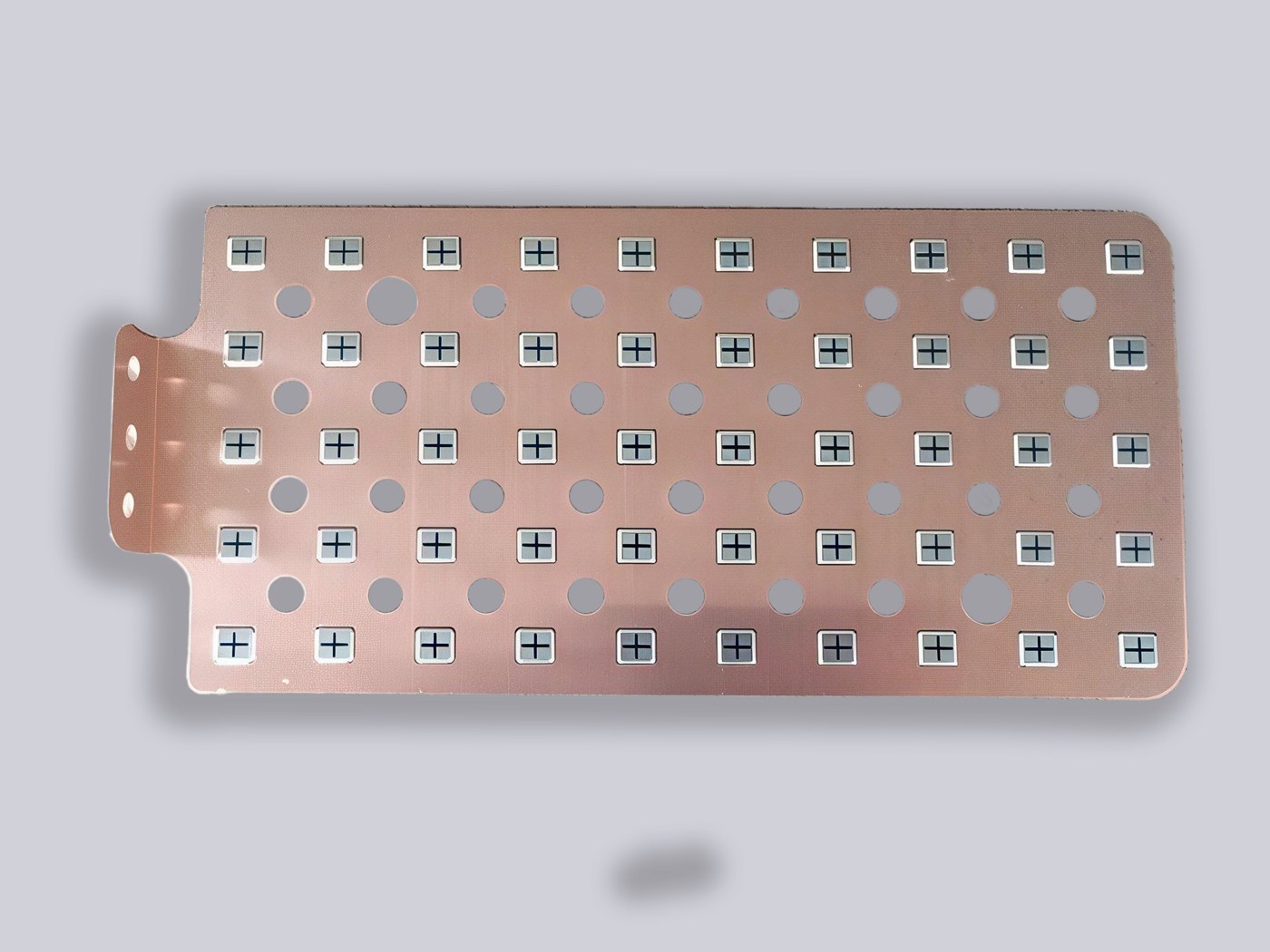
Copper busbar current rating is not a single number. It is a starting ampacity adjusted by
Read article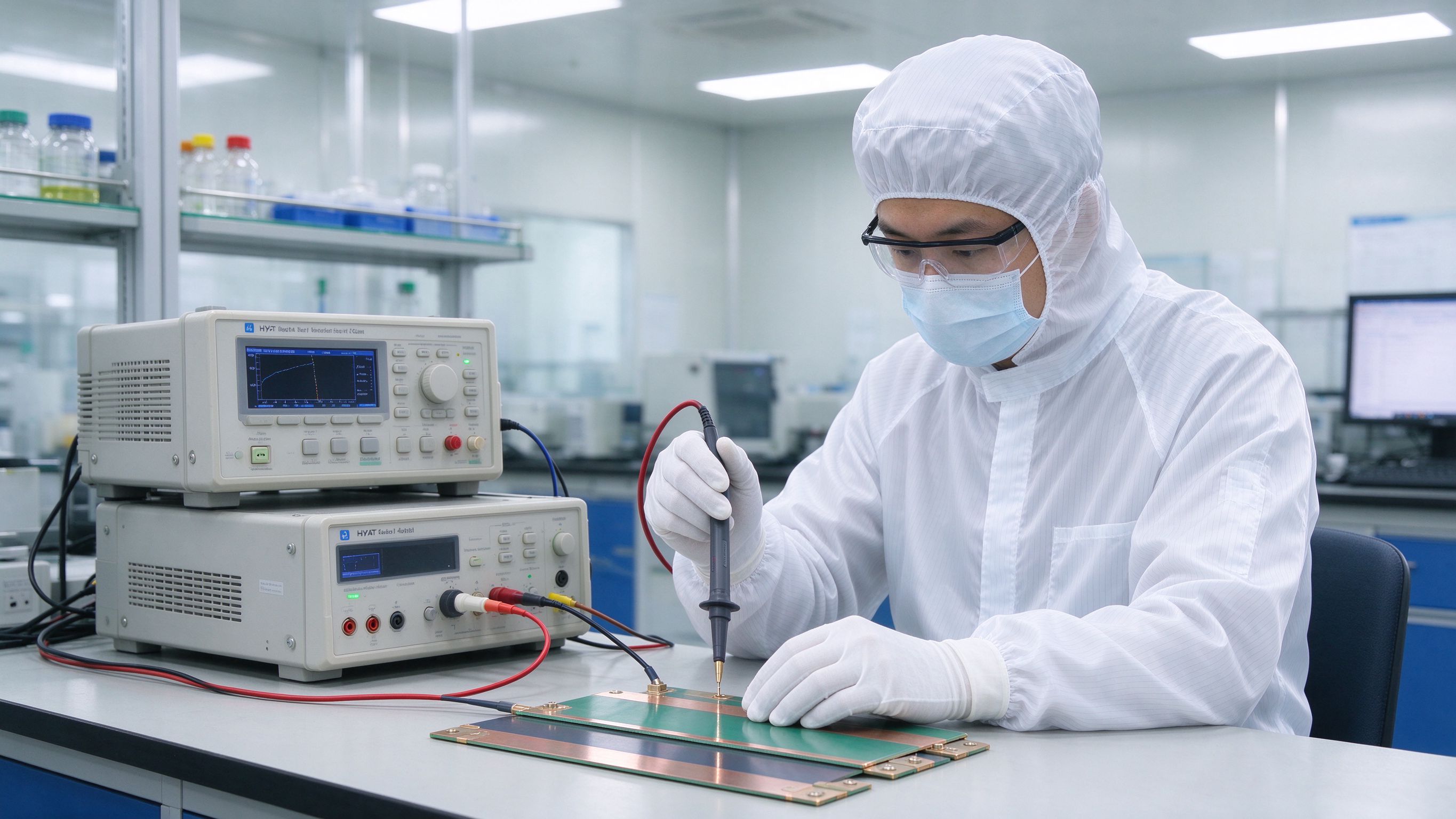
Every hour spent on DFM before a custom busbar quote saves a week of rework. This is the c
Read articleSend the current profile, voltage class and terminal types — our engineers reply within one business day.
Send drawings, current ratings and voltage class — DFM feedback and a quotation within one business day.