European grid capital programmes are at record levels and yet mid-sized busbar fabricators report uneven order books. The reason is timing: money is committed years before the switchgear is ordered, and transformer queues sit between the two. This article maps where the EUR 584 billion goes, what it means for copper and bar demand through 2030, and what European buyers now ask that they did not ask five years ago.
European grid capital programmes are at record levels and yet mid-sized busbar fabricators report uneven order books. The reason is timing: money is committed years before the switchgear is ordered, and transformer queues sit between the two. This article maps where the EUR 584 billion goes, what it means for copper and bar demand through 2030, and what European buyers now ask that they did not ask five years ago.
This page is an annual rolling data page: the 2026 edition, refreshed once a year as new market data is published.
The European Union's grid action plan, published in November 2023, put the investment requirement at roughly EUR 584 billion by 2030 to meet the electricity network needs implied by the Fit for 55 package and the renewable targets. That number circulates widely and is useful for scale. It is not useful for procurement, because the part that matters to a busbar supplier is not how much money is committed but when the copper actually gets ordered.
Grid investment has a long front end. A 380 kV substation extension needs permits, a connection agreement, a transformer slot, and a construction window; the busbar inside the medium-voltage switchgear that serves the station is a late-stage order. When capex announcements rise in one year, the busbar volume arrives two to four years later, and it arrives as a wave rather than a ramp.
That timing explains something apparent in the 2026 market: European TSOs and DSOs have committed record capital programmes, transformer lead times have stretched to two years or more, and yet the busbar order books of mid-sized fabricators are uneven. The bottleneck is in front of the busbar, not behind it.
This article looks at where the European money is actually going, what it implies for copper and bar demand between 2027 and 2030, and what a fabricator should do now to be positioned when the wave lands. The regulatory side of medium-voltage switchgear - the F-gas rules that force SF6 alternatives - is covered separately in our SF6-free switchgear analysis.
Roughly half of the European grid investment requirement is transmission and half is distribution, with distribution rising faster in relative terms because the low-voltage network has to absorb rooftop solar, heat pumps, and electric vehicles at a scale it was never designed for.
Transmission spending concentrates on four things: 380 kV and 400 kV line rebuilds and new corridors, HVDC links for offshore wind and for interconnectors, substation automation and replacement of ageing assets, and reactive power compensation. Distribution spending concentrates on transformer replacement, medium-voltage switchgear, cable renewal, and the digital sensors that make a passive network observable.
For busbar content, the distribution side is the larger market in tonnage and the transmission side is the larger market in specification complexity. A single 380 kV substation may use a few tonnes of copper in auxiliary and station service equipment; a distribution area with 200 secondary substations uses far more, spread across many small orders.
That has a strategic implication. A fabricator that wants volume chases the DSO replacement programmes, which are repetitive and specification-stable. A fabricator that wants margin chases the transmission projects, which are fewer but carry documentation, testing, and qualification requirements that exclude casual suppliers. Trying to do both with the same sales channel usually produces neither.
Electrical networks are the largest single end use of copper globally, and the IEA has repeatedly flagged that meeting announced grid targets implies copper demand growth that current mine supply cannot comfortably support. This matters to a busbar buyer because the bar is a copper derivative: the fabrication margin is stable, the metal price is not.
Three intensity changes are in play. First, renewable generation is more copper-intensive per installed megawatt than thermal generation, mostly in collector systems and inverters. Second, grid reinforcement adds copper in cables, transformers, and switchgear. Third, the shift from SF6 switchgear to vacuum and solid-insulation designs sometimes increases conductor content because the insulation is less effective at compacting clearances.
On the supply side, new copper projects have long lead times and declining ore grades, and recycling covers a limited share of incremental demand. The practical consequence is a metal price with a structurally higher floor and more volatility, which is why nearly every serious European bar contract now carries a copper reference clause rather than a fixed metal price.
For procurement managers, the actionable point is that evaluating a busbar quote on the total price hides the part of the price that is not the supplier's decision. Splitting fabrication cost from metal cost at a dated LME reference is the only way to compare offers honestly. Our MOQ and total cost of ownership analysis works through that split in detail.
Large power transformer lead times in Europe have moved from around 50 weeks before 2021 to 120 weeks and beyond, with some 420 kV and 500 kV units quoted at over three years. The cause is a combination of grain-oriented electrical steel supply, skilled winding labour, and a limited number of high-voltage test bays that cannot be added quickly.
This has a counter-intuitive effect on busbar demand. A substation cannot be energised without its transformer, so the switchgear and auxiliary systems may be installed and left idle for months. In that window, the maintenance and protection systems are commissioned, the station service is tested, and any defect in the auxiliary busbar becomes visible before the main plant is live. Projects that compress this window because the transformer finally arrived are the ones where a missing joint kit costs the most.
It also creates a second-order market: retrofit and replacement busbar for stations whose transformers are being replaced on a rolling programme. Those jobs are small, urgent, and specification-constrained by the existing cubicle, which makes them unattractive to large fabricators and profitable for a supplier that can work from a photograph and a measured drawing.
The wider picture on transformer-driven busbar demand is in this analysis of lead times, and the Korean and Japanese equivalents in the Asia grid build-out article.
Europe has roughly 3 million secondary substations, most of them with medium-voltage switchgear built between 1975 and 2005. Replacing that fleet is slow, unglamorous, and enormous in aggregate volume, and it is the segment where standardised laminated busbar earns most of its money.
The technical requirements are modest by transmission standards: 24 kV or 36 kV switchgear, 630 A to 1,250 A busbars, 16 to 25 kA fault levels, and a compact cubicle that leaves little room for cooling. What makes the segment demanding is the combination of a small enclosure, a high ambient in summer, and a specification that must survive 40 years with one or two maintenance visits.
That combination pushes design toward laminated bar with thin but well-bonded insulation, generous joint contact area, and plating that resists humid air rather than salt fog. It also pushes toward a repeatable part: a DSO that buys 5,000 cubicles over five years wants the busbar to be identical every time, because the field crews learn one part and one torque value.
For a fabricator, the discipline is configuration control. A DSO replacement programme is won on the first 50 units and lost on the 500th if the hole pattern has quietly drifted. The tolerance discipline that makes that possible is unglamorous and is exactly what the segment pays for.
Three architectural shifts are reshaping what goes inside a European MV cubicle. The first is the move away from SF6, which forces either vacuum interruption with solid insulation or a gas mixture with a lower global warming potential, and both routes change the space available for conductors.
The second is compactness. Urban substations in Amsterdam, Paris, and Berlin are constrained by real estate, and a cubicle that is 20% narrower can justify a higher unit price. Narrower cubicles mean shorter creepage paths in air and more reliance on solid insulation, which in turn means the busbar is often encapsulated or laminated rather than bare.
The third is digital monitoring. Temperature sensors on joints, partial discharge sensors in the tank, and current sensors on the bus are now specified in new-build substations, and each sensor needs a place to sit and a cable route. Sensing hardware competes with the busbar for the same cubic centimetres.
None of these shifts changes the fundamental physics, but each changes the drawing. A fabricator that can offer an encapsulated busbar with an integrated sensor pocket is selling a different product from one that can only supply a flat bar, and the price difference is not explained by the copper. The insulation design logic is set out in our low-inductance design reference and in the surface coating guide.
Offshore wind is the most visible part of the European build-out and the least relevant to a bar fabricator, because the busbar inside a converter station is part of the converter package and is supplied with it. That does not mean there is no market; it means the market is in the auxiliary and onshore interface rather than the valve hall.
The onshore converter station for a 1.4 GW link has station service switchgear, protection panels, and auxiliary distribution that consume a meaningful quantity of copper bar to ordinary IEC 61439 specifications. The offshore platform has the same equipment in a sealed, humid, salt-laden environment where plating choice and joint sealing become the dominant reliability factors.
Offshore also imposes a logistics constraint that changes the specification: anything installed on a platform must be replaceable with a limited spares inventory, because a maintenance visit costs a vessel day. That favours modular busbar assemblies with documented, interchangeable joints over bespoke bars that fit only one cubicle.
The converter-station interface design is covered in more depth in our HVDC converter station busbar article, and the fire-safety dimension of the associated battery systems in the liquid-cooled DC power analysis.
Europe's binding constraint is not money or copper. It is permits. A new 380 kV line can take seven to ten years from announcement to energisation in several member states, and grid connection queues in Spain, Italy, and the Netherlands have grown to multiples of the available capacity.
The EU's grid action plan tries to address this with faster permitting for grid infrastructure, a priority status for certain projects, and better use of existing rights of way. Even with those measures, the physical build rate is limited by crews, cranes, and the availability of transformers and cables.
For a supplier, the practical read is that European demand is real but slow, and it is back-loaded toward 2028–2030. A fabricator that plans capacity on the basis of 2026 announcements will be early; one that waits until the orders appear will be late. The reasonable posture is to build qualified capacity now for the segments where the specification is already stable, which means distribution and industrial rather than transmission.
This is the same structural problem visible in the US, where interconnection queues hold terawatt-scale capacity waiting for network upgrades; the US perspective is in the UL and NEC article.
Four questions have become standard in European RFQs since 2022. The first is carbon footprint: a declared embodied carbon value per kilogram of copper bar, with a stated methodology, is now requested by several TSOs and by an increasing number of tier-one contractors. A fabricator that cannot produce a number loses points before price.
The second is material provenance. Buyers want to know the mill and the country of origin for the copper, partly for sanction compliance and partly because recycled content is a procurement criterion in some member states.
The third is documentation in the buyer's language, which in practice means English plus one of German, French, Italian, or Spanish. A drawing package in English only is accepted but scores lower on the qualitative evaluation.
The fourth is serviceability. Buyers ask how a joint is replaced in the field, whether a spare kit is available off the shelf, and how long the replacement takes with the cubicle de-energised. A supplier that answers with a part number and a torque value wins that question, and it is easier to answer than the first three.
A European buyer comparing three busbar quotes usually finds a spread of 15–30% and assumes the cheapest supplier is cutting corners. Sometimes that is true; more often the spread comes from four structural differences.
Metal reference date. A quote that fixes copper at a low LME date looks cheaper than one that fixes at today's price, even with identical fabrication cost. The right comparison is fabrication plus metal at the same reference date.
Plating specification. Tin at 5 µm and tin at 12 µm over a nickel barrier differ materially in cost, and the drawing may not specify thickness. Comparing quotes without normalising the plating is comparing different products.
Testing and documentation. A package that includes a dimensional report per lot, plating thickness reports, and a dielectric test on laminated stacks costs more to produce than one that includes a certificate of conformance. The difference is typically a few percent of the price and most of the risk.
Scrap and yield. A fabricator with a good nesting strategy on standard bar sizes wastes less, and that advantage is real rather than cosmetic. The total cost logic, including the cost of a field failure, is worked through in the MOQ and TCO guide.
Three actions are worth more than a marketing campaign.
First, qualify into one distribution segment with one specification. Pick a single DSO-standard cubicle family, build the drawing library, and get a type-tested assembly reference. Repetition is the only way to get cost down without cutting quality, and one qualified family opens the door to a fleet replacement programme.
Second, build the evidence file before it is requested. Dimensional reports, plating thickness reports, dielectric test records, and heat-number traceability should be standard output of every lot, not a special service. In a market where buyers increasingly evaluate qualitative criteria, the evidence file is the differentiator that does not depend on price.
Third, prepare for the copper clause. A supplier that can quote fabrication plus metal at a dated reference, with a clear tolerance band and a stated adjustment mechanism, is easier to contract with than one that insists on a flat price for a two-year programme.
For the qualification mechanics of a second source, which is what most European buyers are actually doing when they add a supplier, see the dual-source qualification guide.
The European grid programme is large, slow, and back-loaded. The money is committed; the permits, transformers, and crews are not. Busbar demand rises from 2027 and peaks after 2029, with distribution volume exceeding transmission value.
The segments that reward a mid-sized fabricator are distribution switchgear replacement, industrial and commercial switchboards, and retrofit work. The segments that reward a large one are transmission auxiliary systems and converter station ancillary equipment. Neither segment rewards a supplier that cannot produce a measured inspection report.
Copper is the variable that cannot be managed by negotiation. Splitting fabrication from metal, and agreeing a reference date, is the only way to keep a multi-year programme profitable when the LME moves 20%.
The regional regulatory detail sits in our standards reference, the German-language market specifics in the terminology guide, and the Asian comparison in the Korea and Japan article. Buyers evaluating a first order can start from the sample-to-series procurement sequence.
One more number deserves attention: the European fabrication capacity for busbar is not the constraint, and neither is copper supply at the tonnage level. The constraint is skilled CNC and plating capacity in the specific 1,000-2,000 A segment, where most fabricators sit, and the willingness to run small lots with full documentation. Buyers who understand that stop negotiating on unit price and start negotiating on delivery certainty, which is the only variable that reliably decides whether a substation energises on schedule.
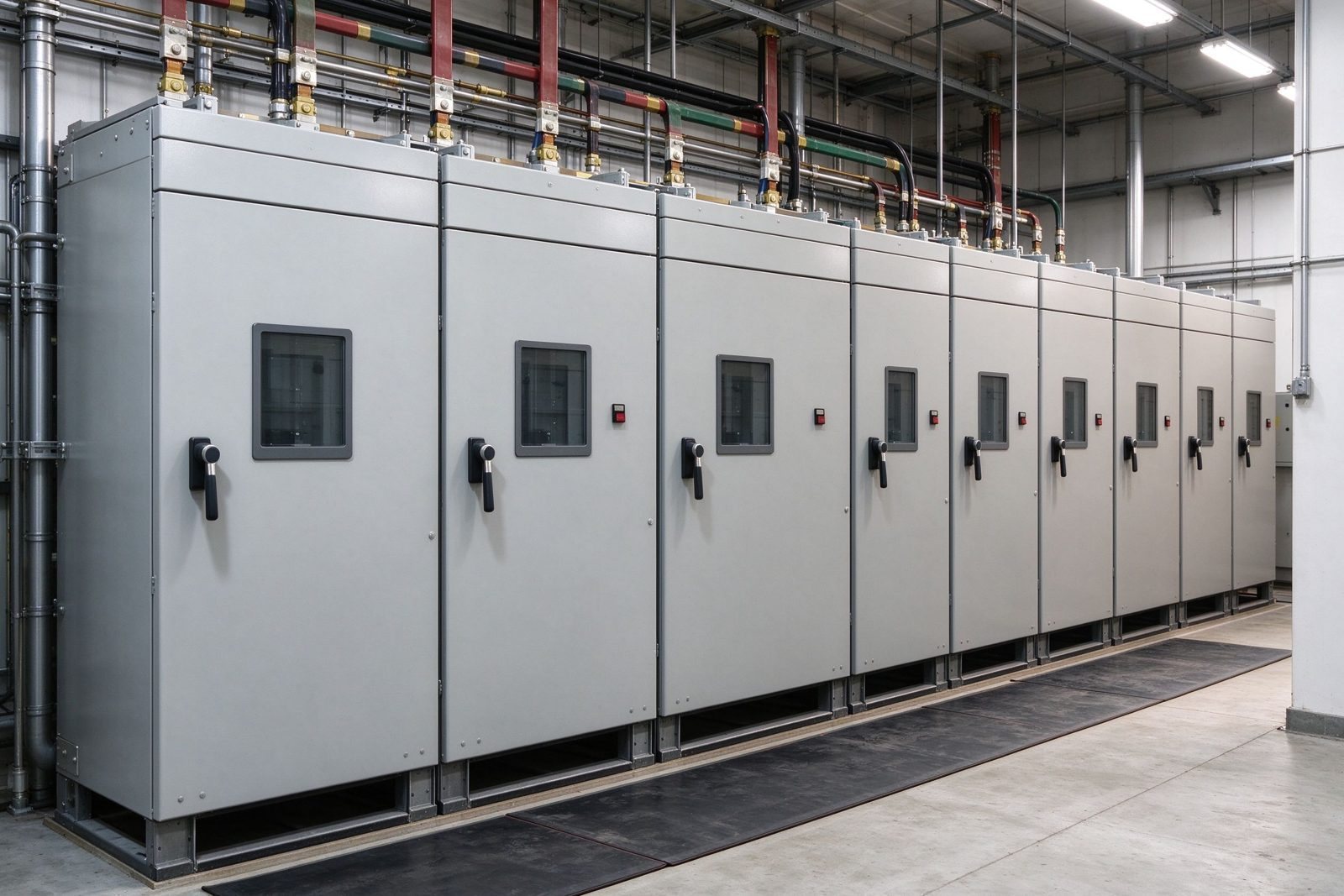
Replacing SF6 with air or vacuum is not a gas swap. It changes how close a busbar can sit
Read article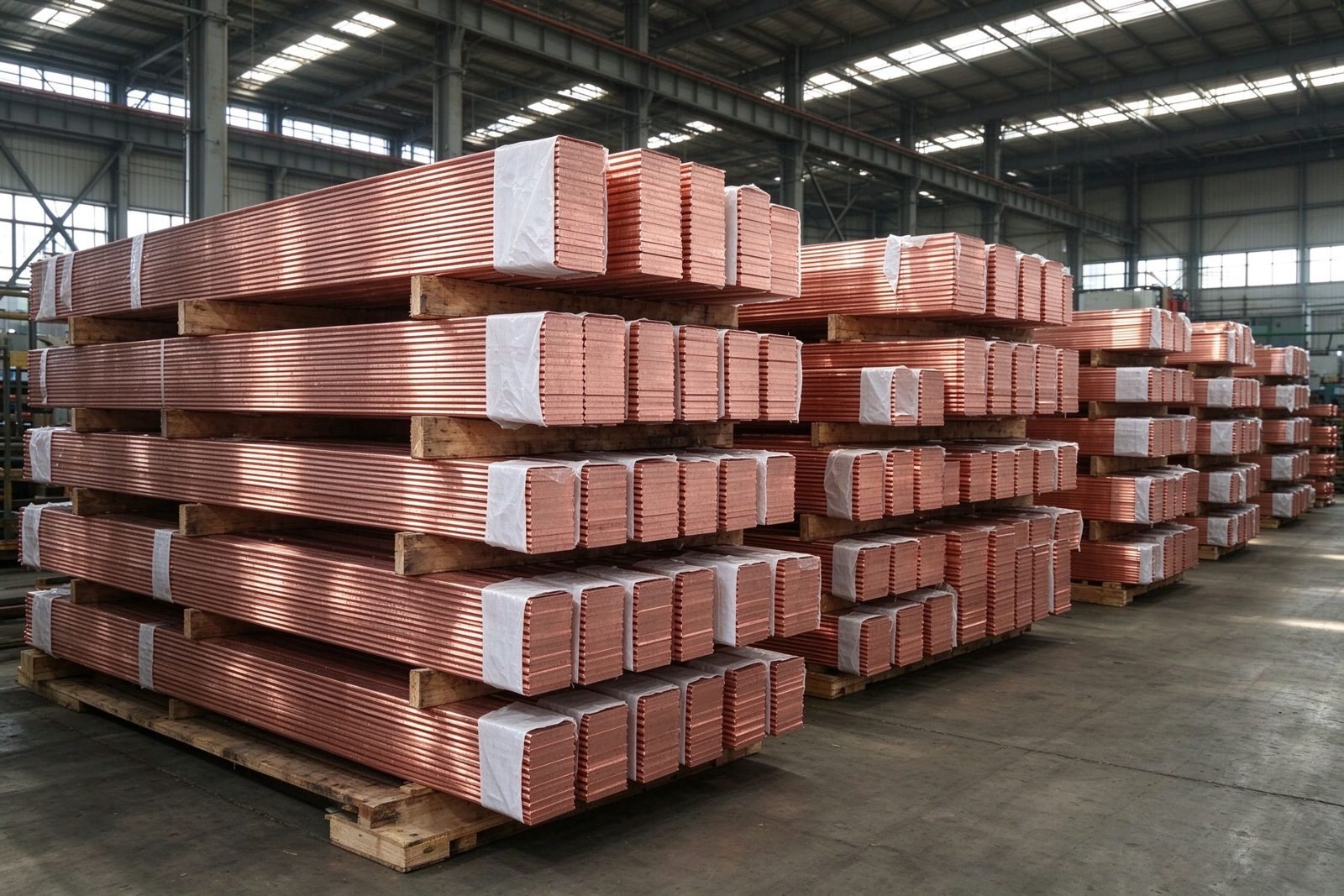
The lowest quoted piece price is rarely the lowest total cost. This framework puts tooling
Read article
Lucas Meyer advises procurement and supply-chain teams on copper sourcing, busbar pricing and supplier evaluation, with 13 years in industrial metals and electrical-component procurement. He developed SHANYUAN's copper-price quotation model and cost-breakdown framework for busbar projects. He h
Send the current profile, voltage class and terminal types — our engineers reply within one business day.