Japan and Korea are both rebuilding transmission networks designed for a different generation mix: Japan a 500 kV trunk between Tokyo and Chubu, Korea a 345 kV and 765 kV corridor from the southwest coast to Seoul. Both procure to IEC 61439 lineage with domestic deviations, both are short of large transformers, and both judge a busbar supplier on the evidence file rather than the unit price. This article maps the plans, the standards, the fault levels, and the procurement route.
Japan and Korea are both rebuilding transmission networks designed for a different generation mix: Japan a 500 kV trunk between Tokyo and Chubu, Korea a 345 kV and 765 kV corridor from the southwest coast to Seoul. Both procure to IEC 61439 lineage with domestic deviations, both are short of large transformers, and both judge a busbar supplier on the evidence file rather than the unit price. This article maps the plans, the standards, the fault levels, and the procurement route.
This page is an annual rolling data page: the 2026 edition, refreshed once a year as new market data is published.
Search Console data for this site tells a story that the European market reports hide: over a 16-day window in the second half of 2026, the Japanese pages converted click-through at 7.2% and the Korean pages at 3.4%, against 0.7% for English pages. Small absolute numbers, but the ratio is not an accident. Japanese and Korean engineers are searching for busbar specifications in their own language, finding summaries in English, and clicking on anything that looks like a native technical page.
The physical reason sits in the ground. Japan is rebuilding a 500 kV backbone that was designed around a 1970s generation mix, and Korea is pushing a 345 kV and 765 kV network to carry renewables concentrated on the southwest coast while the load sits in the Seoul metropolitan area 300 km to the north. Both programmes are transmission-heavy, and both need the same component: high-current busbar inside switchgear, converter stations, and large power transformers.
What differs from Europe is the procurement shape. European grid capex is driven by EU regulation and a handful of TSOs with harmonised specifications. Japan and Korea are driven by national plans, by a single dominant utility in Korea and by ten regional utilities plus one transmission operator in Japan, and by specifications written around IEC 61439 with domestic deviations a European supplier will not recognise.
The commercial consequence is simple. A supplier that can quote against KS C IEC 61439 and JIS C 8480 with local documentation wins these programmes; a supplier that sends an IEC certificate and an English drawing loses to a local fabricator at the paperwork stage, before price is discussed.
Korea's 10th Basic Plan for Electricity Supply and Demand, issued in January 2023, set the 2030 generation mix at roughly 32.4% nuclear, 21.6% renewable, and a smaller coal and LNG share than the previous plan. The revision was politically contested, but the infrastructure consequence is not: the plan requires new transmission corridors and a large volume of new substation capacity, because the renewable build is coastal and the load is metropolitan.
The 11th plan, covering 2025 to 2039, continues the same direction with a larger renewable share and an explicit commitment to expand the transmission system ahead of generation rather than behind it. That sequencing matters. When transmission leads generation, equipment is ordered in large batches against a schedule, and busbar content per project is high because each 345 kV substation needs main bus, disconnector bus, and converter bus.
KEPCO's investment programme has been the largest single driver of Korean switchgear and transformer demand since 2022, and the utility's own procurement cycles set the lead times that private developers then face. A 345 kV gas-insulated substation ordered in 2026 should be assumed to have a multi-year delivery profile, with the busbar as one of the shorter items inside a long schedule.
For a busbar manufacturer, Korea is a volume market with a specification culture. Drawings are detailed, tolerances are called out on the drawing rather than in a general note, and incoming inspection measures what the drawing says. That is good news for a supplier with a real dimensional report and bad news for one that ships to a nominal thickness and hopes.
Japan's 7th Strategic Energy Plan, approved by the Cabinet in February 2025, sets a 2040 target of 40–50% renewable electricity and around 20% nuclear, with thermal generation providing the balance and a role for hydrogen and ammonia co-firing. Whether those numbers survive the next review is political. The grid consequence is already visible: the plan cannot be delivered on the existing transmission system.
Japan's backbone is built around 500 kV lines between the Tokyo, Chubu, and Kansai areas, with 275 kV and 154 kV networks below them. Interregional ties have historically been weak by European standards, and the 2020s brought policy decisions to strengthen them, including direct-current links and new trunk lines designated under the national grid master plan process run by the Organisation for Cross-regional Coordination of Transmission Operators.
Japanese specifications add a layer that foreign suppliers underestimate: seismic qualification. Switchgear and busbar assemblies in Japanese substations are designed against JIS seismic criteria that differ from IEC 60068-3-3 practice, and a support layout that passes a European shake-table test may fail a Japanese review because the required spectrum and damping assumptions are different.
The other Japanese idiosyncrasy is documentation depth. A utility review will ask for the calculation as well as the test: short-circuit forces, support spacing, thermal rise, and insulation distance, each traceable to a standard clause. Supplying the test report alone is treated as an incomplete submission.
The busbar in a high-voltage substation is not one part but a family. There is the main bus inside gas-insulated switchgear, usually an aluminium or copper conductor inside a sealed tank, and there is the low-voltage and medium-voltage busbar in the station service and auxiliary systems, which is where laminated and solid copper bar from a fabricator actually appears.
The high-current items that drive volume are different again: the busbar in a converter station carrying 400–800 kV DC after the valves, the busbar in a static var compensator, and the busbar in the station's own 6.6 kV or 11 kV auxiliary switchgear. Those are copper or aluminium bars in the hundreds of amperes to a few thousand amperes, procured as part of the auxiliary system rather than the primary plant.
This distinction is commercially important. A fabricator that markets itself as a high-voltage busbar supplier will lose to the GIS manufacturers, who make their own conductors. A fabricator that positions itself in the auxiliary, distribution, and converter auxiliary space competes on drawings, plating, and delivery rather than on high-voltage credentials it does not have.
In Korean and Japanese projects that auxiliary space is large, because each substation carries substantial station service, battery, and protection equipment, all of which needs busbar. It is also less regulated than the primary plant, which shortens the approval cycle and makes it a realistic entry point for an overseas supplier building a local track record.
Korea adopts IEC 61439 as KS C IEC 61439-1 and -2, and Japan works to JIS C 8480, harmonised with the same IEC text. On paper a European assembly design should transfer directly. In practice three deviations matter.
The first is the ambient reference. IEC 61439-1 uses a 40 °C average over 24 hours with a 35 °C daily mean, while Korean summer conditions in an outdoor enclosure can exceed that for weeks. Korean specifications often call for a higher design ambient or a derating table, and a bar sized to the IEC minimum will run hot in August.
The second is the earthing and bonding convention. Japanese practice places heavy emphasis on bonding the enclosure and on the continuity of the ground path, with test requirements that go beyond a visual inspection. A ground bus bolted through painted steel will be rejected on that basis alone.
The third is language and units in the documentation. A Korean reviewer expects KS clause references; a Japanese reviewer expects JIS clause references and often a Japanese-language summary sheet. Supplying an IEC test report with an English cover letter is not a neutral choice; it reads as an incomplete submission.
The underlying engineering is identical, which is the point. Bar geometry, plating, and joint design can be the same part number in all three markets. What changes is the evidence file, and the evidence file is what the purchasing decision hinges on.
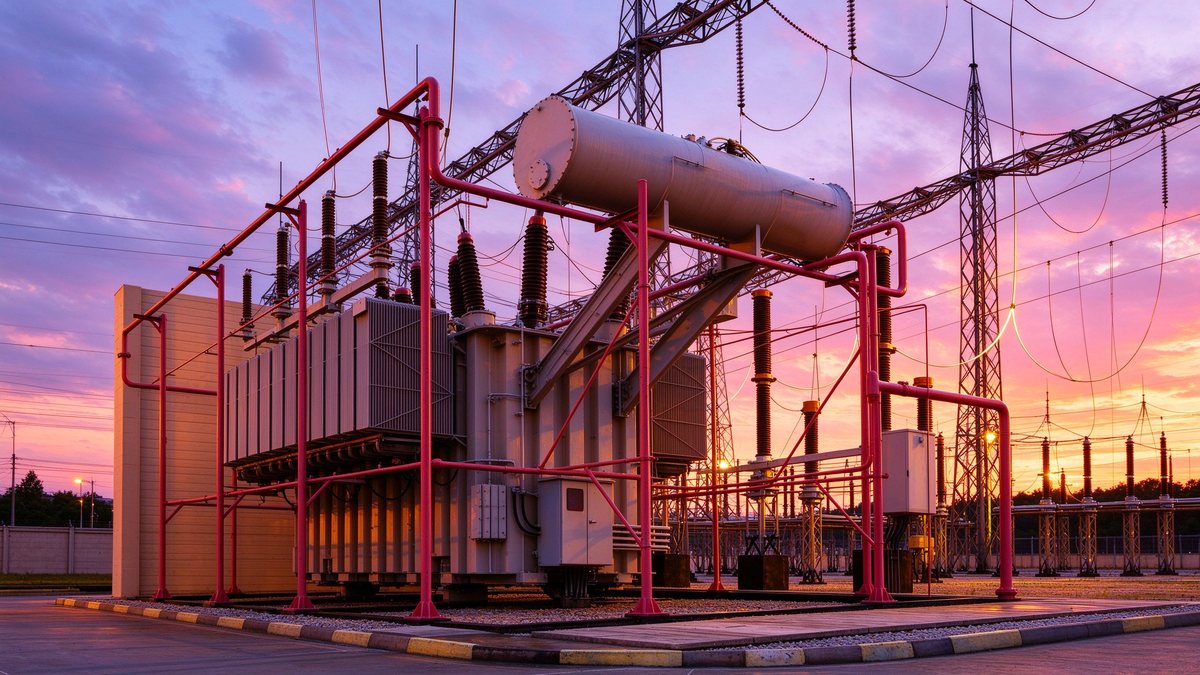
Korean 345 kV and Japanese 500 kV substations operate with fault levels that make low-voltage experience insufficient. At the medium-voltage auxiliary level, 40–63 kA is normal, and the busbar in that switchgear is subject to forces that scale with the square of the current.
For a 63 kA fault with a 2.5 peak factor, first peak reaches about 157 kA. Two bars spaced 35 mm apart see forces in the tens of kilonewtons per metre, which is why medium-voltage switchgear busbar is supported at short intervals and why the support insulator, not the bar, is usually the limiting component. It is also why retrofit work inside an existing cubicle is so constrained: the space for additional supports does not exist.
Where the assembly is a laminated stack, the laminated construction helps mechanically as well as electrically. Bonded layers behave as a stiffer beam in the plane of the fault force, and the insulation between layers prevents the layers from touching under deflection. That is a real advantage, and one reason laminated bar is used in compact medium-voltage designs even when the current does not require it.
The design review question is not whether the bar can carry the current but whether the support layout was tested at the assembly's rated fault level with the same barrier arrangement. A calculation that ignores the barriers under-predicts the force path and over-predicts the margin.
Korea and Japan are both short of large power transformers, and the shortage has the same root as in Europe and North America: grain-oriented electrical steel capacity, winding capacity, and a testing bay queue that cannot be expanded quickly. Industry surveys since 2024 have put large power transformer lead times at 120–210 weeks globally, with Asian utilities competing for the same limited capacity as US and European buyers.
That shortage changes the busbar opportunity in a specific way. When transformers arrive late, switchgear and auxiliary systems are often installed first, and the project schedule compresses the commissioning window. A busbar package that arrives complete, correctly plated, and with the dimensional report in the crate becomes disproportionately valuable, because there is no slack left to rework a joint in the field.
It also changes what buyers ask. In a schedule-constrained project the questions shift from price to: can you deliver in twelve weeks, can you deliver the full set in one shipment, and can you supply a replacement joint kit without a new drawing cycle. Suppliers who can answer those three questions compete on a different axis from suppliers quoting a lower unit price.
The data behind the global shortage is set out in our analysis of grid transformer lead times and busbar demand, and the European picture in the EU grid capex article.
The most expensive misunderstandings in these markets are lexical, not commercial. A Korean drawing will specify 부스바 or 버스바 depending on house style, a Japanese drawing will use バスバー or 母線, and the English translation of either may say bus bar, busbar, or bus conductor. None of that is a problem until a note says insulated support or flame-retardant coating and the two sides mean different products.
Three traps recur. First, 絶縁距離 in Japanese covers both clearance and creepage, while IEC separates them; a Japanese note asking for insulation distance may be satisfied by either, and a supplier that optimises only the through-air gap can fail the over-surface requirement. Second, Korean 절연거리 carries the same ambiguity. Third, plating notes often say 주석 도금 or 錫メッキ without a thickness; the supplier picks a thickness that passes, and the buyer rejects it against an unstated internal standard.
The fix is procedural rather than linguistic: on every translated drawing, restate the requirement as a number with a unit, and ask the buyer to confirm the number rather than the word. That single practice prevents most rejections we see in cross-language programmes.
This is why we maintain a cross-language terminology reference with nine languages and a column for the numeric requirement behind each term. It is not a translation exercise; it is defect prevention. The electrical version of the same problem appears in the creepage and clearance guide.
Japan and Korea both put busbar in environments European specifications do not always anticipate. Coastal substations see salt fog, Korean summer humidity holds above 80% for weeks, and Japanese volcanic-ash regions see dust that becomes mildly conductive when wet.
Tin over copper remains the default, but thickness matters more here than in a dry inland plant. For coastal and humid sites, 10–15 µm of tin over a 2–3 µm nickel barrier is a reasonable specification, and joint faces should be inspected for porosity rather than only appearance. Matte tin with a controlled grain structure is preferable to bright tin where whisker risk matters, and in a sealed enclosure with a DC bias, whisker risk does matter.
Silver plating is the alternative where contact resistance must be minimal and the environment is controlled, typically in converter and protection equipment. Silver tarnishes in sulfur-bearing air, common in Korean industrial areas, so silver joints need a controlled atmosphere or a protective coating the buyer accepts.
What should not happen is a buyer specifying tin, the supplier applying thin bright tin to save cost, and the joint failing two summers later at a coastal site. Thickness is a process parameter and belongs on the drawing. Our connection design reference sets out the joint geometry that goes with each finish.
Korean procurement is organised around won-denominated contracts with a local agent or fabricator as contracting party, and Japanese procurement is similar with a trading house in the middle. Direct export contracts exist, but they are the exception for a first order.
For a Chinese fabricator the realistic path is a local partner that holds the relationship and takes currency and logistics risk, with the technical file coming from the factory. That structure is not a concession; it is how the market works, and it shortens qualification because the local partner already holds the utility's vendor code.
Two details decide whether the structure works. First, a documented factory audit, because the local partner will be asked to guarantee the factory's process. Second, a stable specification: if the design changes between sample and production lot for a cost optimisation on the factory side, the local partner carries the liability and will not repeat the order.
Payment terms in both markets are conservative, typically with retention held until commissioning. That retention is the reason a supplier should price the inspection and documentation package into the quotation rather than treat it as overhead. It is also why dual-source qualification is worth reading before, not after, the first local order.
An RFQ from a Korean EPC or a Japanese trading house typically arrives as a drawing set plus a specification sheet, and it tests five things beyond price.
Conformance to the drawing, measured. Not nominal dimensions, but actual values with a report per lot. A supplier that cannot produce a dimensional layout will be asked to produce one before the order is placed, and the supplier that already has one shortens the cycle by weeks.
Material traceability. Heat number on the mill certificate, matched to the lot, matched to the shipment. Korean and Japanese quality systems are built around traceability, and a certificate covering a month of production rather than a heat number is treated as no certificate.
Process capability evidence. For a laminated bar, the dielectric test on the finished stack; for a plated bar, the thickness measurement with the method stated; for a machined bar, the deburring and edge condition, because a burr is a field failure in a medium-voltage cubicle.
Schedule credibility: a date with a production plan behind it rather than a wish. And responsiveness during review, because a supplier that answers technical questions in a day is treated as lower risk than one that answers in a week, regardless of price.
The quality documentation behind those five answers is the same package a European or US customer asks for, which is why building it once is worth the effort.
The Korean programme's centre of gravity is the southwest renewable corridor and the new transmission corridors feeding Seoul, with converter stations for planned DC links and a large volume of 345 kV substation work. The Japanese programme's centre of gravity is the 500 kV trunk reinforcement between Tokyo and Chubu, the Hokkaido–Honshu link, and the rebuild of ageing 154 kV substations.
Both programmes will consume far more busbar in the auxiliary and distribution layers than in the primary plant, because there are many more cubicles than converter valves. That is where a fabricator with laminated and solid copper capability can compete, and where technical requirements are most familiar: IEC 61439 lineage, tin plating, M8 and M10 joints, and a temperature-rise test.
What decides winners is not capacity. It is the ability to hold a specification for five years while the buyer's engineering team changes, and to reproduce a part number exactly on the fifth order. In a programme measured in decades, reproducibility is the product.
The same logic applies in the US market, where UL 891 and NEC rules put the assembly rating ahead of the component rating, and in data halls, where the blind-mate interface is replacing the bolted joint entirely.
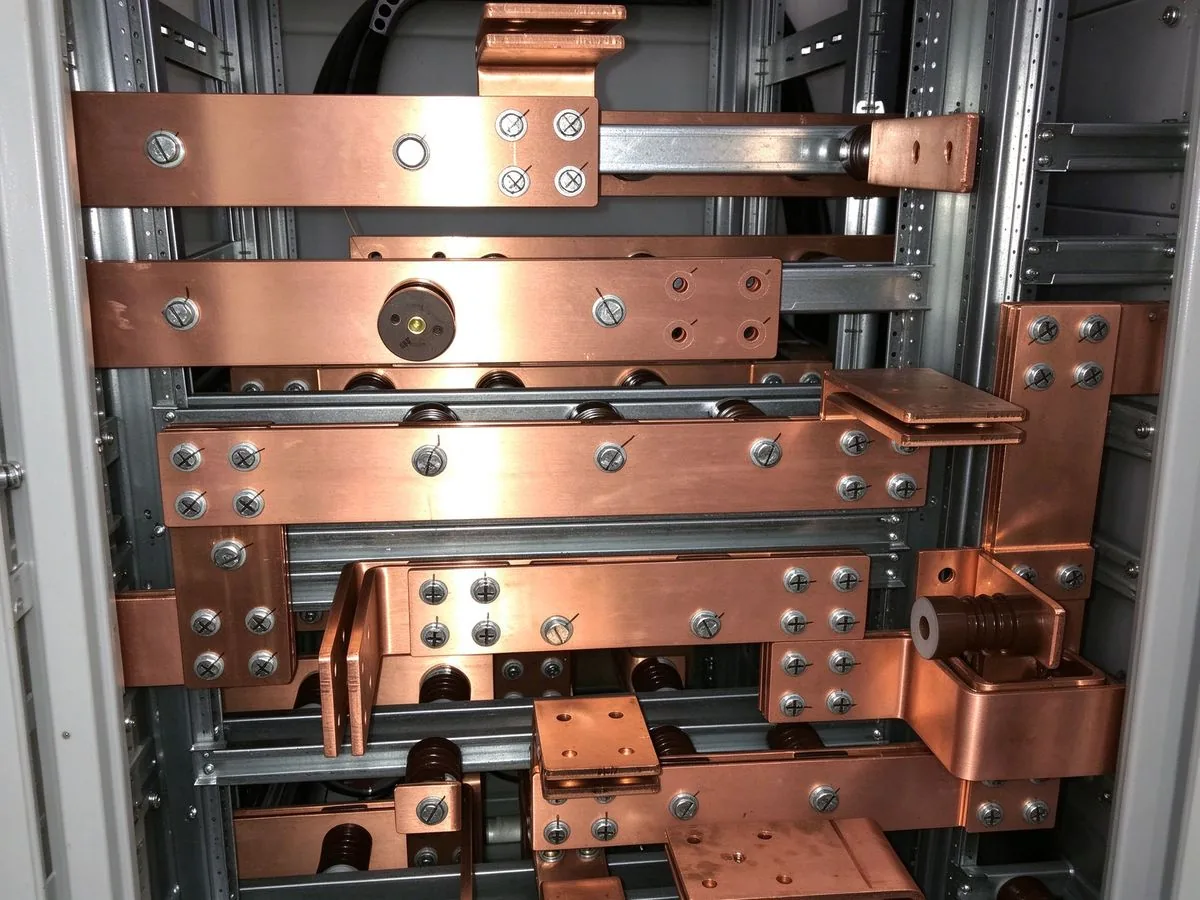
Standard power transformers average about 128 weeks to delivery and generator step-up unit
Read article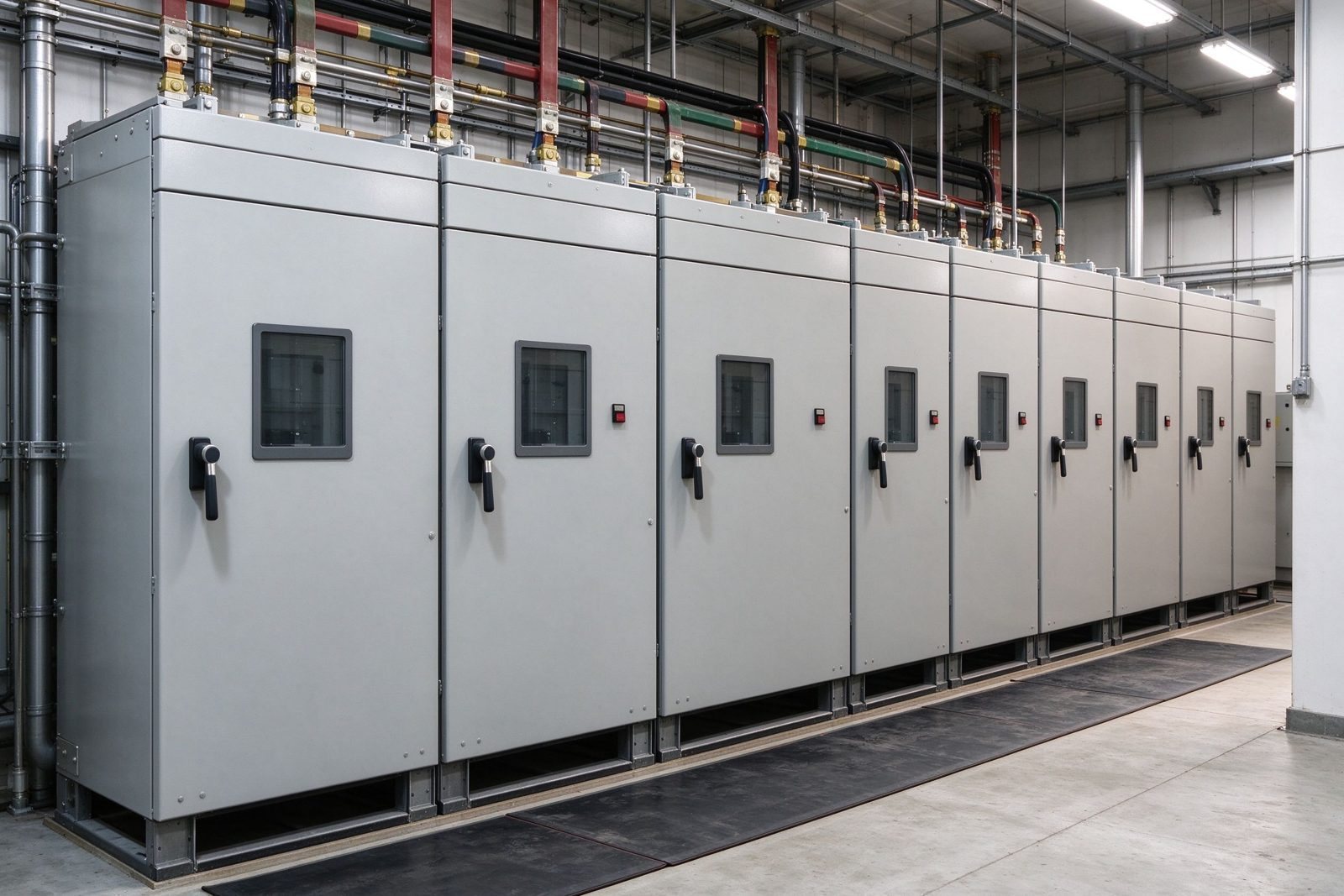
Replacing SF6 with air or vacuum is not a gas swap. It changes how close a busbar can sit
Read article
Emily Novak analyses energy-storage, grid and new-energy markets and turns them into procurement-ready technical content. With 7 years in energy market research and technical writing, she covers BESS growth, HVDC projects and regulatory shifts that change busbar demand. She holds an M.A. in Energy E
Send the current profile, voltage class and terminal types — our engineers reply within one business day.