The HVDC order book in 2026 is the fattest it has been in a decade. 50Hertz is adding 4 GW of offshore HVDC capacity through LanWin3 and LanWin6 with a EUR 2.5 billion converter contract (Elia Group, July 2026); China Southern Power Grid has sailed its first ±500 kV, 2,000 MW offshore VSC converter station for the Yangjiang project (China News, July 2026); and State Grid has committed CNY 4 trillion of fixed-asset investment for 2026-2030, roughly 40% above the previous cycle (China Daily, January 2026). Behind each converter terminal sit the busbars nobody photographs: DC-link laminates inside the valve towers, DC-yard bus sections, filter-branch bars and ground paths. This article walks through where laminated busbars appear in a modern HVDC station, what the 2026 projects changed, and how the specification language has shifted.
The HVDC order book in 2026 is the fattest it has been in a decade. 50Hertz is adding 4 GW of offshore HVDC capacity through LanWin3 and LanWin6 with a EUR 2.5 billion converter contract (Elia Group, July 2026); China Southern Power Grid has sailed its first ±500 kV, 2,000 MW offshore VSC converter station for the Yangjiang project (China News, July 2026); and State Grid has committed CNY 4 trillion of fixed-asset investment for 2026-2030, roughly 40% above the previous cycle (China Daily, January 2026). Behind each converter terminal sit the busbars nobody photographs: DC-link laminates inside the valve towers, DC-yard bus sections, filter-branch bars and ground paths. This article walks through where laminated busbars appear in a modern HVDC station, what the 2026 projects changed, and how the specification language has shifted.
A voltage-source converter (VSC) station breaks into five electrical zones. The AC yard and converter transformer step the grid down; the valve hall holds the converter valves and their DC-link capacitors; the DC yard collects the pole output; the filtering section handles harmonics on both sides; and the auxiliary/ground system keeps everything referenced. Laminated busbars turn up in four of those five zones.
The pattern repeats whether the station is a 600 MW Elmed interconnector or a 10 GW UHVDC corridor. What changed in 2026 is the volume of projects reaching equipment-procurement stage at once - which is exactly when busbar orders get placed.
Each converter valve needs a low-inductance DC link between its power modules and capacitor bank. A VSC switches at a few kilohertz; di/dt at turn-off can exceed 1 kA/µs in a 2 GW converter. Stray inductance in that loop is not a cosmetic concern - it produces overvoltage spikes proportional to L·di/dt and drives uneven current sharing across parallel module arms.
This is the application laminated busbars were built for. The multi-layer, interleaved construction puts positive and negative current paths within a few millimetres of each other, cancelling loop inductance. A well-laid laminate for a 2 GW valve can hold the commutation loop below 20 nH; the same loop in discrete bars and cable assemblies runs several times higher. The 2026 class of converters - Siemens Energy's LanWin3/LanWin6 2 GW platforms, Hitachi's 1 GW Mumbai infeed - pushes module counts up, and with them the number of DC-link laminates per tower.
Leaving the valve hall, the pole current travels on the DC yard bus to the cable or overhead-line termination. At 2 GW and ±320 kV to ±525 kV, the current is in the 3-6 kA range, and the bus is usually a conventional rigid bar arrangement - copper or aluminium sections sized for continuous rating plus short-circuit withstand.
What the yard does share with the valve hall is the need for controlled clearance and creepage: at ±525 kV, phase-to-ground clearances and insulation coordination follow IEC 60664 and IEC 61865 practice, and the DC-link laminate's own insulation (PET, Nomex or DLF stacks) has to survive the same voltage class without partial discharge. Yard bus is where copper weight matters most - and where the copper price conversation in Section 7 lands.
Both AC and DC sides of a VSC station carry harmonic currents. AC-side filters handle 11th, 13th and higher orders; DC-side smoothing and passive filters manage the ripple from the switching process. Filter branch conductors see continuous harmonic content, which means skin effect and proximity effect cannot be ignored - AC resistance at 250 Hz to 2 kHz is higher than at power frequency.
In practice the filter branches use either stranded conductors or thin, wide bars. A laminated busbar with parallel thin layers is a good fit here because the layers keep AC-resistance growth modest. This connects directly to our harmonic-derating guidance for VFD and charger loads: the same physics that derates a 50 Hz rating on a factory floor applies, scaled, inside a converter station.
The least photographed busbars in a station are the ground paths. DC grounding, neutral bus, auxiliary power distribution and the platform earth grid all carry fault current transiently and a defined load current continuously. These sections are usually simpler laminates or bare bars, but the termination practice matters: bolted joints on high-current ground paths need the same preload and plating discipline as the main power path.
For offshore platforms - the 25,000-tonne, seven-storey Yangjiang station being a good example - the vibration and salt environment add mechanical and corrosion requirements that a purely land-based design would not carry.
The Yangjiang ±500 kV station is 85.5 m long, 43 m high and weighs about 25,000 t, with anti-corrosion treatment and a frame designed for Category 17 typhoons and magnitude-8 earthquakes (China News, July 2026). That environment is brutal for busbar joints: differential thermal expansion between copper and steel structures, vibration from transformers and pumps, and salt mist all attack bolted connections.
Offshore converter busbars increasingly copy rail-grade practice: spring washers or Belleville stacks, controlled preload rather than torque-only, and plated surfaces rated for salt-spray hours rather than just contact resistance. If a project specifies IEC 61373-style vibration testing for the busbar assembly, the design rules are the ones we published for bolted joints under vibration.
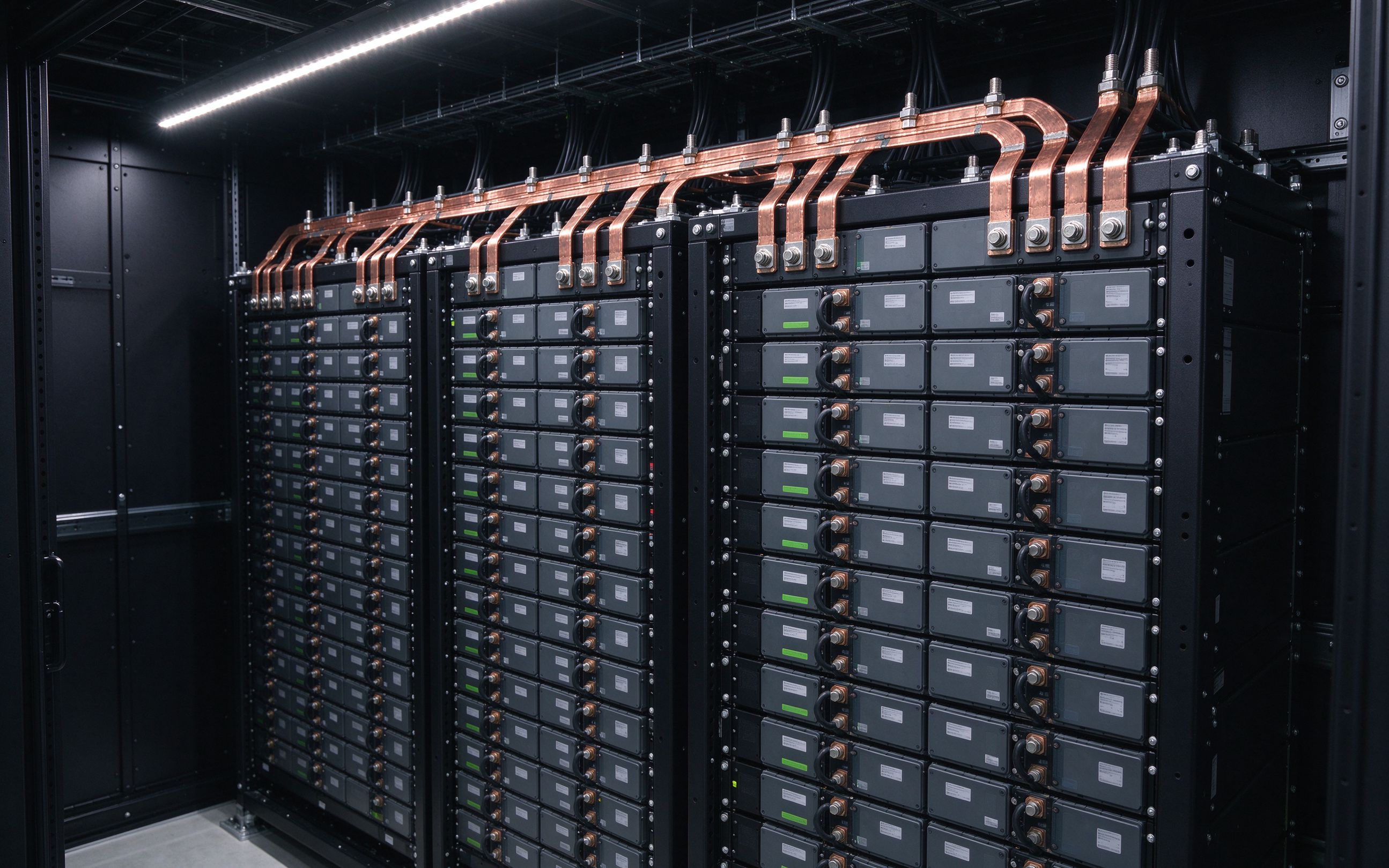
A 2 GW station contains hundreds of tonnes of copper across transformers, valves, busbars, cables and terminations. The busbar share is small next to the transformer coils, but it is the share a component supplier is asked to price. With LME copper volatile through 2025-2026 and State Grid's four-year CNY 4 trillion programme stretching supply chains (China Daily, January 2026), converter-station tenders now routinely ask for copper-weight breakdowns and LME-linked pricing clauses.
For busbar makers that means quoting on weight and plating is no longer enough: customers want the material certificate, the copper basis, and a clear statement of what changes if LME moves 5% between order and delivery. Our guidance on copper procurement for busbar supply covers the same ground from the buyer side.
Europe is building offshore HVDC at an unprecedented clip. 50Hertz's LanWin3 and LanWin6 alone add 4 GW and a EUR 2.5 billion contract with Siemens Energy and NSORe (Elia Group, July 2026), with the German North Sea offshore wind target at 30 GW by 2030 and 70 GW by 2045. Hitachi Energy won roughly EUR 770 million for the 600 MW Elmed link - the first DC interconnection between Europe and North Africa - in June 2026, and Siemens Energy signed a GBP 3 billion contract for the 2 GW Eastern Green Link 4 in March 2026 (Dataintelo, September 2026).
China is running the same race at higher voltage. State Grid's plan lifts inter-regional transfer capacity by more than 30%, with the Tibet-Guangdong ±800 kV, 10 GW multi-terminal link targeting full operation in 2029 (Dataintelo, September 2026). Every one of these projects passes through equipment tenders, and busbar sub-specifications travel with the converter packages.
Ten years ago, ±320 kV was the default offshore VSC voltage. The 2026 pipeline is dominated by 525 kV-class links: NKT qualified a 525 kV subsea cable for 90 °C operation in August 2026, and Sumitomo Electric won the EUR 2 billion, 525 kV Amprion cable project in May 2026 (Dataintelo, September 2026). On the busbar side, higher DC voltage moves the insulation conversation from creepage management toward partial-discharge-free design.
At ±525 kV, a laminate's dielectric stack, layer edges and terminations have to be engineered so that no internal void sits where the field is highest. That is the same discipline as PD-free design for MV converter busbars, scaled to thicker stacks and larger clearances.
Across the 2026 converter-station tenders we have reviewed, busbar sub-specifications keep coming back to a short list: continuous and short-time current ratings; rated DC voltage and insulation coordination; partial-discharge limits (typically <10 pC at rated voltage); terminal and connection requirements (bolt sizes, plating, torque); environmental conditions (temperature, humidity, salt, vibration); and documentation - material certs, test reports, and DFM drawings.
Suppliers who answer those with data instead of slogans get shortlisted. Our laminated busbar specification checklist mirrors the same structure and is a useful template for any converter, inverter or ESS tender.
Valve-hall laminates are rated the same way every busbar is: thermal rating first, then short-circuit withstand, then mechanical duty. For a 2 GW valve tower, continuous currents are in the 1-2 kA range per module arm; the interesting number is the short-time rating, because fault current in a DC link decays through the converter control rather than a grid breaker.
Type testing for these parts follows IEC 61439-style verification - temperature rise, dielectric, short-circuit withstand - plus the DC-specific tests: DC hipot, partial discharge under DC stress, and thermal cycling. We apply the same test matrix on every production lot for our converter and inverter busbars, with batch records kept per lot.
The most common mistake in HVDC procurement is treating the busbar as a late-fit component. The DC-link laminate defines the valve tower's commutation loop; the DC-yard bus defines copper weight and clearances; the filter bars define harmonic performance. Changing any of them after the enclosure and steelwork are frozen costs real money.
Practical advice: send the converter package's electrical parameters - voltage class, continuous and short-time currents, switching frequency, ambient and cooling assumptions - to a busbar supplier in the same week you finalise the converter architecture. A DFM review at that stage is free, and it catches loop-inductance and insulation-coordination problems while they are still a sketch.
SHANYUAN has built laminated busbars for power-electronics duty since 2012 - EV inverters, ESS power conversion systems, industrial drives and, increasingly, DC-link and converter applications in the 800 V to multi-kV class. Our plant in Rizhao, Shandong runs 17,200 m² of stamping, lamination, plating and test capacity, and exports to more than 20 countries.
For converter and inverter OEMs we supply low-inductance DC-link laminates (1-6+ layers, C11000 copper, PET/Nomex/DLF dielectrics), blade- and stud-terminal variants, and per-lot test records with CoC. If a 2026 HVDC, MV drive or ESS project is on your table, the first step is a drawing and a current profile - our engineers reply within one business day.
Most of what happens in an HVDC valve hall happens, smaller, inside every industrial drive and ESS inverter: a DC link with fast switching, a commutation loop that must stay tight, and busbars that carry the full rated current between modules and capacitors. The 2026 HVDC wave is unusual only in scale - the design rules are the ones the power-electronics industry has used for two decades.
That is why the same laminate families serve both markets: a 1,000 V ESS PCS DC link and a 525 kV valve-hall busbar share the same physics of inductance, insulation and thermal rating, and differ mainly in voltage class, stack thickness and testing depth.
When the converter package reaches the busbar tender, keep the checklist short and quantitative. Electrical: continuous and short-time currents, rated DC voltage, insulation coordination level, PD limit. Mechanical: terminal types and sizes, plating, torque and preload, environmental conditions. Commercial: copper weight breakdown, LME-linked pricing terms, DFM drawings, test reports and CoC.
Suppliers answer best to explicit numbers. A one-page spec with those ten items beats a twenty-page tender with vague language - and it is the fastest way to get comparable quotations from three different factories.
2026 is a buying year for HVDC hardware, not a planning year: LanWin3/6 contracts are signed, the ±500 kV offshore station is sailing, the UHVDC corridors are tendering, and the busbar orders travel with them. Suppliers who answer the quantitative spec - inductance, PD, copper weight, test records - are the ones who stay on the shortlist.
SHANYUAN builds low-inductance DC-link laminates for converter and inverter duty in Rizhao, exports to 20+ countries, and replies to a drawing with DFM feedback and a quotation within one business day. If your project is in the 2026 pipeline, the first step is a current profile and a drawing.
Ask ten converter OEMs what their DC-link busbar spec says about inductance and half will point at the capacitor data sheet. The commutation loop includes the busbar, and the busbar's contribution is set by its geometry: layer spacing, overlap, and how close the positive and negative paths run. A laminated busbar with interleaved layers can pull the loop inductance into the low tens of nanohenries; discrete bars and cables leave several times that.
The measurable consequence is switching overshoot: V = L·di/dt, and at 1 kA/µs, every 10 nH of extra inductance costs 10 V of spike - on a 2 GW valve tower, that margin is real silicon and real reliability. If a laminate supplier cannot state a loop-inductance figure with the design, the drawing is not finished.
Valve-hall busbars are rated thermally before they are rated electrically: continuous current decides the cross-section, and the cooling arrangement - natural convection, forced air, or liquid through the tower - decides what current the section can hold. At 2 GW, a valve tower's module arms run 1-2 kA continuously, and the temperature-rise budget is the same IEC 61439-style limit every power-electronics busbar obeys.
Our rating basis is the 30 °C-rise figure used across the product range, with the derating conversation - enclosure, ambient, altitude, harmonics - documented in the quotation. For converter duty the harmonic content matters more than most engineers assume; the harmonic-derating guidance in our current-rating note applies here as well.
Offshore HVDC platforms trade one set of problems for another: the salt mist that never reaches a land-based substation attacks every plated surface, and the busbar joints sit in the most exposed zone. Tin plating remains the workhorse for joint areas, with silver reserved for the highest-current interfaces, and the specification should name the plating thickness and the salt-spray hours the system is qualified for.
Corrosion on a DC path is doubly damaging: it raises contact resistance, and it can create rectifying oxide films that distort current sharing across parallel paths. The corrosion guidance we publish for busbar plating applies here at higher stakes - a 2 GW station cannot afford a joint that oxidises into a hot spot.
AI racks move from 140 kW to 1 MW by 2027, and the industry answers with 800 VDC distribut
Read article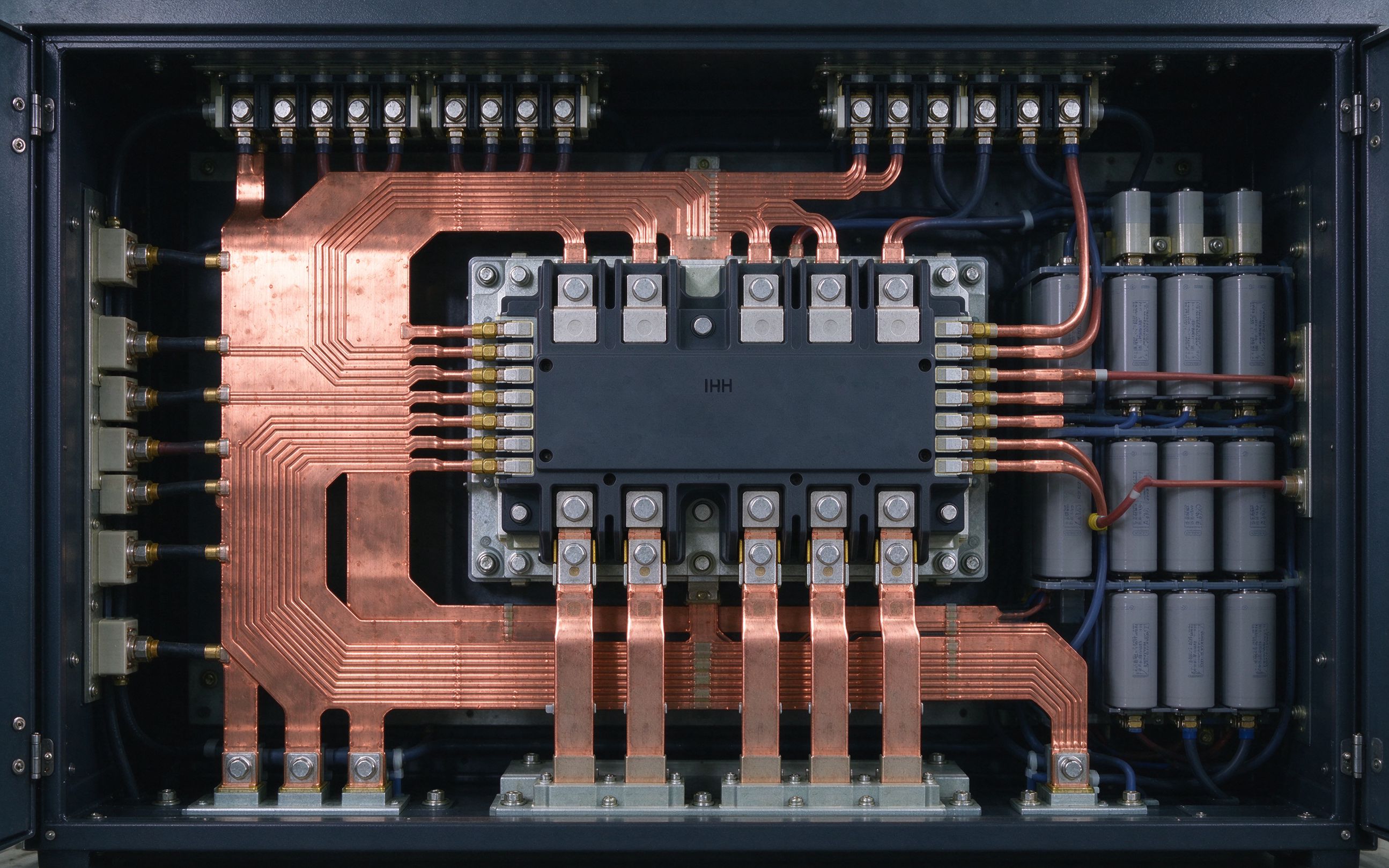
Higher switching speeds from SiC MOSFETs and modern IGBTs are pushing the DC-link busbar t
Read article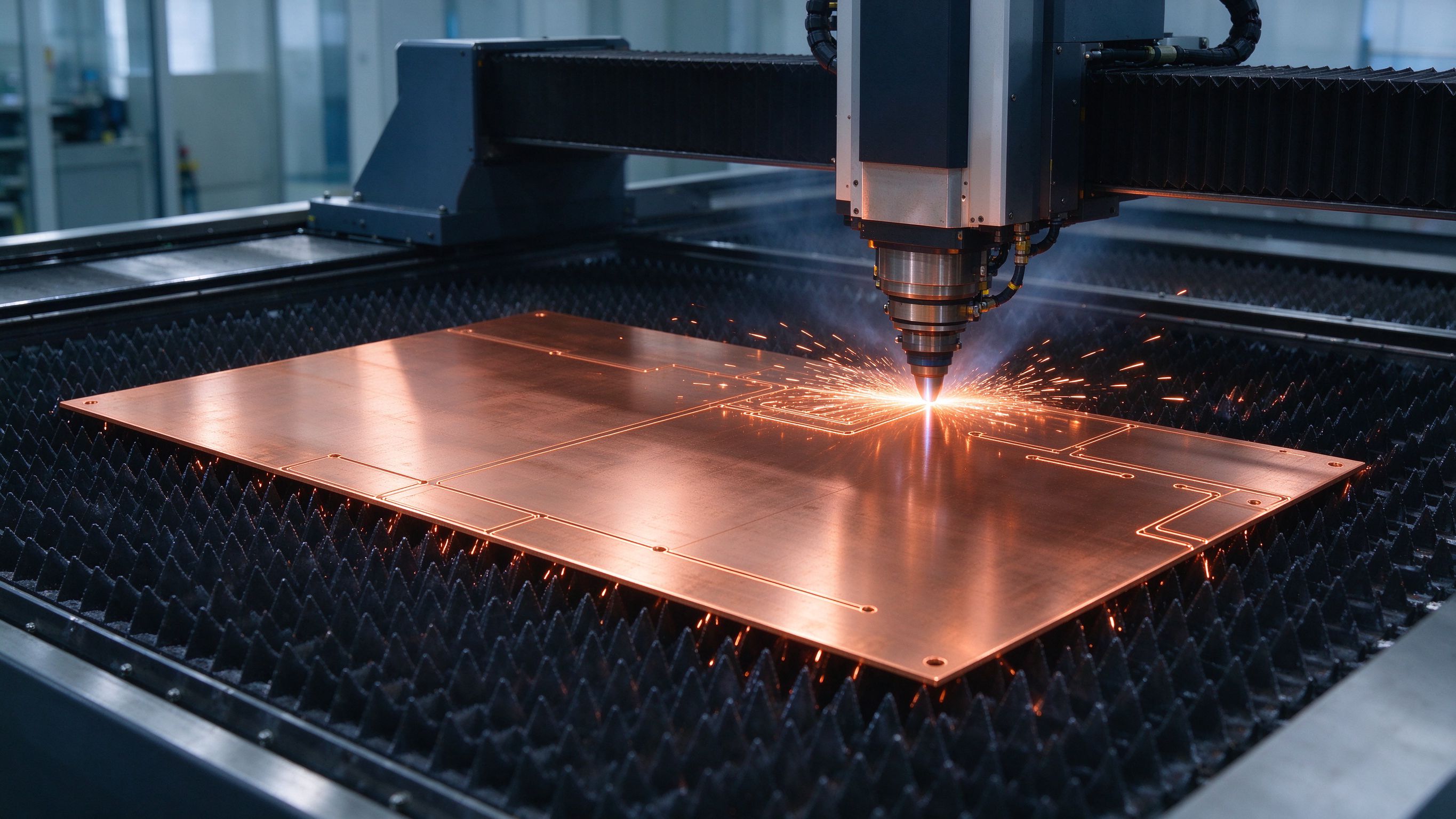
Copper is the largest cost driver in a laminated busbar. This 2026 buyer's guide explains
Read articleSend the current profile, voltage class and terminal types — our engineers reply within one business day.