The US grid build-out is no longer gated by capital or permits but by hardware. Transformers, gas turbines and now switchgear, circuit breakers and high-voltage cable all carry multi-year lead times. Every substation that finally gets its transformer still needs the switchgear and busbar systems to move power — and that demand is flowing into busbar order books.
The US grid build-out is no longer gated by capital or permits but by hardware. Transformers, gas turbines and now switchgear, circuit breakers and high-voltage cable all carry multi-year lead times. Every substation that finally gets its transformer still needs the switchgear and busbar systems to move power — and that demand is flowing into busbar order books.
According to Wood Mackenzie's mid-2025 market survey, standard power transformers average roughly 128 weeks to delivery, generator step-up units about 144 weeks, and the largest custom substation units are quoted as long as four years (Vedeni Energy, 2026).
Because a transformer is the single component that steps grid voltage up or down, no substation energises until one arrives — and once it does, the rest of the electrical chain has to be ready around it.
The shortage is not a demand blip. It combines: electrical steel supply constraints, a decade of under-investment in transformer capacity, the reshoring push of AI data centre load, and grid reinforcement for renewables interconnection.
Scarcity has now reached switchgear, circuit breakers and high-voltage cable (Vedeni Energy, 2026). That cascade is what turns a transformer problem into a busbar opportunity.
GE Vernova's planned USD 9 billion purchase of Trench Group targets the high-voltage equipment crunch directly. Trench manufactures high-voltage bushings used in transformers, switchgear, substations and HVDC transmission systems, with transformer bushings rated as high as 1,200 kV (ENR, 2026).
Consolidation around bushing and switchgear capacity confirms that the bottleneck has moved down the supply chain — into the components that connect transformers to the grid.
The US Department of Energy plans a program worth up to USD 375 million to strengthen the domestic supply chain for distribution and power transformers, components, materials and other grid components (DOE, 2026).
For component manufacturers, the program signals multi-year, policy-backed demand — the kind of visibility that justifies capacity investment in busbar production lines.
Utilities report stretched lead times not only for transformers but for switchgear assemblies, breakers and disconnect switches. Substation construction schedules are now driven by component availability, not engineering capacity.
Every switchgear line-up contains busbars: main bus, risers and branch connections sized for the station's fault current and load. When switchgear orders surge, busbar orders surge with them.
The lead time problem feeds itself. Utilities, seeing 128-week transformer deliveries, order earlier and in larger batches, which queues the factories further and stretches the backlog — and the same dynamic is now visible in switchgear. Panel builders who used to order busbars eight weeks before delivery are being told 16-20 weeks, and they are responding the same way: ordering earlier.
A distribution substation's switchgear contains a main busbar system (typically 600-4000 A at 12-40.5 kV), branch risers and cable-to-bus transitions. Larger stations add outdoor rigid bus and HVDC links.
Busbar content is not optional and not substitutable — every breaker needs a connection point, and every connection point needs a conductor with defined ampacity, short-circuit withstand and insulation coordination.
For the busbar itself, the switchgear order surge concentrates on a small set of geometries: main bus sizes for 1600 A, 2500 A and 4000 A frames at 12-40.5 kV, plus the laminated links between breakers and bus. Standardising those few geometries lets manufacturers stock pre-production material and cut the effective lead time in half.
Utilities are using multi-year framework agreements, capacity reservation contracts and take-or-pay structures to secure grid equipment through 2026 and beyond (SpecForge, 2026).
That procurement shift favours suppliers who can commit to reserved capacity and standardised designs — the same model busbar manufacturers use for multi-year OEM programs.
Grid-equipment cost inflation has added tens of billions of dollars to US utility capex since 2020 (SpecForge, 2026). Transformers, steel, copper and labour all moved up, and the price increases are now embedded in multi-year capital plans.
Copper content in substation busbars makes them directly sensitive to the same copper market that has pushed LME prices to records in 2026 — another reason buyers lock supply early.
Order visibility for switchgear busbars is improving as utilities reserve capacity. Suppliers benefit from three trends: standardised switchgear designs (fewer one-off busbar geometries), multi-year framework volumes, and a copper-price environment that makes early frame agreements valuable.
SHANYUAN supports switchgear and panel builders with laminated busbars up to about 1000 A per stack, tin-plated terminations and IEC 61439-aligned test documentation.
The commercial consequence is that busbar quotes now carry both a capacity clause and a copper mechanism. Buyers who accept an uncapped spot-copper pass-through are exposed to the widest swings; buyers who lock a reference price and a defined adjustment window turn copper from a negotiation into a formula.
The US faces the longest lead times and the most policy-driven response (DOE program, reshoring incentives). Europe's shortage is milder but real, driven by renewables interconnection and data centre load. China, the largest transformer manufacturer, is expanding export capacity while managing domestic grid investment.
For buyers, the implication is to plan busbar capacity regionally — and to qualify alternate suppliers early.
With transformer lead times at 2.5-4 years, the switchgear and busbar purchase decision is being pulled forward to match substation energisation dates. Buyers who reserve busbar capacity at the same time as transformer orders protect their project schedules.
Frame agreements with reserved production slots, standardised test protocols and copper-linked pricing are the practical instruments.
Analysts expect the transformer crunch to persist into 2028-2030 as electrical steel capacity catches up. Switchgear and busbar demand follows the same curve, with a lag: once transformers arrive, the surrounding hardware must be on site.
Busbar suppliers with spare capacity in 2026 are quietly becoming the bottleneck-breakers of the 2027 substation build-out.
Transformers get the headlines; busbars get the substations energised. The grid equipment crunch has reached switchgear, breakers and bushings, and every one of those assemblies routes its current through copper busbars.
For buyers, the lesson is to treat busbar capacity like transformer capacity — reserve it early, standardise the design, and qualify the supplier on test documentation, not just price.
And the busbar is the component that cannot be hurried: once a substation is energised, the main bus runs continuously for decades. The test documentation trail — copper certificates, plating records, hipot and PD results — is the only insurance against a mid-life failure that takes the whole station offline.
The crunch is not only in large power transformers. Distribution transformer production times have also stretched, and the DOE has convened industry stakeholders specifically to reduce them (DOE, 2026). Distribution switchgear that feeds commercial and industrial buildings sits behind those transformers — and inside that switchgear, the main busbar is typically a laminated or flat copper assembly rated 600-3000 A.
For panel builders the consequence is direct: their busbar orders must be placed with as much lead time as their transformer orders, because both arrive on the same construction schedule.
This is why switchgear manufacturers are standardising busbar geometries — the same way utilities are standardising transformer designs — to shorten their own procurement cycles.
Substation busbars are copper-intensive, and the 2026 copper market has been at records. Grid equipment inflation has already added tens of billions to US utility capex since 2020 (SpecForge, 2026), and copper is a large share of switchgear material cost.
Buyers are responding with the instruments that work: frame agreements that lock both capacity and a defined copper-adjustment mechanism, so the material cost floats transparently while the processing cost stays fixed.
The suppliers that can commit to multi-year capacity — and price copper against a published reference — are winning the reserved slots, while spot buyers face both longer waits and wider price swings.
Panel builders caught in the equipment crunch are standardising their own product lines to survive it. A builder who offers three switchgear frames instead of forty cuts the number of busbar geometries it needs to stock, buys those bars in larger lots, and negotiates reserved production slots with the supplier.
The same logic applies to documentation: a standardised busbar design gets a pre-approved test record, so each order does not restart the qualification cycle. Panel builders who froze their busbar designs in 2025 are quoting shorter deliveries in 2026 than those who kept customising.
For busbar suppliers, the response is to publish the standard geometries they produce — ampacity, insulation class, termination pattern — and to reserve capacity for frame-agreement customers before spot orders.
The commercial message to buyers: busbar lead time is now a function of standardisation. The more standard the design, the faster the delivery, and the difference is measured in weeks, not days.
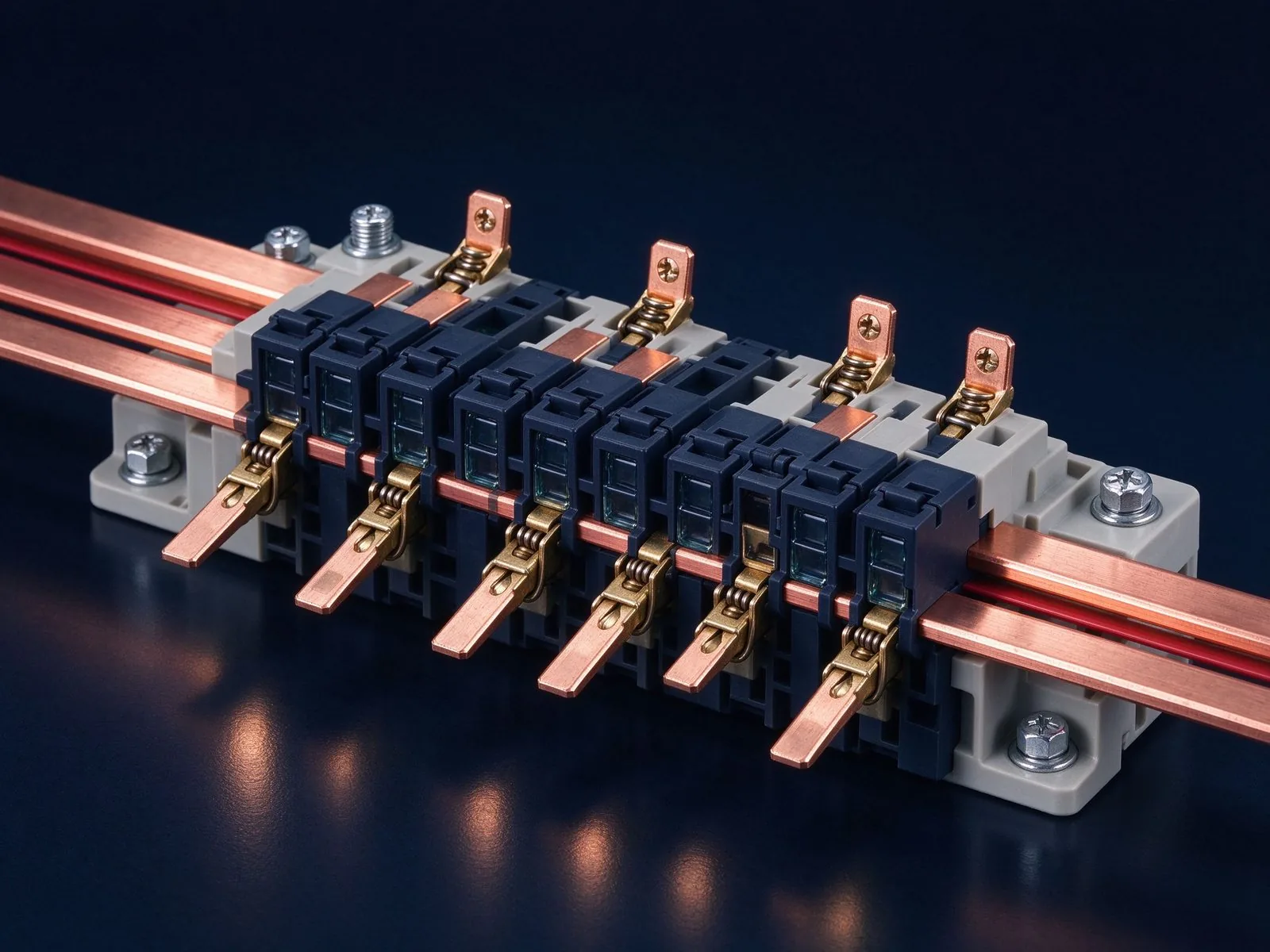
A short circuit is the busbar's worst moment: tens of kiloamps peak, forces in kilonewtons
Read article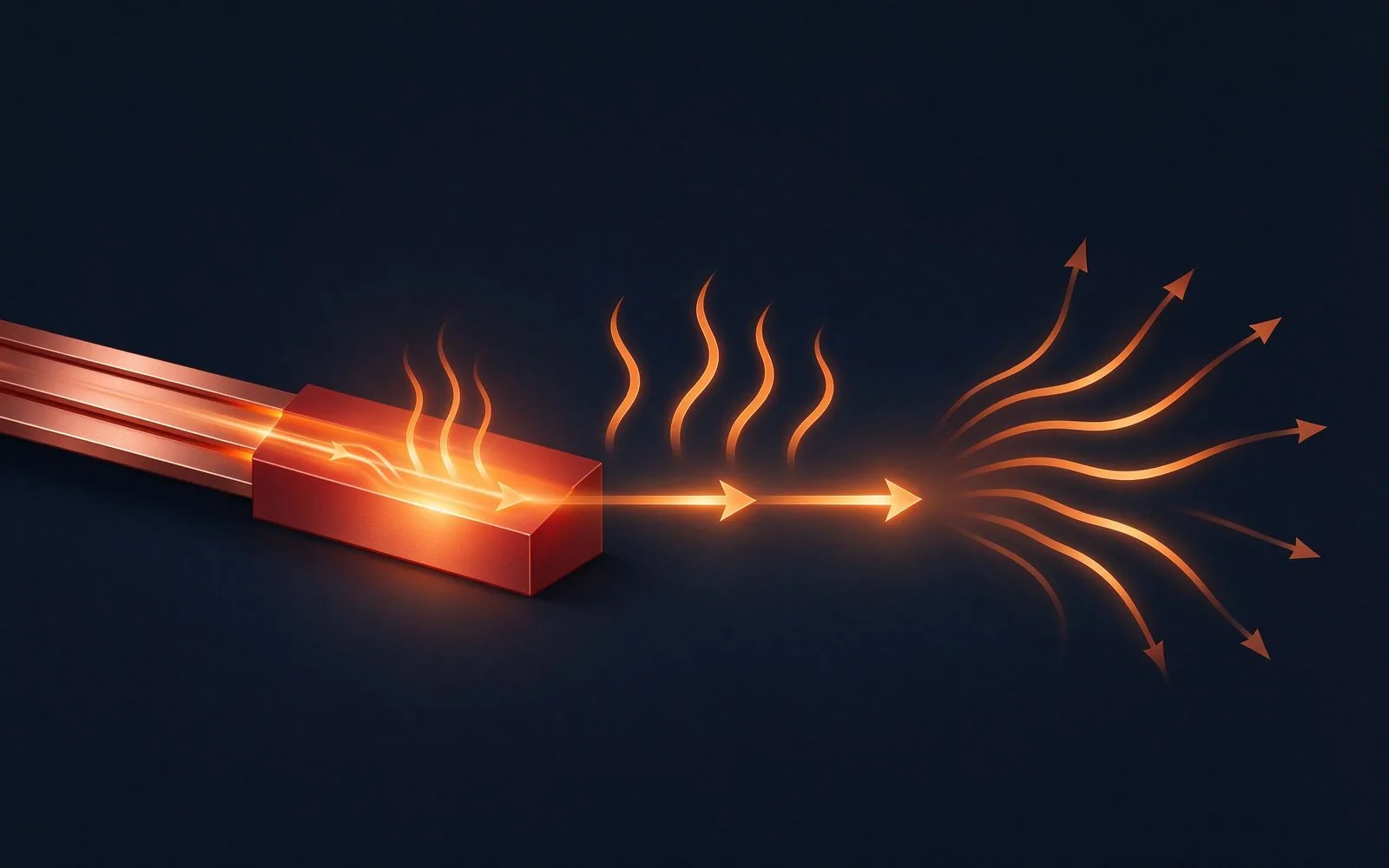
A busbar's rating is not a lookup — it is a calculation. Temperature rise is the real limi
Read article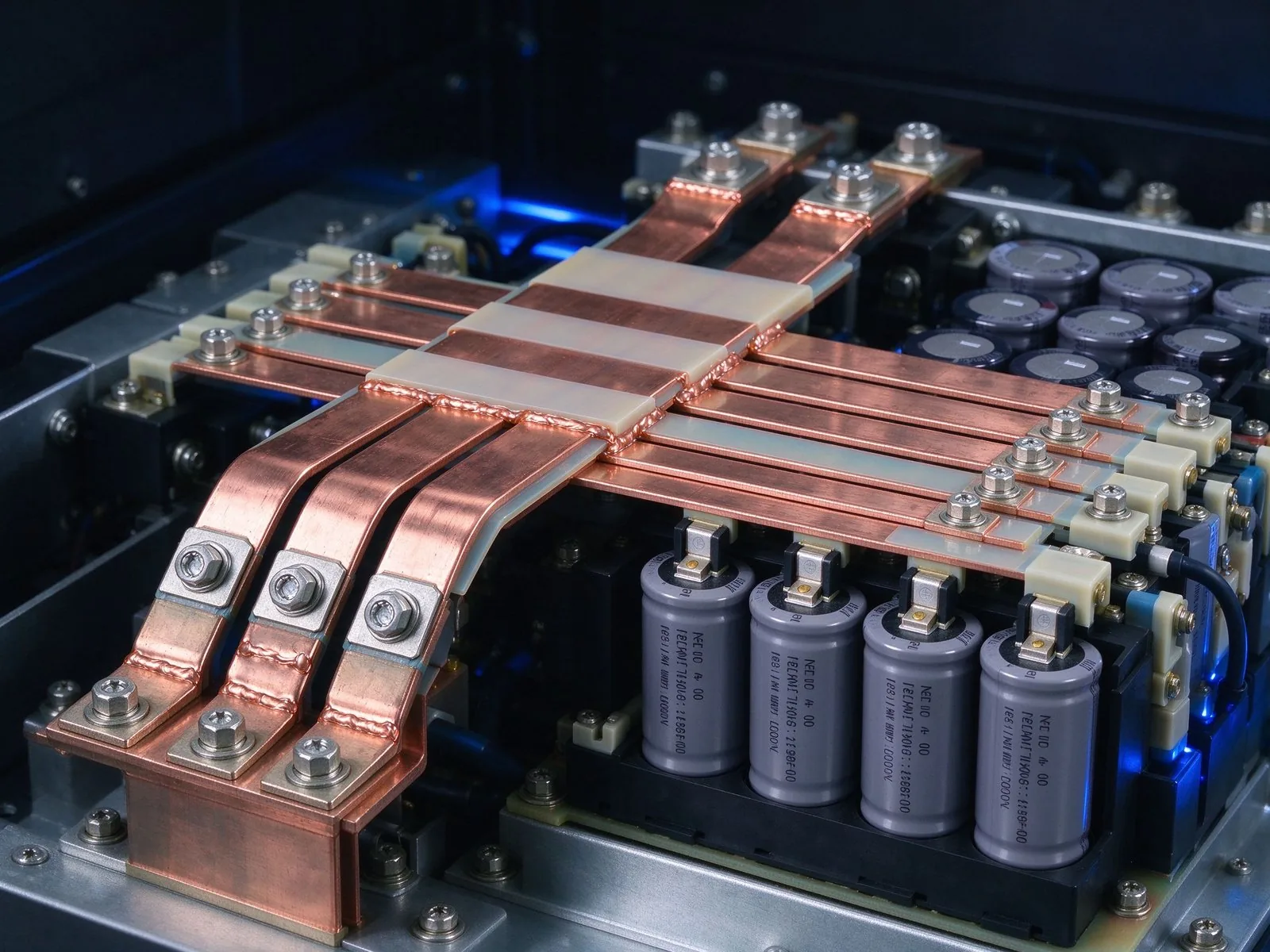
Germany's LanWin3/6, China's ±500 kV offshore VSC station and the CNY 4 trillion State Gri
Read article
Aiko Tanaka is application engineering manager at SHANYUAN, with 11 years in applying laminated busbars to data centres, energy storage and new-energy systems. She leads application selection, custom-profile development and project delivery, and holds a B.Eng. in Electrical Engineering from the Univ
Send the current profile, voltage class and terminal types — our engineers reply within one business day.