Two curves crossed in 2026. AI rack densities hit 120–227 kW while air cooling tops out near 30–40 kW, and the industry responded with two linked decisions: liquid cooling at the rack, and 800 VDC power distribution at the hall. Both change where the copper goes — and both are reshaping the DC busbar business.
Two curves crossed in 2026. AI rack densities hit 120–227 kW while air cooling tops out near 30–40 kW, and the industry responded with two linked decisions: liquid cooling at the rack, and 800 VDC power distribution at the hall. Both change where the copper goes — and both are reshaping the DC busbar business.
Traditional enterprise racks run at 5–10 kW; today's AI racks run at 120–227 kW, a roughly twentyfold gap that conventional AC distribution and air cooling cannot close (Coolnet, September 2026). Above roughly 30–40 kW, air simply stops moving enough heat off high-density GPU clusters, so hyperscalers began specifying liquid loops as the default rather than an option.
The rack-level trend is visible across OEM roadmaps: NVIDIA's GB200 NVL72 generation sits at 120–132 kW per rack, the Vera Rubin platform is fully liquid-cooled on 45 °C water, and 600 kW rack designs have been announced for the Rubin Ultra generation (Meticulous Research, October 2026). Every one of those watts still arrives as copper and leaves as current through a power-electronics busbar somewhere in the chain.
TrendForce projected in August 2025 that liquid-cooling penetration in AI data centers would reach 33% in 2025, up from 14% in 2024; by August 2026 the firm had raised its AI-chip liquid-cooling forecast to 53% for 2026, approaching 60% in 2027 (Coolnet, September 2026). Dell'Oro Group sized the data center liquid cooling market near USD 3 billion in 2025 and approaching USD 7 billion by 2029, with single-phase direct-to-chip cooling consolidating as the dominant architecture for AI clusters (Dell'Oro, January 2026).
Single-phase direct liquid cooling now commands an estimated 55% of the direct-to-chip market in 2026 — in part because PFAS-containing two-phase fluids face a US EPA TSCA reporting window opening no later than 31 January 2027 (Data Center Insights, July 2026). Liquid and immersion cooling overall is valued at USD 6.5–8.5 billion in 2026 and projected to reach USD 45–60 billion by 2034 (Meticulous Research, October 2026).
While cooling took the headlines, power architecture quietly converged on 800 VDC for next-generation AI factories, with commercial deployment starting in 2027 on NVIDIA's Vera Rubin platform (Coolnet, September 2026). Two September 2026 announcements — Compal and Exascale's letter of intent for a native 800 VDC validation platform, and AirJoule's acquisition of BitSink — moved the transition from roadmap to market action.
The gain is arithmetic: distributing at 800 V instead of 48 V cuts copper current by roughly an order of magnitude for the same power, shrinking busbar cross-sections, cable weight and voltage-drop losses across the hall. That is why the DC-link, the busway and the rack power path are all being re-specified at 800 V.
A modern AI rack converts grid power through a PSU front-end, then steps the DC bus down through an intermediate bus converter (IBC) to intermediate voltages feeding GPU voltage regulators. Infineon's expanded collaboration with NVIDIA, announced at GTC in Berlin in October 2026, targets exactly this stage: GaN-based IBCs supporting 800 V-to-50 V, 800 V-to-12 V and 800 V-to-6 V conversion at switching frequencies up to 1 MHz (Power Semiconductors Weekly, October 2026).
Each conversion stage is a DC-link: the rectifier output, the IBC input and output, and the point-of-load rails all carry high DC current through laminated busbars or busway. A 100 kW-class rack shelf can see 125 A at 800 V — manageable only if the busbar system is sized, insulated and connected properly.
Five distinct busbar zones appear in an 800 VDC rack: the rectifier/PSU DC-link, the IBC input bus, the vertical busway feeding the rack, the power distribution unit (PDU) drawers, and the battery backup unit (BBU) interconnect. Each has different current, voltage and mechanical demands.
At 800 V the engineering emphasis moves from ampacity alone to insulation: creepage and clearance distances roughly double versus 400 V-class systems, partial-discharge (PD) inception becomes a design gate, and PD-free design matters for long service life. Laminated construction earns its place precisely here — controlled dielectric spacing, low loop inductance and predictable impedance for the switching stages.
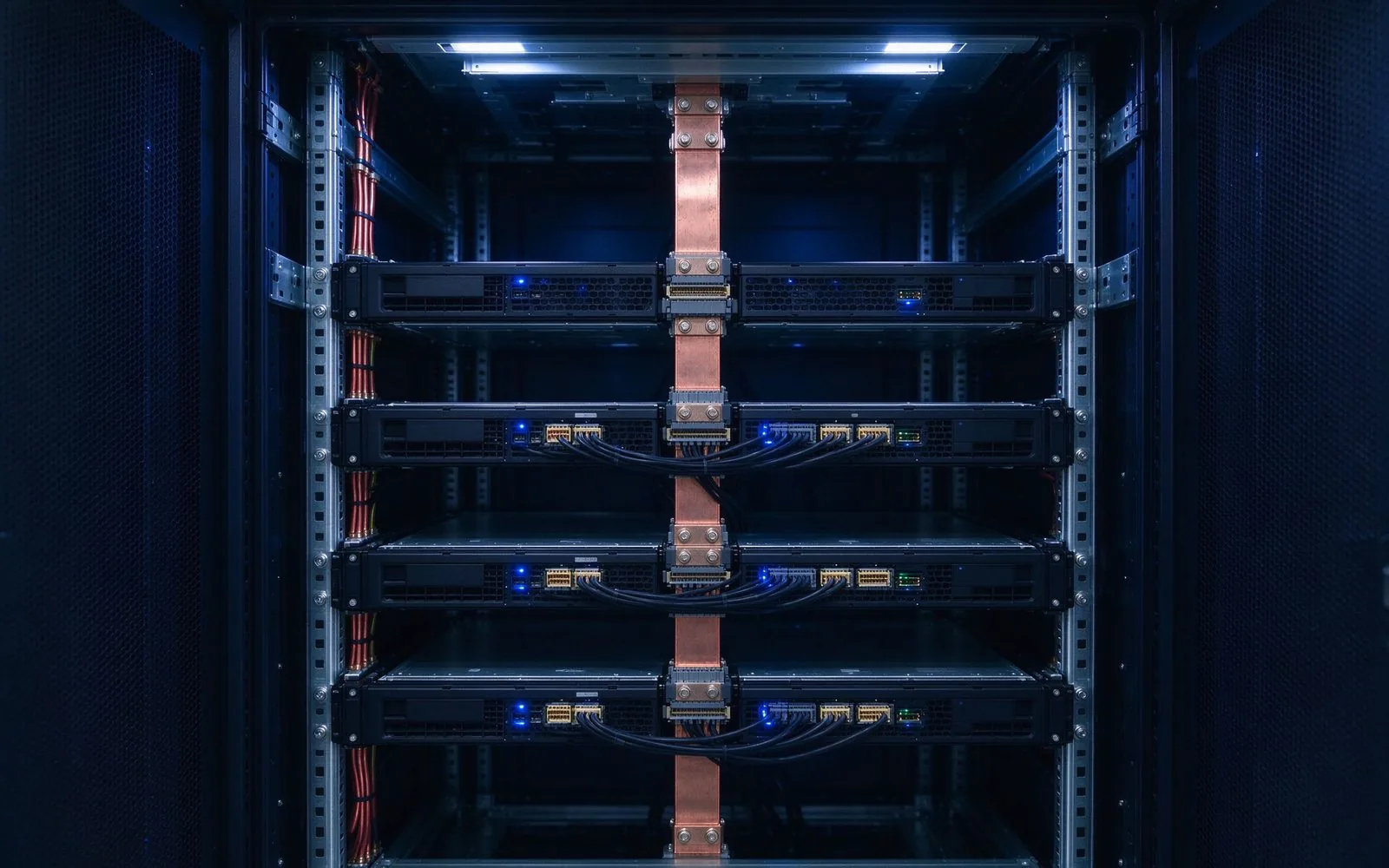
The three distribution topologies coexist. Busway wins for long, modular hall-level runs where hot-swap and reconfiguration matter; cable remains for flexible jumpers and service loops; laminated busbars win at the rack and converter level where density, impedance control and heat management decide.
In liquid-cooled racks the busbar increasingly shares the cooling loop's real estate: the CDU pump drives, fanless shelves and cold-plate manifolds leave little free air, so busbar current density and low-inductance layout must be designed together with the thermal path. This is a design question, not a parts list — the custom busbar design service exists for exactly this integration.
Moving from 400 V to 800 V DC changes more than numbers. DC arcs do not self-extinguish at every current zero as AC arcs do, so arc-flash mitigation and rapid fault clearing become part of system design. Insulation coordination follows IEC 60664-style rules extended to DC, with pollution degree and altitude derating factored in.
For the busbar manufacturer the practical consequences are concrete: thicker or multi-layer dielectric builds, longer insulation creepage paths, tested edge and termination treatments, and documented PD and hipot test records per lot. The quality evidence trail — not just the copper — is what 800 V customers now audit.
Liquid cooling changes the thermal boundary conditions for every power component, busbars included. With coolants at 45 °C supply temperature and cold plates mounted close to the power path, a busbar can often be pushed to higher current density than in air-cooled halls — but only if the joint and termination temperatures stay controlled.
That favors current rating tables built on measured temperature rise rather than generic charts, tin or silver plating on contact surfaces, and thermal-cycling evidence for bolted and welded connections. A 30 °C temperature-rise budget at full load remains a practical design anchor for battery and converter busbars in these systems.
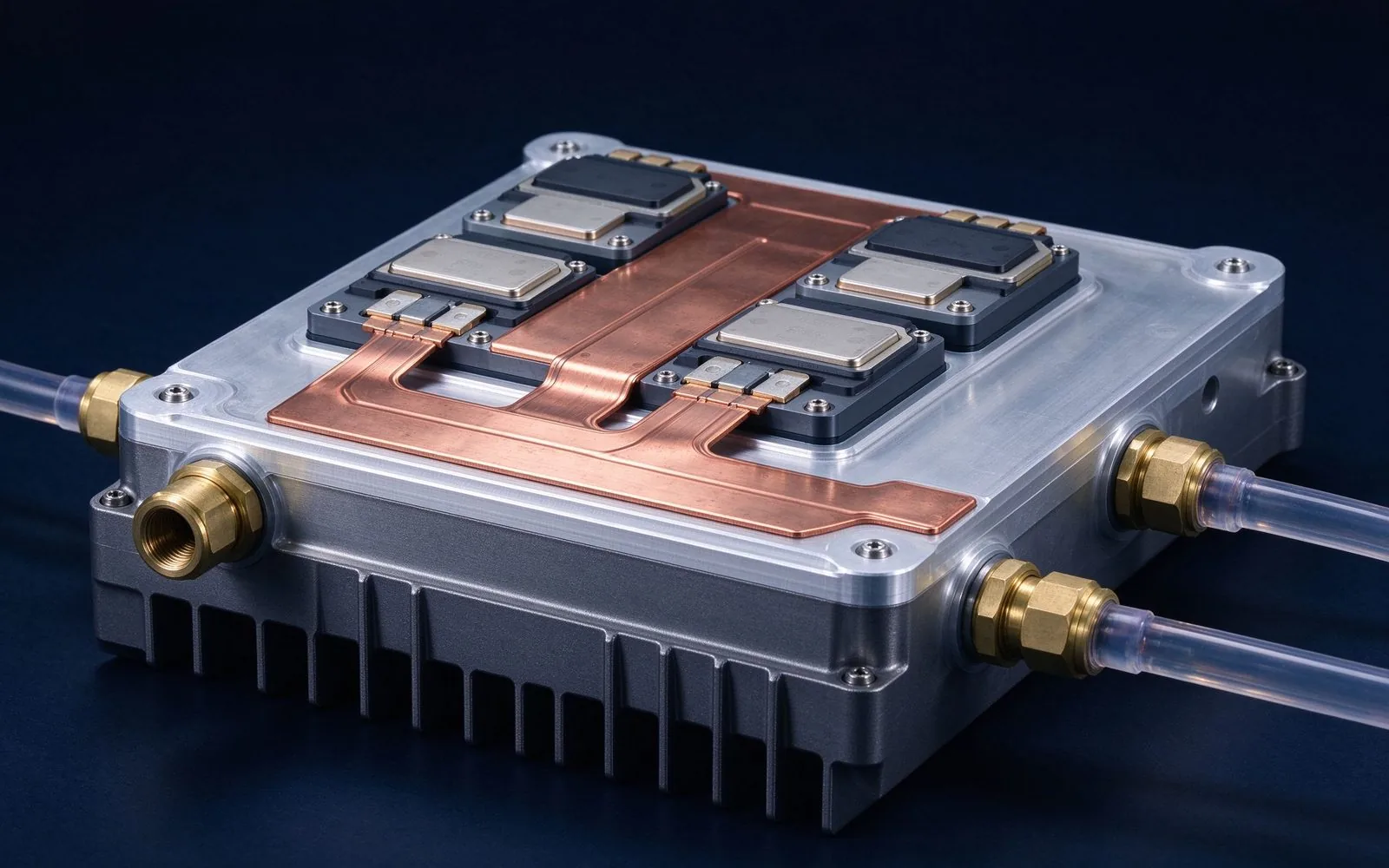
Every one of these watts is copper before it is anything else. Grid-side transformers, switchgear, busway and rack-level busbars together push data center copper intensity well above legacy facilities, at a time when refined copper supply is already tight. C11000 electrolytic tough-pitch copper remains the workhorse for laminated busbars in the 1–6+ layer, ~1000 A class the industry specifies.
For buyers the practical questions are lead time, lot traceability and test certification. A factory-direct supplier with in-house lamination, plating and testing removes several weeks of sub-supplier latency from an 800 V program's critical path.
The standards stack is still settling: UL and IEC frameworks for DC distribution, arc-flash studies extended to DC, and connector and busbar test requirements for hot-swap and serviceability. NVIDIA's ecosystem work with Infineon and partners explicitly targets serviceable, hot-swappable 800 VDC racks (Power Semiconductors Weekly, October 2026).
Until the stack matures, specifiers protect themselves with conservative clearance, verified partial-discharge performance and documented insulation testing at the component level. Suppliers who can provide that evidence reduce project risk materially.
For a data center power program, the busbar RFQ is no longer just a drawing and a price. Ask for: PD-inception and hipot test data at the operating voltage, thermal-rise measurements at rated current, plating thickness certificates on contact surfaces, creepage and clearance calculations for the actual pollution environment, and thermal-cycling or vibration evidence for the connection method.
The six-dimension supplier due-diligence checklist covers manufacturing depth, test capability, documentation discipline and financial stability. At 800 V the documentation is as important as the copper.
SHANYUAN builds custom laminated busbars for EV, ESS and power-electronics customers from a 17,200 m² facility in Rizhao, China: C11000 copper, 1–6+ layers, PET/Nomex/DLF dielectrics, ~1000 A class, with tin plating and M6/M8 stud, blade or welded terminals. Engineering review and quotation follow within one business day.
Data center power programs with 800 VDC ambitions need partners who treat insulation and impedance design as core engineering, not options. That is the position we build from.
Three milestones define the window: Vera Rubin racks shipping with native 800 VDC and full liquid cooling (2027), the first 600 kW-class Ultra racks entering production validation, and the ISO/UL/IEC 800 VDC distribution stack reaching first-consensus drafts. Each milestone converts another design-win from roadmap to volume.
The busbar implication is directionally simple: more racks, higher voltage, more liquid cooling, and more demand for engineered, documented DC busbar systems. Suppliers positioned for that conversation are already part of it.
If you are specifying power distribution for a 2027–2028 AI rack program, start the busbar conversation early. Send the power profile, voltage class and mechanical envelope to our engineering team via the contact page — we size the busbar, document the calculation and return a technical and commercial response within one business day.
Related reading on this site: GaN power enters the data center, DC power busbars for AI data centers, and the data center power busbar market.
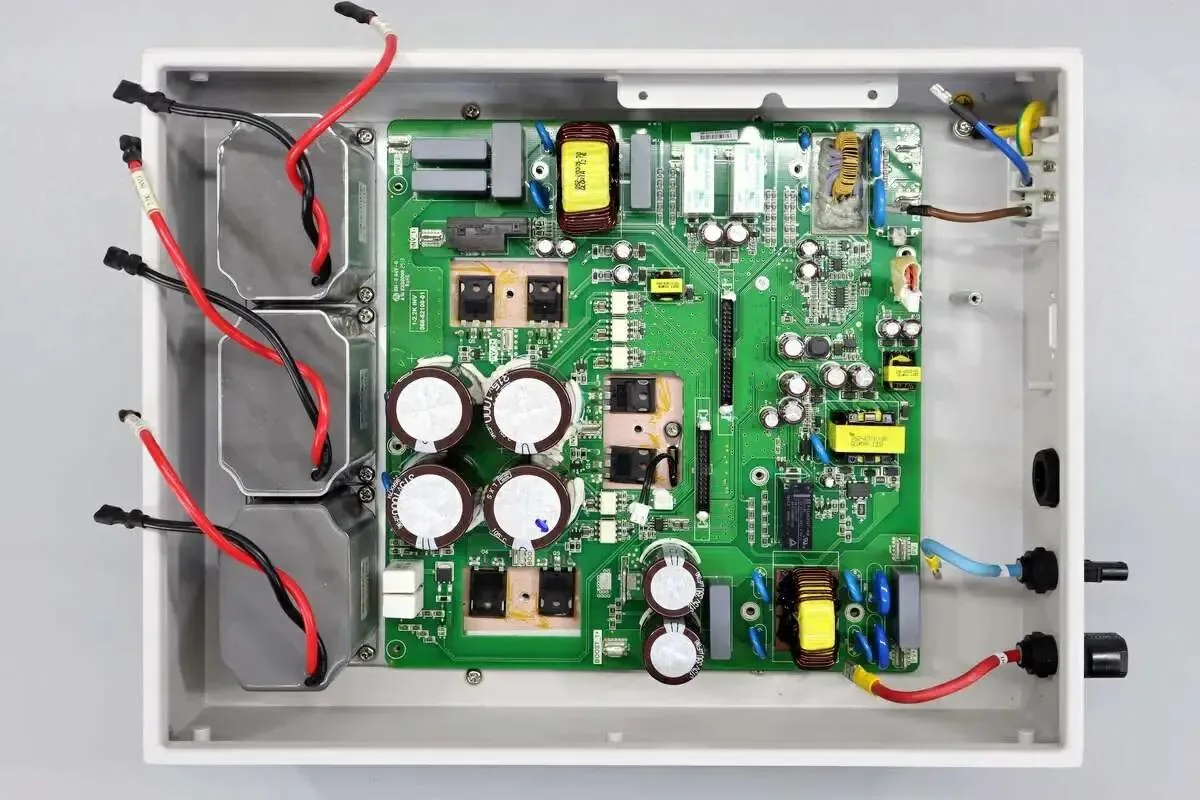
Yole sizes the power GaN device market at roughly USD 0.59B in 2025 growing to about USD 0
Read article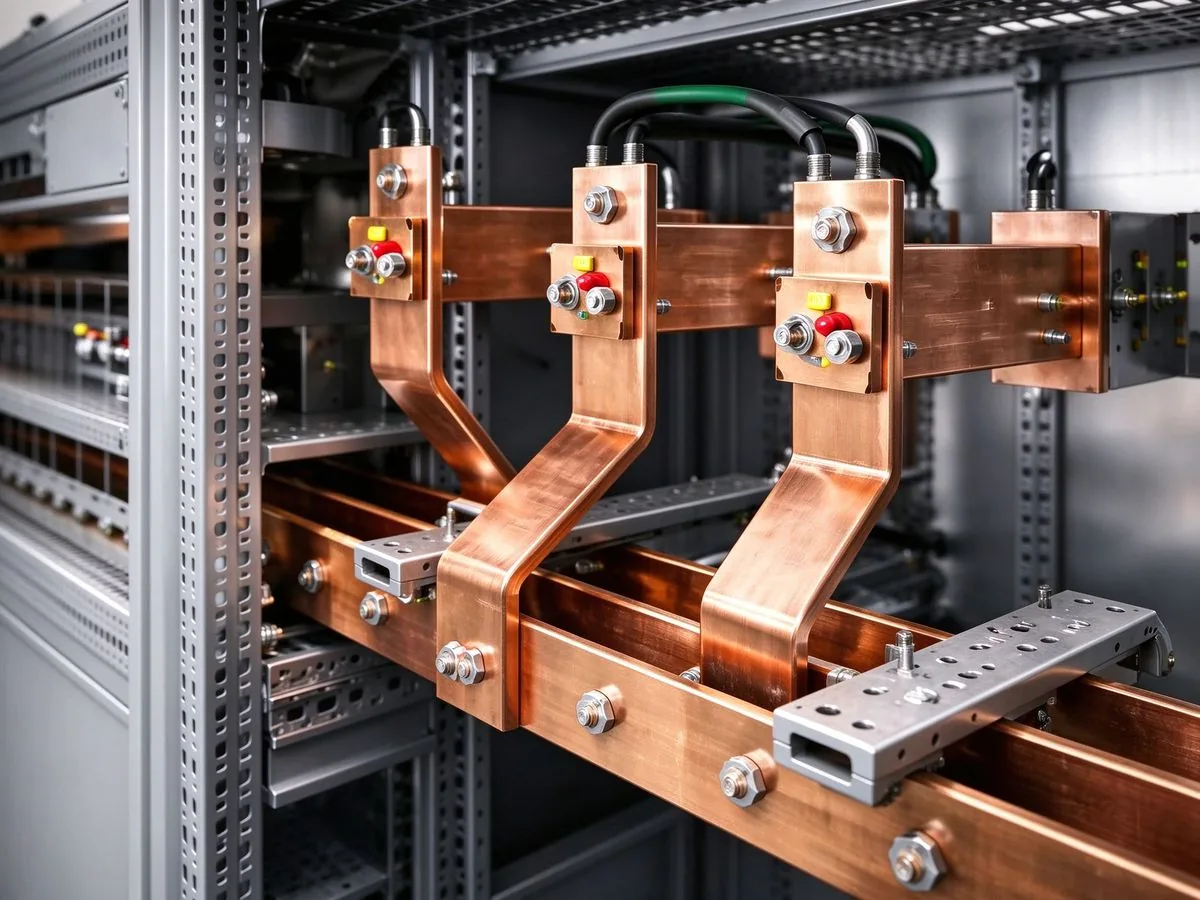
AI racks move from 140 kW to 1 MW by 2027, and the industry answers with 800 VDC distribut
Read articleAI training racks are pulling 30-100 kW each, breaking the assumptions behind legacy data
Read article
Aiko Tanaka is application engineering manager at SHANYUAN, with 11 years in applying laminated busbars to data centres, energy storage and new-energy systems. She leads application selection, custom-profile development and project delivery, and holds a B.Eng. in Electrical Engineering from the Univ
Send the current profile, voltage class and terminal types — our engineers reply within one business day.