A purchasing manager comparing three laminated busbar quotes is usually comparing three different scopes with the same title. The numbers diverge by 20 to 40 percent between suppliers who can all build the part, and the difference is rarely the copper price. It is what each quote assumes about tooling, plating, testing and freight.
A purchasing manager comparing three laminated busbar quotes is usually comparing three different scopes with the same title. The numbers diverge by 20 to 40 percent between suppliers who can all build the part, and the difference is rarely the copper price. It is what each quote assumes about tooling, plating, testing and freight.
A machined aluminium bracket can be quoted from a drawing with a single material and a single process. A laminated busbar cannot. The same drawing can be built with two, four or six layers; with PET, Nomex or an epoxy-coated film stack; with tin plating at 5 µm or 15 µm; with a sample-only test record or a full dimensional report; and with tooling amortised over 500 pieces or over 5,000.
Each of those choices is legitimate, and each moves the unit price. A supplier quoting the lean version is not necessarily cheaper in the long run; it has simply put fewer obligations inside the number. The buyer's job is to make the scopes match before comparing totals, and that means comparing five cost blocks separately rather than one bottom line.
The framework below is written for the person who has to explain a sourcing decision to an engineering team and a finance team in the same meeting. It assumes the parts are technically acceptable and the question is which quote is actually the lowest delivered cost at equal scope.
For the supplier-side view of the same problem, see sample-to-series procurement and how to choose a manufacturer.

Copper. The metal is the largest single block, typically 35 to 55 percent of a laminated busbar price at 2026 copper levels, and it is the block most sensitive to how the quote is indexed.
Fabrication. Slitting, punching or laser cutting, stacking, lamination, machining of terminal features, deburring and cleaning. This block carries the labour and the equipment hour, and it scales with layer count and tolerance class rather than with mass.
Tooling and NRE. Punch dies, lamination fixtures, machining programmes, first-article inspection and any custom test fixture. This block is either amortised into the unit price or billed separately, and the two approaches produce very different unit numbers for the same total.
Plating and surface finish. Tin, nickel underlayer, selective plating, coating. Priced by surface area and thickness, and often quoted as a lump sum that hides the thickness assumption.
Test, documentation and logistics. Routine electrical test, dimensional report, material certificates, packing, freight, duty and the Incoterm. This block is where quotes diverge most for identical hardware.
The weight and cost build-up behind these blocks is worked through in weight and cost calculation.
Copper is quoted against an index, usually the LME cash settlement or a regional premium plus an SHFE or COMEX reference. The first question to ask is not the price but the date and the basis: a quote issued in a rising market may carry a copper assumption from three weeks earlier, and the validity period tells you who absorbs the movement.
The second question is the scrap credit. A punched busbar generates skeleton scrap and punch slugs, and the value of that scrap returns to the supplier. Some quotes assume a scrap recovery rate of 90 percent of input mass, some 75 percent, and some ignore it. On a part with 40 percent buy-to-fly ratio, the difference between a 75 percent and 90 percent recovery assumption can be several percent of the part price.
The third is the material grade. C11000 is the standard for conductivity and formability. A quote that switches to a lower-grade or thinner gauge to hit a price is not a like-for-like comparison, and the conductivity difference will show up later as a temperature rise or a derating argument. Ask for the grade and the temper in writing, and check it against the drawing.
Grade selection and conductivity trade-offs are covered in copper grade selection and copper versus aluminium.
Within fabrication, four variables explain most of the spread. Layer count is the first: each additional layer adds copper, film, handling and a lamination cycle, and it also multiplies the inspection points. A four-layer stack is not twice a two-layer stack; it is closer to two and a half times in process cost.
Tolerance class is the second. A general-tolerance drawing with ±0.5 mm on hole positions is cheaper than a drawing with ±0.1 mm and a true-position callout, because the tight version requires better tooling, slower machining and more inspection. If the assembly can absorb the looser tolerance, specifying it is free money.
Terminal complexity is the third. A simple stud hole is a punch operation; a blade terminal with a machined step, a welded tab or a threaded insert is a milling or welding operation with its own setup. Every terminal type added to a part adds a process step and a fixture.
Volume and lot structure is the fourth. A quote for 500 pieces per year in monthly releases costs more per piece than a quote for 5,000 pieces in two releases, and the difference is setup amortisation rather than material.
Tolerance and machining practice is described in terminal machining, and layer trade-offs in layer-count selection.
Two suppliers can quote the same part at 42 and 51 currency units and both be right, because one has amortised a 12,000 unit tooling package across 5,000 pieces and the other has amortised 30,000 across 1,000. The unit price hides the difference until the volume changes or the part is revised.
The clean way to compare is to ask for tooling as a separate line with its ownership, its expected life and its revision policy. A punch die quoted at 8,000 with a 100,000-stroke life is a different asset from a die at 12,000 with a 300,000-stroke life, even though the first looks cheaper on the purchase order.
Revision policy matters more than most buyers expect. A drawing change that requires a die modification can cost a few hundred or a few thousand depending on whether the change touches a station or the whole layout. Quotes that state a revision rate per change, and a notification window, are easier to budget than quotes that promise to "work it out later".
Tin plating on copper busbars is usually specified as a thickness range, and the range is where the money sits. A 5 µm nominal with a 3 µm minimum is a different proposition from a 15 µm nominal with a 10 µm minimum: more plating time, more tin, more thickness measurement, and better corrosion and contact resistance behaviour in a humid or sulphidic environment.
The question to put to each supplier is not "do you tin plate" but "what is the specified thickness, how is it measured, and how often". A quote that does not state the thickness is assuming one, and the assumption will usually be the cheapest that passes a visual inspection.
The same logic applies to selective plating and to nickel underlayers. If the drawing requires nickel under tin at the terminals for a battery application, a quote that omits the underlayer is not the same part. The cost difference is real but so is the difference in contact resistance after thermal cycling, which is where the warranty argument starts.
Finish selection by environment is set out in plating finish selection.
Test scope is where two quotes for the same hardware can differ by 8 to 12 percent and neither supplier is being dishonest. A quote that includes a routine hipot, a dimensional check on the first article and a material certificate is a production quote. A quote that adds partial discharge measurement, plating thickness per lot, a full dimensional report per shipment and a traceability record is a quality quote.
The buyer's decision is not to always buy the quality quote. It is to buy the scope the application needs and to know what has been excluded. A 48 V industrial busbar does not need partial discharge data; an 800 VDC rack busbar does, and a supplier who does not offer it is telling you something about capability rather than price.
Documentation has a similar structure. Material certificates, heat-number traceability, first-article inspection reports and change notifications are individually small line items and collectively the difference between a supplier a quality team can audit and one it cannot. In regulated programs, this block is not optional, so a quote that omits it will acquire the cost later.
The dielectric test scope itself is described in hipot acceptance and partial discharge.
Busbars are dense, so freight is usually a smaller share than for assembled electronics, but the Incoterm changes who carries what. An EXW quote excludes export clearance, main freight, insurance and import duty; a DDP quote includes all of them and the supplier's margin on each. Comparing an EXW number with a DDP number is comparing a component price with a delivered cost.
Duty and origin matter as much as freight in 2026. Copper content, country of origin and the applicable tariff line determine the landed cost, and a supplier who can document origin and material composition makes the customs entry predictable. A quote that cannot state origin is a landed-cost risk, not a discount.
Packing is part of this block and easy to overlook. A laminated busbar is a flat, stiff, static-sensitive-adjacent part that must not be stacked without interleaving or shipped without edge protection. Cheap packing shows up as transit damage and a replacement shipment, which is a cost the unit price never mentioned.
Packaging and shipping damage is one of the criteria in the factory audit checklist.
Payment terms change the comparison more than most buyers admit. A 30-day net quote at one price and a 90-day net quote at a slightly higher price are not equivalent when the buyer's cost of capital is included. The difference is a financing cost that belongs in the comparison, and it is calculable: the price premium divided by the number of days of extra credit, annualised.
For tooling, the timing of payment matters separately. Paying 100 percent up front for a die that will be used over three years is a different commitment from paying 40 percent at order and 60 percent at first article. Neither is wrong, but the comparison should show it.
Currency is the third element. A quote in USD against a copper index in USD is naturally hedged on the metal; a quote in local currency with a USD copper basis carries an exposure that the buyer may not want. Stating the currency and the index basis together is enough to make the exposure visible.
Four costs live outside the quote and all of them are real. Rework and sorting cost, driven by first-pass yield; a supplier at 92 percent yield and one at 99 percent yield are not 7 percent apart, because the rework is discovered at the customer's incoming inspection as well as at the supplier's line.
Lead time and inventory carrying cost. A 12-week lead time forces the buyer to hold safety stock that a 6-week lead time does not, and the carrying cost is a percentage of part value per year.
Change cost. The price of a drawing revision, a die modification or a plating change, including the engineering time to re-qualify. Suppliers who publish a revision rate are easier to model.
Quality failure cost. A field return, a line stoppage or a customer notification has a cost that dwarfs the unit-price difference between two credible suppliers. It is not quantifiable in advance, which is exactly why the qualification scope should be compared rather than assumed.
Terminal quality cost is covered in torque and pull acceptance.
The matrix below is the working form of the framework. Each row is filled per supplier, and the comparison is made on normalised columns rather than on the bottom line.
| Block | Normalised question | What to record |
|---|---|---|
| Copper | Index, date, grade, scrap credit | USD/kg basis, C11000 temper, recovery percent |
| Fabrication | Layer count and tolerance class | Layers, hole tolerance, terminal operations |
| Tooling | Separate or amortised, life, revision rate | Tooling value, strokes, change price |
| Plating | Thickness min/nominal, measurement frequency | µm, method, per-lot or per-shipment |
| Test | Routine only or with PD and reports | Test list, sample rate, report type |
| Logistics | Incoterm, origin, packing | Landed cost, duty line, packing spec |
| Terms | Payment days, currency | Net days, currency, index linkage |
A matrix filled this way usually explains most of the spread between quotes. The remaining gap is genuine difference in capability or margin, and that is a commercial judgement rather than a scope question.
Most of the normalisation work can be done before the RFQ is issued, by stating six items. The drawing with a defined tolerance class and a terminal table. The layer count and dielectric system, with the material grade allowed. The plating specification with minimum thickness and measurement method. The test scope and documentation package, itemised rather than described. The copper index, its reference date and the quote validity period. And the delivery terms, destination and expected annual volume with release pattern.
A supplier receiving that package can quote without assumptions, and a buyer receiving three responses can compare block by block. The RFQ does not need to be long; it needs to be unambiguous on the six items that move price.
For programs where the part is not yet frozen, the useful step is a cost review before the drawing is released. A supplier who can tell you that the ±0.1 mm tolerance is adding 12 percent to the price, or that a blade terminal is cheaper as a welded tab, is giving information that is worth more than a discount on the first order.
For a worked RFQ sequence, see sample-to-series procurement.
Before awarding, confirm that each quote states its copper basis and validity, that tooling is a separate line with life and revision terms, that plating thickness is specified with a measurement method, that the test and documentation scope is itemised, that the Incoterm and origin are stated, and that payment terms and currency are unambiguous.
Red flags are consistent across markets. A quote that is dramatically below the others without a scope difference. A quote that cannot state the copper index date. A quote that offers partial discharge testing "if required" without a method. A quote that treats tooling as free without stating who owns it. A quote that will not state origin. None of these proves a bad supplier, but each is a question that should be answered before the purchase order rather than after.
The point of the framework is not to make buying bureaucratic. It is to make the cheapest credible quote visible. In most programs that quote is not the lowest number on the sheet; it is the one whose scope matches the application and whose assumptions are written down.
To put a package together with a supplier, use the contact page or the custom build route.
Once the matrix is filled, the negotiation changes character. Instead of arguing about a total, the buyer can point at a block: the tooling amortisation is spread over five years while the program is three, or the plating thickness is nominally the same but measured per shipment rather than per lot. Those are specific, resolvable differences, and resolving them usually moves the price more than a percentage-point demand.
It also protects the supplier relationship. A supplier who is asked to match a number that excludes test scope will either refuse or quietly remove scope, and both outcomes are worse than an honest comparison. A supplier who is shown the matrix can explain where its cost comes from, which is the beginning of a cost-down conversation rather than a margin argument.
Two levers are worth keeping for the second round. Volume commitment in exchange for tooling amortisation is one, because it converts a fixed cost into a variable one for the buyer and improves the supplier's utilisation. Specification relaxation is the other: a tolerance class or a plating thickness that engineering can defend as over-specified often releases more cost than a price negotiation, and it is a decision the buyer and the engineer can make together with data from the matrix.
Neither lever should be used before the qualification scope is agreed. A cheaper part that fails incoming inspection costs more than the difference, and the matrix exists to keep that from happening.
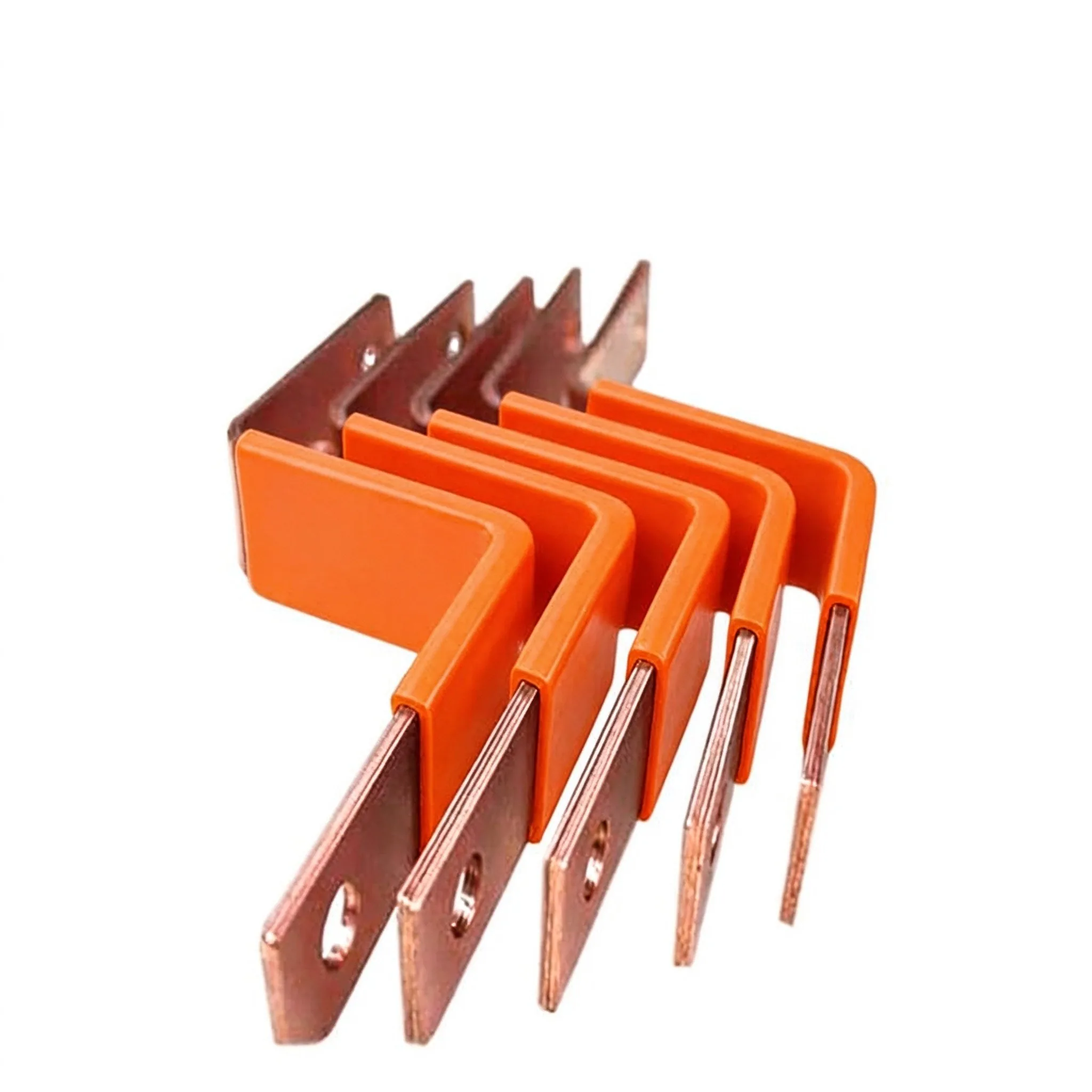
Buying a laminated busbar is not like buying a standard connector. The part is custom, the
Read article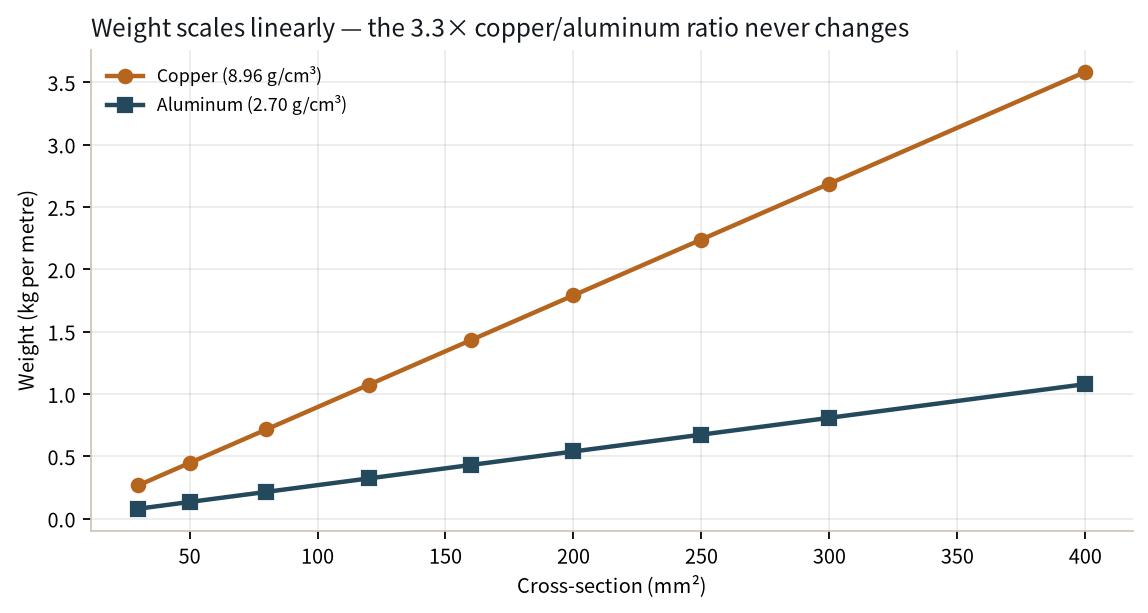
Weight is geometry times density; cost is weight times a copper reference plus conversion.
Read article
Lucas Meyer advises procurement and supply-chain teams on copper sourcing, busbar pricing and supplier evaluation, with 13 years in industrial metals and electrical-component procurement. He developed SHANYUAN's copper-price quotation model and cost-breakdown framework for busbar projects. He h
Send the current profile, voltage class and terminal types — our engineers reply within one business day.