Every busbar price is a weight calculation wearing a commercial jacket. Copper is bought by the tonne, shipped as bar, stamped into a profile and laminated - and each of those steps is charged either by mass or by hour. If you can reproduce the mass and the conversion step, you can audit any quotation in ten minutes.
Every busbar price is a weight calculation wearing a commercial jacket. Copper is bought by the tonne, shipped as bar, stamped into a profile and laminated - and each of those steps is charged either by mass or by hour. If you can reproduce the mass and the conversion step, you can audit any quotation in ten minutes.
Mass equals volume times density. For a rectangular conductor, volume is width times thickness times length, so the whole calculation collapses into one line: kilograms per metre = width (mm) × thickness (mm) × density (g/cm³) ÷ 1000.
For copper at 8.96 g/cm³, a 20 mm × 3 mm bar weighs 0.5376 kg/m. For aluminum at 2.70 g/cm³, the same profile weighs 0.162 kg/m. The ratio is fixed at 3.32 - no supplier, no market condition and no negotiation changes it.
Laminated assemblies multiply this by the number of conductive layers. A four-layer bar with three 2 mm profiles and one 1.5 mm profile carries five times the copper of a single-layer bar of the same width, plus the insulation films and the adhesive weight, which is usually small but not zero.
The formula is worth memorising because it converts a drawing into a purchase quantity before any quotation arrives. If a supplier's quoted weight is 15 percent above your calculation for the same drawing, you are either being sold a different profile or being charged for scrap you did not agree to buy.
Take a laminated DC-link bar rated 1000 A: four copper layers of 2 mm, width 25 mm, length 1.2 m, with three PET films of 0.188 mm between layers and a 0.25 mm outer wrap.
Copper mass per metre: 25 × 2 × 8.96 ÷ 1000 = 0.448 kg/m per layer, so four layers give 1.792 kg/m. At 1.2 m the copper content is 2.15 kg. Insulation adds roughly 0.05 kg, so the finished part is close to 2.2 kg.
At a copper reference of USD 14,300/t, the metal alone is about USD 30.8. Conversion - stamping, deburring, lamination, terminal machining, plating and test - typically adds USD 12 to 25 for a part of this complexity at low volume, and considerably less at 5,000 pieces.
That gives a first-principles range of USD 43 to 56 per piece before packaging and freight. Any quotation far outside that band is either a different design or a different cost structure, and both are worth asking about. The same method is built into our ampacity calculator for the electrical side, and the copper versus aluminum guide covers when the lighter metal changes the answer.
A defensible busbar quotation decomposes into five blocks: metal, conversion, surface treatment, verification and logistics. Suppliers who quote a single number are not hiding anything sinister - they are simply compressing the blocks - but you cannot compare two single numbers and know why they differ.
Metal should reference a named price basis (LME cash, an average of a defined month, or a published index) plus a conversion premium for grade and form. Without the basis, a "fixed" price is a bet on copper that someone is paying for.
Conversion covers stamping or laser cutting, deburring, stacking, lamination, CNC terminal work and assembly. It is driven by labour hours, tooling amortisation and yield, so it behaves very differently at 100 pieces and 10,000 pieces.
Surface treatment is plating - usually tin or nickel - priced by surface area and thickness in microns. A "standard tin" callout that does not state microns is not a specification.
Verification is test time: hipot, continuity, dimensional inspection, partial discharge where required, and the documentation package. It is often the smallest block and the first one cut by suppliers competing on price.
Logistics includes export packing, pallets, freight and insurance. Copper is heavy, so freight is never negligible and should be quoted separately for a landed-cost comparison.
At 100 pieces, tooling and programming are spread over a small batch, inspection is proportionally expensive and material yield is poor because setup scrap is a large share of the run. At 5,000 pieces, the same part can fall by 20 to 35 percent without any change in copper content.
The mechanism is straightforward. Fixed costs per order - die or program setup, first-article inspection, packaging design - stay constant, while variable costs per piece fall with yield and learning. A supplier quoting 100 pieces and 5,000 pieces from the same cost model will show almost identical metal cost and very different conversion cost.
This is why asking for a price at three volumes is a better negotiating move than asking for a discount. It exposes the supplier's fixed-cost assumption and tells you whether the quoted price is a volume price or a prototype price.
For project procurement, the useful question is where the break points sit. In our experience the first break is around 500 pieces, where setup stops dominating; the second is around 3,000 to 5,000, where automated lamination and reel-fed stamping become viable. The sample-to-series procurement guide sets out how to structure that transition.
Copper can move 10 percent in a month without any change in demand. A quotation that fixes the metal price for twelve months is not a favour; it is a risk premium embedded somewhere in the number.
Three arrangements are common. The first fixes everything, which suits small orders and short lead times. The second separates metal from conversion and re-prices the metal at shipment against a named reference, which is fair but requires an agreed calculation method. The third uses a monthly average with a collar, sharing the risk inside a band and re-pricing outside it.
Whichever you choose, the clause must name the reference, the pricing date, the premium and the currency. "Copper price at order" is not a clause; it is an invitation to argue. The current market backdrop and how it flows into busbar pricing is covered in our copper price and supply note.
Aluminum conducts about 61 percent of what copper does by volume, so an aluminum bar needs roughly 1.6 times the cross-section to carry the same current. Its density is 3.32 times lower, so the finished bar still weighs about half as much as the copper equivalent.
On metal cost the picture is less obvious than it looks. Aluminum is cheaper per tonne, but you buy more cross-section, and the joint hardware - bimetallic transitions, Belleville washers, plating - adds cost that a copper bar does not need.
The economics usually favour aluminum when weight matters (vehicle, aerospace, roof-mounted equipment), when copper is in a price spike, or when the current is high and the cross-section penalty is acceptable inside the available volume. They favour copper when joint reliability, conductivity per unit volume, or existing tooling dominate.
Run both calculations with the same ampacity assumptions before deciding; a comparison that uses metal price alone will mislead you, which is exactly what the material comparison is for.
Unit price is not landed cost. Add export packing, freight, insurance, duties, inland transport and the cost of inventory while goods are in transit. For a 2.2 kg part shipped in a carton of ten, packing and freight can add 8 to 15 percent, and air freight can double it.
The second skipped item is quality cost. A supplier that saves 6 percent on unit price but delivers a 2 percent incoming defect rate has not saved anything once sorting, rework and line stoppage are counted. Ask for the defect history and the inspection regime, not just the price.
The third is payment terms and lead time. A 60-day lead time forces safety stock; a 30 percent deposit ties up cash. Both belong in the comparison even though neither appears on the invoice.
A practical template: landed cost equals unit price plus packing plus freight plus duty plus quality cost plus carrying cost. Compare suppliers on that number, and the cheapest quote often stops being the cheapest.
In fixed installations, weight is a logistics and handling question. In vehicles and airborne equipment it becomes a design constraint: every kilogram of busbar is a kilogram not available for payload or battery.
Weight also affects vibration behaviour. A heavier bar needs stiffer supports and higher torque retention at the terminals, and a lighter aluminum bar can need more frequent inspection because the joint preload relaxes differently under thermal cycling.
For high-current modules, the weight distribution matters as much as the total. A four-layer laminated bar with an unbalanced stack can warp during lamination and load one terminal more than another, which shows up later as contact resistance drift rather than as an obvious defect.
This is why weight calculation belongs in the design review, not only in purchasing. The design guide treats stack balance and support spacing as first-order variables, and copper bar stock lists the standard profiles we hold.
Recompute the mass from the drawing. Compare it with the quoted weight and flag any deviation above 5 percent. Identify the copper reference and the pricing date. Ask which conversion steps are included and which are charged separately. Check plating thickness in microns and the surface area basis. Confirm what testing is included and what the documentation pack contains. Finally, convert everything to landed cost.
Seven questions, one spreadsheet. In most cases the gap between two quotes resolves into one of four causes: a different copper basis, a different plating specification, a different test scope, or a different volume assumption.
If you want the arithmetic done for you, the sizing tools cover the electrical inputs, and our team can return a cost breakdown against your drawing through the quote process.
A comparable RFQ states the drawing revision, the conductor grade and temper, the plating thickness in microns, the insulation material by name, the test scope, the documentation pack, the annual and release quantities, the copper pricing basis, the Incoterm and the destination.
It also states what must not change: no substitution of copper grade, no reduction in plating thickness, no change of insulation supplier without written approval. Those three clauses prevent the most common post-award cost reduction, which is a silent material substitution.
Finally, ask each supplier to quote at two volumes and to show the metal and conversion blocks separately. You will learn more from the structure than from the total, and the structure is what you will still be arguing about eight months later. Send the package through our contact form and we will return the breakdown against the drawing.
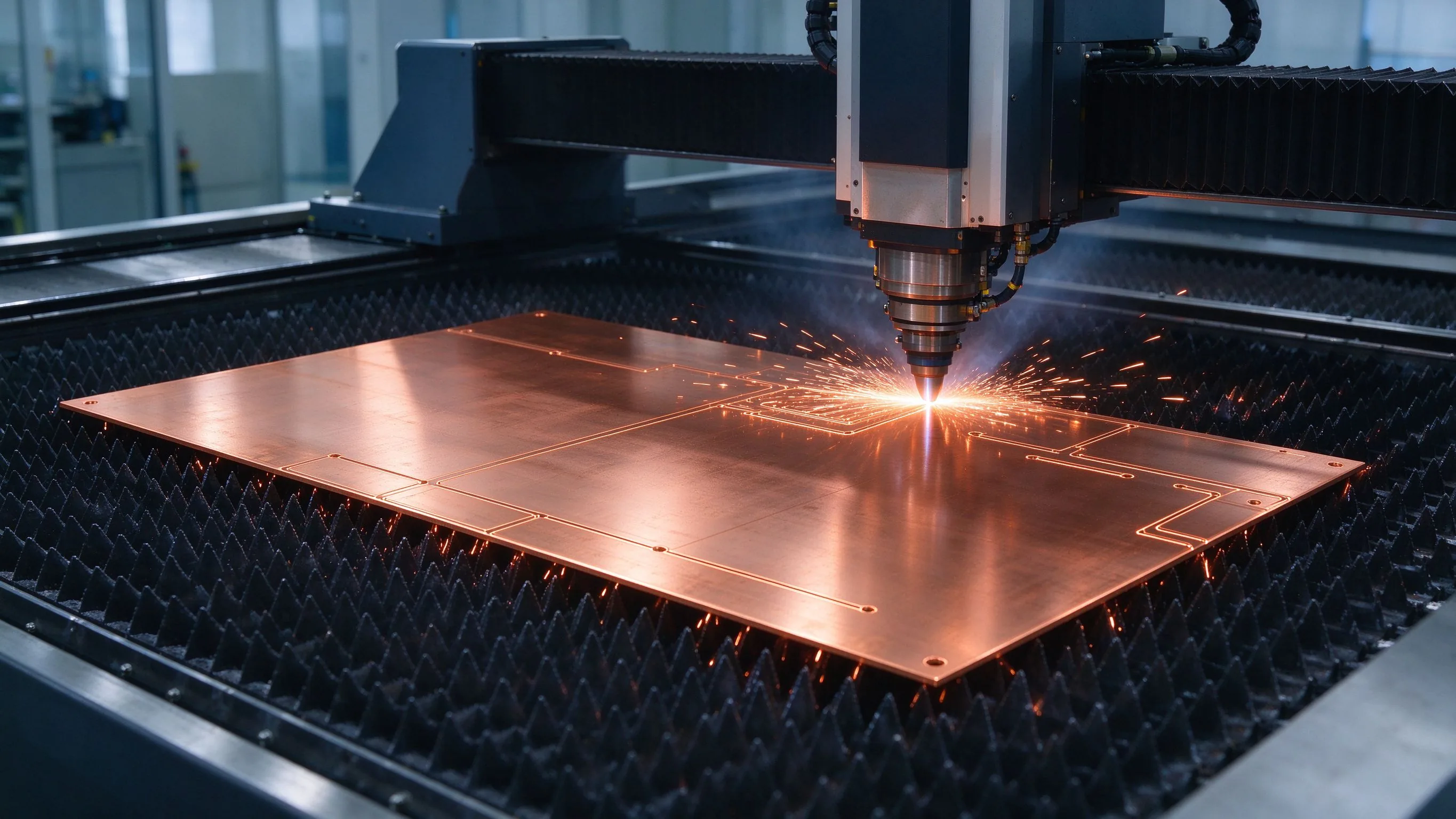
Copper is the largest cost driver in a laminated busbar. This 2026 buyer's guide explains
Read article
A busbar's rating is not a lookup — it is a calculation. Temperature rise is the real limi
Read article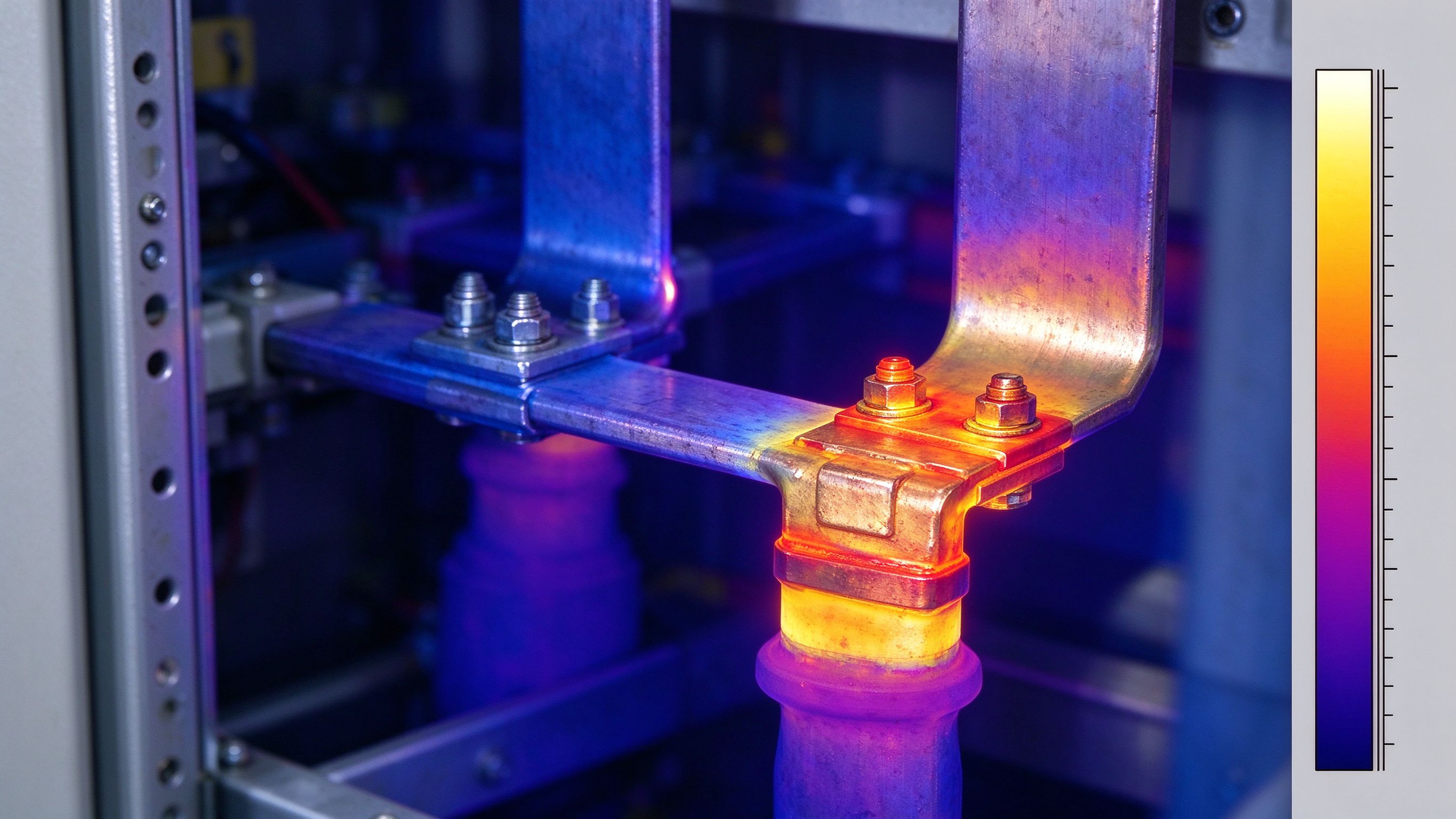
An 8-step busbar sizing method used by switchgear and power-electronics engineers: current
Read article
Lucas Meyer advises procurement and supply-chain teams on copper sourcing, busbar pricing and supplier evaluation, with 13 years in industrial metals and electrical-component procurement. He developed SHANYUAN's copper-price quotation model and cost-breakdown framework for busbar projects. He h
Send the current profile, voltage class and terminal types — our engineers reply within one business day.