
Mon–Fri 9:00–18:00 · CST (UTC+8) · Shandong, China
News · Materials

Tin, Silver or Nickel? A Procurement Decision Framework for Busbar Plating Finishes

On a drawing, a plated busbar terminal looks like a rectangle with a hole. In service, the plating finish determines how much resistance the joint adds, whether it corrodes in a humid container, whether torque stays stable through thermal cycling, and what the part costs. Tin, silver and nickel are the three options that matter for laminated busbars, and the choice between them is a purchasing decision with engineering consequences. This guide gives a decision framework, a comparison matrix and a checklist for procurement teams specifying busbar plating.

ByDavid Osei Materials Technical Note

On a drawing, a plated busbar terminal looks like a rectangle with a hole. In service, the plating finish determines how much resistance the joint adds, whether it corrodes in a humid container, whether torque stays stable through thermal cycling, and what the part costs. Tin, silver and nickel are the three options that matter for laminated busbars, and the choice between them is a purchasing decision with engineering consequences. This guide gives a decision framework, a comparison matrix and a checklist for procurement teams specifying busbar plating.

1. What Plating Actually Does on a Busbar Joint

Plating has three jobs on a busbar. First, it stabilizes contact resistance: a plated surface oxidizes predictably, so the joint resistance stays within a known band instead of drifting with the weather. Second, it protects the base copper from corrosion in the service environment. Third, it conditions the surface for fastening — plated finishes have controlled friction, which makes torque specs meaningful and re-tightening predictable. None of this appears in the ampacity table, but all of it decides whether the contact resistance stays inside the thermal budget over years of service. Plating is the cheapest reliability insurance on the bill of materials — when it is specified correctly.

2. Tin: the Default Finish, and Why

Tin plating is the default for busbars for three reasons: cost, corrosion protection and proven field behavior. Tin keeps a thin, stable oxide that breaks down under normal fastening force, so bolted joints reach consistent contact resistance. It protects copper in humid and mildly corrosive environments, which covers most battery, ESS and industrial service. It is also friendly to maintenance — torque specs hold, re-termination is reliable, and inspection is simple. The limits: tin's melting point (~232 °C) rules it out for high-temperature joints, and its oxide means contact resistance is not as low as silver. For the large majority of battery busbars and power-electronics busbars, tin at 3–10 µm is the right answer, and it is SHANYUAN's standard finish.

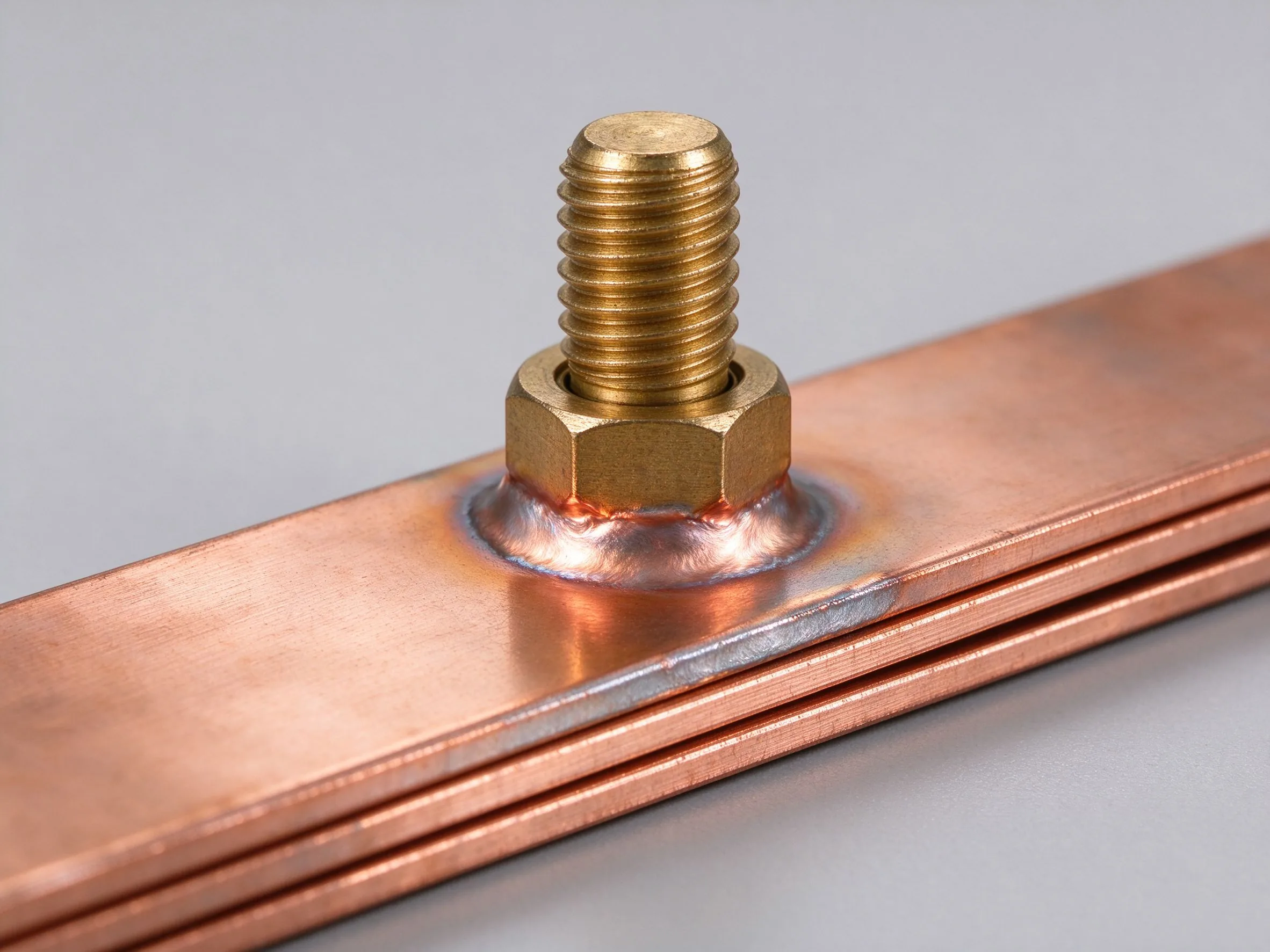
Tin-plated busbar terminals with bolted joints
Tin-plated terminals keep bolted-joint resistance stable through years of service.

3. Silver: Lowest Resistance, Highest Cost

Silver plating gives the lowest and most stable contact resistance of the three, which matters on the highest-current joints and on connections that are made and broken repeatedly. It is the standard for many inverter DC links, switchgear contacts and high-power EV connections, where a few micro-ohms of saving are worth real money in loss and temperature. The tradeoffs: silver tarnishes in sulfide environments (though the sulfide film stays conductive), it costs substantially more than tin, and it is reserved for joints where the engineering justifies the premium. On inverter DC-link busbars, silver plating on the capacitor-side terminals is common; on battery rack busbars it is usually unnecessary. The purchasing rule: specify silver where current density is high and the loss matters; specify tin everywhere else.

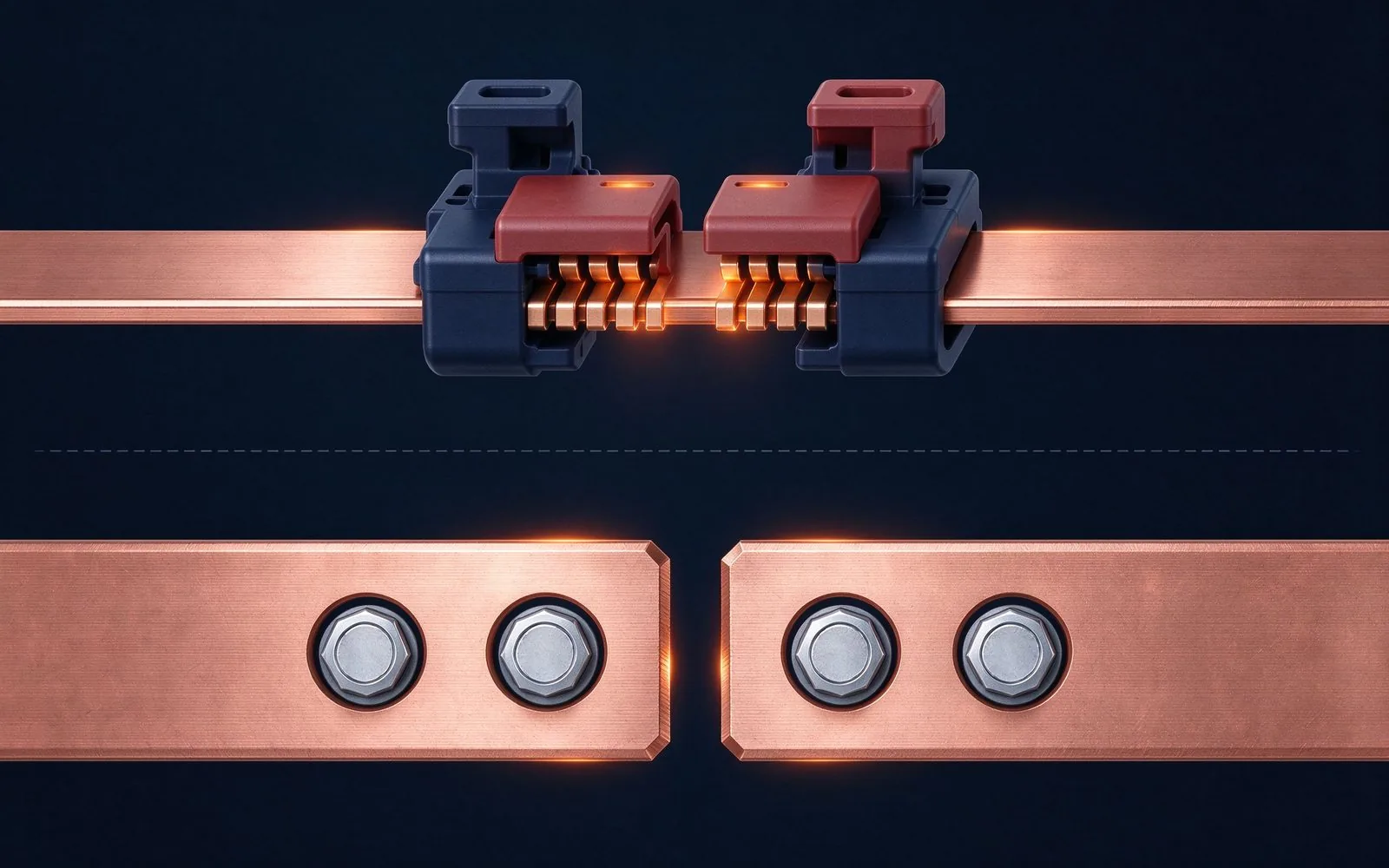
Busbar connection schematic showing plated joint surfaces
Joint surfaces carry the finish decision: silver on the highest-current paths, tin as the default.

4. Nickel: Corrosion First, Conductivity Second

Nickel plating is chosen for corrosion resistance and high-temperature service, not for low resistance. Nickel holds up in marine, high-humidity and chemically aggressive environments where tin would degrade, and it tolerates higher operating temperatures. The catch: nickel's oxide is hard and resistive, so bolted joints need higher force to reach stable contact, and nickel-plated surfaces are sometimes specified as an underlayer under silver or tin rather than as a final finish. In practice nickel appears on busbars for traction, offshore and aerospace applications, and on terminals that see aggressive cleaning agents. For standard industrial and storage service, it is usually the wrong first choice — but it is the right answer in its niche. The plating-corrosion guide covers the environmental mapping in more depth.

5. The Comparison Matrix

PropertyTin (Sn)Silver (Ag)Nickel (Ni)
Contact resistanceGood, stableLowestHigher, force-sensitive
Corrosion resistanceGood (humid/mild)Fair (sulfide tarnish)Excellent (marine/aggressive)
Max service temperature~150 °C (melt 232 °C)~250 °C+~400 °C+
Typical thickness3–10 µm3–15 µm2–8 µm (often underlayer)
Relative cost1.0× (baseline)1.5–3×1.1–1.6×
Make-break durabilityGoodExcellentGood
Typical busbar useBattery, ESS, industrial defaultHigh-current DC links, switchgearTraction, marine, high-temp, underlayer

Cost figures are indicative ranges, not quotes; thickness and cost depend on part geometry and volume. The finish decision should be paired with the conductor material choice, because plating behavior interacts with the base metal.

6. Current Density Sets the First Cut

Start the selection with current density per joint. Below roughly 200 A per connection, tin carries the day: contact resistance is adequate, cost is low, and field behavior is proven. Between 200 A and 1,000 A, the choice depends on loss economics — a silver-plated joint saving 5 µΩ at 500 A saves 1.25 W per joint, which matters when a large-cell rack has a hundred joints and a sealed enclosure. Above 1,000 A, silver is usually justified on the main DC path. The ampacity chart gives the current side of the equation; the plating decision is the resistance side. SHANYUAN's engineers model both together in the thermal budget before the finish is locked.

7. Environment Decides the Second Cut

Environment filters the candidates: humid containers and coastal sites push toward tin or nickel; sulfide-heavy industrial air hurts silver unless sealed; marine and aggressive-chemical service points to nickel; high-temperature joints (above ~150 °C) rule out tin. Altitude and condensation matter more than they should — a sealed ESS cabinet can go through condensation cycles that stress finishes. The practical approach is a short environment checklist on every RFQ: temperature range, humidity, condensation risk, chemical exposure, altitude. That list converts a plating debate into a table lookup, and it prevents the classic failure of a perfect electrical finish that corrodes in service. The busbar components range includes the mating hardware and insulators that complete the environmental picture.

8. Maintenance Access and Torque Stability

How a joint is serviced decides how much finish matters. Bolted joints that are re-torqued in the field need finishes with stable friction and predictable oxide behavior — tin and silver both qualify; nickel needs documented higher torque. Joints that are never touched can be welded and plated once, and the finish is a corrosion matter only. Make-break connections (bus plugs, disconnect points) favor silver for durability. The engineering point: specify the finish for the service life, not the first assembly. A torque spec is only as good as the finish's friction stability, which is why SHANYUAN documents plating thickness, adhesion and torque data together on quality and testing records.
9. Plating Process Control Is Part of the Spec

The finish name is not the spec. Tin from a clean, properly pre-treated line and tin from a rushed line are different products: adhesion, porosity and thickness distribution decide field behavior, and they are set by process control. A robust plating spec includes minimum thickness, adhesion test (e.g. bend or thermal shock), porosity limits and salt-spray expectation, plus a certificate of conformance per batch. SHANYUAN's in-house plating line holds these parameters and records them per batch, which is what makes the finish auditable when the integrator's customer asks. When comparing suppliers, ask for plating records, not plating brochures — the difference shows up in the field, usually two years in.

10. RFQ Checklist for Plating

  • Finish and minimum thickness with the standard referenced (e.g. ASTM B545 for tin, ASTM B700 for silver).
  • Contact-resistance expectation at the specified fastening force.
  • Adhesion and porosity test requirements.
  • Salt-spray or humidity test duration if the environment demands it.
  • Service temperature range (rules out tin above ~150 °C).
  • Torque spec and re-torque expectations for bolted joints.
  • Certificate of conformance and batch records.

Send this with the mechanical drawing and the manufacturer evaluation framework, and the plating answer comes back in one round instead of three.

11. Common Plating Mistakes in RFQs

Five mistakes show up repeatedly. First, silver-plating everything because it 'must be better' — it costs 1.5–3× tin and buys nothing below the current threshold. Second, no thickness spec, leaving the line free to plate thin and fail early. Third, ignoring temperature and discovering tin reflow at a hot joint. Fourth, treating nickel as a generic upgrade without the torque documentation it needs. Fifth, skipping adhesion verification on complex geometries where edge buildup and starved areas hide. Each fix is a line in the RFQ. And when in doubt, the engineering conversation is free: contact SHANYUAN with the current, environment and duty cycle and get a finish recommendation with the numbers behind it.

12. Decision Summary

Start with tin: it is the default for battery, ESS and industrial busbars, and it is right for the large majority of joints. Move to silver when current density is high and the loss is worth the premium. Choose nickel when corrosion or temperature rules out the others. Document thickness, adhesion, tests and torque in the RFQ; verify process control at the supplier; and pair the finish decision with the conductor grade and laminate design rather than treating plating as an afterthought. Done that way, plating stops being a cost line and becomes the reliability line it actually is.

Tin plating at 3–10 µm is the busbar default, balancing cost, corrosion protection and stable bolted-joint resistance.
Silver plating lowers contact resistance to the minimum and suits high-current DC links and make-break connections at 1.5–3× the cost of tin.
Nickel serves corrosion-heavy and high-temperature service but needs higher fastening force and is often an underlayer.
SHANYUAN holds an in-house plating line and documents thickness, adhesion, porosity and torque data per batch.
FAQ

Frequently asked questions

What plating is standard on busbars?
Tin plating at 3–10 µm is the industry default for battery, ESS and industrial busbars. Silver is used on high-current DC links where contact-resistance loss justifies the premium; nickel serves marine, high-temperature and aggressive-chemical service.
When should I specify silver plating?
Specify silver when current density per joint is high (roughly above 1,000 A on main DC paths), when the joint is made and broken repeatedly, or when the loss economics favor the premium. Below ~200 A, tin is normally sufficient.
Does plating affect the busbar current rating?
Not the ampacity table itself, but it affects joint resistance and therefore the temperature rise under load. Poor or wrong plating turns a joint into a hot spot; correct plating keeps the joint inside the thermal budget.
What should a plating spec include?
Finish, minimum thickness, referenced standard, contact-resistance expectation, adhesion and porosity tests, salt-spray or humidity duration, service temperature range, torque spec, and certificate of conformance per batch.
Related

Continue reading

Plating Corrosion in Service: Salt Spray, Galvanic Couples and Field Failures on Copper Busbars
Materials Engineering

Plating Corrosion in Service: Salt Spray, Galvanic Couples and Field Failures on Copper Busbars

The plating on a busbar contact is a corrosion strategy as much as a conductivity play. Ti

Read article
Contact Resistance in Bolted Busbar Joints: How to Specify, Measure and Control It
Technical Guide

Contact Resistance in Bolted Busbar Joints: How to Specify, Measure and Control It

A bolted busbar joint is a resistor hiding inside a conductor: contact resistance sets the

Read article
David Osei
David OseiProduct Marketing Engineer

David Osei is a product marketing engineer covering SHANYUAN's laminated busbar product lines. With 9 years in technical marketing for electrical components, he translates application requirements into product definitions, selection guides and technical content. He holds a B.Eng. in Electrical

Product MarketingApplication SelectionTechnical Content
See Full Bio

Designing a busbar for this application?

Send the current profile, voltage class and terminal types — our engineers reply within one business day.