Battery cell makers are ramping 500 Ah-plus cells for stationary storage, and the 314 Ah cell that defined 2024–2025 is already becoming the smaller option. Bigger cells lower system cost per watt-hour, but they push every downstream component into a new regime: rack current climbs, connections get fewer and heavier, thermal budgets tighten, and thermal-runaway containment becomes harder. Envision Energy's senior vice president Tian Qingjun warned in early November 2026 that the industry needs to watch 'the rising difficulty of thermal-runaway control during the large-cell iteration.' This article traces what larger cells mean for the laminated busbars that tie them together — current density, temperature rise, connection design, testing and the standards that now govern them.
Battery cell makers are ramping 500 Ah-plus cells for stationary storage, and the 314 Ah cell that defined 2024–2025 is already becoming the smaller option. Bigger cells lower system cost per watt-hour, but they push every downstream component into a new regime: rack current climbs, connections get fewer and heavier, thermal budgets tighten, and thermal-runaway containment becomes harder. Envision Energy's senior vice president Tian Qingjun warned in early November 2026 that the industry needs to watch 'the rising difficulty of thermal-runaway control during the large-cell iteration.' This article traces what larger cells mean for the laminated busbars that tie them together — current density, temperature rise, connection design, testing and the standards that now govern them.
This page is an annual rolling data page: the 2026 edition, refreshed once a year as new market data is published.
In 2024, 314 Ah was the flagship storage cell; by late 2026, Chinese and Korean makers are shipping 500–600 Ah cells for grid-scale projects, with 1,000 Ah-class cells announced for the next cycle. The economics are compelling: fewer cells per megawatt-hour, lower BMS cost per amp-hour, fewer busbar joints and faster assembly. But the electrical consequence is blunt — a 500 Ah cell at 1P delivers 500 A per connection, and at 2P the connector system must carry 1,000 A continuously inside the same 30 °C temperature-rise budget that governed a 314 Ah design. The busbar ampacity chart is the same physics; what changes is how many connections now sit near the top of it.
For a battery busbar, current per connection is the master variable. A 500 Ah string doubles the current that a cell-to-busbar joint must carry versus 2024-era 280 Ah strings. Doubling current quadruples the I²R loss at the same resistance, so the resistance budget for each joint halves. That forces three design choices: larger copper cross-section, better contact surface (plating, flatness, controlled torque) and shorter current paths. A laminate that worked at 200 A with a 30 °C rise cannot simply be scaled by adding copper thickness — skin effect, edge current concentration and the mechanical envelope all push back. This is why the design conversation starts from the measured joint resistance budget, not from a catalog ampacity table.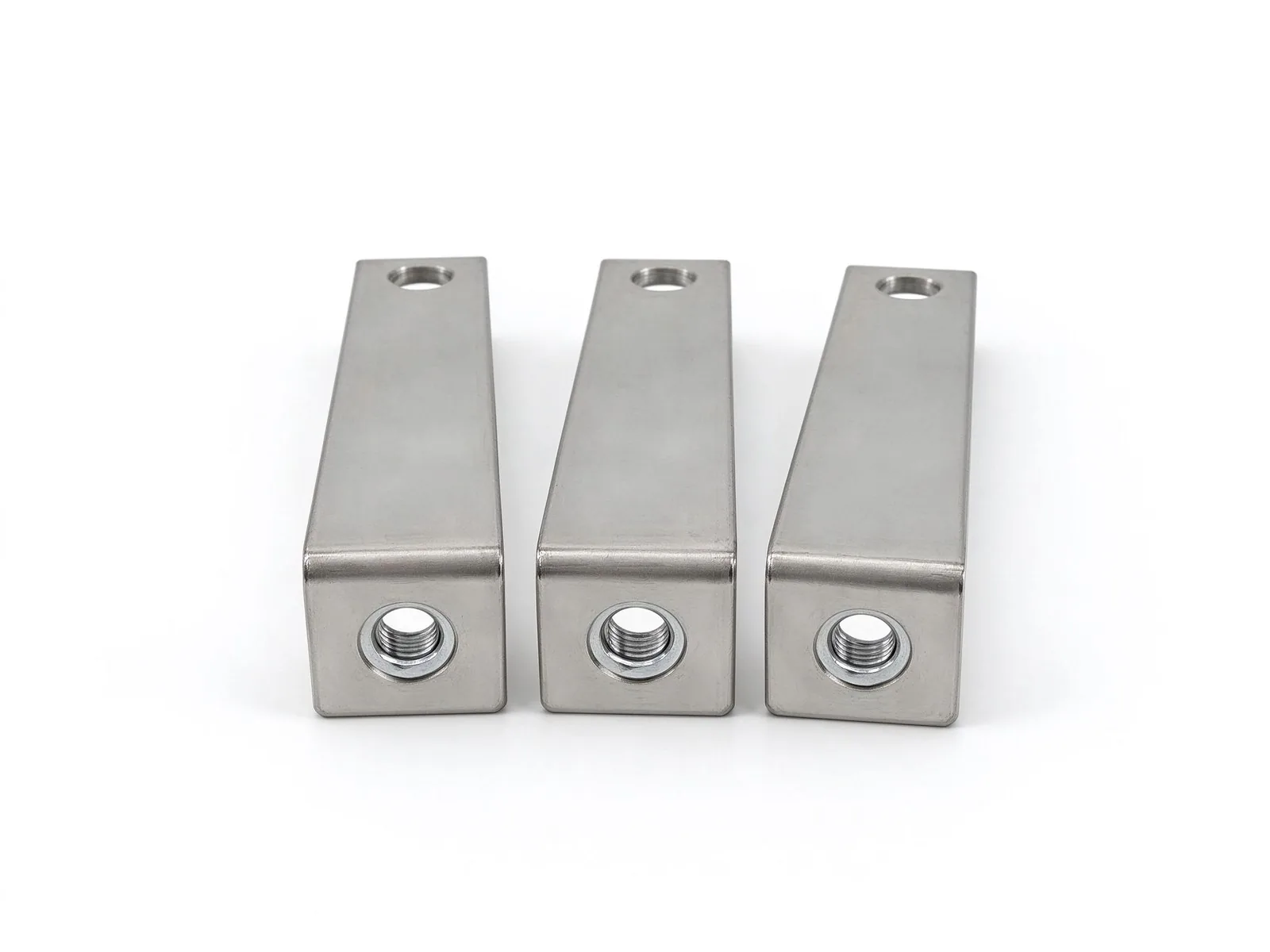
Bigger cells mean fewer cells per rack, which means fewer busbar joints per system — but each joint now carries more current and more mechanical load. A loose or contaminated joint at 1,000 A does not just run warm; it runs hot enough to accelerate local insulation aging and, in the worst case, to initiate the failure chain that thermal-runaway containment exists to stop. The engineering response is redundant verification: torque-controlled fastening with Belleville washers, resistance checks on assembled joints, and temperature-rise testing on the populated module rather than on a single bar. SHANYUAN's quality and testing flow includes joint-resistance sampling and thermal cycling on production batches precisely because a field joint failure at 1,000 A is a system event, not a component event.
Storage systems run hours-long discharges, so the thermal design driver is sustained loss, not peak current. At 1,000 A continuous, a joint that adds 0.1 mΩ dissipates 100 W — continuously, inside a sealed cabinet. That heat must flow into the cell cooling loop or the enclosure, or the busbar becomes a second heat source fighting the thermal design. The practical consequence: busbar thermal management now includes joint-loss accounting, thermal imaging on prototypes and, increasingly, direct coupling of busbar losses into the CFD model of the rack. A 30 °C temperature-rise budget measured on the laminate surface is the right acceptance criterion; the design must also verify that the heat it generates does not disturb the cell thermal envelope above.
Bigger cells store more energy per unit surface area, and when a cell goes into thermal runaway the event is larger and harder to contain. The busbar's role in containment is often underestimated: it is the metal path that can propagate a short circuit between adjacent cells if its insulation fails in the fire, and it is also the path that must keep carrying — or cleanly disconnect — current during the event. Design implications: insulation materials that do not propagate flame, edge seals that hold at elevated temperature, and busbar layouts that respect the cell-to-cell spacing the system integrator has certified. This is where busbar components and accessories like insulated covers and standoff insulators earn their place. The UL 9540 evaluation of the system takes the busbar's flammability and arc behavior into account, so component-level choices cannot be made in isolation.
Higher cell capacity is arriving at the same time as the industry's push from 1500 V DC toward 2000 V DC strings. Bigger cells and higher string voltage multiply the insulation duty on the busbar: more voltage across the dielectric, more energy available in a fault, and more partial-discharge stress at altitude and humidity. A laminated busbar for a 2000 V-class string needs thicker or higher-class dielectrics, verified PD-free behavior above the working voltage, and creepage distances sized for the pollution environment — not copied from a 1500 V drawing. SHANYUAN validates these with hipot and PD testing on production-representative samples, because the certification chain downstream depends on repeatable component behavior.
Large-cell packs increasingly move to welded or ultrasonically bonded tabs for cell-to-busbar connections, because a welded joint has lower and more stable resistance than a bolted one and eliminates the torque-recheck problem. The tradeoff is serviceability: welded connections cannot be disassembled in the field, so the industry splits along application lines — welded for sealed, replace-the-module designs; multi-terminal bolted busbars for racks that support cell or module replacement. The right answer depends on the cell maker's tab specification, the maintenance strategy and the logistics of the project site. Our custom design service routinely builds both variants from the same laminate stack, so the choice can be made on field economics rather than supplier capability.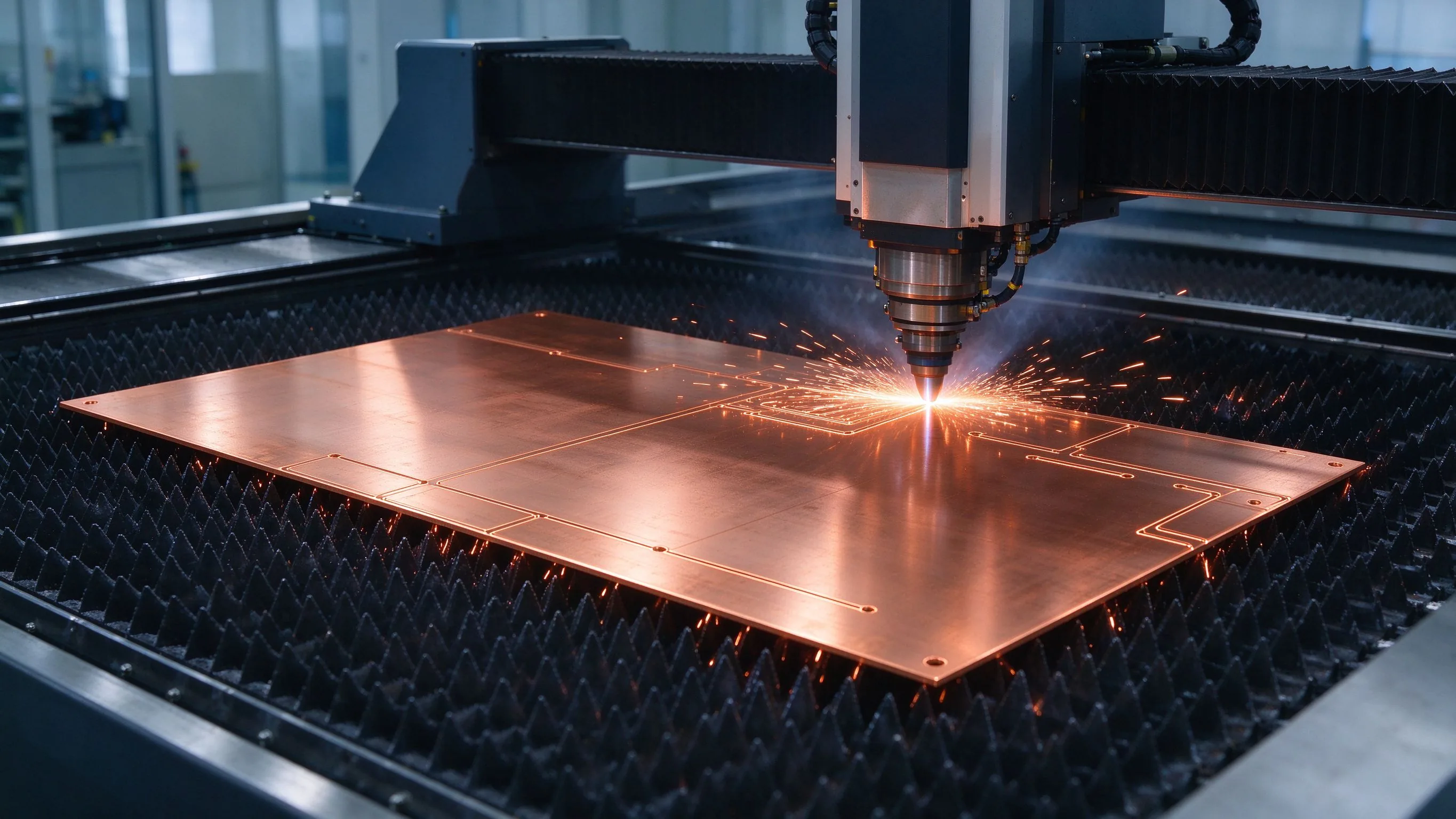
At 500 A per joint, the difference between a good and an average contact finish is measurable in watts and in field failures. Tin plating is the cost-effective default for storage busbars, but tin's oxide film means contact resistance depends on plating thickness, flatness and fastening force. Silver plating buys lower and more stable contact resistance for the highest-current joints and for connectors that see repeated make-and-break. Nickel sits between for corrosion resistance in humid service. The engineering rule: specify plating by joint current, service environment and maintenance access, and verify with contact-resistance measurements on assembled joints. SHANYUAN documents plating thickness and adhesion per batch, because at 1,000 A a plating defect is not cosmetic — it is a thermal event waiting for a duty cycle.
Validation for large-cell busbars is a three-layer stack. Material level: film dielectric strength, thermal class and flammability. Component level: temperature rise at rated current on a representative laminate, PD and hipot on insulated versions, and thermal cycling through the module duty cycle. System level: the populated-module tests the integrator runs for UL 9540 — which the busbar must pass without surprises. The realistic pitfall is that a busbar that passes component tests can still fail system tests if edge sealing, bolt torque or mating hardware were not controlled in production. That is why selecting a busbar manufacturer on the basis of documented process control — plating thickness logs, torque records, PD batch reports — matters more than the catalog spec sheet.
UL 9540, NFPA 855 and the IEC 62619/63056 series define the safety envelope, and their revisions keep pace with cell capacity growth. For busbar suppliers the practical reading is: insulation and connection systems must be evaluated for the actual cell energy and fault energy of the system, not for a generic voltage class. A 1,000 A connection in a 5 MWh container has a different arc-fault and thermal-runaway context than the same connection in a 1 MWh cabinet. Component documentation — material certs, PD reports, thermal data — is what lets integrators carry the busbar through their system certification without rework. Contact SHANYUAN for the test data packages we provide with 500 Ah-class busbar programs.
Buyers evaluating busbar suppliers for large-cell programs should ask six questions: (1) Have you built busbars for 500 Ah-plus cell programs, and what current per joint did they carry? (2) What is your joint-resistance verification process on production? (3) Can you provide PD and hipot reports for 1500 V/2000 V-class insulation stacks? (4) What plating thickness do you hold, and how is it documented? (5) What is your lead time for a custom laminate from DFM approval to first articles? (6) Do you thermal-cycle production samples? The answers separate component vendors from engineering partners — and the difference shows up in field reliability. A complete RFQ package shortens the cycle: how-to-choose-a-busbar-manufacturer walks through the evaluation criteria in detail.
Beyond 500 Ah, the 1,000 Ah-class cells announced for 2027–2028 will push rack current into the 2,000 A range and force busbar design toward multi-layer laminates and parallel paths as a matter of course. The deeper trend is integration: busbar, cooling and enclosure are being co-designed rather than bought separately, because at these currents the boundaries between them decide the thermal outcome. SHANYUAN's power-electronics busbars and battery-side laminates are built on the same engineering platform — low-inductance layering, verified insulation, documented process control — so the step from battery connection to system DC-link is seamless. The record storage quarter and the big-cell migration are the same story: more energy per connection, and better engineering behind every joint.
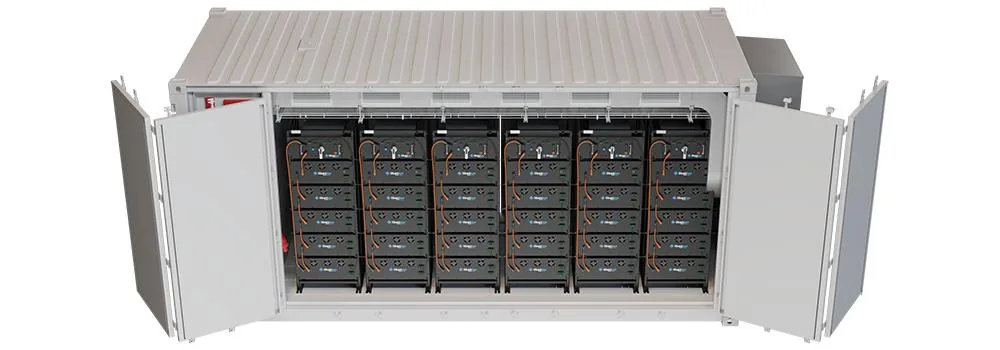
ERCOT's record 2.2 GW storage quarter and SNE's 73% global ESS shipment jump are reshaping
Read article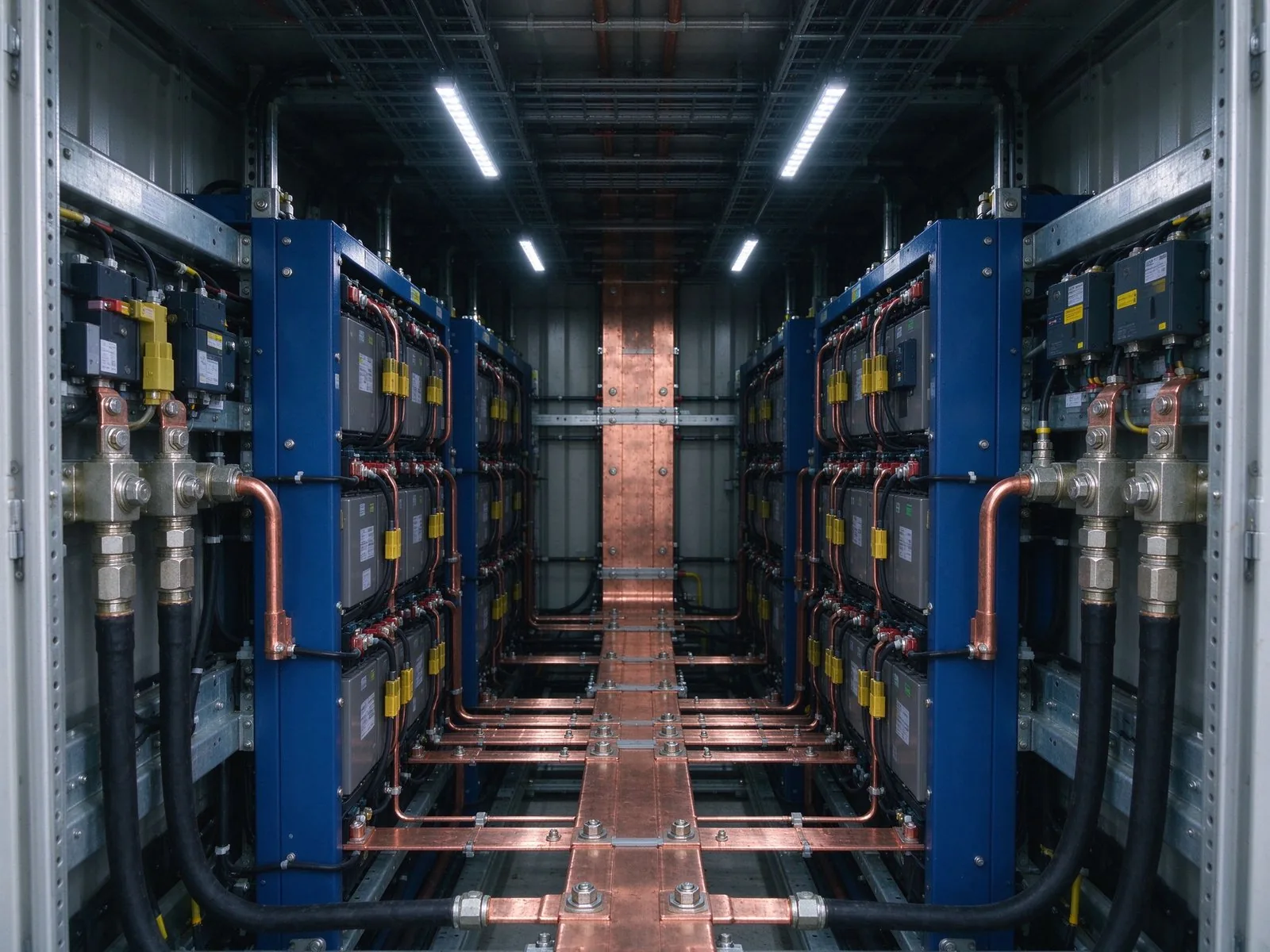
Repurposed EV packs enter stationary storage at 70-80% SoH under new EU and North American
Read article
Aiko Tanaka is application engineering manager at SHANYUAN, with 11 years in applying laminated busbars to data centres, energy storage and new-energy systems. She leads application selection, custom-profile development and project delivery, and holds a B.Eng. in Electrical Engineering from the Univ
Send the current profile, voltage class and terminal types — our engineers reply within one business day.