For years V2G lived in pilots with a handful of cars. In 2026 it became a product: automakers launched tariffs and firmware updates, standards moved, and charge point operators began writing bidirectional capability into procurement specs. The hardware consequence is simple — EV power paths now carry current in both directions, and the busbars inside batteries and chargers have to handle it.
For years V2G lived in pilots with a handful of cars. In 2026 it became a product: automakers launched tariffs and firmware updates, standards moved, and charge point operators began writing bidirectional capability into procurement specs. The hardware consequence is simple — EV power paths now carry current in both directions, and the busbars inside batteries and chargers have to handle it.
In April 2026 Volkswagen and its energy brand Elli announced a fully integrated vehicle-to-grid offer for private customers in Germany, with market launch planned from the fourth quarter of 2026: car, app, electricity tariff, smart meter, bidirectional charger and installation sold as one package, pre-registration from June 2026 (Volkswagen Group, April 2026). Customer savings are estimated at 700–900 euros per year from grid services and optimized charging.
Integrated offers like this remove the biggest adoption friction — the customer no longer assembles charger, contract and software themselves. For the power-electronics busbar supplier the signal is structural: bidirectional hardware is now embedded in mass-market vehicle platforms, not test fleets.
France was first to a consumer-grade V2G service. The Renault 5 E-Tech ships with two-way capability from launch, and Mobilize with The Mobility House sells it as a bundle: car, bidirectional charger, energy contract and managed charge/discharge software, with expansion into the Netherlands, Germany and the UK planned through 2026 (Nexithon, August 2026). In Utrecht more than a hundred Renault 5s are live in Europe's largest V2G car-sharing project, heading toward 500 vehicles.
Designing V2G-native from launch — rather than retrofitting — changes the vehicle architecture early: the onboard charger, battery interconnect and DC-link are specified for bidirectional current from day one, which is exactly where battery busbar design earns its place.
Germany's first commercial offer came from BMW with E.ON using the Wallbox Professional, one of the first bidirectional CCS wallboxes, with the Neue Klasse platform carrying the capability from the outset; Mercedes-Benz announced the same for the electric GLC through MB.CHARGE Home with The Mobility House (Nexithon, August 2026). Ford and Octopus Energy announced a German V2G tariff in February 2026 — EUR 30 per month for at least 300 connected hours plus an 18 ct/kWh charging discount, launching in summer 2026 (Meticulous Research, October 2026).
Tariffs and hardware arrived in the same quarter, which matters for component suppliers: charging infrastructure procurement now includes bidirectional capability as a default checkbox, not an option.
In June 2026 GM activated full vehicle-to-grid for existing customers via firmware, extending its vehicle-to-home systems, with a quarter-million bidirectional vehicles in circulation and a Pacific Gas and Electric collaboration aimed at 52,000 participating vehicles by 2030 (Nexithon, August 2026; Meticulous Research, October 2026). Rivian joined the ChargeScape aggregation platform in June 2026, and Puget Sound Energy is piloting Ford and Kia vehicles through the same stack.
The US pattern is distinct: bidirectional capability arrives as an over-the-air feature on hardware that already exists. That makes the vehicle-side power path — battery packs, battery busbars and charger modules — the rate limiter for grid services, since software cannot add current-carrying capacity that the hardware lacks.
Denmark hosts the world's first fully commercial V2G hub, where Nissan, Enel and Nuvve let the grid operator charge or discharge plugged-in vehicles on demand (Nexithon, August 2026). China is scaling the pilot layer fast: 30 V2G pilots across nine cities announced in 2025, with a target of 5,000 V2G charging facilities by the end of 2027, constrained mainly by GB/T bidirectional protocol standardization. Hyundai and Kia run AC V2G pilots aligned with Korea Electric Power Corporation's grid-code update, and Brazil's ANEEL authorized a 2026 V2G sandbox.
Fleet and hub deployments push the commercial end of the market: DC bidirectional chargers at 30–360 kW two-way power, which means high-current charging busbars carrying sustained reverse current into the grid.
ISO 15118-20 Amendment 1 added AC distributed-resource control in July 2026, ahead of the EU requirement that new chargers support bidirectional functionality from 1 January 2027 (Meticulous Research, October 2026). NACS bidirectional capability is defined in SAE J3400, though public V2G hardware using NACS was not yet commercially deployed in early 2026 (EV Charger Scout, March 2026).
Standardization is the load-bearing wall for the whole business case. Once ISO 15118-20 and J3400 interop mature, chargers stop being bespoke and volume pricing follows — the same pattern the EV power distribution market has seen at every voltage step.
Commercial V2G favors the DC pathway. DC bidirectional chargers deliver 30–360 kW of two-way power versus 3.7–22 kW through AC, with faster response times and higher round-trip efficiency (Mida, August 2026). Silicon carbide is the enabling technology: SiC-based bidirectional modules exceed 97% conversion efficiency in both charge and discharge directions, cutting energy losses and thermal load compared with IGBT designs.
At 30–360 kW the charger's DC-link is a serious power assembly: laminated DC-link busbars connecting SiC modules, film capacitors and the output terminals, designed for low inductance and symmetric current sharing in both directions.
Early V2G research reported accelerated calendar ageing, but field data through 2026 tells a different story: shallow-depth 10–20% depth-of-discharge cycling, combined with LFP/LMFP chemistries, keeps capacity fade within normal driving-use ranges (Mida, August 2026). Automakers now publish customer savings because the battery business case holds.
For the pack itself, bidirectional duty means the interconnect sees more charge/discharge cycles, more thermal cycling and higher sustained currents during grid-service events. Connection reliability — welded cell-to-busbar joints and thermal-cycling performance — becomes a fatigue design input, not a static spec.
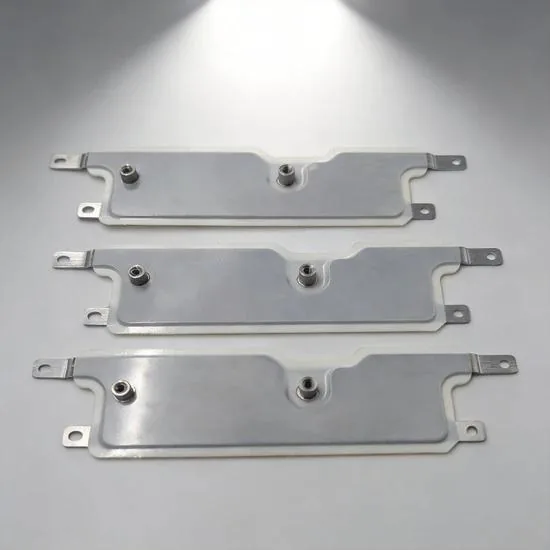
Bidirectional current doubles the time-integral of current through the pack for a given odometer distance, because grid events add to driving current instead of replacing it. That increases both resistive losses and thermal cycling at the busbar and terminal joints, and pushes designers toward lower-resistance, larger-margin connections.
Practical levers: thicker or additional plating on contact surfaces, welded rather than bolted cell interconnects where serviceability allows, and current-sharing symmetry between parallel cells so no single path takes disproportionate cycling duty.
A bidirectional charger's DC-link carries current in opposite directions depending on mode, so loop inductance, capacitor placement and busbar geometry must be optimized for both states, not just charge. SiC modules switch faster and harder, which raises the value of low-inductance busbar layout and careful gate-loop control.
The same busbar also has to handle the thermal asymmetry: grid-export events may occur at different ambient times than charging, so the thermal design envelope is the union of both operating modes.
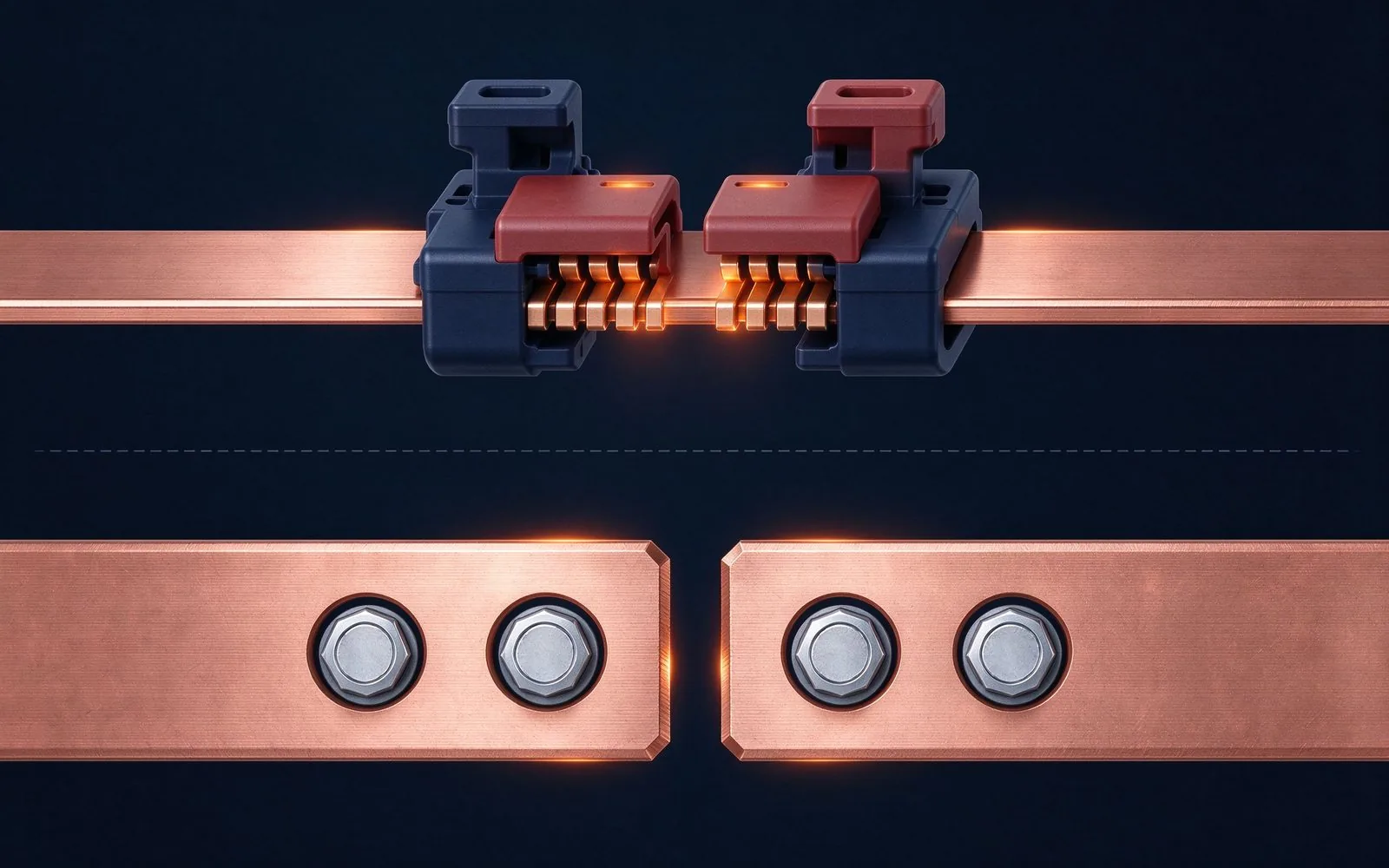
Grid-service duty is relentless — hundreds of shallow cycles per year rather than one daily drive cycle. Bolted joints must hold torque and vibration resistance over years; welded joints must survive thermal cycling without crack growth; contact surfaces must resist oxidation and fretting corrosion over a longer calendar life.
The quality evidence trail matters: per-lot torque, pull, thermal-cycling and contact-resistance records are what separate grid-service-grade hardware from single-direction prototypes.
If you buy EV or charger hardware for programs that will touch V2G, specify bidirectional duty explicitly: rated current in both directions, thermal-cycling count, cycle life of the connection method, and DC-link inductance targets. Ask for measured contact resistance and temperature-rise data at rated current, not just a datasheet ampacity.
For converter and pack programs the custom busbar design route — drawing-to-tested-parts, including DFM review — closes the gap between what a generic catalog part can do and what bidirectional duty requires.
SHANYUAN builds laminated busbars for EV battery packs, onboard chargers and charging systems: C11000 copper, 1–6+ layers, ~1000 A class, PET/Nomex/DLF dielectrics, tin-plated contacts and M6/M8 stud, blade or welded terminals, from a 17,200 m² Rizhao facility exporting to 20+ countries.
Engineering and quotation respond within one business day — send your power profile and drawing and the design review starts immediately.
Every indicator points the same way: tariffs are live, standards are fixed or fixing, hardware is shipping, and the EU mandate lands on 1 January 2027. Bidirectional capability is becoming the default denominator of charging and pack programs, and the busbars inside them carry the consequence.
Related on this site: EV battery busbar trends, SiC/IGBT DC-link busbar design, and megawatt charging systems.
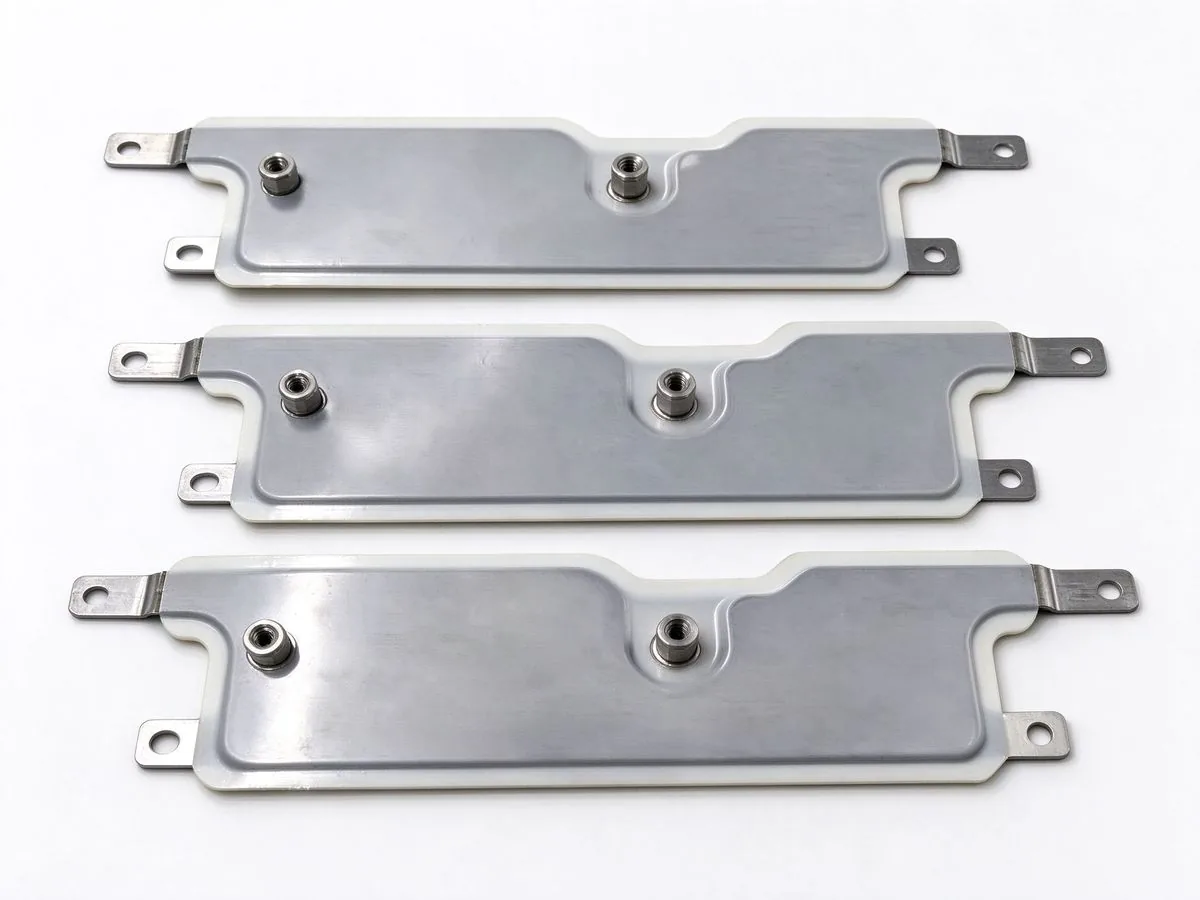
The shift from 400V to 800V vehicle architectures is rewriting the electrical layout insid
Read article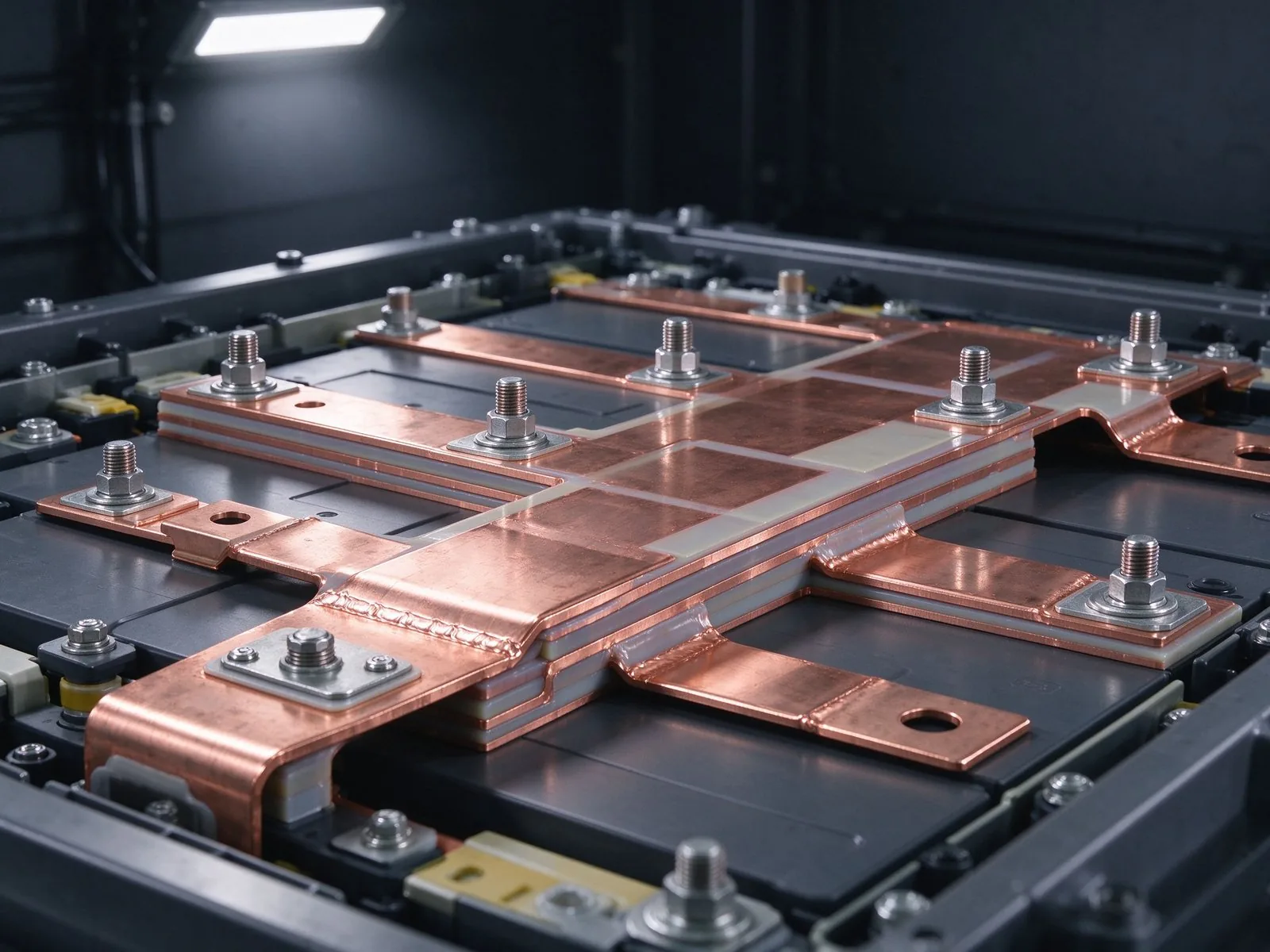
BYD's Megawatt Flash-Charging 2.0 pushes 1.5 MW through a single gun at 1000 V and 1500 A,
Read article
Higher switching speeds from SiC MOSFETs and modern IGBTs are pushing the DC-link busbar t
Read article
Elena Vasquez is a power electronics application engineer with 10 years of experience integrating laminated busbars into EV inverters, charging systems and energy-storage PCS. She specializes in low-inductance DC-link design, EMC behaviour and converter packaging, and holds a B.Sc. in Electrical Eng
Send the current profile, voltage class and terminal types — our engineers reply within one business day.