A battery passport is a digital record attached to a physical pack. The pack maker signs it, but the facts inside it come from the cells, the module hardware, the thermal system and the busbars. When the obligation starts in February 2027, a busbar supplier that cannot produce material and batch data becomes the reason a customer's passport is incomplete.
A battery passport is a digital record attached to a physical pack. The pack maker signs it, but the facts inside it come from the cells, the module hardware, the thermal system and the busbars. When the obligation starts in February 2027, a busbar supplier that cannot produce material and batch data becomes the reason a customer's passport is incomplete.
This page is an annual rolling data page: the 2026 edition, refreshed once a year as new market data is published.
Regulation (EU) 2023/1542 has applied since February 2024, but its digital identity requirement has a later clock. The European Commission's implementation page lists the DPP registry as becoming operational on 20 July 2026, with the battery passport mandatory for the relevant battery categories placed on the EU market from 18 February 2027. Due diligence obligations follow six months later, in August 2027.
For suppliers outside the EU, the date is not a European compliance detail. A pack assembled in Asia and shipped into the EU carries the passport obligation with the product, and the pack maker will pass the data request down the bill of materials until it reaches a supplier who can answer. That request lands on the busbar maker whether or not the busbar itself is a "battery" in the legal sense.
The Commission published updated guidance in August 2026 covering the data points by battery category, which turns the exercise from an interpretation debate into a checklist. The practical question for a component supplier is no longer whether the passport applies, but which of its own records map onto the checklist.
The passport is not a sustainability report. It is a structured data set, machine-readable, identified by a unique identifier that stays with the battery through its life. The core categories are consistent across the guidance: general battery and manufacturer information, carbon footprint, recycled content, due diligence documentation, and — for the categories where it applies — state of health and performance data.
Three of those categories reach the busbar directly. Recycled content is mass-based, so the copper in the busbar counts. Carbon footprint is allocated by mass and process, so the busbar's melting, rolling, plating and lamination energy counts. Due diligence is chain-based, so the identity of the copper source and the smelter or refiner behind it counts.
The remaining categories — cell chemistry, state of health, performance — do not involve the busbar, which is why it is easy for a component supplier to assume the passport is somebody else's problem. The assumption holds until the pack maker's data collection template arrives and asks for a copper mass per part number with a recycled-content percentage and a batch identifier.
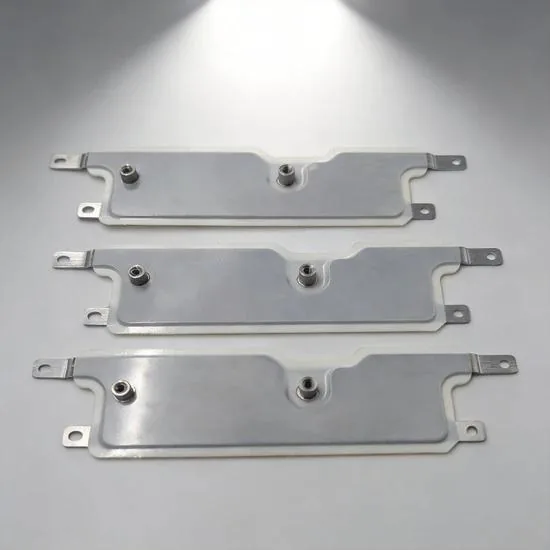
A laminated busbar in a traction pack or a containerised ESS is a small fraction of the pack mass but a large fraction of its conductive copper. A typical multi-layer stack with M6 or M8 studs weighs between 0.8 and 4 kg depending on layer count and current path, and most of that mass is C11000 copper. In recycled-content accounting, that mass is not a rounding error.
The same part also carries the pack's plating and insulation chemistry. Tin plating, nickel underlayers where specified, PET or Nomex dielectric, DLF epoxy coating and the adhesives that bond them are all substances that appear in the pack's material declaration. A passport that reports recycled copper content but cannot describe the plating chemistry is internally inconsistent, and an auditor will notice the gap before a customer does.
This is the structural reason the busbar sits inside the chain: it contributes mass, substances and process energy at the same time, and each of those maps to a different passport field. The supplier who treats the request as paperwork will produce a data sheet that the pack maker cannot use.
The material and construction detail behind those mass figures is on the battery busbar product pages, with the layer and stack options in the design guide.
Recycled content is the field most likely to be requested first, because it is the easiest to state and the hardest to prove. The copper in a C11000 busbar may come from primary refined metal, from secondary refining, or from a mixture, and the fraction is a property of the heat rather than of the part. A fabricator that buys coil from a service centre inherits whatever the mill declared, which means the first data request usually goes one tier further back.
Mass balance is the accounting method that makes this workable. Instead of tracking recycled copper atom by atom through a melt, the mill records the proportion of secondary feed in a defined production period and allocates it across the heats produced in that period. The busbar supplier passes the mill's declaration through with the heat number, and the pack maker aggregates it into the pack-level percentage.
The chain only holds if the identifiers survive. A heat number that is lost when the coil is cut into blanks cannot be recovered at the finished part, so the traceability requirement is a production-control requirement, not a documentation requirement. A fabricator who can print the heat number on the travelling route card and carry it into the final inspection record can answer the question in minutes; one who cannot will be reconstructing it from purchase orders months later.
Copper grade and conductivity trade-offs are covered in the copper grade selection guide and the copper versus aluminium comparison.
Material declarations for plating and dielectric are routinely the weakest part of a component supplier's file. Tin plating is usually bought as a process rather than a material, so the chemistry of the bath, the thickness window and the underlying copper surface are known to the plating line but not always to the sales engineer. Insulation films are bought by specification, and the specification rarely states the full substance composition that a declaration requires.
The gap is fixable with two documents per material family. For plating, a process specification that states the bath chemistry family, the thickness target and tolerance, the adhesion test and the reflow condition, supported by a plating thickness measurement on the actual part. For dielectric, the supplier's declaration plus the laminate's own bond and void data, because the pack maker will ask how the insulation behaves under compression and temperature, not only what it is made of.
There is a commercial argument for doing this early. The same records support the customer's REACH and RoHS declarations, the IMDS entry that automotive programs already require, and the due diligence file that becomes mandatory in 2027. One data collection serves four obligations.
Plating thickness, adhesion and finish selection are set out in plating finish selection; dielectric grades are compared in dielectric selection.
The passport's carbon footprint field is populated from a pack-level calculation that allocates emissions across the bill of materials. The busbar's contribution is dominated by copper production rather than by fabrication: primary copper carries a carbon intensity an order of magnitude above secondary copper, and the fabrication steps — slitting, punching, lamination, plating — add a smaller but measurable increment.
That structure means a busbar supplier does not need a full life-cycle assessment for every part number. It needs a defensible factor per kilogram of copper by source route, plus a per-part process energy figure that can be updated when the line changes. A fabricator who can state "this part carries X kg CO2e per kg, split into copper and conversion" gives the pack maker something that can be aggregated. A fabricator who offers a single number with no breakdown forces the pack maker to estimate, and estimates get conservative.
The practical risk is timing. Carbon-footprint declarations under the regulation have moved through the Commission's delegated acts on a slower schedule than the passport itself, but the data request arrives with the passport. Suppliers who wait for the final methodology will be asked for numbers before they have a method, which is how conservative defaults end up in a customer's calculation.
Part-level weight and cost build-up, which uses the same mass allocation, is described in weight and cost calculation.
A passport identifies a battery, not a production run. The data behind it, however, is batch data: which heat of copper, which lot of film, which plating campaign, which lamination press cycle. A supplier that can only trace to a part number is offering a promise; a supplier that can trace to a batch is offering evidence.
The minimum viable traceability set for a laminated busbar is five fields: the copper heat number, the insulation lot, the plating lot or campaign date, the lamination date and press, and the final test record. Each of these should be linked to the shipment, so that a pack maker who discovers a field issue six months later can ask which busbar batches went into the affected packs.
This is the same discipline the company applies to its factory audit documentation. It is also the discipline that separates a supplier who can answer a recall query in an afternoon from one who needs a week to reconstruct production history from paper route cards.
The audit evidence a buyer should expect is listed in the factory audit checklist.
The passport is a living record. The Commission's own FAQ notes that a new passport is required when a battery is repurposed or remanufactured, which is the pack-level version of a principle that applies at component level too: a material change invalidates the data that was declared.
For a busbar supplier the practical list of changes that need notification is short and specific. A change of copper source or mill. A change of plating chemistry or thickness window. A change of dielectric supplier, film grade or layer count. A change of lamination process or adhesive. A change of terminal plating. Each of those can move a recycled-content percentage, a substance declaration or a carbon factor, and any of them can force the pack maker to reissue data.
A change-notification clause in the supply agreement is therefore not a legal formality; it is the mechanism that keeps the passport valid. The clause should state the notification window, the data package that must accompany a change, and who bears the cost of re-declaration. Suppliers who accept that clause without a process behind it will breach it in the first year.
Documented change control is one of the criteria in how to choose a busbar manufacturer.
Due diligence obligations under the regulation apply from August 2027, and they ask a different question from the passport: not what the battery contains, but how the raw materials were sourced and whether the chain has been assessed against social and environmental risk. Copper is one of the materials in scope, and the assessment runs to the smelter or refiner.
For a fabricator, the deliverable is a documented chain: the identity of the copper supplier, the refiner behind it, the policy the supplier applies, and the evidence that the policy is being followed. Industry schemes exist for this, and a supplier who participates in one can answer with a certificate rather than a narrative. A supplier who does not will be asked to complete a customer questionnaire that takes weeks and produces an answer nobody fully trusts.
The two obligations interact. A passport that reports recycled content without a due-diligence file is half a record; a due-diligence file that cannot be tied to the batch that went into a pack is unverifiable. The suppliers who build one traceability spine and attach both datasets to it will spend far less time on customer audits than those who treat each request separately.
The goal is not a PDF per customer. It is a data set that can be exported in the format the customer's system accepts, keyed to a part number and a batch. Four blocks cover most requests: a part master record (mass, layer count, materials by weight, plating specification, terminal type), a batch record (heat, lots, dates, test results), a compliance record (substance declarations, recycled content, carbon factors) and a change log.
Most fabricators already hold the first two in production systems and the third in scattered files. The work is joining them, not creating them. A part master that states copper mass by layer, insulation mass by material and plating thickness by terminal is the foundation; without it, recycled content and carbon factors cannot be allocated to a shipment.
Format matters as much as content. A customer building a passport will accept a structured export far more readily than a signed declaration scanned to PDF, because the structured version can be validated. That is the difference between a supplier who is easy to work with and one who is compliant on paper.
A worked example of the procurement package is in the sample-to-series procurement guide.
When a pack maker or a notified body audits the chain, the questions are predictable. Show the material declaration for the part and the evidence that the delivered part matches it. Show the batch record that ties the shipment to the copper heat and the insulation lot. Show the plating thickness measurement from the production lot rather than a capability study. Show the change log for the last two years. Show the due-diligence assessment for the copper source.
Each of those maps to a document the factory should already produce for quality reasons. The material declaration supports the customer's substance compliance. The batch record supports recall containment. The plating measurement supports the terminal resistance and corrosion claims. The change log supports configuration control. The due diligence supports the customer's own supply-chain program.
The reason to build them now rather than in 2027 is that retroactive documentation is expensive and unconvincing. A heat number reconstructed after the fact is an assertion; a heat number recorded at goods-in and carried through the route card is evidence.
The quality system behind those records is described on the quality page.
Data costs money, and the market is already pricing it. A busbar supplier who can provide a complete passport-ready package will be asked to quote earlier in the program and will be compared against fewer competitors, because the buyer's transaction cost of qualifying a new supplier includes the data collection. That is the data premium, and it is largest in programs with a 2027 SOP.
The cost side is real but bounded. Adding a heat-number field to the route card, measuring plating thickness per lot, keeping lot records for the dielectric and exporting a structured part master are process changes that a fabricator with an existing quality system can absorb. The expensive path is the improvised one: a customer-specific spreadsheet built from scratch for every program.
For buyers, the practical test in an RFQ is simple. Ask for the part master, one example batch record and the recycled-content method in the first round rather than at PPAP. A supplier who can produce those three documents in a week is ready for 2027; one who promises them for the next program is not, and the difference will show up as a schedule risk on somebody's passport launch.
Quote normalisation across suppliers is covered in the quote comparison framework.
The runway to February 2027 is short for a supply chain that moves at the speed of metallurgy. Four steps fit into it. First, build the part master with mass by material, because nothing else can be allocated without it. Second, add heat and lot capture to the production record, because recycled content and containment both depend on it. Third, agree a recycled-content and carbon-factor method with the copper supplier, even if the numbers are provisional. Fourth, put a change-notification clause and a data package into the supply agreement before the customer asks for one.
Components that carry less copper but more chemistry — plated terminals, coated stacks, bonded assemblies — deserve the same treatment earlier, because their declaration is harder to reconstruct. The busbar is not the hardest part of the passport, but it is one of the easiest places for a pack maker's data collection to stall.
The suppliers who start with the part master and the batch record will find the passport obligation mostly administrative by the time it becomes mandatory. The ones who start with the customer questionnaire will find it expensive, late and negotiated under pressure.
To scope a documented supply package, use the engineering contact or the custom build route.
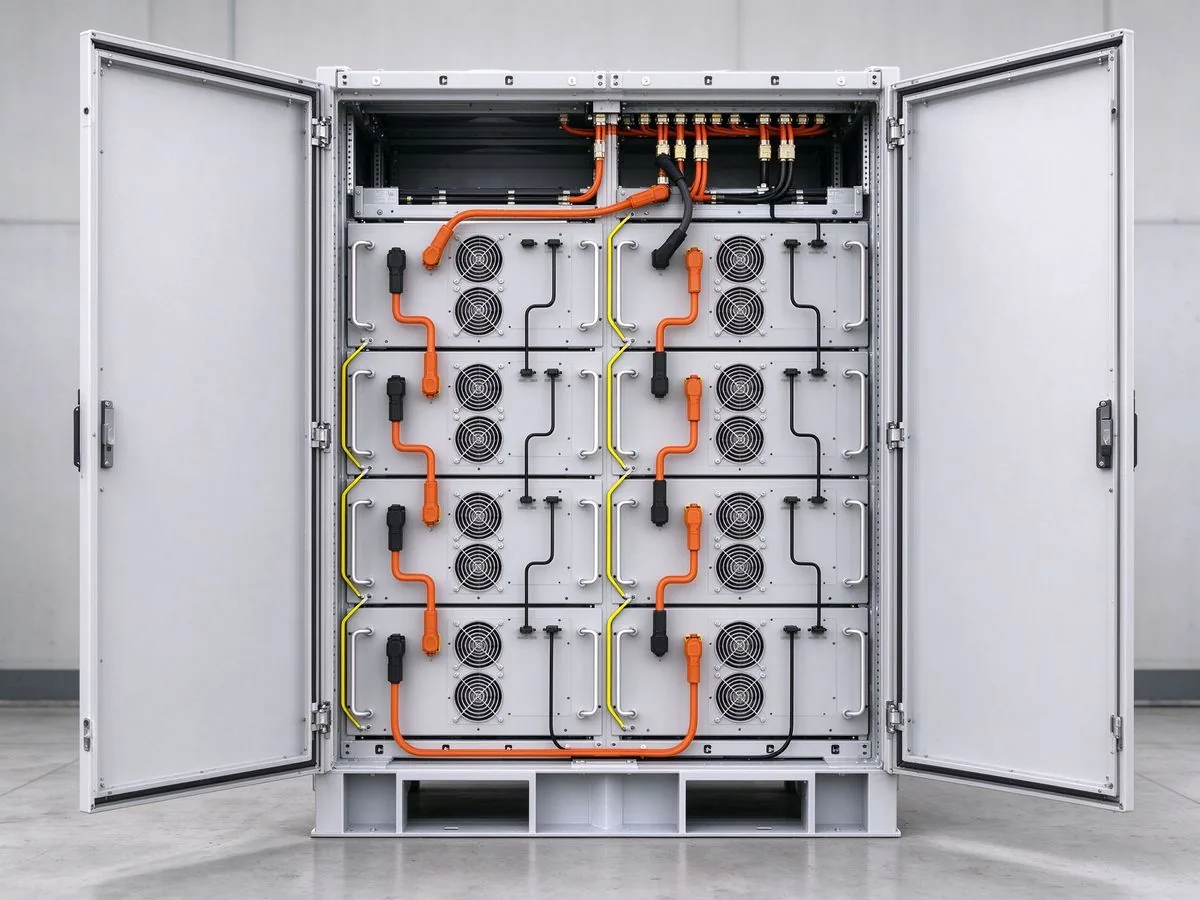
The EU Battery Regulation (2023/1542) makes the battery passport mandatory on 18 February
Read article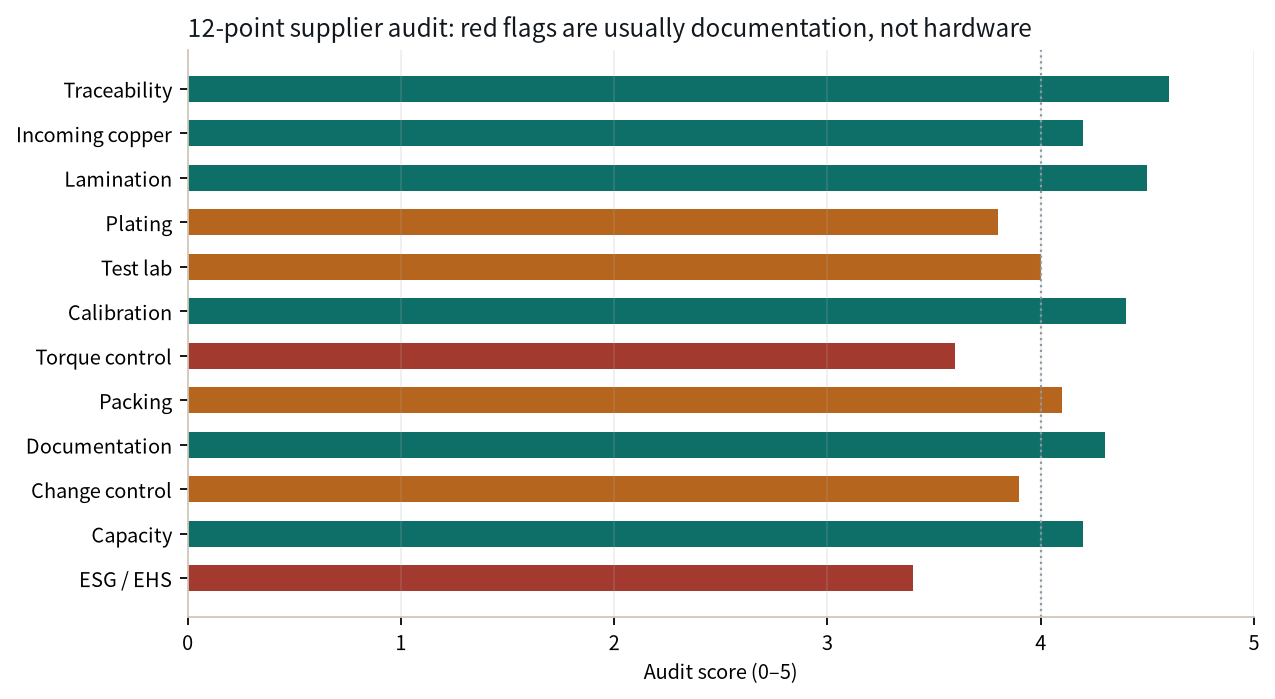
Supplier audits fail on documents far more often than on machines. A 12-point checklist, t
Read article
Emily Novak analyses energy-storage, grid and new-energy markets and turns them into procurement-ready technical content. With 7 years in energy market research and technical writing, she covers BESS growth, HVDC projects and regulatory shifts that change busbar demand. She holds an M.A. in Energy E
Send the current profile, voltage class and terminal types — our engineers reply within one business day.