Three queries - kriechstrecke, busbar laminé, recubrimiento de estaño - produced 45 impressions and no clicks in sixteen days, and each of them hides a requirement that a translation can lose. This reference gives twelve busbar terms in nine languages, flags the four false friends that change a part, and states the numeric value that has to sit next to every term before a drawing is released.
Three queries - kriechstrecke, busbar laminé, recubrimiento de estaño - produced 45 impressions and no clicks in sixteen days, and each of them hides a requirement that a translation can lose. This reference gives twelve busbar terms in nine languages, flags the four false friends that change a part, and states the numeric value that has to sit next to every term before a drawing is released.
In the last sixteen days, three queries in our Search Console data came from engineers searching in their own language: kriechstrecke in German, busbar laminé in French, recubrimiento de estaño in Spanish. Between them they produced 45 impressions and no clicks. The site had the engineering content; it did not have a page that answered the query in the words the engineer actually used.
That is a search problem, but it is also a symptom of a procurement problem. When a German drawing says Kriechstrecke and the English translation on the purchase order says distance, and the supplier interprets it as clearance, the part gets built to the wrong dimension. Nobody notices until the insulation test fails.
This reference exists to close that loop. It lists the twelve terms that cause the most rejections in cross-language busbar work, gives the term in nine languages, and - more importantly - states the numeric requirement that sits behind each word. A term without a number is an opinion.
The wider standards picture is in our standards reference; this page is the language layer on top of it.
Read the table as a translation aid, not a dictionary. Each row is a term that has caused a real rejection, and the numeric column tells you what to confirm in writing before the drawing is released.
| English | Français | Deutsch | Español | Italiano | Tiếng Việt | 日本語 | 한국어 | العربية |
|---|---|---|---|---|---|---|---|---|
| Busbar | barre omnibus | Sammelschiene | barra colectora | sbarra conduttrice | thanh cái | バスバー(母線) | 부스바 | قضيب التوصيل |
| Laminated busbar | barre omnibus laminée | laminierte Sammelschiene | barra laminada | sbarra laminata | thanh cái nhiều lớp | 積層バスバー | 적층 부스바 | قضيب توصيل مصفّح |
| Creepage distance | ligne de fuite | Kriechstrecke | distancia de fuga | linea di fuga | chiều dài rò bề mặt | 沿面距離 | 연면거리 | مسافة الزحف السطحي |
| Clearance | distance d'isolement dans l'air | Luftstrecke | distancia en el aire | distanza in aria | khoảng cách trong không khí | 空間距離 | 공간거리 | مسافة العزل الهوائي |
| Tin plating | étamage | Verzinnung | estañado | stagnatura | mạ thiếc | 錫メッキ | 주석 도금 | طلاء بالقصدير |
| Temperature rise | échauffement | Temperaturerhöhung | aumento de temperatura | sovratemperatura | độ tăng nhiệt | 温度上昇 | 온도 상승 | ارتفاع درجة الحرارة |
| Partial discharge | décharges partielles | Teilentladung | descargas parciales | scariche parziali | phóng điện cục bộ | 部分放電 | 부분방전 | التفريغ الجزئي |
| Ampacity | courant admissible | Strombelastbarkeit | intensidad admisible | portata | dòng điện cho phép | 許容電流 | 허용 전류 | شدة التيار المسموح |
| Bolt torque | couple de serrage | Anzugsdrehmoment | par de apriete | coppia di serraggio | mô-men siết | 締付トルク | 체결 토크 | عزم الربط |
| Joint | jonction | Stromschienenverbindung | unión | giunzione | mối nối | 接続部 | 접속부 | وصلة التوصيل |
| Burr | bavure | Grat | rebaba | bava | ba via | バリ | 버 | نتوء معدني |
| First article | premier article | Erstmuster | primera pieza | primo pezzo | chi tiết đầu tiên | 初品 | 초도품 | العينة الأولى |
Two practical notes. The Japanese column gives both バスバー and 母線 because both appear on drawings and they are not interchangeable in every house style: 母線 is the older term and appears in utility documents, バスバー is common in data centre and inverter drawings. The Korean column gives 부스바, which is the transliterated form most common in industry, while 버스바 appears in translation from English; both are understood and neither is wrong.
Four pairs cause most of the damage.
Insulation distance. The Japanese 絶縁距離 and the Korean 절연거리 both cover what IEC separates into clearance and creepage. A drawing that says insulation distance 8 mm may mean 8 mm through air, 8 mm over surface, or either, depending on the author. The only safe response is to ask which of the two the number refers to and to write the answer on the drawing.
Tin coating. The Spanish recubrimiento de estaño literally means tin coating and is used loosely for both hot-dip and electroplated deposits, which differ in thickness uniformity and in porosity. The term estañado is closer to electroplated tin. Specify the process, not only the metal.
Bar and busway. In English, busbar is the conductor and busway is the enclosed system containing it. In French, jeu de barres can mean either the conductor set or the complete assembly, and in German Sammelschienenanlage means the installation while Sammelschiene means the bar. When a French drawing asks for a jeu de barres, confirm whether a bar or an assembly is being purchased.
Laminated. The French laminé and the English laminated both suggest layers, but laminated busbar means bonded conductor and dielectric layers, while a laminated core means stacked steel. In a quote, laminated without a construction description is ambiguous.
Three English spellings cause most of the confusion in inbound enquiries: bus bar in two words, electric bus bar — which in some consumer markets means a plug-in power strip, and busbar electrical, which is a search phrase rather than a product name. A drawing that says bus bar electric is not asking for a socket strip; it is asking for a conductor, usually with a terminal detail attached. Confirm which one the buyer means before pricing, because the two answers differ by three orders of magnitude in unit price.
The same requirement appears under different numbers in different markets, and quoting the wrong number signals that the supplier does not know the market.
Low-voltage assemblies: IEC 61439-1 and -2 at the international level, EN 61439 in Europe, BS EN 61439 in the United Kingdom, IS 8623 in India, KS C IEC 61439 in Korea, JIS C 8480 in Japan, GB/T 7251 in China, and UL 891 or UL 508A in the United States. The technical content overlaps heavily; the test evidence and the marking requirements do not.
Insulation coordination: IEC 60664-1 defines clearance and creepage as functions of overvoltage category, pollution degree, and material group. The US equivalent for equipment spacing is not a single standard but the spacing tables inside the listing standard, which is why an IEC 60664 calculation can be correct and still fail a UL review.
Partial discharge: IEC 60270 defines the measurement and the picocoulomb unit, and a supplier quoting discharge in volts is quoting a different quantity.
When a drawing cites a standard number, the first action is to confirm that the number is current and that the edition matches the buyer's expectation. Citing a superseded edition is a common rejection reason and an easy one to avoid. The regional breakdown is maintained in the standards hub, and the six gap pages being added there cover IEC 61439, IEC 60664, IEC 60270, UL 9540A, IS 8623, and BS EN 61439 individually.
Temperature rise is specified in kelvin in IEC documents and in degrees Celsius in much US practice, and the two numbers are interchangeable only when the specification is a difference rather than an absolute. A 30 K rise above 40 °C ambient is 70 °C absolute; a 70 °C rating means the surface, not the rise. Writing K where °C is meant turns a compliant part into a rejected one at the test bench.
Conductor size is the second trap. IEC drawings use square millimetres; US drawings still use AWG and kcmil for smaller sizes and switch to square millimetres above roughly 250 mm². A 4/0 AWG bar is about 107 mm², and a supplier who reads 4/0 as 4 mm² will quote a part one-twentieth of the intended section.
Torque is the third. N·m and lbf·ft differ by a factor of 1.356, and lbf·in by 0.113. A drawing that says 20 without a unit is a hazard, and the correct response is to reject the drawing rather than to guess the common value.
Length tolerances follow the same pattern: millimetres on ISO drawings, inches with fractions on older US drawings. A 1/16 inch tolerance is 1.59 mm, not 1.5, and the difference matters on a hole pattern with a position tolerance of 0.2 mm.
Most of the information needed to quote a part sits in five places on a spec sheet, and they can be read in a fixed order regardless of language.
First, the title block and the standard cited. It gives the assembly standard, the revision, and the units. Second, the material line: grade, temper, and conductivity. Third, the plating line: metal, thickness, and process. Fourth, the dimensional table or the general tolerance note. Fifth, the notes block, which is where the requirements that are not dimensions live: deburring, marking, packaging, and test.
The notes block is the part that gets skipped, and it is the part that contains the requirements a supplier is most likely to fail. A note that says edges free from burrs is a process requirement; a note that says dielectric test at 2.5 kV for 60 s is a test requirement; a note that says parts to be packed in one lot per drawing revision is a traceability requirement.
Reading in this order also produces a natural list of questions, which is what a good RFQ response should contain. Our design guide shows the same five-part structure from the design side, and the tolerance implications are set out in the fabrication tolerance article.
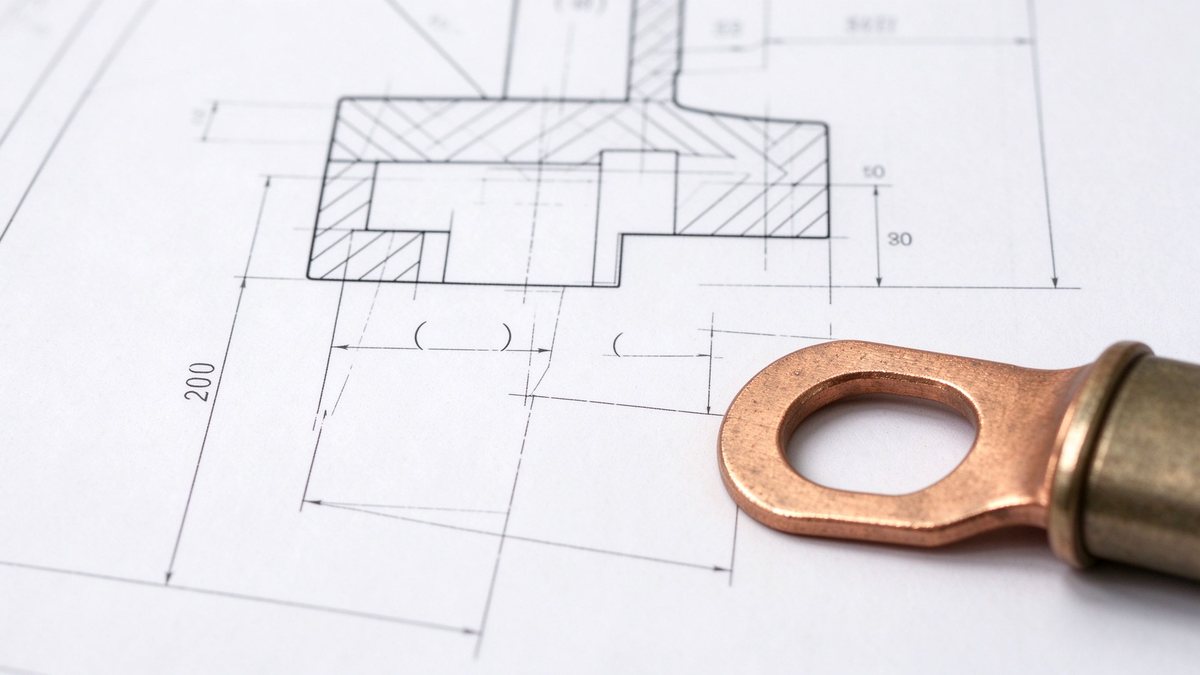
Almost every rejection we see on plating traces back to a note that named the metal and not the thickness.
Verzinnung, étamage, estañado, mạ thiếc, 錫メッキ, 주석 도금, طلاء بالقصدير: all of these say tin, and none of them say how much. The range in industrial practice runs from 3 µm, which is a cosmetic flash, to 15 µm, which is a corrosion barrier. The difference in cost is small; the difference in service life is large.
The three-part specification that prevents the problem is: metal, thickness with a tolerance, and process. For copper busbar the usual answer is tin at 6-12 µm over a 1-3 µm nickel barrier, electroplated, with a porosity check on a sample and a thickness measurement reported per lot.
Where the joint runs hot, the nickel barrier becomes more important than the tin thickness, because copper diffuses into tin at elevated temperature and the joint resistance rises over time. Where the environment is humid and sulfur-bearing, the tin thickness dominates. Different failures, different numbers, same word on the drawing.
The metallurgy behind those numbers is in the plating and corrosion article, and the joint geometry that goes with each finish in the connection design reference.
Take a 1,000 V DC busbar pair in a sealed enclosure, pollution degree 3, material group 1, overvoltage category 3. IEC 60664-1 gives a creepage requirement in the region of 10 mm and a clearance of about 8 mm for the same conditions, with the clearance rising at altitude.
A drawing written in Japanese says 絶縁距離 10 mm. The supplier provides a 10 mm through-air gap and a 7 mm over-surface distance, because the bar edge is close to a metal bracket. The clearance passes, the creepage fails, and the part is rejected at the insulation test - or worse, passes the test and tracks in service two years later.
The lesson is not that one language is imprecise. It is that a single number cannot carry both requirements, and a drawing that tries to do so will be interpreted differently by every supplier. The correct practice is to dimension both, label both, and put the standard clause next to each.
The physical reasoning behind the two distances, including the effect of humidity and contamination, is in the creepage and clearance design article.
A bilingual drawing works when the second language is a label, not a translation. Three rules make it usable.
Numbers first, words second. Every requirement that can be expressed as a number with a unit should be expressed that way, and the words should sit beside the number rather than instead of it. A note reading 8 mm (clearance) / 10 mm (creepage) survives translation; a note reading insulation distance does not.
One requirement per line. Combined notes are the main source of ambiguity, because a translator has to decide which part of a sentence is the requirement and which is the explanation.
Keep the standard clause in the original numbering with the original edition, and add the local equivalent in brackets. A Korean reviewer sees KS C IEC 61439-1 and knows what to check; an English reviewer sees the same clause and can follow it.
The drawing is the contract. Everything that is not on the drawing becomes an assumption, and assumptions are what the second-source qualification process exists to eliminate. That process is set out in the dual-source qualification guide.
Our own traffic answers this empirically. Japanese pages convert at 7.2% and Korean at 3.4%, against 0.7% for English pages, on the same content set. The absolute numbers are small and the conclusion is still clear: an engineer who finds a page in their own language and sees their own term reads further, and reading further is what produces an enquiry.
That does not mean machine translation. Machine-translated German produces sentences that a German engineer can parse and does not trust, and trust is the entire product in a technical B2B market. The workable approach is native rewriting of the technical content for each market, with the standards numbers, units, and terminology adjusted to local practice.
Commercially, the language investment pays twice: once in search visibility in that language, once in the shorter clarification loop that follows an enquiry. A Korean buyer who receives a Korean drawing package with KS clause references asks fewer questions, and fewer questions means a faster order.
The market reasoning for the two highest-converting languages is in the Korea and Japan analysis, and the US documentation expectations in the UL and NEC article.
Technical terminology is one of the few content types where a structured table beats prose for both human and machine readers. An answer engine asked what Kriechstrecke means in a busbar context needs a short, factual, well-labelled answer with the numeric requirement, and a table row provides exactly that.
Three structural habits help. Put the term pair in the heading of the row, not only in the cell. State the unit immediately after the number, every time. And keep one sentence per cell that answers the question, rather than a paragraph that explains the context.
The same logic applies to FAQ blocks: a question phrased as an engineer would type it, and an answer that leads with the number, is citable. A question phrased as a marketing headline is not.
Our what is a busbar page is structured that way, and the same approach is used across the design guide.
Six checks before a quote leaves the building.
Confirm the standard and edition cited, and that it is current. Confirm the units on every dimensional and torque value. Confirm that creepage and clearance are dimensioned separately, or ask which one an insulation-distance note refers to. Confirm the plating specification includes metal, thickness, and process. Confirm the conductor grade and temper rather than only the metal. And confirm the language of the deliverable documentation, because a buyer who expects a local-language inspection report will reject an English-only package regardless of part quality.
Each check takes minutes and each one has a known failure mode behind it. Together they remove most of the clarification traffic from a first order, which is the cheapest possible improvement to a sales cycle.
If a term is not in the table above, the correct move is not to translate it but to ask for the requirement as a number. That answer is the same in nine languages. Buyers who want to discuss a specific interface can reach our engineering team through the contact page.
The commercial upside of getting this right is measurable in the same data that exposed the problem: pages written natively in the language of the engineer convert at several times the rate of English pages on the same subject. Terminology is not a translation task with a marketing side effect. It is the mechanism by which a technical buyer decides, in the first thirty seconds, whether the supplier understands the requirement.
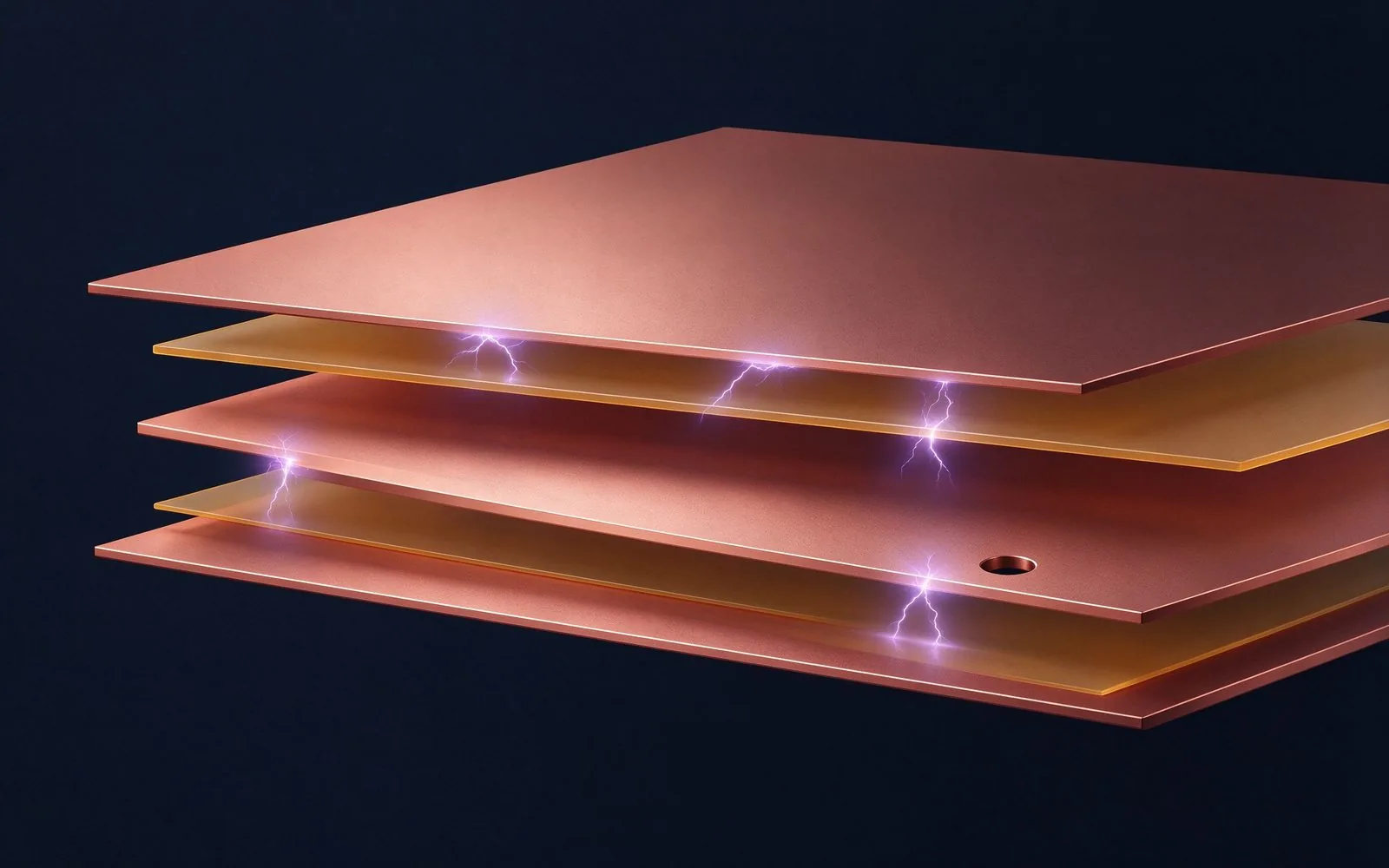
A busbar fails across a surface long before it fails through its insulation if the creepag
Read article
The plating on a busbar contact is a corrosion strategy as much as a conductivity play. Ti
Read article
Wei Chen is a dielectric and insulation specialist at SHANYUAN, with 12 years in insulation systems for laminated busbars. His work covers PET, Nomex and epoxy powder insulation, creepage and clearance design, and partial-discharge-oriented insulation coordination. He holds a Master's degree in
Send the current profile, voltage class and terminal types — our engineers reply within one business day.