Off-highway mining is one of the few applications where an electric drivetrain is judged against a diesel one on availability rather than emissions. A haul truck that stops with a failed joint costs more in a day than the busbar cost in its lifetime. That economics drives the specification: not the highest conductivity, but the joint that still holds torque after ten thousand thermal cycles in dust.
Off-highway mining is one of the few applications where an electric drivetrain is judged against a diesel one on availability rather than emissions. A haul truck that stops with a failed joint costs more in a day than the busbar cost in its lifetime. That economics drives the specification: not the highest conductivity, but the joint that still holds torque after ten thousand thermal cycles in dust.
This page is an annual rolling data page: the 2026 edition, refreshed once a year as new market data is published.
Haul trucks and loaders are moving from diesel-electric to battery-electric drivetrains, and most platforms converge on an 800 V DC backbone. The reason is power: at megawatt levels, 800 V keeps current within manageable ranges for cables and connectors while staying below the voltage class that would push insulation and safety systems into a different regime.
The architecture is familiar from road vehicles but scaled: a large pack, an inverter feeding traction motors, and auxiliary loads for hydraulics, cooling and HVAC. What changes is duty cycle and environment - continuous operation, high ambient, and a charging event that may deliver more power than the entire site's former diesel refuelling station.
For the busbar, the consequence is that current is high and continuous rather than peaky. A road-car busbar sized for acceleration bursts is undersized for a truck that pulls at rated current up a grade for minutes at a time.
A 3 MW charging event at 800 V implies roughly 3,750 A at the pack interface. No single conductor carries that comfortably; the current is split across parallel paths, and every parallel path must share the load evenly.
Even sharing depends on resistance symmetry: identical cross-section, identical length, identical joint resistance. A bar that is 20 mm longer than its neighbour, or a terminal with a slightly different plating thickness, will carry less current - and the remaining paths will run hotter, which increases their resistance and worsens the imbalance.
This is the mechanism behind the hot joint that appears only during fast charging. At low current the imbalance is invisible; at 3,750 A it becomes a thermal gradient of tens of degrees within minutes.
Design the parallel paths as a matched set, and verify with a current-sharing measurement rather than a calculation. Our busbar connections resource covers joint resistance measurement.
Mine dust contains metallic and carbonaceous particles. On an insulated busbar it does two things: it reduces surface creepage by forming a conductive path, and it retains moisture, which accelerates tracking.
The design response is not simply a higher IP rating. Sealed enclosures help, but the busbar inside still breathes through temperature cycling, and a sealed box that ingests dust on the first cooling cycle keeps it forever. The practical measures are conformal insulation at the surface, a geometry that avoids dust traps, and a breather arrangement that filters rather than seals.
Where a bar must remain exposed for serviceability, the specification should include a creepage margin for contamination - design to pollution degree 3 or worse, not to a clean-room assumption.
Our clearance and creepage note explains how contamination changes the required distance.
Haul trucks vibrate continuously, and the spectrum includes low-frequency chassis motion plus high-frequency structure-borne noise. A bolted joint that holds on a test bench will relax under that regime, and contact resistance rises silently until a thermal event makes it visible.
Three design choices improve retention: a spring element in the joint (Belleville washers or a clamped busbar geometry), a plating system that does not creep under load, and a torque specification with a documented verification interval.
Welded or friction-stir joints remove the problem entirely where service access is not required, which is why high-current pack interconnects in off-highway applications increasingly use welding rather than bolting.
The trade-off is serviceability. A welded joint is reliable but not field-replaceable; a bolted joint is replaceable but needs an audit schedule. Choose per location, not per platform.
Mine sites routinely operate above 45 °C, and the enclosure adds its own rise. A busbar rated 1000 A at 35 °C may be a 760 A busbar at 55 °C once enclosure and altitude are considered - and derating curves are usually quoted for the wrong conditions.
The thermal cycle is also aggressive: charge, haul, idle, charge again. Each cycle expands and contracts the copper, the insulation and the terminal hardware at different rates, which is precisely the mechanism that opens voids and relaxes preload.
Design for the cycle, not the steady state. That means a thermal model that includes the duty profile, a temperature-rise test at the actual ambient, and a cycling qualification that measures contact resistance before and after.
Our thermal management resource gives the derating method, and the the ambient derating curve above in this article shows how quickly margin disappears above 50 °C.
At 800 V DC with fast switching, the insulation system must handle continuous field stress plus repetitive transients, in an environment where surface contamination is normal. PET films are common and adequate when the surface is protected; polyimide and Nomex offer better thermal margin near the pack and the inverter.
The critical detail is edge protection. A laminated bar with exposed copper at the cut edge gives dust a place to collect and a field concentration point. Potting, epoxy coating or a screened edge design removes both.
For the pack side, where service access is rare, a fully encapsulated bar is often the right choice. For the inverter side, where the bar may need to be removed during service, a coated but accessible design is preferable.
Material selection logic is covered in the dielectric selection guide.
Ambient temperature and altitude, dust class and cleaning regime, vibration profile, duty cycle with charging power, short-circuit level, serviceability requirement per joint, and the maintenance interval the operator can actually sustain.
Two of those are usually missing: the cleaning regime and the maintenance interval. A design that assumes a wiped busbar every month is a different design from one that assumes no access for five years. Stating the assumption prevents a supplier from optimising for the wrong one.
Also state the acceptance test: current sharing at rated charging current, contact resistance after thermal cycling, and a torque audit record. These three tests catch the failures that a visual inspection cannot.
Shipping and packing requirements for heavy assemblies are covered in our order and shipping guide.
In a truck, the busbar is a passive component surrounded by active ones, and it rarely fails first. When it does, the cause is usually a joint that was marginal from the start and degraded slowly: a plating that passivated, a preload that relaxed, a current imbalance that ran one path hot.
That makes the busbar a leading indicator. A fleet with rising joint temperatures is a fleet with a specification problem, not a maintenance problem - no amount of retorquing fixes a design that cannot hold preload.
The practical monitoring approach is to measure contact resistance at service intervals and trend it, rather than to wait for a thermal event. A micro-ohmmeter reading is cheap; a haul truck on fire is not.
Operators are choosing between battery-electric haul trucks with megawatt charging and trolley-assist systems that draw power from an overhead line on the ramp. The busbar implications differ.
Battery trucks concentrate the challenge in the pack and charging interface: high continuous current, parallel path balance, and thermal management during charge. Trolley systems distribute power along the route and reduce pack size, but introduce pantograph contact and overhead infrastructure, with the busbar carrying continuous current from the catenary.
In both cases the 800 V backbone is similar; the difference is duty profile. Battery trucks cycle; trolley trucks run steady. A busbar optimised for cycling is not automatically optimal for steady high current, and vice versa.
The application context for both is described on our EV application page.
Prototype bars are made carefully; fleet bars are made at rate. The transition needs three things: a frozen design with a change log, a process capability study on the critical dimensions - plating thickness, joint preload, layer alignment - and an incoming inspection plan the operator can actually run.
Add a field feedback loop: contact resistance readings at service intervals, returned-part analysis, and a re-qualification trigger for any material or process change. Without the loop, the first fleet-wide failure is also the first warning.
SHANYUAN supplies high-current laminated busbars for traction and off-highway programmes, including welded pack interconnects and encapsulated assemblies, with thermal cycling and current-sharing test records. Send the duty profile and the environmental class through our contact form and we will return a first-pass design and qualification plan.
Related: EV battery busbar trends, thermal management and creepage and clearance.
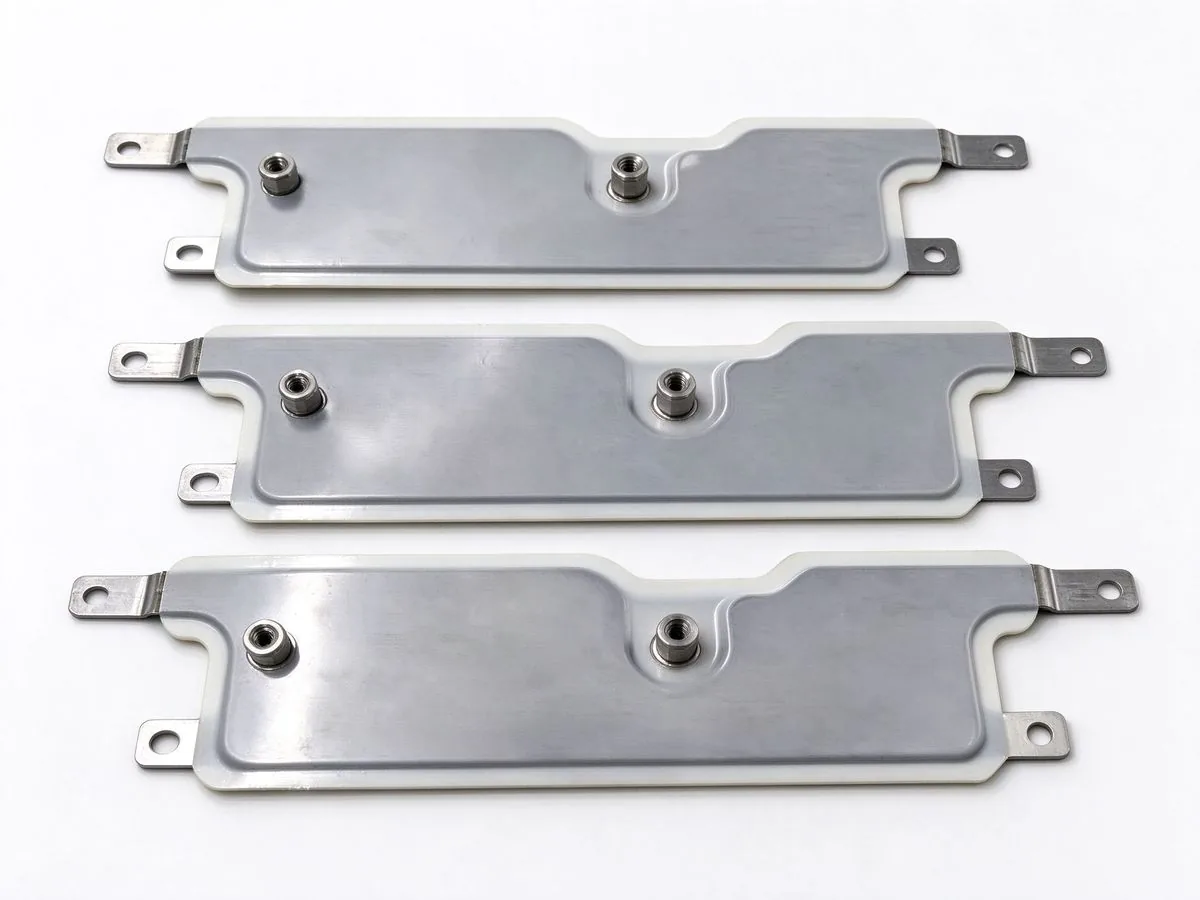
The shift from 400V to 800V vehicle architectures is rewriting the electrical layout insid
Read article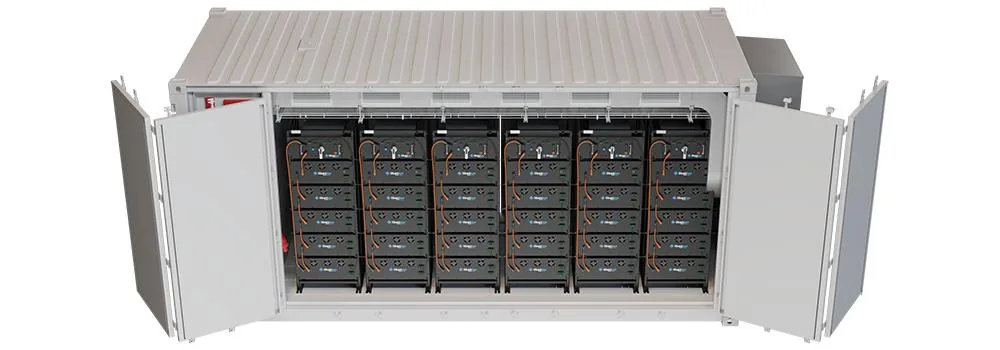
A bolted busbar joint fails in one of two ways: vibration loosens it or thermal cycling fa
Read article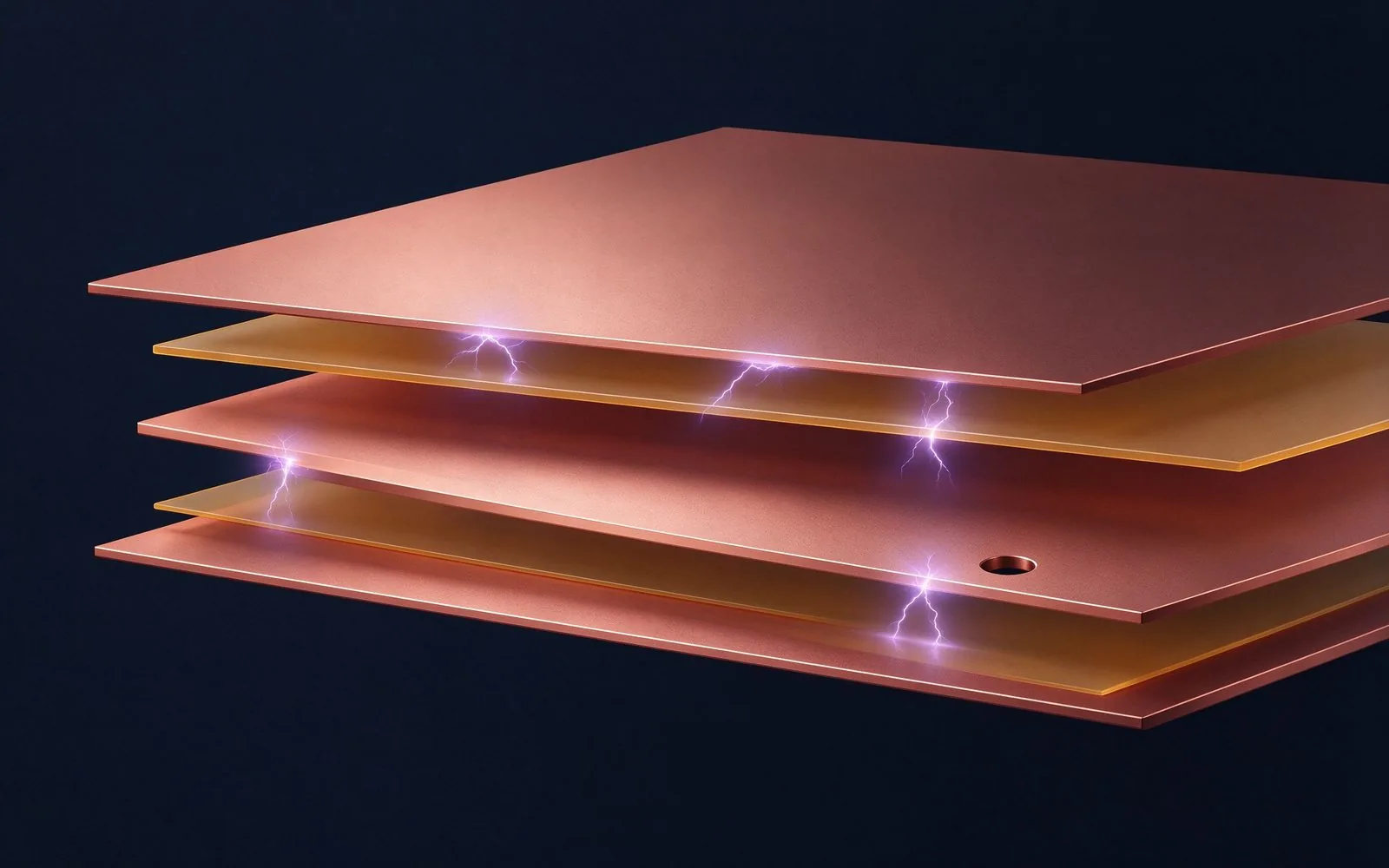
A busbar fails across a surface long before it fails through its insulation if the creepag
Read article
Daniel Richter is the chief electrical engineer at SHANYUAN Laminated Busbars, with 15 years in laminated busbar design and current-carrying systems. He leads electrical dimensioning, DC-link layout and thermal simulation for power converters, EV platforms and HVDC stations, and holds an M.Sc. in El
Send the current profile, voltage class and terminal types — our engineers reply within one business day.