Green power direct connect (绿电直连) is no longer a pilot concept. Securities research cited by Chinese media on 5 November 2026 noted that 24 provinces have now issued supporting policy documents for direct green-power connection, and 12 compute-power projects with approved direct-connect arrangements are under way. The idea is simple: park a solar-plus-storage plant next to a data center or industrial load, and feed it power directly instead of round-tripping through the regional grid. For busbar engineers the consequence is concrete — bigger DC links, higher string voltages, tighter power density and enclosure designs that mix solar inverters, storage PCS and load distribution in one footprint.
Green power direct connect (绿电直连) is no longer a pilot concept. Securities research cited by Chinese media on 5 November 2026 noted that 24 provinces have now issued supporting policy documents for direct green-power connection, and 12 compute-power projects with approved direct-connect arrangements are under way. The idea is simple: park a solar-plus-storage plant next to a data center or industrial load, and feed it power directly instead of round-tripping through the regional grid. For busbar engineers the consequence is concrete — bigger DC links, higher string voltages, tighter power density and enclosure designs that mix solar inverters, storage PCS and load distribution in one footprint.
This page is an annual rolling data page: the 2026 edition, refreshed once a year as new market data is published.
Direct connect collapses the distance between generation and load. A solar array, a battery system and a data center hall share one electrical enclosure or a short private feeder, so the power electronics and their DC links shrink in physical scale but grow in current density. Instead of a utility-scale inverter hall with wide spacing, the equipment is packed into container or prefab modules. That is precisely the environment where a power-electronics laminated busbar earns its keep: low-inductance layering, compact geometry and verified insulation let designers fit megawatt-class DC paths into a fraction of the volume a bolted-bar-and-cable approach would need.
China's National Energy Administration reported 38.76 GW of new PV installed in Q3 2026, up 38% year-on-year, and total new-type storage capacity reached 167 GW / 435 GWh by end-September 2026, up 63% — the same buildout driving record grid-storage quarters elsewhere. Against that base, direct-connect policy adds a new demand channel: 24 provinces have published supporting documents and 12 compute-power green-power direct-connect projects have been approved, per securities research cited on 5 November 2026. For the supply chain the message is that renewables-plus-storage is becoming an on-site power plant, with all the electrical interconnection that implies — PV combiner boxes, DC-coupled storage, inverter stations and the busbars that tie them together.
Direct-connect clusters favor DC-coupled solar-plus-storage: the PV array, the battery and the inverter share a common DC bus, so excess solar charges the battery instead of being curtailed or inverted twice. The common DC bus is a laminated busbar with a mixed duty — solar current in, battery current in or out, inverter load out — which means the laminate must handle bidirectional current and a wide operating window. The busbar design guide covers how to size such a bus: worst-case current, voltage, temperature-rise budget and the terminal plan for every converter leg. Getting this right at the drawing stage is what keeps DC-coupled systems from becoming an EMI and heating problem after commissioning.
Utility PV moved to 1500 V DC years ago, and storage is now there too. On a shared DC bus, the insulation duty of the busbar is set by the highest voltage on the bus plus margin, and by the partial-discharge behavior at operating conditions. Humidity, altitude and temperature all derate insulation; a busbar rated in a lab at sea level may not hold the same PD margin at a 2,000 m plateau site. SHANYUAN validates 1500 V-class insulation stacks with PD testing on production-representative samples and documents the derating — the same discipline that carries into 2000 V-class insulation rules now entering evaluation for next-generation systems.
Direct-connect projects pack generation and load into one footprint, which raises enclosure current density: more amps per cubic meter of switchgear space. The thermal consequence is that busbar losses can no longer be treated as an afterthought — a 1,500 A DC link dissipating heat inside a sealed prefab module has to be accounted for in the cooling design. Options that buy density: multi-layer laminates with interleaved positive/negative layers (which also cut inductance), laminated busbar geometries that follow the enclosure wall, and thermal management that couples busbar losses into the module airflow model. The 30 °C temperature-rise criterion keeps the whole system honest.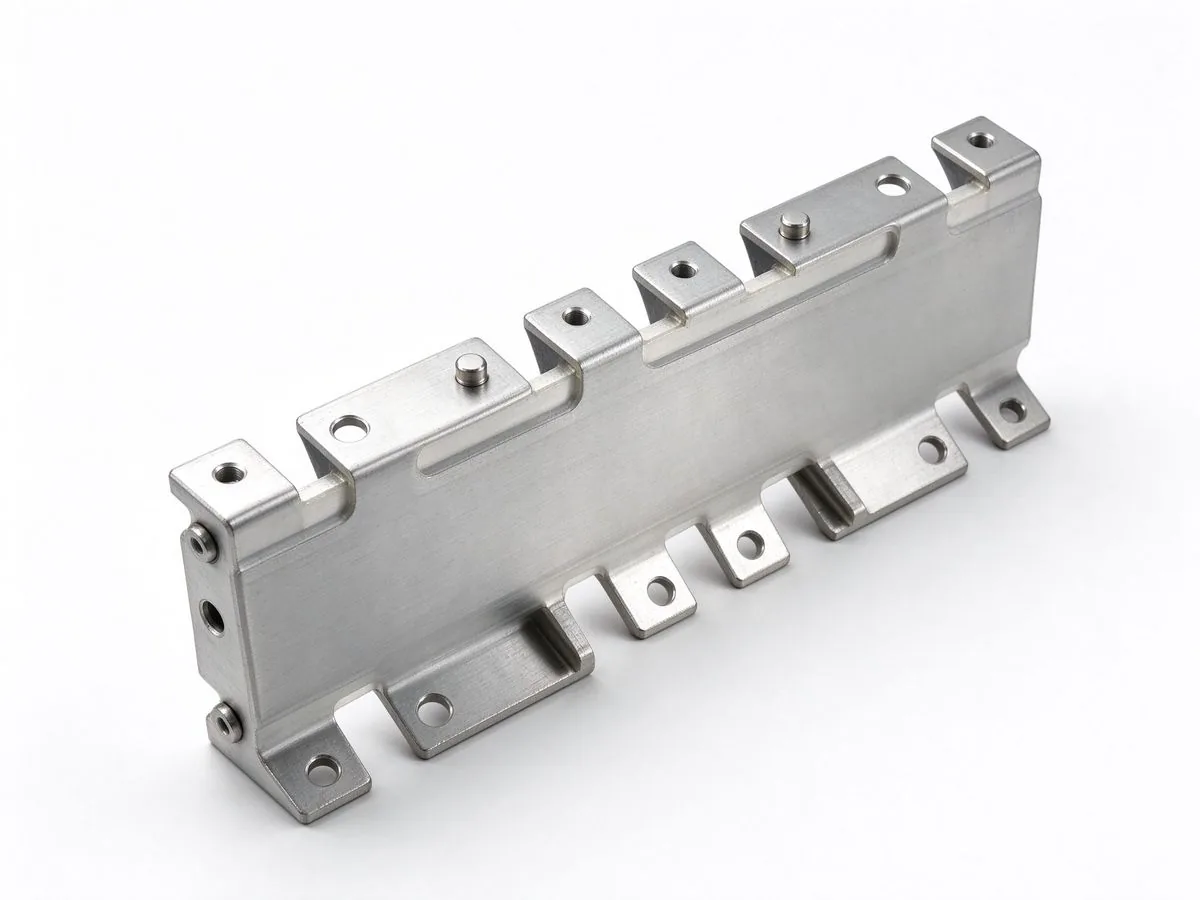
The inverter DC link in a direct-connect cluster is the harshest busbar location: it sees full solar current, charging and discharging current from the battery, and the switching ripple of the inverter's IGBT or SiC modules. Loop inductance here directly sets switching voltage overshoot, so the inverter DC-link busbar has to be designed for low inductance first and current capacity second. Interleaved layers, tight coupling between the capacitor bank and the module terminals, and short, wide paths are the standard toolkit. This is also where low-inductance design practice separates suppliers who understand switching loops from those who only bend copper.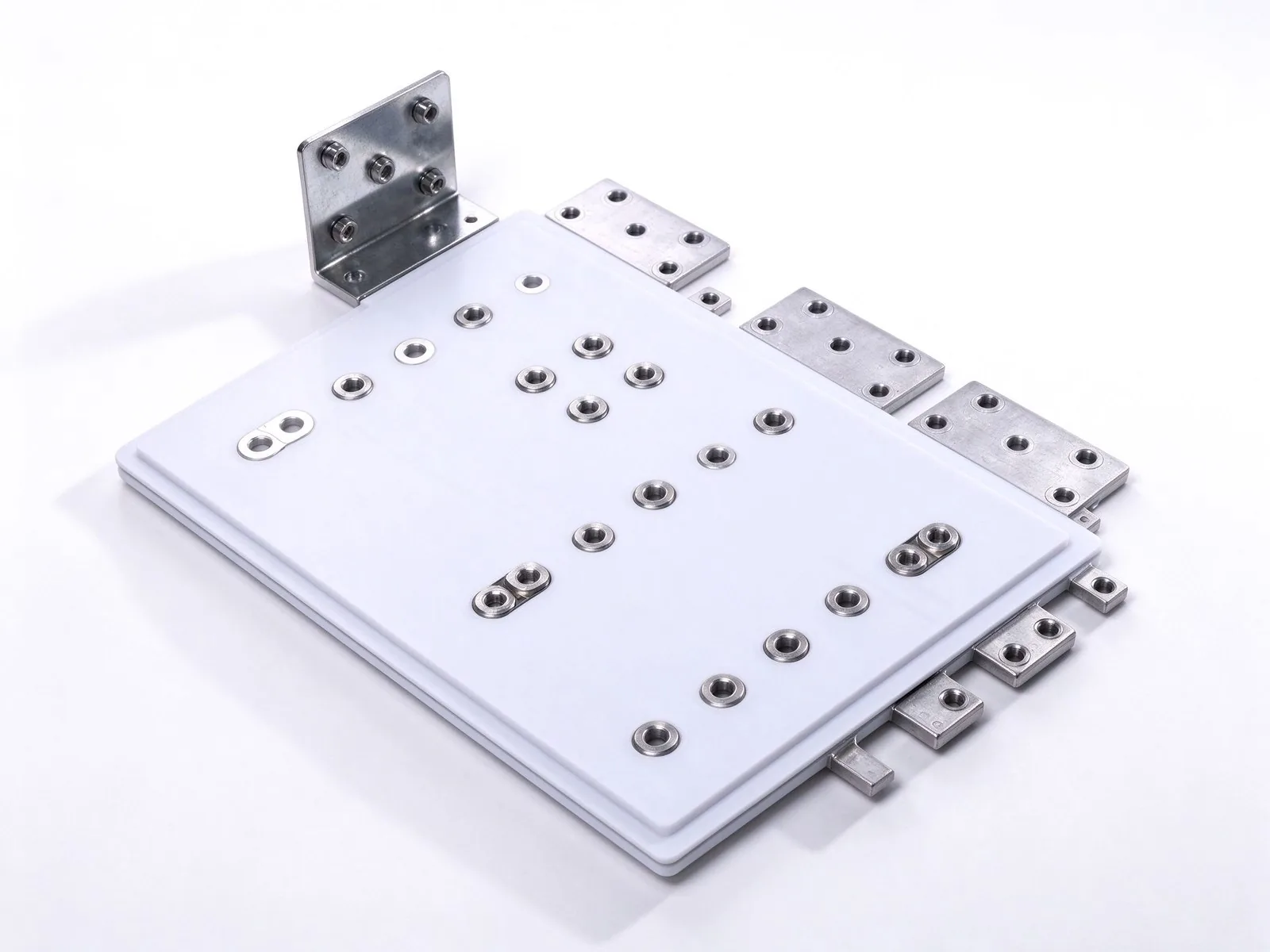
DC-coupled storage inside a direct-connect cluster puts battery busbars physically near inverter hardware, which changes the rules: the battery DC path must tolerate inverter ripple without overheating, and its insulation must survive the same enclosure environment as the inverter bus. Shared thermal, shared vibration, shared maintenance access. The practical upshot is that battery and inverter busbars are increasingly specified as one electrical interconnect system rather than two separate purchases — one laminate platform, one plating spec, one test regime, which is what SHANYUAN's busbar components range supports with matching connectors and insulators.
A direct-connect microgrid is a private grid with its own fault profile. Fault currents are fed by the utility import, the PV array and the battery simultaneously, and the busbar must carry or withstand that combined fault without sustaining damage that compromises the enclosure. Short-circuit withstand becomes a sizing input: bar cross-section, bracing and support spacing are chosen so the bar does not deflect or weld under the worst-case through-fault. Insulated busbars add a second consideration — the insulation must survive the fault arc without propagating flame. These requirements belong in the RFQ, and custom design reviews catch them before tooling rather than after.
Direct-connect projects are monitored heavily — operators want to see solar yield, battery state and load in one dashboard — and busbar temperature is becoming part of that picture. Embedded or clamp-on temperature sensing at bolted joints gives early warning of resistance drift before it becomes a hot spot. The busbar supplier's job is to leave room for sensing (sensor pads, accessible joint surfaces, routing slots) without weakening the laminate. This is a design-for-serviceability conversation that fits naturally into the manufacturer selection criteria: does the supplier think about the operating life of the joint, or only about first cost?
Direct-connect clusters sit at the intersection of PV standards (IEC 62109/62477, UL 1741), storage standards (IEC 62619/63056, UL 9540) and low-voltage switchgear rules. A busbar inside such a system is usually a component, but its insulation class, flammability and short-circuit behavior feed each evaluation. The practical discipline is to specify the busbar against the strictest applicable envelope — highest voltage, worst temperature, harshest pollution degree — so one laminate carries through all certifications. SHANYUAN documents material certs, PD reports and thermal data per batch to keep integrator certification moving without rework.
For direct-connect projects, integrators should ask: (1) Have you built shared DC buses carrying both PV and battery current? (2) What loop inductance do you hold on inverter DC links, and how is it measured? (3) Do you provide PD reports for 1500 V-class insulation? (4) What is your short-circuit withstand documentation? (5) Can you supply the battery and inverter busbars as a matched system? (6) What is your thermal documentation at the actual enclosure conditions? These questions map directly to the ampacity and derating engineering baseline. A supplier that answers with data, not adjectives, is the one whose busbars will survive the first hot summer.
Twelve approved compute-power direct-connect projects is a small number — but it is the point where a category becomes a product line. As provinces standardize the connection rules, the electrical architecture of direct-connect clusters will converge: DC-coupled solar-storage, 1500 V DC links, compact prefab enclosures, integrated monitoring. For busbar engineering that convergence is good news, because it means the power-electronics busbar platform — low-inductance layering, verified insulation, documented process control — becomes a repeatable module instead of a one-off. The SHANYUAN engineering team is already quoting DC-link assemblies for this architecture, and the pattern is the same one that served EV and storage programs: freeze the mechanical envelope early, verify the insulation class, and let the laminate do the work.
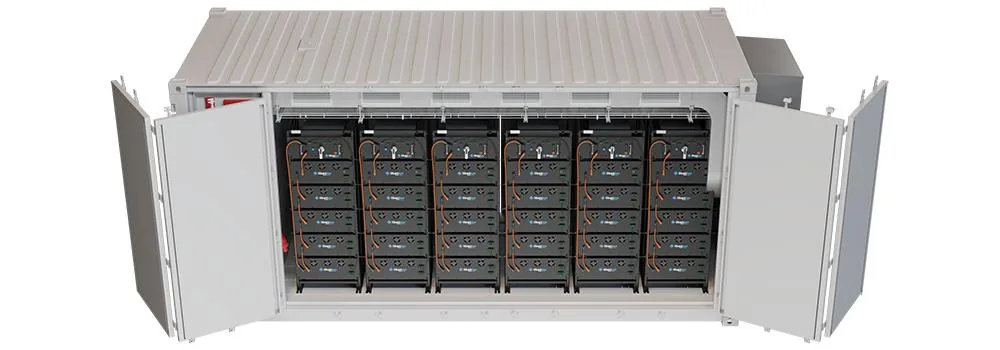
ERCOT's record 2.2 GW storage quarter and SNE's 73% global ESS shipment jump are reshaping
Read articleThe inverter that dominated 2026's solar tenders is no longer a small box: 300 kW-plus str
Read article
Elena Vasquez is a power electronics application engineer with 10 years of experience integrating laminated busbars into EV inverters, charging systems and energy-storage PCS. She specializes in low-inductance DC-link design, EMC behaviour and converter packaging, and holds a B.Sc. in Electrical Eng
Send the current profile, voltage class and terminal types — our engineers reply within one business day.