Solar power electronics crossed a quiet threshold in 2026: the string inverter became a 300 kW-plus machine. In the first nine months of the year, inverters rated 300 kW and above captured 88% of China's tendered inverter capacity, according to industry tracking cited by Weibo Consulting (2026), while 150 kW-and-below designs fell to about 7%. Behind that shift is a chain of engineering decisions — higher DC-link voltages, denser power stages, higher switching frequencies — and every one of them lands on the busbar that carries current between the DC-link capacitors and the switching modules. This article maps the 2026 inverter market and what it means for laminated busbar design.
Solar power electronics crossed a quiet threshold in 2026: the string inverter became a 300 kW-plus machine. In the first nine months of the year, inverters rated 300 kW and above captured 88% of China's tendered inverter capacity, according to industry tracking cited by Weibo Consulting (2026), while 150 kW-and-below designs fell to about 7%. Behind that shift is a chain of engineering decisions — higher DC-link voltages, denser power stages, higher switching frequencies — and every one of them lands on the busbar that carries current between the DC-link capacitors and the switching modules. This article maps the 2026 inverter market and what it means for laminated busbar design.
The headline number of 2026: string inverters rated 300 kW and above took 88% of China's tendered inverter capacity in January–September 2026, with 150 kW-and-below units at about 7%, per the market tracking summarized by Weibo Consulting's 2026 industry report (published via Sina Finance, October 2026). A year ago the split was far more balanced; today the large string format is the procurement default for both utility and large C&I projects.
The driver is economics per watt: fewer cabinets, fewer DC terminations, lower balance-of-system cost. Huawei took the largest single 2026 award — 3 GW in the CGN New Energy 300 kW-plus string inverter framework agreement — with Sungrow, TBEA, Sinexcel and others splitting multi-gigawatt tranches (pvsolar reports, October 2026).
The equipment trend rides on a strong installation year. China added 71.77 GW of new PV in the first half of 2026 (29.55 GW utility-scale, 42.22 GW distributed), bringing cumulative installed capacity to 1.272 TW as of June 30, 2026, up 15.8% year-on-year, according to the National Energy Administration's July 2026 press conference. Utility-scale buildout is the segment where 300 kW-plus string and central inverters compete head-to-head.
For busbar suppliers the useful signal is not just volume but architecture: utility-scale plants now standardize on higher string DC voltages and larger power stages, which changes what the inverter's internal conductor must do — carry more current per module, at higher DC-link voltage, inside a smaller cabinet.
Inside a 300 kW-plus string inverter, the power stage is the heart: DC-link capacitors, IGBT or SiC switching modules, and the conductors joining them. Two trends dominate the 2026 stage design — higher DC-link voltage (1,000 V to 1,500 V platforms for large string inverters) and higher switching frequency (SiC modules switching in the tens of kilohertz). Both push the interconnect requirements in the same direction: lower stray inductance and higher dv/dt capability.
That is precisely the problem laminated busbars solve. The face-to-face conductor geometry of a laminate cancels loop area, holding stray inductance in the tens of nanohenries — an order of magnitude below cable or braid interconnects. The power electronics busbar line exists for this reason.
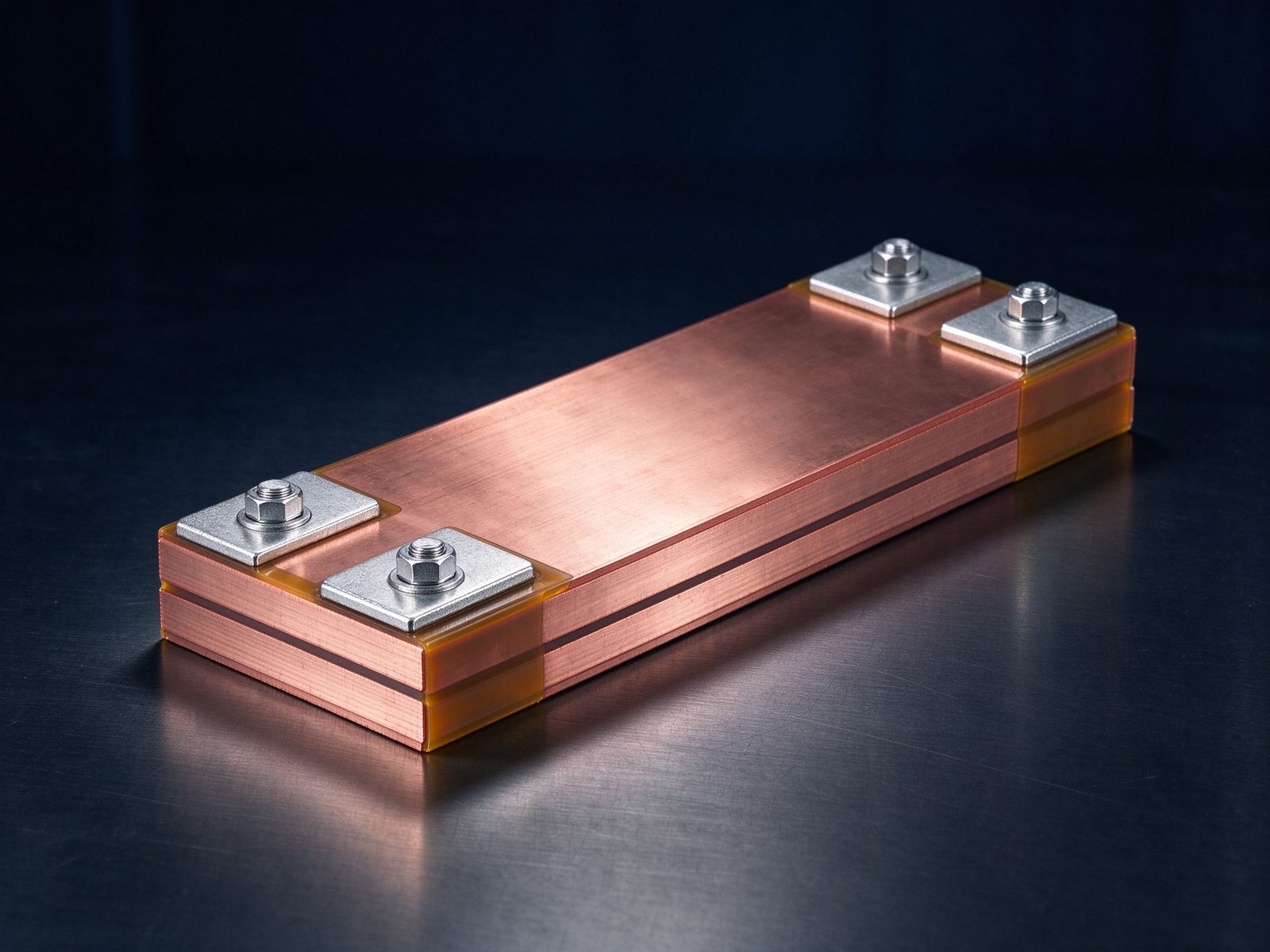
At 1,500 VDC, the switching transient imposes a voltage spike across the stray inductance of the commutation loop: V_spike = L × di/dt. With module currents in the hundreds of amps and SiC dv/dt rates in the 10–50 V/ns range, every nanohenry of loop inductance is budget. A poorly routed busbar converts the DC-link into an overvoltage generator that stresses the module and drives premature failure; a properly laminated DC-link busbar keeps the loop tight and the spike controlled.
This is why the 2026 large-string designs we review specify low-inductance laminated busbars as a first-order component rather than an accessory. The loop-area math is covered in our SiC/IGBT DC-link design article, and the measurable outcome is a cleaner switching waveform and longer module life at the same silicon cost.
Larger power stages carry more current per module pair. A 300 kW string at 1,000 VDC runs roughly 300–350 A at the DC bus; at 1,500 VDC the current falls but the switching stresses rise. The busbar cross-section is then set by the temperature-rise budget under the inverter's duty cycle, not by a static rating — the same method as the ampacity calculation we published for switchgear and DC-link parts.
Practical 2026 values for large-string DC-link laminates: conductor thickness 1.5–3 mm per layer, current densities in the 1.5–2.5 A/mm² band with forced-air cabinet cooling, and temperature-rise budgets around 40 K to protect nearby film capacitors rated at 70–85°C hotspot.
The DC-link film capacitors are the inverter's most temperature- and ripple-sensitive components. The busbar's job at the capacitor interface is threefold: carry the ripple current with low AC resistance, keep the loop inductance to the module low, and conduct heat away from the capacitor terminals rather than into them.
Laminated construction addresses all three: the face-to-face layers carry opposing ripple currents that partially cancel the magnetic field (lowering AC resistance, a point covered in our current-sharing guide), the tight loop minimizes inductance, and the copper layers act as a thermal spreader at the terminal plane. Capacitor manufacturers publish ripple-current derating curves; the busbar is what determines which operating point the inverter actually sees.
When 88% of tendered capacity standardizes on one format, component suppliers face a new discipline: the 300 kW-plus string platform becomes a volume product, and its internal busbar moves from custom-engineering to semi-standardized variants — common DC-link voltage classes, common terminal patterns for the chosen capacitor bank and module layout, and DFM-ready drawings.
That is the change we see in 2026 inquiries: customers arrive with a platform drawing and ask for variants (different capacitor counts, alternative module suppliers, busbar-mounted current sensors) rather than a blank-sheet design. Our custom busbar process is structured for exactly this — a validated base design, adapted per platform revision.
The 2026 string inverter generation increasingly runs SiC MOSFET modules, which switch faster than IGBTs and therefore multiply the value of low loop inductance. The broader SiC picture — 8-inch wafer expansion, cost per amp falling, AI-server and automotive demand absorbing capacity — is covered in our SiC power module market article published today; the inverter-relevant point is that switching speed and inductance budget are now the design constraints that favor laminates.
For inverter builders, the practical SiC question is the dv/dt at the motor or grid side and the ringing at the module side; both are busbar-shaped problems.
Bigger power stages in the same cabinet footprint mean less room and more heat per cubic meter. The 2026 large-string cabinet relies on forced-air or hybrid cooling, and the busbar's thermal role expands: it must reject its own I²R heat, stay within the insulation's temperature class (PET to ~130°C continuous, Nomex higher, DLF epoxy per design), and not shadow the capacitors' airflow.
The thermal treatment for laminated parts — layer stack, dielectric thickness as thermal resistance, and the 30°C-class budgets used in battery and module applications — is documented in our thermal management design guide. The same principles apply at 300 kW, just with more amps.
At 1,000 VDC the DC-link laminate typically uses PET insulation with adequate creepage and clearance to the enclosure and to the module baseplates; at 1,500 VDC platforms, Nomex or epoxy-DLF layers and thicker dielectric build-ups enter the picture, driven by the 1.5× DC factor that IEC 60664-1 applies to voltage withstand. The creepage and clearance guide we published covers the IEC 60664-1 dimensioning in detail.
The trend in 2026 large-string platforms is toward Nomex-faced constructions at the 1,500 V level, trading a small cost increase for partial-discharge headroom in high-altitude and high-humidity sites — a decision increasingly driven by inverter warranty terms rather than first cost.
At 300–500 A per bus, the terminal interface becomes a design variable in its own right. M8 studs with tin-plated contact faces remain the workhorse for capacitor and module terminations; blade terminals and welded joints appear where assembly automation and vibration resistance matter. Torque control at M8 studs, plating thickness on contact areas, and coining of the joint face are the reliability details — the same discipline as our terminal connection guide.
For high-volume string platforms, welded or blade terminal constructions reduce assembly time per cabinet, which is why the 2026 platform designs we see increasingly specify them over loose hardware.
A 3 GW framework agreement buys hundreds of thousands of inverters; each contains one or more laminated DC-link busbars, and the failure cost is a field replacement in a plant, not a bench rework. The 2026 procurement specs reflect that: hipot and insulation-resistance tests per IEC standards, partial-discharge screening on 1,500 V parts, dimension verification on terminal patterns, and plating thickness checks on contact areas.
Our quality system maps those tests to production lots so the shipped busbar carries the same verification record the type-test prototype carried — the standard required for utility-scale volume.
China's first-half 2026 additions were 59% distributed (42.22 of 71.77 GW, per NEA July 2026 data). Distributed solar increasingly means industrial rooftops and agri-PV at the 10–50 MW scale, which buy exactly the 100–320 kW string format. Sungrow's 2026 half-year report shows the same product logic globally: new 100/110/125 kW C&I string inverters (SG100/110CX-P3 series) launched for both domestic and overseas commercial roofs, with the first VDE-AR-N 4105:2026 grid code certificate awarded to its SHT series.
For busbar suppliers, C&I strings at 100–125 kW still use 1,000 VDC links and smaller laminates, but the volumes are enormous and the cost-per-watt pressure is extreme — the segment rewards DFM-ready, low-cost laminate designs, not engineering overkill.
2026's certification activity points to the 2027 battlefield. Grid-code evolution (VDE-AR-N 4105:2026 in Germany), harmonic and anti-islanding requirements, and the push for higher DC voltages in European C&I segments all reshape the inverter — and each new requirement flows into the busbar spec via voltage withstand, insulation coordination and EMI behavior. Components qualified to the latest standard de-risk the inverter builder's certification cycle.
Export-oriented builders are also consolidating suppliers who can ship the same laminate quality to plants on multiple continents, with full material and test documentation — the practical face of the application coverage our engineering team supports.
The 88% concentration on 300 kW-plus string inverters is not a passing quarter's statistic — it is the new default architecture for utility and large C&I solar, and it puts three demands on the DC-link busbar: low loop inductance for the faster-switching 1,500 V platforms, thermal headroom inside denser cabinets, and DFM-ready variants for volume production. The engineering methods to meet all three are established and published — laminated power electronics busbars, correctly specified, delivered with test records.
When your 2027 platform moves to the 300 kW-plus format or the 1,500 V class, the busbar decision deserves the same rigor as the module choice. Send us the platform parameters — current, voltage class, capacitor layout, cooling — and our engineers will return the laminate design and its verification plan, as part of every inquiry.
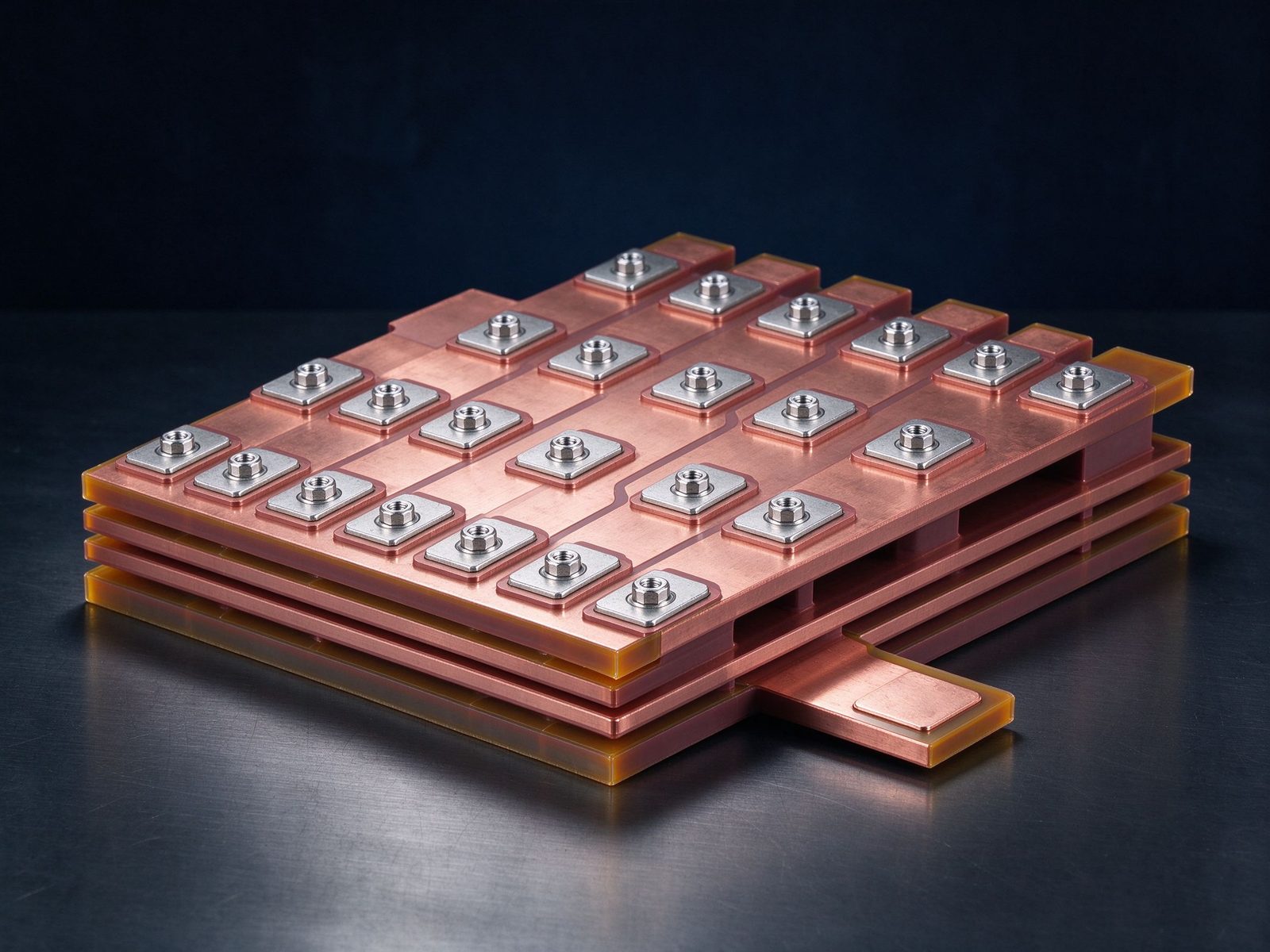
SiC is scaling up — literally. Eight-inch wafer capacity is expanding at double-digit CAGR
Read article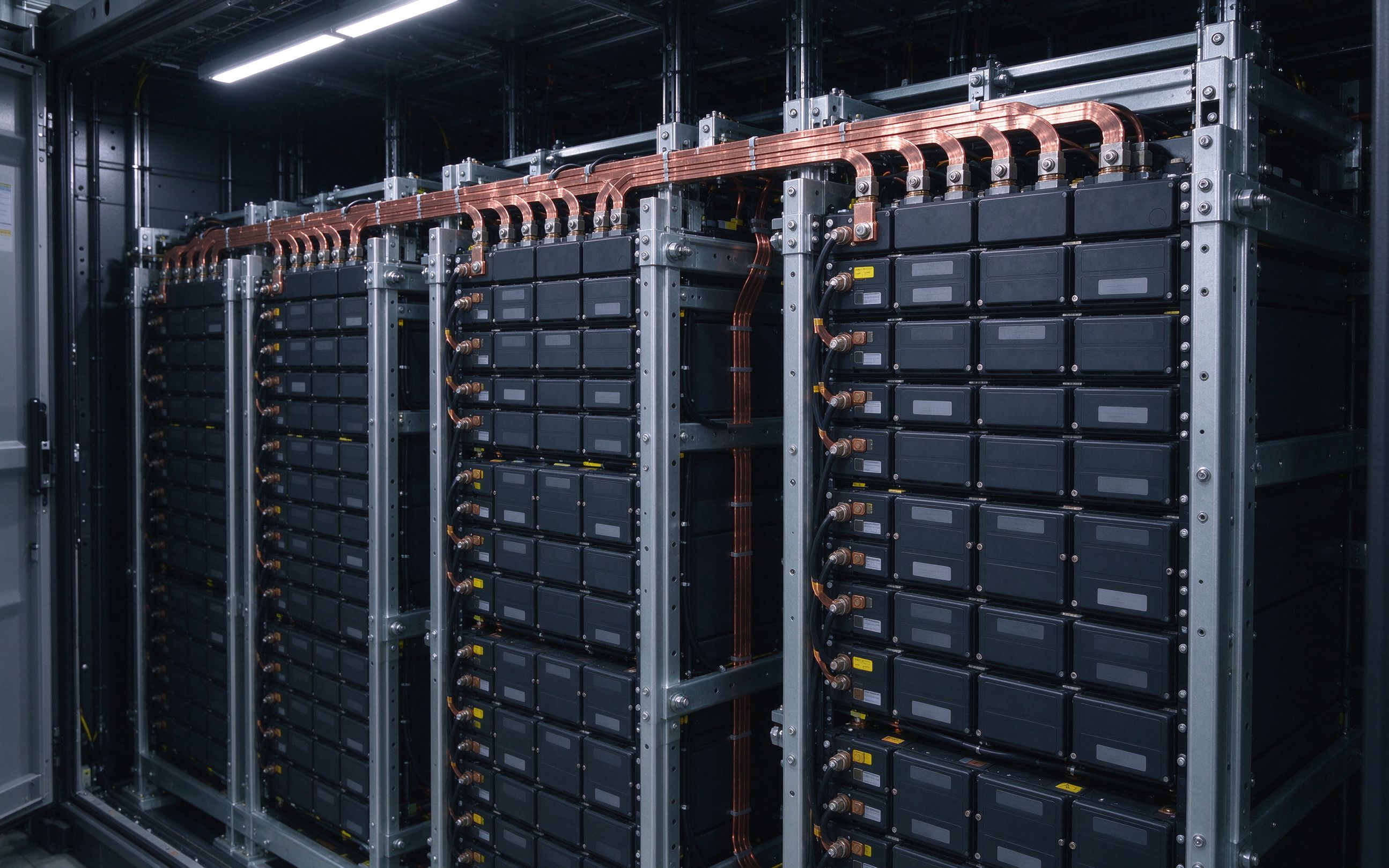
Global energy storage additions are forecast at 158 GW in 2026, up 45% year-on-year, with
Read article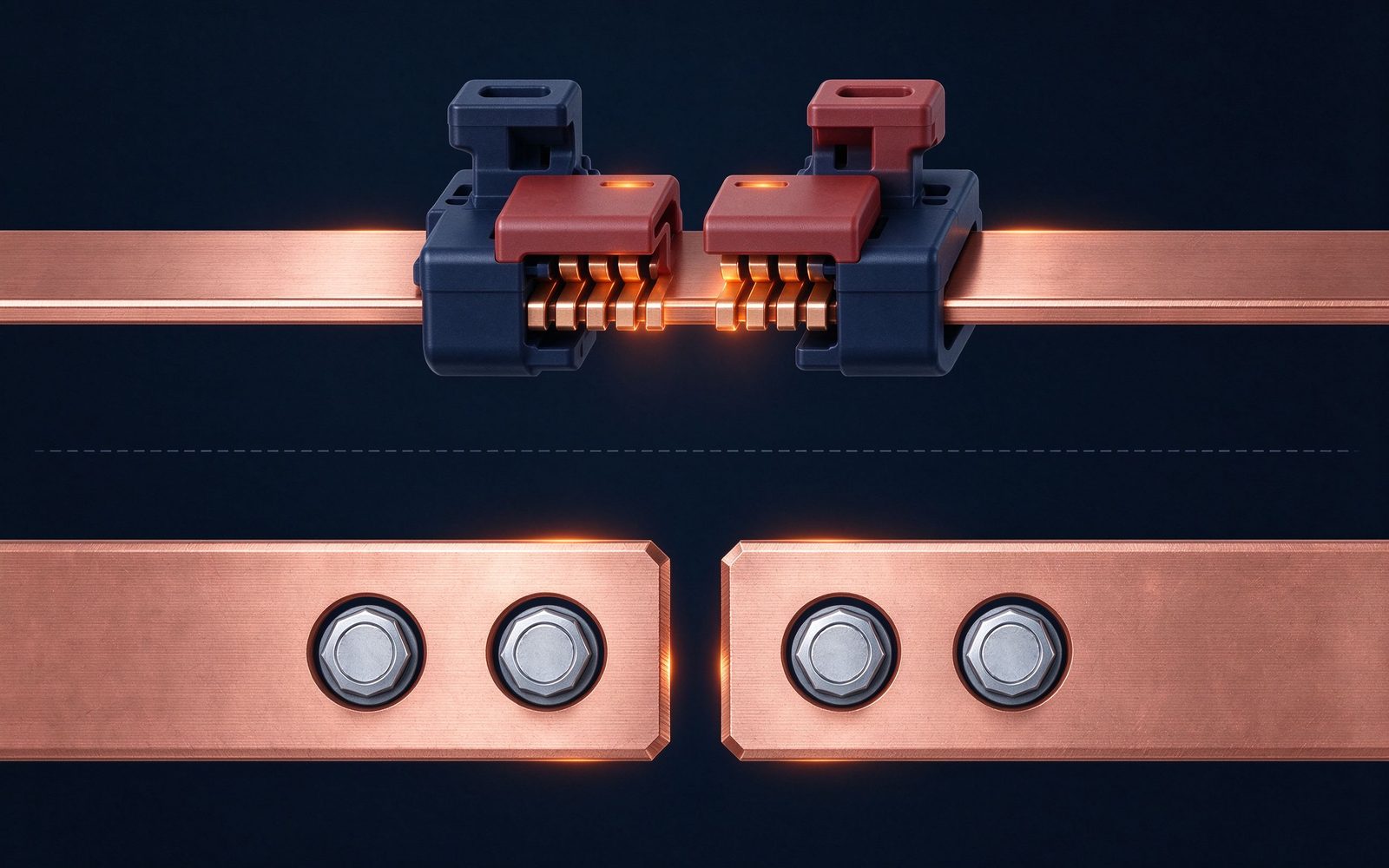
Parallel busbars are supposed to share current equally — physics disagrees. Skin effect pu
Read articleSend the current profile, voltage class and terminal types — our engineers reply within one business day.