From 1 January 2026 the EU carbon border adjustment mechanism moves from reporting to liability. Every importer bringing aluminium goods into the union needs embedded-emissions data that was never part of a commercial quotation, verified by an accredited body, and tied to a production route the supplier can actually evidence. Aluminium busbars fall inside the scope; copper busbars do not, at least not yet. That split is the single most useful planning fact for a busbar buyer this year, and it is also the one most often missed.
From 1 January 2026 the EU carbon border adjustment mechanism moves from reporting to liability. Every importer bringing aluminium goods into the union needs embedded-emissions data that was never part of a commercial quotation, verified by an accredited body, and tied to a production route the supplier can actually evidence. Aluminium busbars fall inside the scope; copper busbars do not, at least not yet. That split is the single most useful planning fact for a busbar buyer this year, and it is also the one most often missed.
This page is an annual rolling data page: the 2026 edition, refreshed once a year as new market data is published.
Between October 2023 and the end of 2025, CBAM was a reporting regime. Importers filed quarterly declarations on embedded emissions, and nothing was paid. The definitive period that began on 1 January 2026 changes the economics: importers must be authorised declarants, surrender CBAM certificates matching the embedded emissions of the goods they release for free circulation, and keep an evidence trail that survives audit. The first declaration covering 2026 imports is due in 2027, and the Commission has indicated that certificate sales open ahead of that deadline so declarants can build positions rather than pay in one lump.
For a company that imports busbars, the practical consequence is that carbon data has become a line in the landed-cost calculation, alongside freight and duty. It also means the data has to be produced before the shipment, because a declaration cannot be reconstructed from memory eighteen months later.
The regulation itself is Regulation (EU) 2023/956 as amended by the 2025 simplification package; the implementing acts define the calculation methods and the default values. Read the regulation for scope, the implementing acts for arithmetic. They disagree often enough to matter, and the implementing act is what a verifier will apply.
CBAM Annex I covers cement, iron and steel, aluminium, fertilisers, electricity and hydrogen. Copper is absent. That single omission decides how a busbar programme is planned, because a laminated busbar can be built on either metal, and the two now carry different administrative loads.
An aluminium busbar — whether a solid extruded profile or an aluminium conductor inside a laminated stack — is an in-scope good when it enters the union. A copper busbar is not, at least not under the current annex. The asymmetry is not a quirk: copper was left out because its trade exposure and emissions intensity profiles were judged differently at the time of drafting, and the Commission has kept the question of extending scope open.
Two cautions follow. First, the annex is amendable, and downstream extension has been under review, so a copper-only sourcing strategy is a bet on regulatory stasis rather than a permanent exemption. Second, a mixed assembly can drag the whole line into scope: if a declared good contains in-scope material, the classification follows the good, not the dominant metal. A laminated stack with an aluminium conductor and copper terminals does not become exempt because most of the mass is copper-free.
Material selection now has a compliance dimension. The comparison that used to be weight, conductivity and price has a fourth column: which route carries carbon paperwork. Our copper versus aluminium comparison covers the engineering side; this page covers the paperwork side.
Embedded emissions are the emissions released during production of the good, expressed per tonne and calculated under a defined system boundary. For aluminium the boundary includes the production processes listed in the implementing act — alumina refining, anode production, electrolysis, casting and the fuel combustion attached to them — plus, where applicable, emissions from precursors.
Indirect emissions, meaning those from purchased electricity, are reported. Whether they enter the financial obligation is a separate question, and for aluminium the Commission has kept indirect emissions outside the certificate obligation pending review, while requiring them to be declared. A supplier who sends one combined figure is therefore not answering the question. You need the split.
Three numbers should appear on any supplier carbon sheet: direct emissions per tonne of product, indirect emissions per tonne, and the production route identifier that ties both to a specific plant and process configuration. Without the third, the first two cannot be verified against anything.
For a busbar, the tonnage basis is the shipped product mass, not the purchased input mass. Scrap, offcuts and rejected units do not disappear from the calculation automatically; if the supplier counts them in production but not in output, the intensity looks better than it is.
The regulation allows two routes. Actual values come from the installation and must be verified. Default values are published fallbacks, deliberately conservative, used when actual data is unavailable or unverifiable.
Default values are a pricing decision disguised as a data problem. They are set high enough to make reporting without measurement unattractive, so a supplier that cannot produce verified actuals effectively hands the buyer a cost penalty. In a competitive tender, asking for actual values is not pedantry — it is the difference between two landed costs that look identical on the price sheet.
There is a third, messier case that catches most first-time importers: actual values exist, but they come from a group-level corporate report rather than the specific installation. A verifier will not accept a company average applied to a plant that was never individually assessed unless the monitoring methodology explicitly allows that aggregation. Check the methodology reference, not just the number.
The practical test before you sign a purchase order: ask the supplier to name the installation, the monitoring period, and the verifier who signed the report. If any answer is vague, assume default values and price the penalty in.
Verified data must come from a verifier accredited for the relevant scope under the regulation's accreditation rules. This is not the same as an ISO 14064 certificate, and it is not the same as an ISO 9001 audit. A supplier holding both can still have no CBAM-verifiable emissions statement, and this confusion wastes months.
What the verifier does is narrower and more mechanical than a management-system audit: they check the monitoring methodology against the implementing act, check the activity data and the calculation, and check that the installation boundary matches what was declared. They do not opine on whether the plant is well run.
Buyers should also know the timing trap. Verification is an annual exercise tied to the reporting period, and a report signed in one year cannot be stretched over the next. A three-year supply agreement therefore needs three verification cycles priced into it, or an explicit clause that the supplier carries the cost of re-verification.
Where the supplier is small and cannot carry a verifier relationship, the honest answer is to use default values and negotiate on something else. A fabricated verification claim is a much larger liability than a known default value.
What a verifier actually asks for, in our experience supporting customers through supplier audits, is a monitoring plan that predates the reporting period, meter or invoice evidence for electricity, and a mass balance that reconciles purchased aluminium with shipped product. None of these is carbon-specific in nature — they are the ordinary records of a plant that measures what it consumes. That is why a supplier with a working energy-management system produces a compliant file in weeks, while a supplier whose consumption is estimated produces one never. The gap is not moral, it is infrastructural, and it is visible before you place an order.
This list is deliberately shorter than the regulation and longer than a normal quotation. Ask for it in the RFQ, not after the goods land.
Two of these are project management artefacts rather than carbon data: the product-to-installation mapping and the change clause. They are the two that fail in year two, when a supplier shifts a part number to a cheaper line and the carbon paperwork still points at the old plant.
A laminated busbar is an assembly, and assembly is where carbon data loses resolution. Four specific breaks recur.
None of these is exotic. All of them mean the buyer needs a mapping table, not a single corporate number — the same discipline as the sample-to-series procurement sequence we describe for technical qualification.
Do not model the certificate price. Model the exposure.
The exposure is embedded emissions per tonne multiplied by tonnage, and the useful output is a range. Build three cases: verified actual values, published default values, and a mid-case where the supplier has actuals that fail verification. The spread between the first and second is the value of getting the paperwork right, and in aluminium it is usually larger than the negotiation margin on the metal itself.
Then separate the metal price risk from the carbon risk, because they hedge differently. Metal is a market price you can pass through with an index clause. Carbon is an administrative number that depends on your supplier's diligence, and it belongs in the supplier qualification score, not in the commodity clause.
One more line worth adding: the cost of delay. A shipment held because a declaration cannot be completed is more expensive than the certificate. Freight, storage and customer penalties land on the buyer, and they are not recoverable from the supplier unless the contract says so.
Worked example, with the arithmetic kept simple so the method is visible. Take a 40-foot container of aluminium busbars at roughly 18 tonnes shipped mass, and suppose the verified direct intensity is 6.5 tCO2e per tonne against a published default of 10.5. The gap is 72 tCO2e for that shipment. Multiply by whatever certificate price you assume and you have the order-of-magnitude difference between a supplier with actuals and one without. We deliberately do not quote a certificate price here, because it is set by auction and will move; the tonnage gap is the part that is stable, and the part worth putting in the tender comparison.
Note what the example leaves out: indirect emissions, scrap treatment and the plating steps. Each can move the figure by several percent, and each is a question to ask rather than a constant to assume. For projects where weight is already the deciding factor, the renewable-energy applications section shows how aluminium stacks are specified in practice, and the custom busbar programme explains how a part number is tied to one production route rather than a shifting one.
Four clauses cover most of the risk without turning the purchase agreement into a regulatory treatise.
Clause two is the one suppliers resist and buyers underestimate. A report delivered in November covers a period that may already be closed, and a shipment in January then travels on stale data. Put the deadline in the calendar, not in the annex.
Carbon capability is now a qualification dimension, and it is worth scoring explicitly rather than treating as a pass or fail.
A simple four-question screen separates suppliers usefully. Can you name the installation for each part number? Do you have verified actuals for the last reporting period? Who verified them and under what scope? What changes if we move a part to another line? Suppliers who answer all four in writing are in a different category from those who answer two and promise the rest.
This does not automatically favour European producers. A Chinese or Southeast Asian plant with a monitored route and a verifier relationship can beat a European plant that buys default values because nobody owns the data. The criterion is evidence, not geography — which is also the honest reading of a regulation that is often described as protectionist and is, mechanically, a data-quality instrument.
Our own route documentation and the qualification questions we answer for customers are described in quality and compliance, and the supplier-evaluation framework itself sits in how to choose a busbar manufacturer.
Copper's absence from Annex I is the assumption most busbar buyers are quietly running on. It is a reasonable assumption for 2026 and a weak one for 2029.
The Commission has been examining extension to downstream goods and to additional products, and a scope change is a legislative act, not a technical adjustment, so it arrives with a transition period rather than overnight. The planning implication is modest but real: keep carbon data flowing for copper parts too, even though it is not yet required. A supplier who is already monitoring can produce a declaration within weeks of a scope change; one who is not will need a year.
There is a second-order effect worth noting. If aluminium carries carbon paperwork and copper does not, the relative economics of the two materials shift at the margin. Designs that were marginal on weight and conductivity may tip toward copper simply because the compliance burden is lower — a materials decision driven by administration rather than physics, which is exactly the kind of distortion a border mechanism is supposed to avoid and often creates.
For now, the safe position is to specify per project: aluminium where weight and cost dominate, copper where conductivity and carbon certainty dominate, and both documented. The aluminium busbar range and the copper equivalents on this site follow the same drawing conventions, so a late material switch does not restart the design.
Before the next container leaves, confirm the following. Each line has a named owner somewhere in the organisation; if it does not, it will not happen.
None of this is engineering. It is the administrative layer that now sits on top of a technical purchase, and it is cheaper to build once than to rebuild under a customs deadline. If you are weighing an aluminium route against a copper one, start with the material comparison; if the question is who can supply with documentation, send the part list and the documentation requirement together. Teams running a wider sourcing review will also find the tariff side in trade tariffs and busbar supply and the grid demand context in EU grid capex.
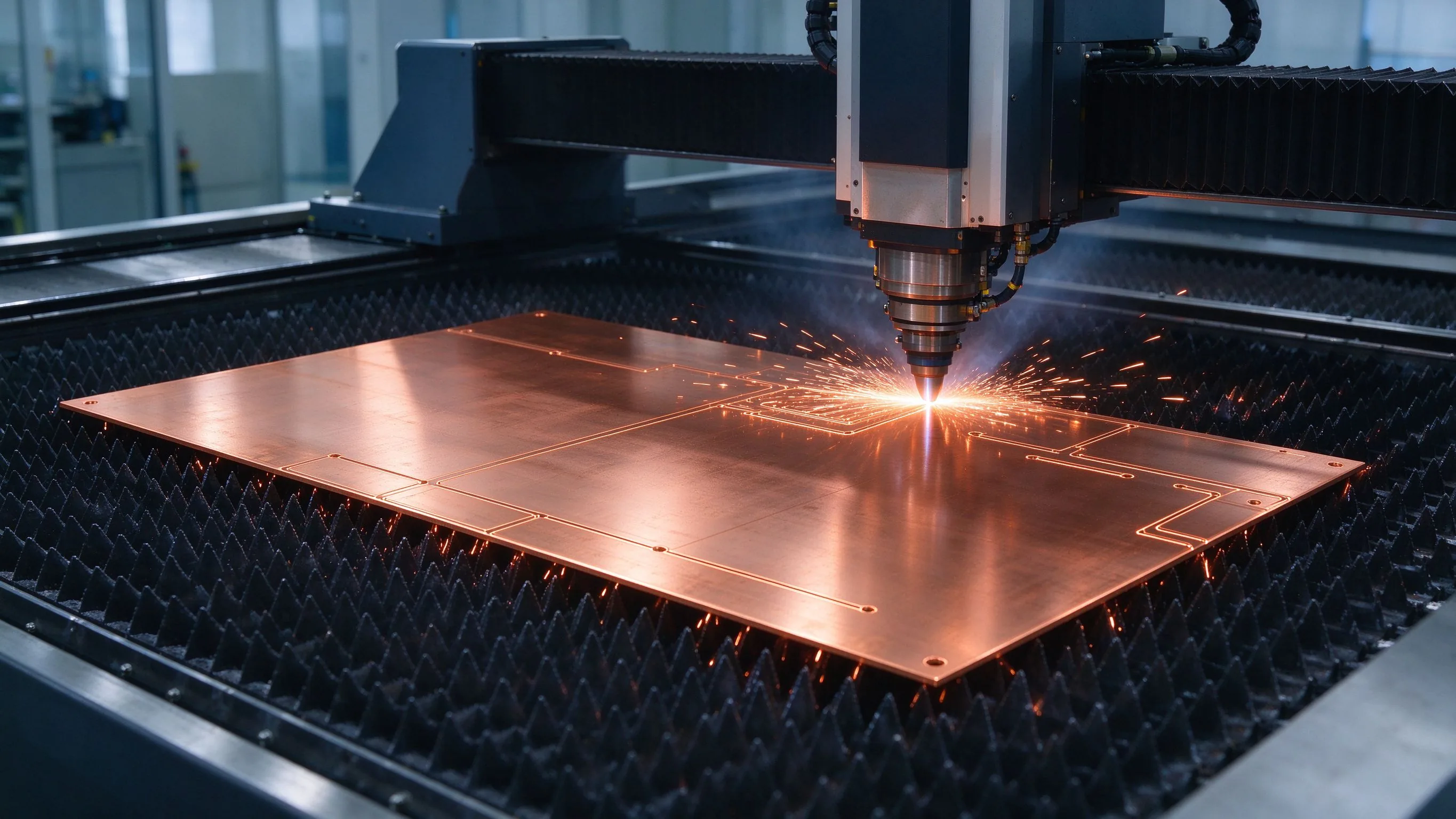
The April 2026 US Section 232 copper duties landed a 50%/25% tariff structure on busbar su
Read article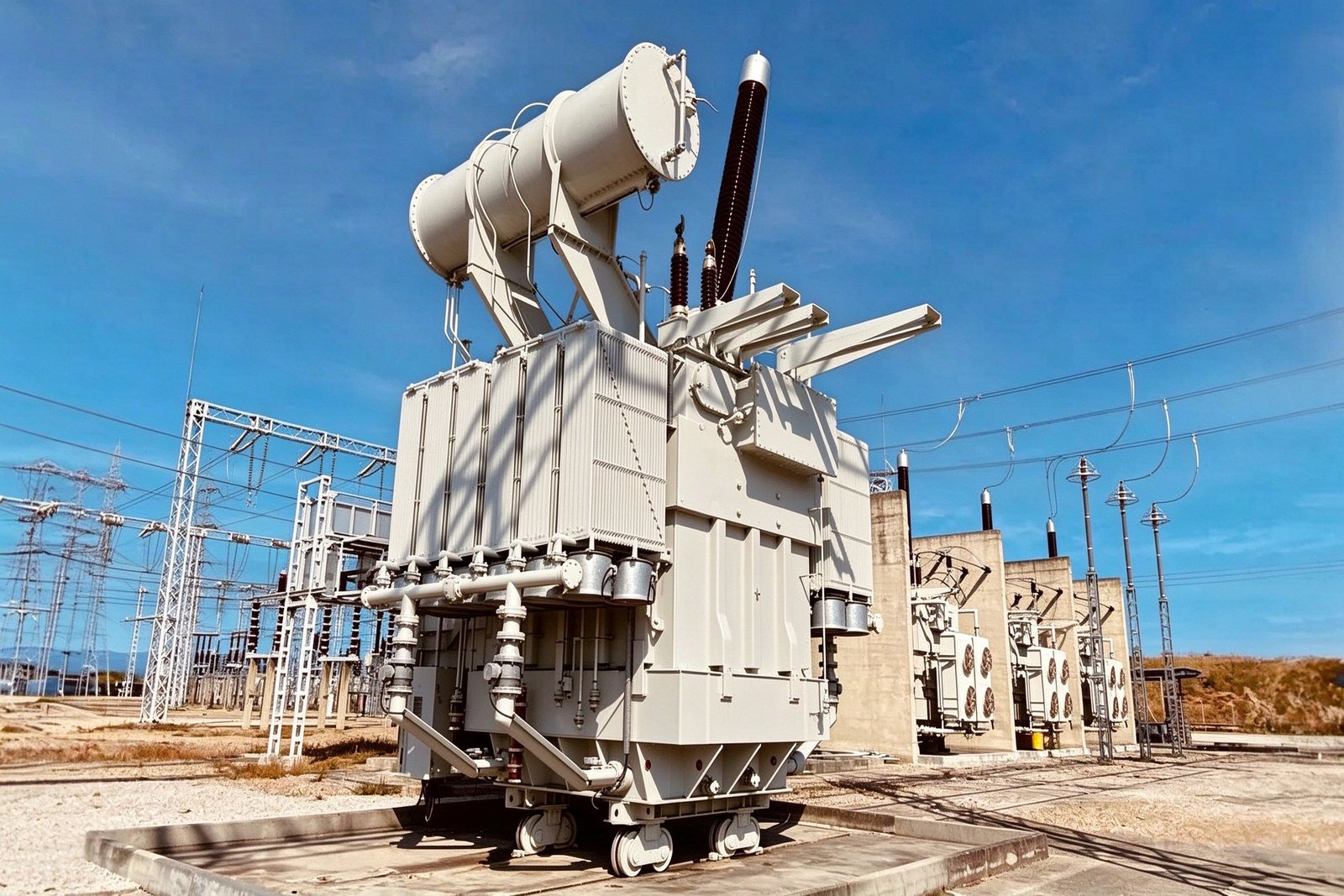
The EU has committed EUR 584 billion to grids by 2030, but busbar orders arrive two to fou
Read article
Lucas Meyer advises procurement and supply-chain teams on copper sourcing, busbar pricing and supplier evaluation, with 13 years in industrial metals and electrical-component procurement. He developed SHANYUAN's copper-price quotation model and cost-breakdown framework for busbar projects. He h
Send the current profile, voltage class and terminal types — our engineers reply within one business day.