Indian low-voltage projects rarely reject a busbar on electrical grounds. They reject it on documentation: a type-test report that references the wrong standard, a clearance table copied from a European drawing, or a certificate that does not name the assembly. IS 8623 is not an obstacle; it is a checklist that tells you what the utility will ask for.
Indian low-voltage projects rarely reject a busbar on electrical grounds. They reject it on documentation: a type-test report that references the wrong standard, a clearance table copied from a European drawing, or a certificate that does not name the assembly. IS 8623 is not an obstacle; it is a checklist that tells you what the utility will ask for.
IS 8623 is the Indian standard for low-voltage switchgear and controlgear assemblies, issued in parts that mirror the structure of the IEC assembly family. It addresses the assembly as a system: ratings, design and construction requirements, verification, and the information that must be supplied with the product.
It does not contain a separate busbar chapter. Busbar requirements arrive through the assembly requirements - temperature rise, short-circuit withstand, clearance and creepage, internal separation, and the verification regime - exactly as they do in IEC 61439.
The practical consequence for a component supplier is that compliance is demonstrated through the assembly builder. What the supplier can do is provide evidence that travels well: test reports in a format the Indian buyer recognises, declarations that name the assembly type, and drawings whose clearances are traceable to a table rather than to habit.
Treat IS 8623 as a documentation interface, not a separate design code. Designs that satisfy IEC 61439 usually satisfy IS 8623 technically; they fail on paperwork far more often than on copper.
The two standards share a technical lineage, and most Indian manufacturers work to both: IS 8623 for the domestic approval path, IEC 61439 when the panel is exported or specified by a multinational. The tables are close enough that one design usually serves both, but the evidence pack is not identical.
The differences that matter to a buyer are procedural. Indian utilities and EPCs frequently ask for type-test reports witnessed by a recognised laboratory, a declaration of conformity naming the standard and the assembly type, and drawings stamped by the panel builder. European packs often rely on a designer's declaration plus calculation.
For a busbar supplier, this means the same physical product may need two document sets. Supplying the European pack to an Indian customer is not wrong, but it will generate a round of questions that could have been avoided.
The efficient approach is to build one evidence file with a cross-reference page: parameter, IS 8623 clause area, IEC 61439 clause area, evidence route. One file, two audiences, no re-testing.
Ambient is where the Indian market diverges from the European design assumption. A panel designed for a 35 °C switch room may operate at 45 to 50 °C in Rajasthan or Gujarat, and the busbar that passed a temperature-rise verification at 35 °C will run closer to its limit every day.
The standard's verification is performed at a stated ambient, and the result is a rise above that ambient. Site conditions then determine the actual operating temperature. A 70 K rise at 35 °C gives a 105 °C conductor; the same 70 K at 50 °C gives 120 °C, which may exceed the insulation class.
This is a design conversation, not a compliance conversation. Buyers should state the site ambient and the enclosure arrangement in the RFQ, and suppliers should quote a derated current rather than a catalogue rating. Adding a derating line to the quotation is cheaper than a field failure in June.
The calculation method is the same one used in our temperature-rise guide; the difference is the ambient input.
Indian LV systems frequently specify 50 kA or 65 kA short-time withstand at one second for utility and industrial boards, with higher values in dense urban distribution. The number itself is not the difficulty; the difficulty is the assumed support spacing and the joint configuration behind it.
A busbar declared at 50 kA for one second on a test rig with short support spans may not survive the same current in a panel where the span is longer or the bar passes close to a steel partition. Electromagnetic force scales with span and inversely with spacing, so the assembly geometry is part of the rating.
Ask for the declared Icw, the duration, the test arrangement and whether the value was type tested or calculated. Then compare the arrangement with your panel layout. A mismatch is not necessarily a rejection, but it needs a calculation note rather than an assumption.
Our short-circuit withstand guide sets out the force calculation and the support-spacing effect.
Clearance and creepage values depend on voltage, pollution degree and material group. Indian installations often sit at pollution degree 3 - dust, humidity and conductive deposits - where a clearance table copied from a clean European installation is simply the wrong table.
The failure mode is subtle: the design passes a drawing check, passes a factory hipot, and then tracking appears on a terminal block after two monsoon seasons. Nothing was defective at dispatch; the assumption was wrong.
For a busbar supplier the actionable item is to state the pollution degree and the assumed material group on the drawing, and to make the interface dimensions explicit at terminals, fuse holders and cable entries. Where a phase crosses a neutral or a sensor cable, the clearance belongs to whoever owns the drawing.
The working method, including how creepage interacts with plating and contamination, is in our clearance and creepage note.
The pack usually includes: a type-test report from a recognised laboratory; a declaration of conformity naming the standard and the assembly type; drawings with revision control and material callouts; routine test records for the shipped batch; and, for utility projects, approved vendor documentation that may also require factory assessment.
Two items cause most of the delay. The first is a type-test report whose sample does not match the offered design - different module width, different terminal arrangement, different internal separation. The second is a declaration that names a product family rather than an assembly type.
Prepare a one-page cross-reference that maps each parameter to the evidence document. It takes an hour and saves a week of emails. The documents we routinely issue are listed on our quality documents page.
Many Indian public-sector tenders include a local-content component, and vendor registration is often a precondition rather than a formality. A component supplier exporting into India is usually carried by the panel builder's registration rather than holding one independently.
The practical sequence is therefore: the panel builder qualifies the busbar supplier, the panel is type tested or verified, and the assembly carries the approval. Attempting to register a busbar as an independent "approved product" for a utility usually runs into a category problem - the approval is for assemblies.
This makes the panel builder the most important commercial relationship in the market. Suppliers that support the builder's verification file - with fast document turnaround and clear interface drawings - win repeat business more reliably than suppliers competing on unit price.
Shipping and documentation mechanics for Indian projects are covered in our order and shipping guide.
Three segments dominate new demand: utility-scale solar and storage, data centres, and industrial electrification including electric mobility manufacturing. Each changes the busbar specification in a different way.
Solar and storage projects push high DC currents at 1500 V and increasingly at 800 V DC, with long runs and outdoor enclosures; the design problem is thermal and environmental rather than short-circuit. Data centres push modular, high-density distribution with strict redundancy and serviceability requirements, where a busbar's value is in replacing cable harnesses inside a confined cabinet.
Industrial electrification is the most fragmented and the most price-sensitive, with a wide range of custom profiles and shorter runs. It rewards suppliers who can quote quickly and hold tolerances without dedicated tooling.
For all three, the common requirement is documentation speed. The technical design is rarely novel; the ability to answer a consultant's question in 48 hours is what decides the award.
State the site ambient and the enclosure type. State the pollution degree and the assumed material group. State the short-circuit level and duration, and the support spacing assumed. Name the standard the assembly will be verified against, and whether the pack must reference IS 8623, IEC 61439 or both. List the documents required at dispatch. Name the Incoterm and destination port. State whether local content evidence is required.
Eight lines in an RFQ remove most of the ambiguity that later becomes a commercial dispute. Suppliers can then quote against a defined evidence scope instead of guessing which pack the buyer expects.
Our manufacturer selection guide covers the qualification side, and the industrial application page shows how these boards are typically configured.
If you are building panels for Indian projects, start by assembling the cross-reference file: parameter, IS 8623 area, IEC 61439 area, evidence, owner. Then check the interface drawings for clearance and short-circuit assumptions, because those are the two places where a European design most often meets an Indian site condition.
If you are a supplier, the equivalent move is to prepare both document sets once and keep them current through a change log. The cost is a few days of engineering time; the benefit is not re-answering the same question on every enquiry.
SHANYUAN supplies laminated and bare copper busbars to panel builders and OEMs across Asia, Europe and North America, and can issue evidence packs referenced to either standard family. Send the assembly context and destination through our contact form and we will return the applicable document list.
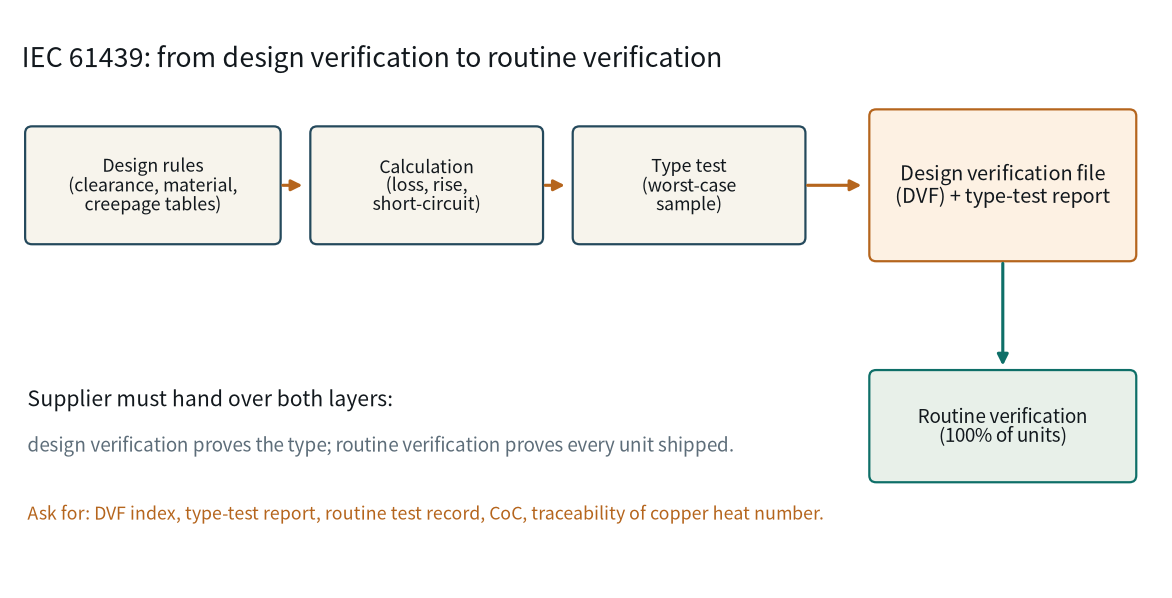
IEC 61439 governs the assembly, not the copper bar. That is exactly why busbar suppliers a
Read article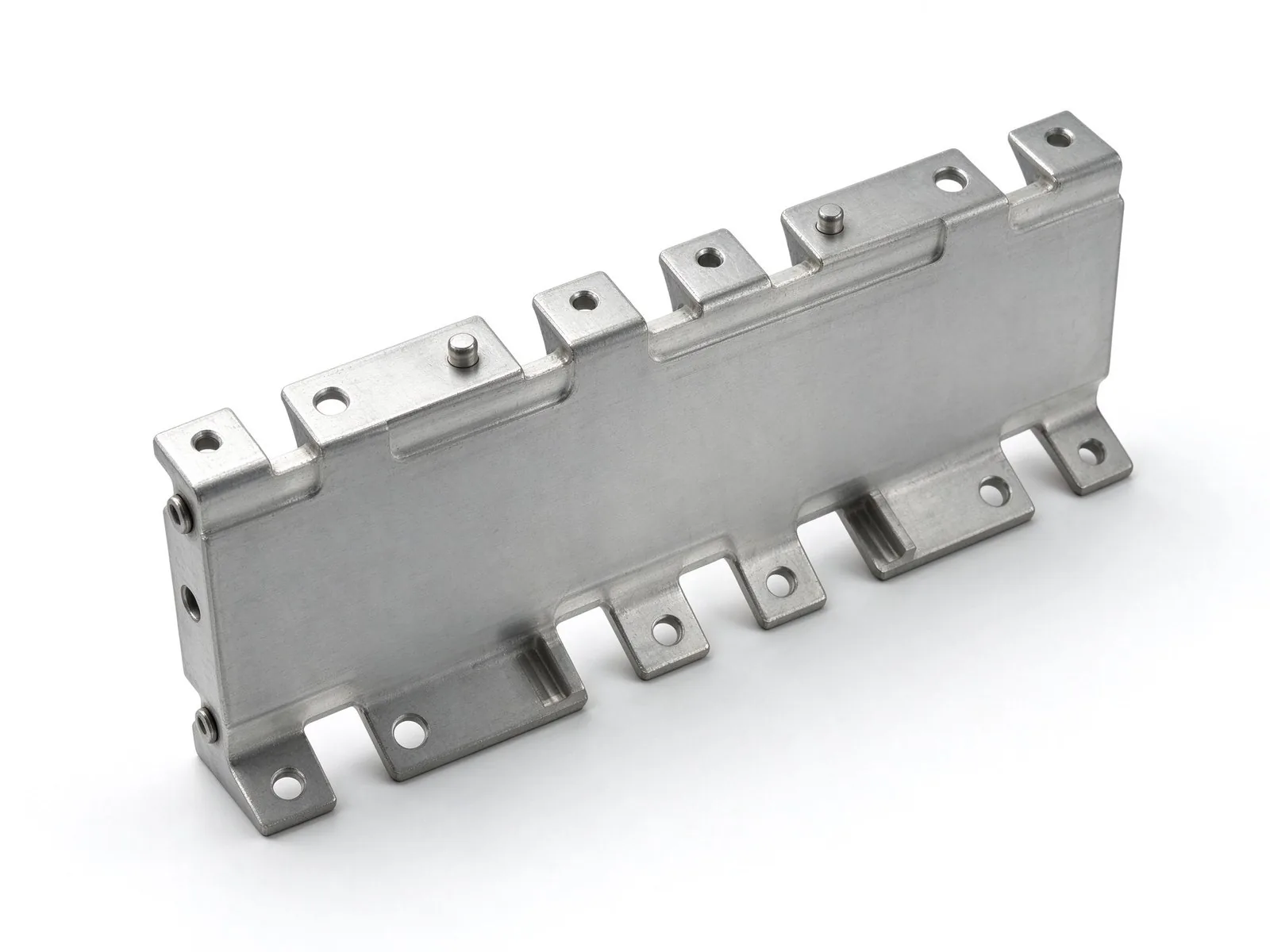
A practical guide to busbar continuous-current temperature-rise testing: applicable IEC li
Read article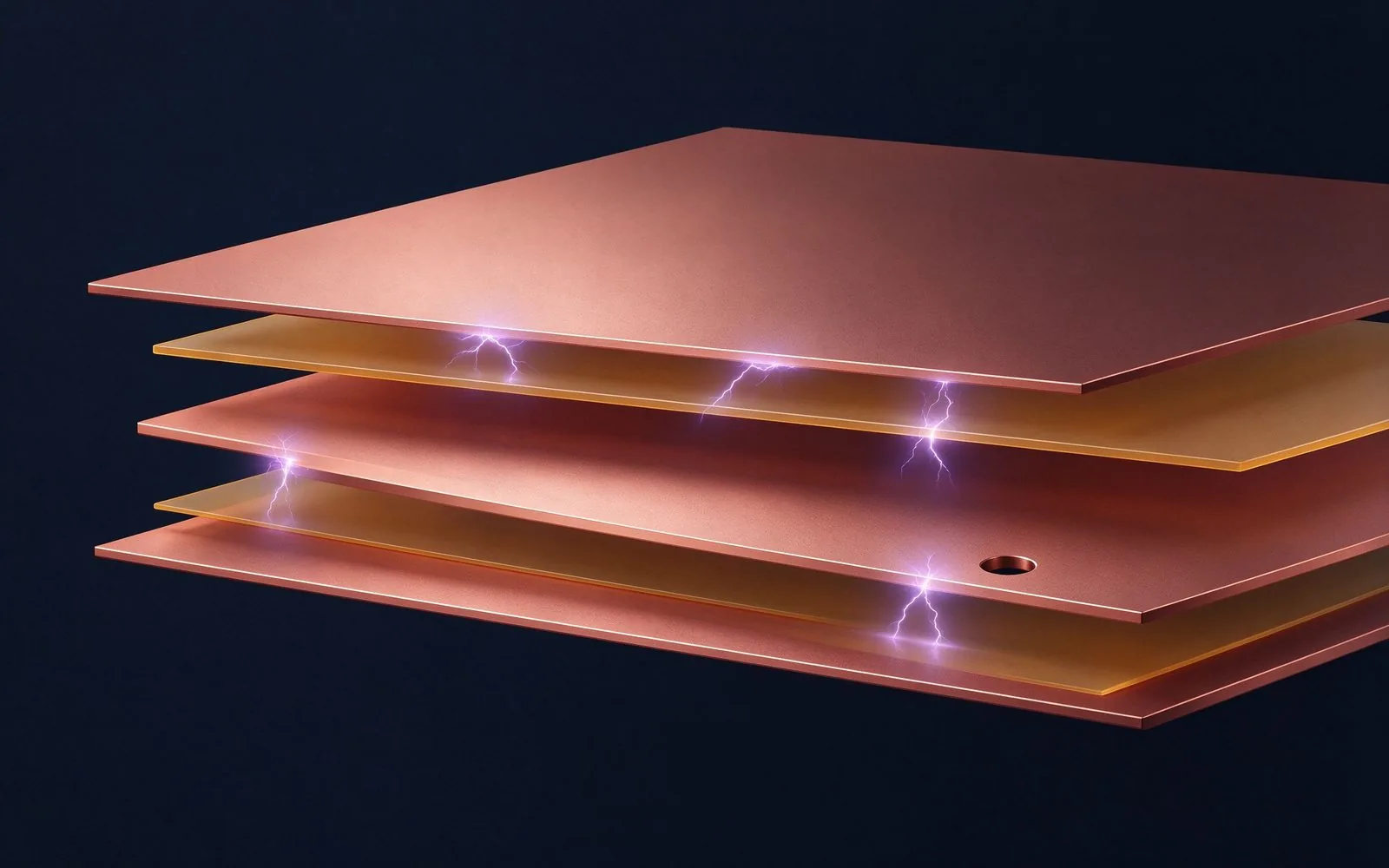
A busbar fails across a surface long before it fails through its insulation if the creepag
Read article
Aiko Tanaka is application engineering manager at SHANYUAN, with 11 years in applying laminated busbars to data centres, energy storage and new-energy systems. She leads application selection, custom-profile development and project delivery, and holds a B.Eng. in Electrical Engineering from the Univ
Send the current profile, voltage class and terminal types — our engineers reply within one business day.