Balcony solar has become Europe's fastest-growing distributed-energy category. The kits are small, the rules got simpler, and the hardware inside them — microinverters with DC-DC boost stages and grid-tied H-bridges — needs the same busbar engineering disciplines as a 300 kW string inverter, just at millimetre scale.
Balcony solar has become Europe's fastest-growing distributed-energy category. The kits are small, the rules got simpler, and the hardware inside them — microinverters with DC-DC boost stages and grid-tied H-bridges — needs the same busbar engineering disciplines as a 300 kW string inverter, just at millimetre scale.
The micro inverter for balcony power plants market reached USD 426.5 million in 2025 and is set to expand to USD 1.51 billion by 2032, implying a 19.8% CAGR over 2026-2032 (PW Consulting, 2026). The worldwide balcony solar system market was USD 548.2 million in 2025 and is growing at double-digit rates (PW Consulting, 2026).
Germany is the volume engine: roughly 500,000 balcony kits were shipped in 2025, each integrating 1-2 bifacial panels with a microinverter that plugs into a wall outlet (Mordor Intelligence, 2026).
Germany raised the registration-free ceiling for plug-in solar devices to 800 W in 2024, removing permit friction for apartment dwellers. The rest of Europe followed with simplified grid-notification rules (Market Research Future, 2026).
Simpler rules did two things at once: they expanded the addressable audience from homeowners to renters, and they pushed manufacturers to ship higher-power kits — which in turn raises the current handled by every power component in the chain.
Micro-inverters represent an estimated 31.6% of balcony system value at USD 173.02 million in 2025 (PW Consulting, 2026). The inverter is the part that makes plug-and-play safe: it manages per-panel MPPT, converts to grid-compatible AC and handles anti-islanding.
It is also the component with the tightest electrical layout — 800 W through a board the size of a paperback book means real current density on the DC input and H-bridge sections.
A typical 800 W microinverter architecture: PV input (35-60 VDC) → DC-DC boost to a 380-400 VDC link → DC-AC H-bridge → filter → grid. The boost stage and H-bridge both switch at 20-60 kHz.
Small laminated busbars and copper interconnects carry current between the input terminals, boost inductor, DC-link capacitors and the power module. They are short, but they still must meet the same low-inductance and thermal rules as large DC links — in a millimetre envelope.
The boost stage is where the busbar content concentrates. Between the PV input terminals and the boost inductor, current path lengths are measured in millimetres, and the loop area between the MOSFETs and the DC-link capacitors determines the switching noise the inverter radiates.
A laminated or properly paired interconnect keeps that loop tight, which is the difference between a kit that passes EMC on the first test and one that needs ferrites and shields added at the last minute.
At 800 W the busbar currents are modest — roughly 22 A on the DC input at 36 V, and about 2 A on the 400 V link. The engineering challenge is not current capacity; it is inductance, thermal density and manufacturing cost.
At 20-60 kHz switching, stray inductance in the boost or bridge loop converts directly into voltage spikes. Laminated construction shrinks the loop area, and tin-plated precision terminals keep contact resistance low over a 10+ year balcony life in weather-exposed positions.
The thermal side is just as demanding: at 800 W continuous in a fanless enclosure, the power stage runs hot, and the copper interconnects double as heat spreaders conducting toward the aluminium case. Thermal resistance through the interconnect, not just its electrical resistance, is a design input.
Balcony inverters are thin, fanless and installed outdoors, usually clipped to the panel frame behind the module. There is no enclosure airflow budget to waste, so heat must spread through the metal — including the busbars.
The same copper that carries current becomes a heat-spreading plate. Thermal modelling of the busbar-to-case interface is part of the design, and plated surfaces are chosen to keep both electrical and thermal contact stable.
Purchasing managers should also understand the tolerance reality of these small parts: a stamped interconnect that is a few hundredths of a millimetre off changes the press-fit force, and press-fit force determines whether the part stays seated through years of thermal cycling.
Balcony kits sit on the same module-level power electronics (MLPE) supply chain as residential microinverters. Vendors design one power platform and scale it across balcony, rooftop and storage configurations.
That platform strategy means busbar and interconnect designs are reused across products — volume leverage for suppliers who can hold tight tolerances on small stamped and bent copper parts.
Germany leads by unit volume; the UK sustains double-digit growth with VAT zero-rating on residential solar; France runs a self-consumption premium; Italy's successor to Superbonus keeps pulling MLPE demand (Market Research Future, 2026).
Each market pushes the same hardware categories — more kits, higher power per kit, battery-ready inverters — which compounds busbar and terminal demand.
Balcony microinverters buy small laminated busbars, stamped copper interconnects and precision terminals — high volume, tight tolerance, low unit cost. The parts are small but the qualification cycle is real: 10+ year outdoor life, -20 to +60 °C, humidity and salt exposure.
Suppliers with experience in automotive-grade stamping and plating fit this segment naturally; the same C11000 copper, tin plating and DFM discipline applies at millimetre scale.
Small-format interconnects use press-fit or riveted copper lugs, solder tabs for the power module, and plated contact surfaces specified to keep contact resistance below milliohms across the product life.
Tin plating is the workhorse; selective silver or gold appears only at signal-level or high-cycling interfaces. Edge geometry and plating thickness follow the same standards as large busbars, scaled down.
A 300 kW string inverter needs thick laminated stacks, stud terminations and megawatt-scale DC links; an 800 W microinverter needs millimetre-thick interconnects and press-fit lugs. The physics is identical — resistance, inductance, thermal budget — but the cost envelope is completely different.
That is why microinverter suppliers usually source from stamping-oriented shops rather than heavy-lamination manufacturers, and why DFM matters more than ampacity tables at this scale.
Plug-and-play kits sold in Europe must meet VDE-AR-N 4105 or equivalent grid connection rules, plus CE and electromagnetic compatibility requirements. The inverter's layout — including busbar loop inductance — directly affects conducted EMI, so low-inductance interconnect design doubles as a compliance tool.
Suppliers support this with documented material certificates, plating thickness data and lot-level electrical test records.
Expect the balcony category to keep doubling for another two years, then consolidate around battery-integrated kits and higher power classes. The 800 W ceiling will be tested at 1200 W in several markets.
Every upgrade raises the current through the DC input stage and the battery interface — more content per unit for busbar and interconnect suppliers who are already qualified in the small-format segment.
Balcony solar turned a niche product into a forecast USD 1.51 billion microinverter market by 2032. The hardware is small, but the engineering rules are the ones we use on every busbar: low inductance, thermal spread, plating reliability and DFM-driven cost.
SHANYUAN supplies small laminated busbars, stamped interconnects and precision terminals for inverter and MLPE customers — with quotation from drawings within one working day.
Finally, remember that balcony hardware is consumer-adjacent: a failure is not a maintenance call but a product-recall event. The interconnect quality bar — plating thickness, contact resistance, thermal cycling — is therefore closer to automotive than to industrial distribution, and the test documentation should prove it.
The next product wave in balcony solar is battery-integrated kits: a plug-in solar kit with a small home battery that shifts surplus evening generation to the night. That adds a DC-DC charger and a battery interface to the microinverter architecture.
Battery-ready inverters carry higher currents on the DC side and add a second power stage, which means more interconnect content — busbars between battery terminals and charger, and between charger and the main DC link.
Suppliers who can hold tight tolerances on these small, high-cycle parts are positioned for the category's next growth phase, which market trackers expect to accelerate from 2027.
Europe's plug-and-play boom has attracted import volume, but the EU's trade and energy policies are pushing toward local production of power electronics. Microinverter assembly, and increasingly the stamping and plating of small copper parts, is moving closer to the end market.
That shift creates an opportunity for component suppliers with EU-qualified processes: material certificates, RoHS/REACH compliance and lot-level traceability are becoming order qualifiers rather than nice-to-haves.
For purchasing managers the practical change is shorter logistics chains and the option to dual-source between Asia and Europe for the same small-busbar design.
Small-format busbars and interconnects have a different cost structure from large laminations. Material is a minority of the price; tooling, stamping speed and plating dominate. That is why volume matters more than ampacity in this segment: a progressive die spreads tooling over millions of parts, and plating line utilisation decides the unit cost.
Buyers should therefore qualify suppliers on die capability and plating capacity, not only on unit price. A supplier with an in-house plating line holds both cost and quality control; one that subcontracts plating adds a logistics and consistency risk.
For annual volumes above a few hundred thousand parts, a dedicated progressive die with in-line inspection is usually the right investment — and it is the point where a stamping-oriented supplier becomes cheaper than a general lamination shop.
The takeaway for the RFQ: state the annual volume and the expected design stability. Suppliers price tooling amortisation very differently for a stable two-year program versus a quarterly redesign.
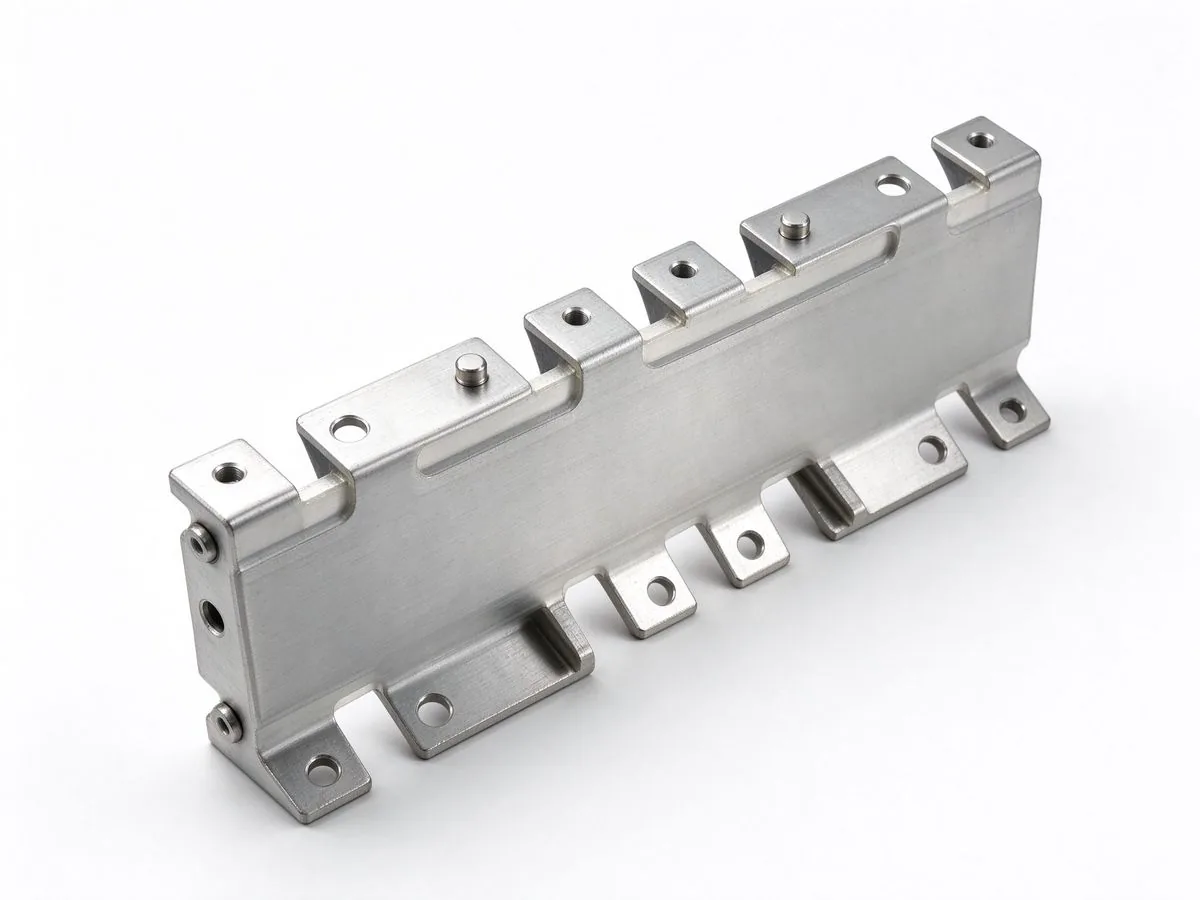
The inverter that dominated 2026's solar tenders is no longer a small box: 300 kW-plus str
Read article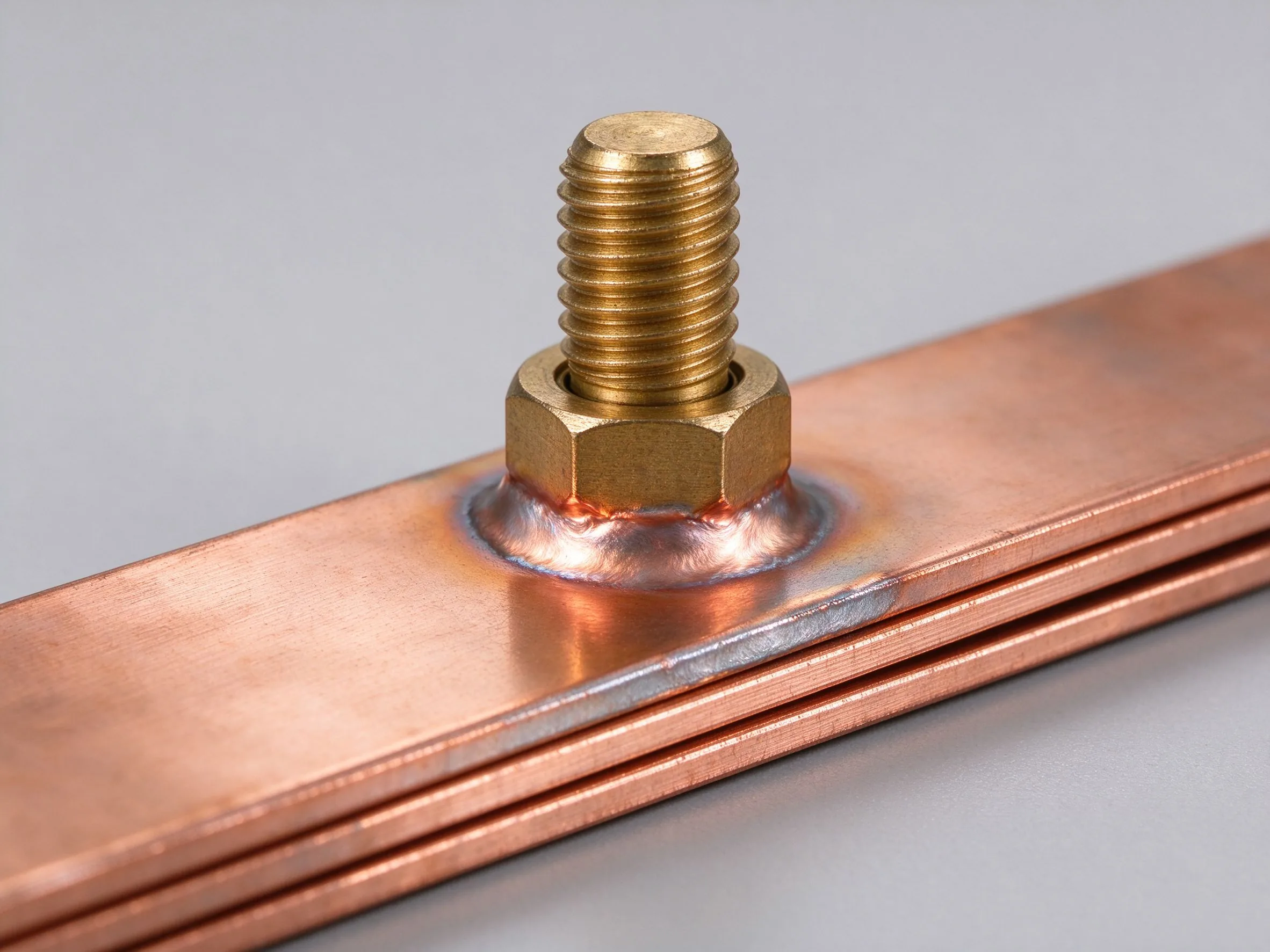
The terminal is where a laminated busbar meets the outside world. This guide covers M6/M8
Read article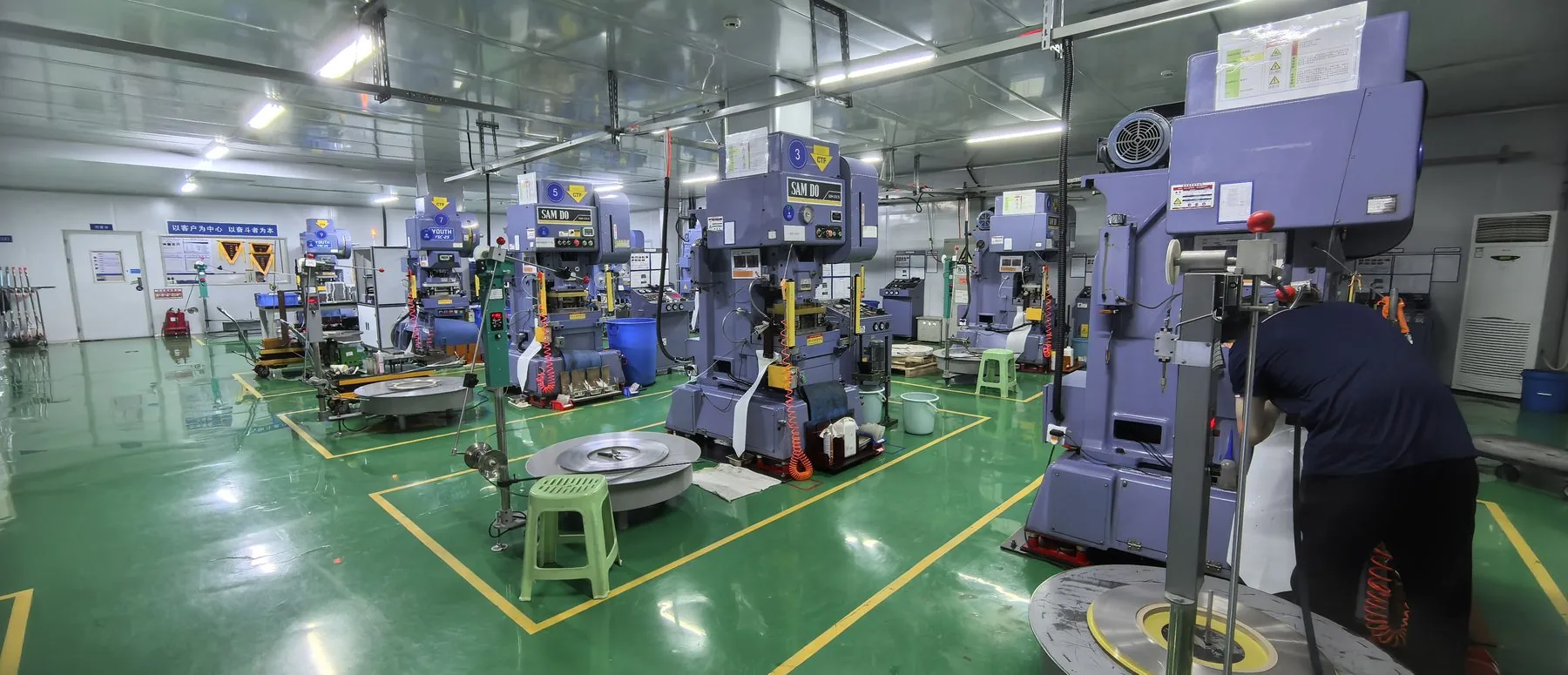
A busbar's reliability is decided in the first 2 mm of the drawing: hole position, bend an
Read article
Elena Vasquez is a power electronics application engineer with 10 years of experience integrating laminated busbars into EV inverters, charging systems and energy-storage PCS. She specializes in low-inductance DC-link design, EMC behaviour and converter packaging, and holds a B.Sc. in Electrical Eng
Send the current profile, voltage class and terminal types — our engineers reply within one business day.