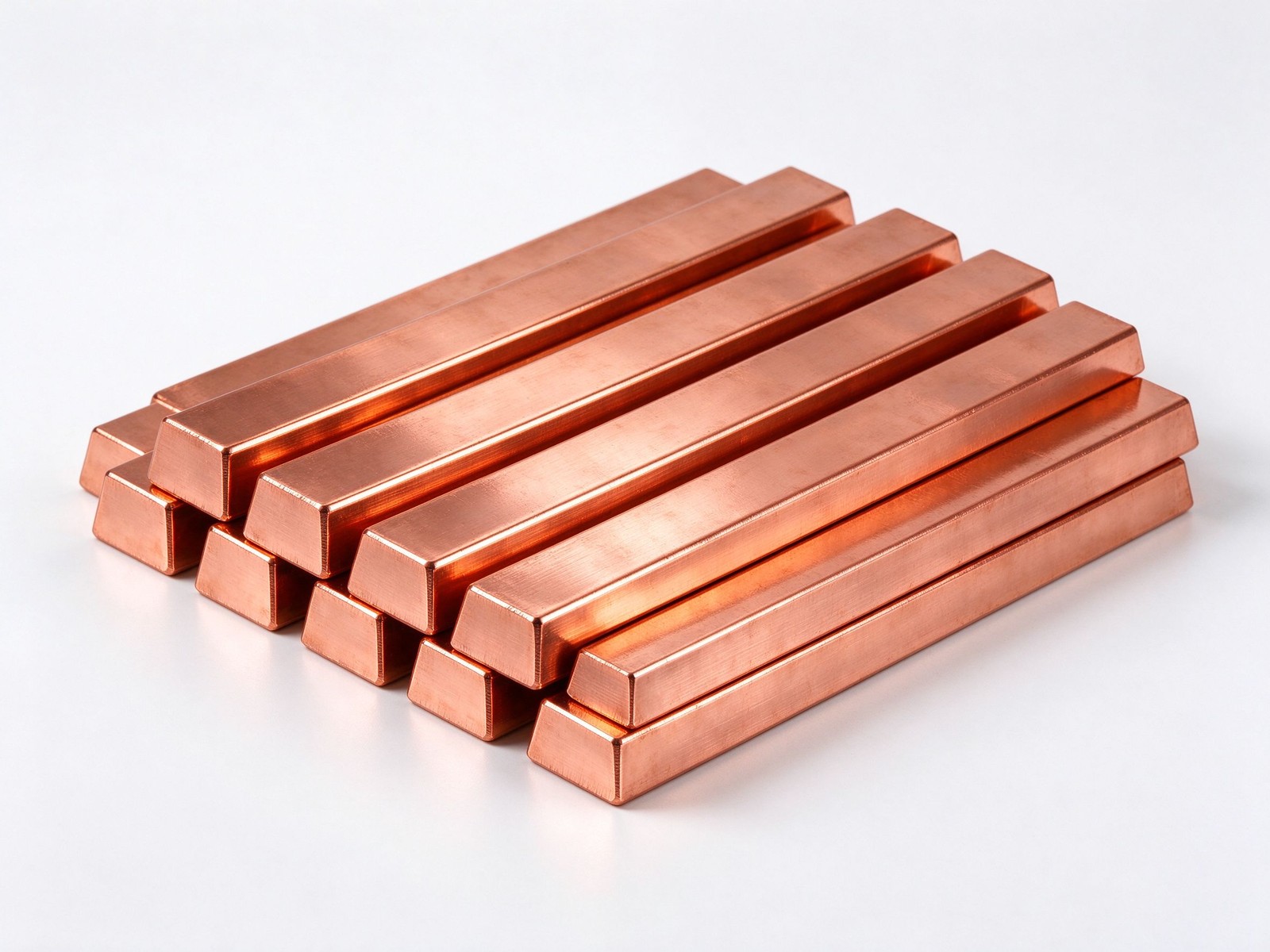
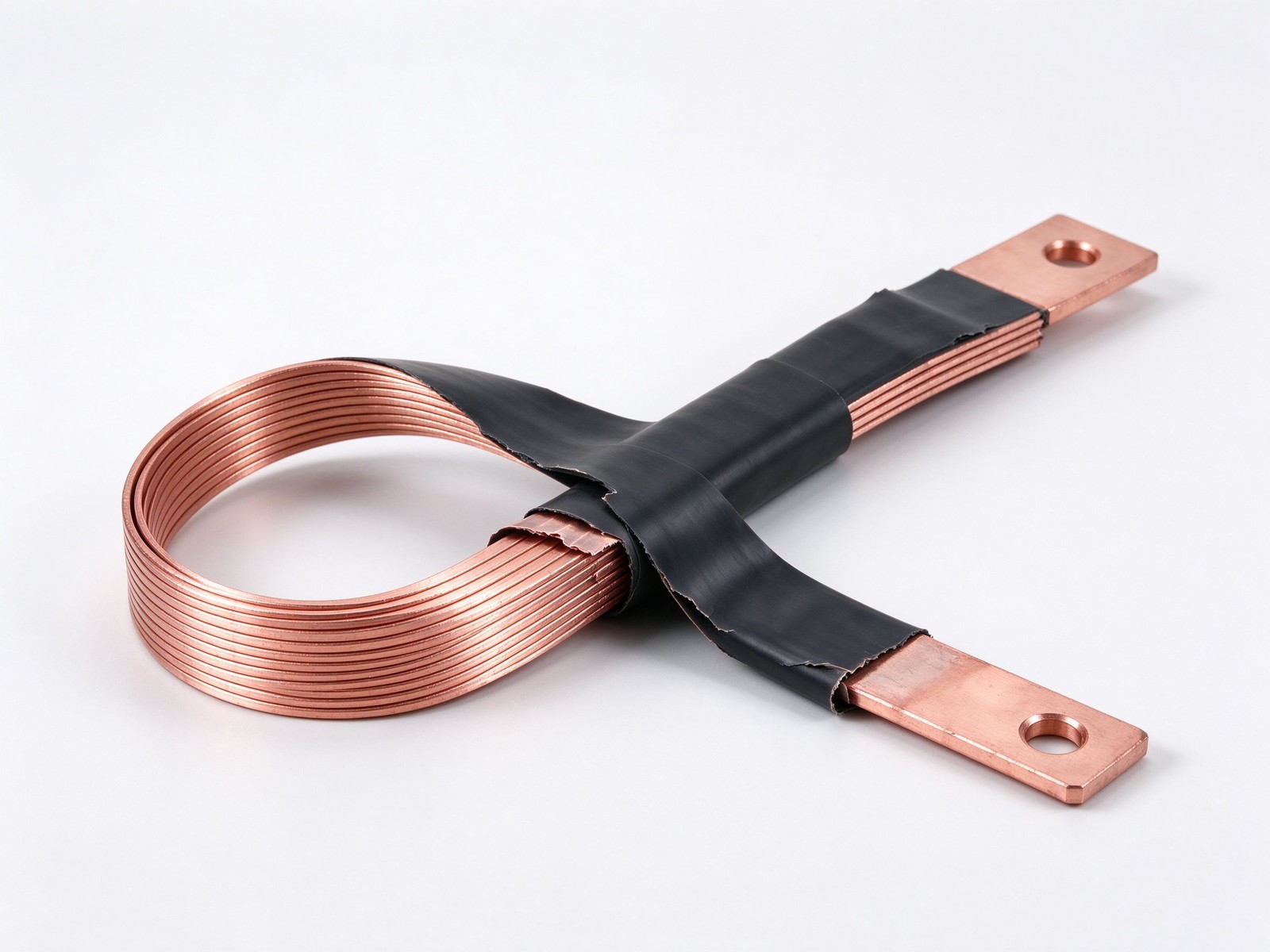
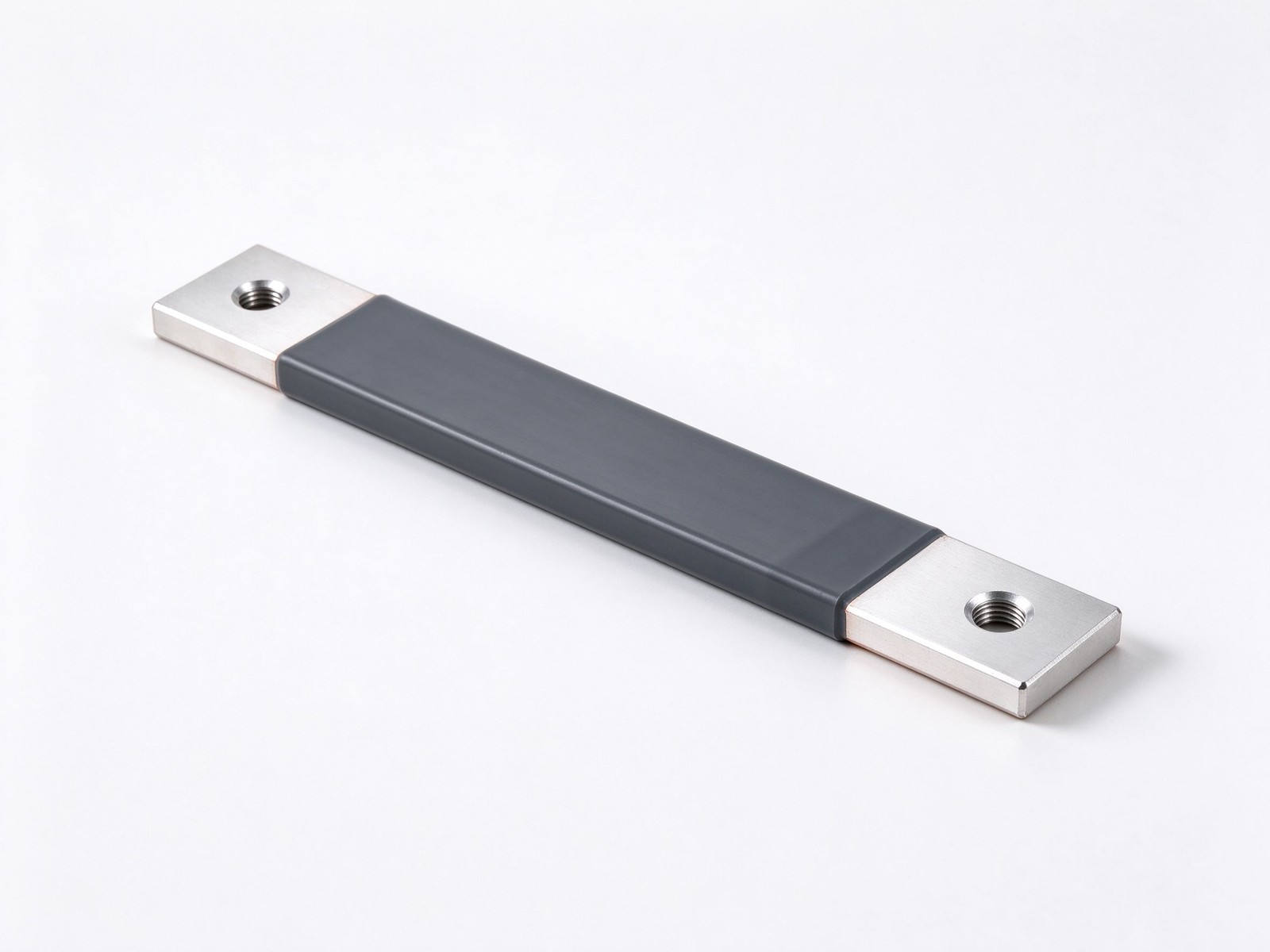
Custom copper busbar fabricated to your drawing on CNC presses, brakes and waterjets, plated in-house and fully tested - send a drawing for a quote.
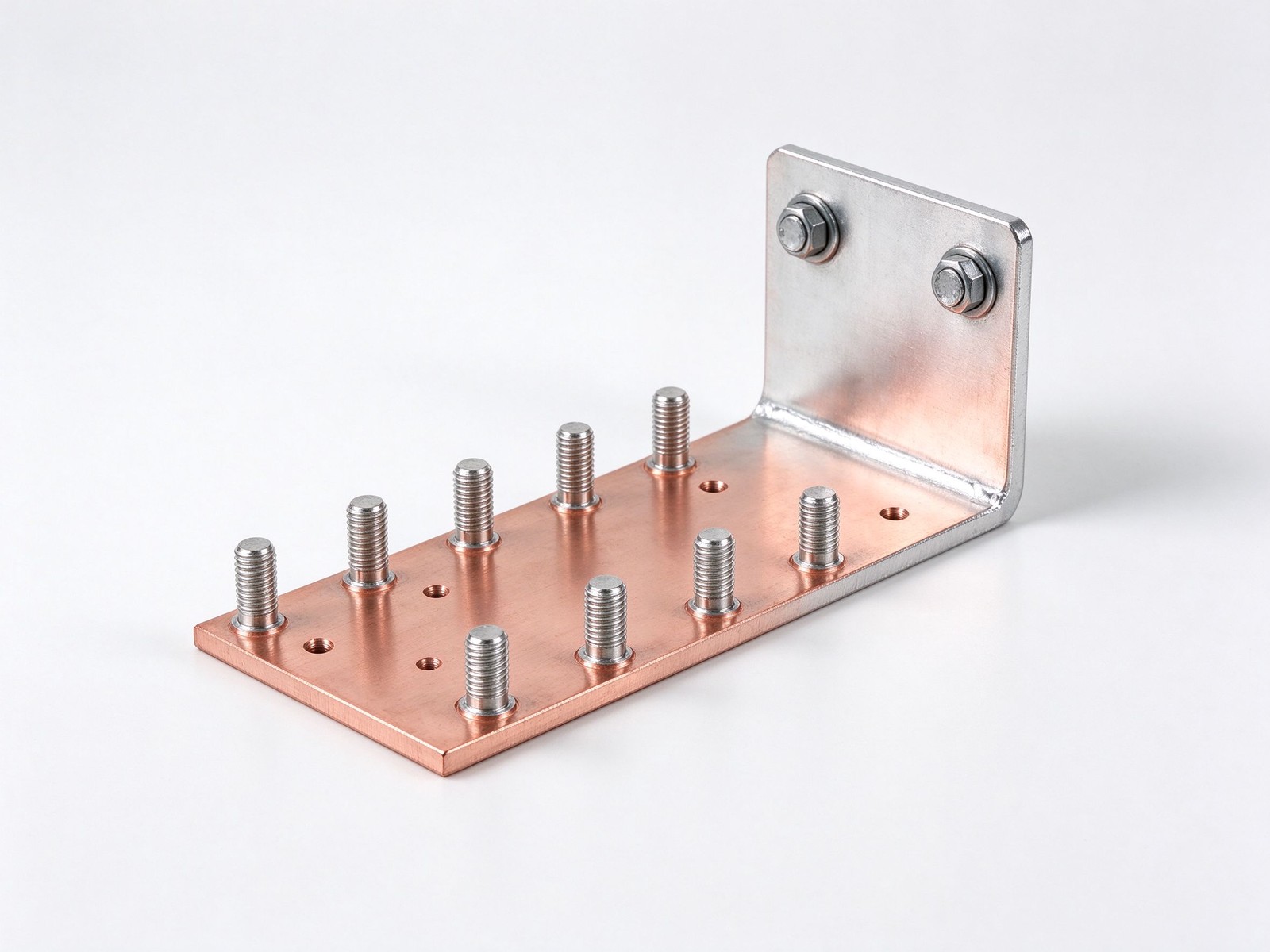
Product imagery: factory photo plus studio renders. The exact geometry, layers and terminals of your part follow your drawing.
Final values follow your drawing — this is the standard configuration of the family.
| Parameter | Value |
|---|---|
| Conductor | C11000 ETP copper; C10100 or 6101 aluminium on request |
| Cutting processes | Water-jet, laser, CNC punching |
| Forming | CNC presses and press brakes, multi-branch geometries |
| In-house plating | Bright/matte tin, lead, tin-lead, nickel, silver |
| Plating methods | Rack or barrel, strike plating, electroless nickel |
| Test equipment | FARO CMM, X-ray, hi-pot, partial discharge, Keyence vision |
| Derived forms | Laminated, insulated, inverter, IGBT, breaker, backplane bars |
| SKU | SY-CM-317 |
Key characteristics of this product family.
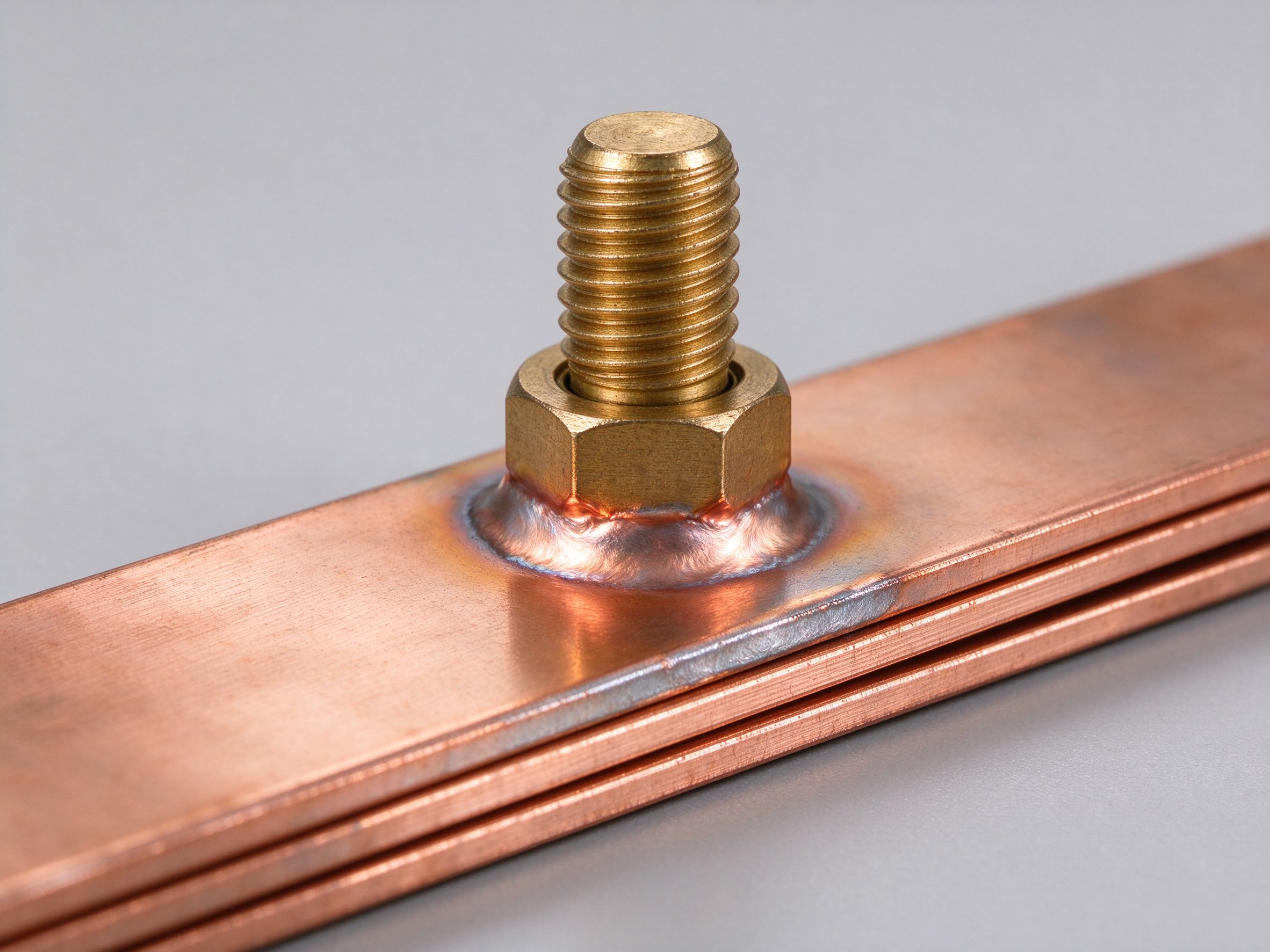
A custom copper busbar is a purpose-formed C11000 copper conductor, fabricated to a customer drawing and finished as a single bolted power connection. Where a cabinet or external distribution assembly needs an efficient, cost-effective conductor, a formed bar carries more ampacity per cross-section than cable, so the same current runs cooler inside a sealed enclosure. It also removes every crimped-lug mechanical joint in the run, which is where connection and grounding reliability usually degrades.
Specifying a fabricated bar over a cable harness pays back in six ways: lower system cost, zero wiring errors on the assembly line, improved reliability and thermal performance, lower inductance and impedance, a wider choice of interconnection methods, and reduced capacitance between conductors.
Production runs on CNC equipment end to end: mechanical presses, press brakes, water-jet cutting, laser cutting and punching. Plating is handled in-house - bright and matte tin, lead, tin-lead alloy, nickel and silver, by rack or barrel plating, with strike plating and electroless nickel where the contact demands it. Before shipment each part passes the test bench: FARO arm CMM dimensional checks, X-ray, hi-pot dielectric testing, partial-discharge testing, Keyence visual inspection, Rockwell hardness testing, ultrasonic thickness measurement and surface-roughness measurement.
The same shop floor produces derived geometries beyond the flat bar: laminated busbars, insulated busbars, inverter busbars, IGBT busbars, power-distribution busbars, backplane busbars, breaker busbars and multi-layer busbar assemblies.
A cable run accumulates joints at every lug, and each joint is a point of resistance, heating and eventual failure. A CNC-fabricated copper busbar replaces that run with one rigid, dimensional part: higher ampacity per square centimetre, cooler enclosure temperatures, and no field wiring errors on the production line. Engineers who want the full cost argument should read our busbar vs cable guide, and for the cabinet where space is tight, a multi-layer laminated busbar stacks several circuits into one pre-tested block.
Because plating never leaves the factory, lead times stay short and small runs stay economical. Bright or matte tin is the everyday contact finish; silver plating gives the lowest contact resistance for high-current or low-temperature-rise joints; nickel protects under elevated temperatures; lead and tin-lead plating suit corrosive or battery environments. Rack plating covers large formed bars, barrel plating handles drilled hardware, and electroless nickel provides a uniform coat on awkward internal surfaces. Where the whole conductor needs dielectric protection rather than a contact finish, see our epoxy-insulated copper busbars and the engineering notes in busbar connection methods.
Send a 2D drawing or 3D model by email and our engineers reply within one business day with a DFM review: bend radii against the C11000 temper, hole patterns against your studs, plating against the environment, and a price. After approval the part is cut, formed, plated and inspected on the in-house bench - FARO CMM, X-ray, hi-pot and partial-discharge checks before pack-out. Explore the custom busbar design service, understand partial discharge testing, or open a contact request with your drawing attached.
Every custom copper busbar starts from the same conductor and finishes through the same in-house plating line, so the material story is short but worth pinning down before the drawing is approved.
| Material Item | Typical Specification | Shop Note |
|---|---|---|
| Base conductor | C11000 electrolytic tough pitch, 99.90% Cu | The CNC copper busbar manufacturing starting stock |
| Conductivity class | 100% IACS | Basis for every rating we quote |
| As-received temper | Cold-drawn half-hard | Formed before final plating cycles |
| Plating families | Bright tin, matte tin, nickel, silver, lead, tin-lead | The silver plated copper busbar route for low-resistance joints |
| Plating method | Rack for formed bars, barrel for hardware | Strike and electroless nickel where contact demands it |
| Insulator / dielectric parts | UL 94 V-0 flame class where they apply | Material-level statement, not a component listing |
| Compliance baseline | RoHS / REACH across shipped lots | Standing baseline on every production run |
| Documentation | Batch mill certificates, CoC available on request | State it when ordering so it travels with the parts |
The fabrication itself - presses, brakes, waterjets, punching - never leaves the shop floor, which is why small runs keep a short lead time. We do not certify finished assemblies against a named third-party scheme; instead the material chain is documented and the electrical tests run on the bench before pack-out. Drawing revisions stay cheap at this stage: every bend, hole and plating callout is reviewed numerically before the press tool moves, which is why the returned quote carries tolerances rather than placeholders. If the drawing calls for insulated sections, the dielectric work follows fabrication, so contact faces stay bare and the coat stops exactly where the drawing says it stops. Engineers who want the background on the plating choices should read the plating and corrosion guide, and the ordering route starts with custom busbar design service.
The copper busbar fabrication order runs through three checkpoints, and knowing what each checkpoint needs keeps the first quote firm rather than provisional.
| Drawing Input You Send | What We Check in DFM | Typical Output |
|---|---|---|
| Current rating plus ambient | Cross-section vs rise target | Confirmed or enlarged bar section |
| Terminal pattern and studs | Hole size, spacing, washer layout | Drill drawing with margins noted |
| Bend envelope, tool clearance | Radii vs half-hard temper limits | Feasible bend list, or anneal note |
| Atmosphere notes: coastal, dusty, chemical | Finish selection logic | Tin, nickel or silver plating proposal |
| Insulation requirements | Dielectric fit and hi-pot plan | Test point list before shipment |
| Plating callout | Rack vs barrel fit | Rack plating quote line |
The bench checks - CMM dimensional measurement, X-ray, dielectric and partial-discharge inspection - are routine on every lot, so the approval loop stays short once the drawing is frozen. Hurry-up prototypes follow the same test queue without jumping it, so a one-off bar takes no shortcuts. Drawings on the fast track move straight from DFM to the press, and bench tests run inline rather than after the whole lot is finished - which is why urgent replacements keep the same quality gate. For the first-pass current check before you draw anything, open the ampacity chart, and start the DFM conversation on the custom design service page.
Where this busbar configuration earns its place.
Where this busbar configuration earns its place.
Where this busbar configuration earns its place.
Where this busbar configuration earns its place.
Where this busbar configuration earns its place.
Where this busbar configuration earns its place.
Your drawings reach the engineers who build the part.
Design risks flagged when changes are cheap.
Test records per lot, CoC and PPAP on request.
Drawing to delivered production parts, one supplier.
From spec review to shipped, tested parts — one accountable supplier.
Straight answers from the engineering team.
Every SHANYUAN busbar is custom, but the power circuits they connect recur across markets. Three typical ones — send us yours and we will point to the right stack-up.
Tight, low-inductance links between the battery source and traction inverters, fully edge-sealed for 400–800 V platforms.
Commutation-loop connections from DC-link capacitors to IGBT bridges, designed against switching overshoot V = L × di/dt.
Converter DC links built for rising bus voltages toward 1500 VDC, with creepage and partial-discharge margins included.
Construction, dielectric selection and current capacity basics.
Read the busbar design guideLayers, terminals, dielectrics and mounting are all configurable. Send us your spec for DFM review and a quotation within one business day.