LME copper closed at $14,322/t on 23 October 2026 after touching a record $14,875/t in September — up roughly 76% from the start of 2024. BloombergNEF now forecasts a large, long-term copper shortage beginning in 2028, with the supply gap reaching 8% of demand by 2035 and 44% by 2050. That price and supply environment is forcing every conductor decision to be re-examined, and busbars — which are, at heart, machined conductor cross-sections — are at the center of the question: when does aluminum make sense, and where does copper still win?
LME copper closed at $14,322/t on 23 October 2026 after touching a record $14,875/t in September — up roughly 76% from the start of 2024. BloombergNEF now forecasts a large, long-term copper shortage beginning in 2028, with the supply gap reaching 8% of demand by 2035 and 44% by 2050. That price and supply environment is forcing every conductor decision to be re-examined, and busbars — which are, at heart, machined conductor cross-sections — are at the center of the question: when does aluminum make sense, and where does copper still win?
Three numbers define the current environment. First, price: LME copper touched $14,875/t in September 2026 — a record — and traded at $14,322/t on 23 October 2026, while LME aluminum sat at $3,044/t on the same day. Second, the trend: the September record was roughly 76% above the start of 2024. Third, the forecast: BloombergNEF's 2026 report identifies a large long-term shortage beginning in 2028, reaching 8% of demand by 2035 and 44% by 2050, and Teck's CEO has estimated a supply gap near 30% by 2035.
The drivers are structural — energy transition, AI infrastructure, defense procurement and developing-economy grid buildout — while supply responds slowly because discovering, permitting and building a new mine can take 15 years. For busbar buyers the practical signal is that copper price volatility is now a design input, not a purchasing footnote. Our earlier supply chain analysis covered the procurement angle; this article addresses the engineering substitution question.
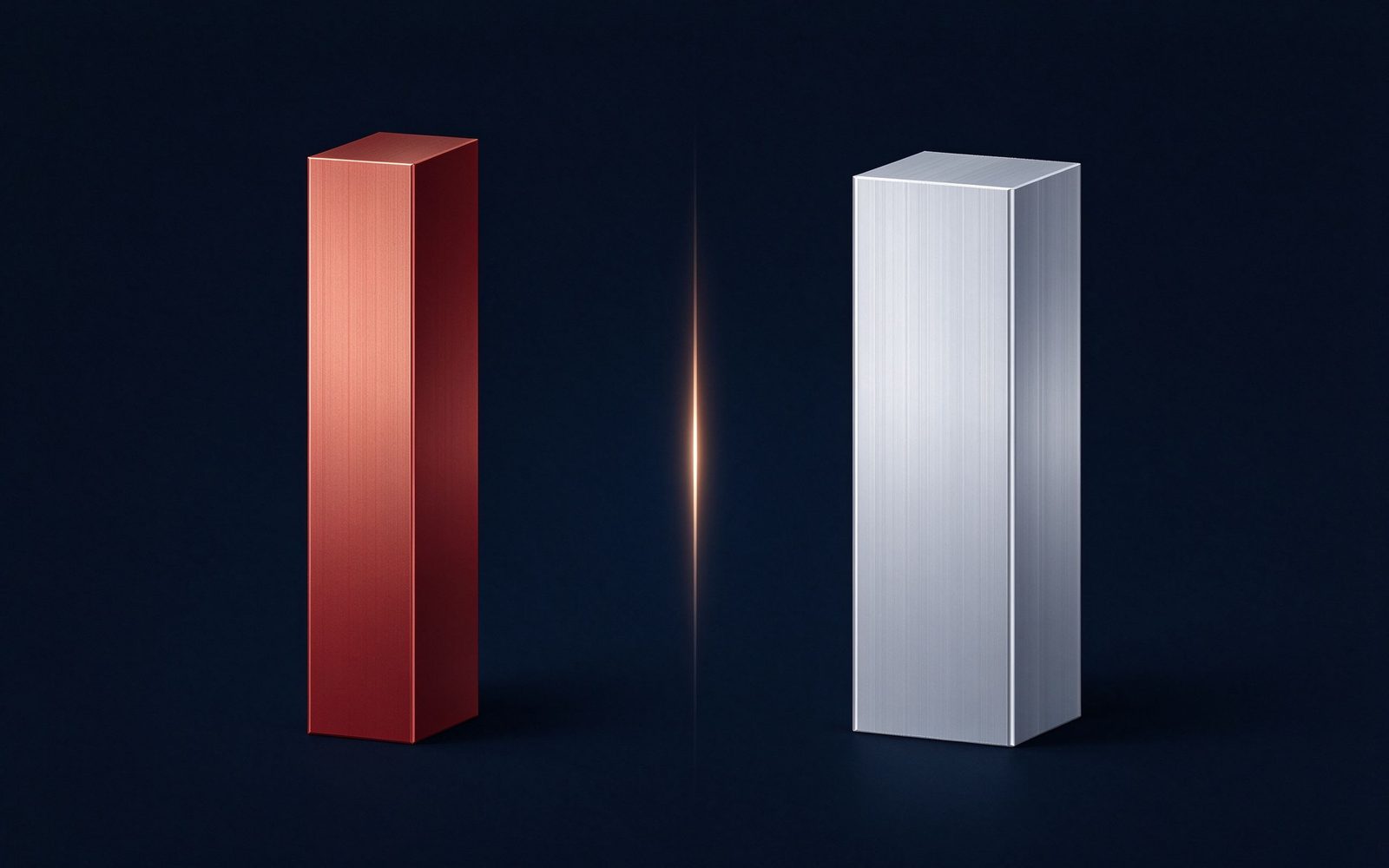
Aluminum's electrical conductivity is about 61% of copper on an IACS basis — 61% IACS versus 100% IACS for C11000 ETP copper. That sounds like a disqualifying penalty, but the engineering question is not conductivity percentage; it is the cross-section and thermal budget needed to carry the same current.
Because resistance scales inversely with cross-section, an aluminum conductor needs roughly 1.6× the cross-sectional area of copper to match its resistance. A common industry shorthand is to go up two standard sizes on the wire gauge. In busbar terms, a copper bar sized at, say, 60 × 6 mm would be matched by an aluminum bar around 75 × 8 mm. The aluminum part is bigger but dramatically lighter — aluminum's density is about 2.7 g/cm³ versus 8.9 g/cm³ for copper, so the larger aluminum bar still weighs roughly half as much.
Substitution is economic before it is technical. Industry rule of thumb puts the substitution trigger at a copper-to-aluminum price ratio around 3.5, and past 4.0 both upstream and downstream players move production lines. As of June 2026 the China copper-to-aluminum ratio reached 4.41 — far above the long-term average — driven by the record copper price against a comparatively stable aluminum price.
At a 3× price gap between the metals by weight, an aluminum conductor with 1.6× the cross-section still costs roughly 70% less for the same electrical performance in applications where the larger profile can be accommodated. That arithmetic is why 'aluminum substitution' is now moving from structural parts into conductive and thermal roles across vehicles, grid equipment and renewable plants — and why it has reached busbars.
Aluminum busbars are a proven, standardized solution in specific niches. IEC 61439-1 recognizes bare aluminum internal connections with a 90 K temperature-rise limit (versus 105 K for copper), reflecting the metal's lower thermal margin. The applications where aluminum wins are those with ample cooling and space: solar PV combiner and inverter DC sections, wind converter cabinets, traction and marine distribution boards, and utility switchgear with ventilated enclosures.
In these environments the larger cross-section fits, the enclosure airflow carries the heat away, and the weight saving matters — on a wind turbine nacelle or an electric bus, a halved conductor mass is a real design advantage. Our copper versus aluminum reference details the comparative rating tables; the aluminum busbar product line covers the manufacturing side, including the surface preparation needed for reliable joints.
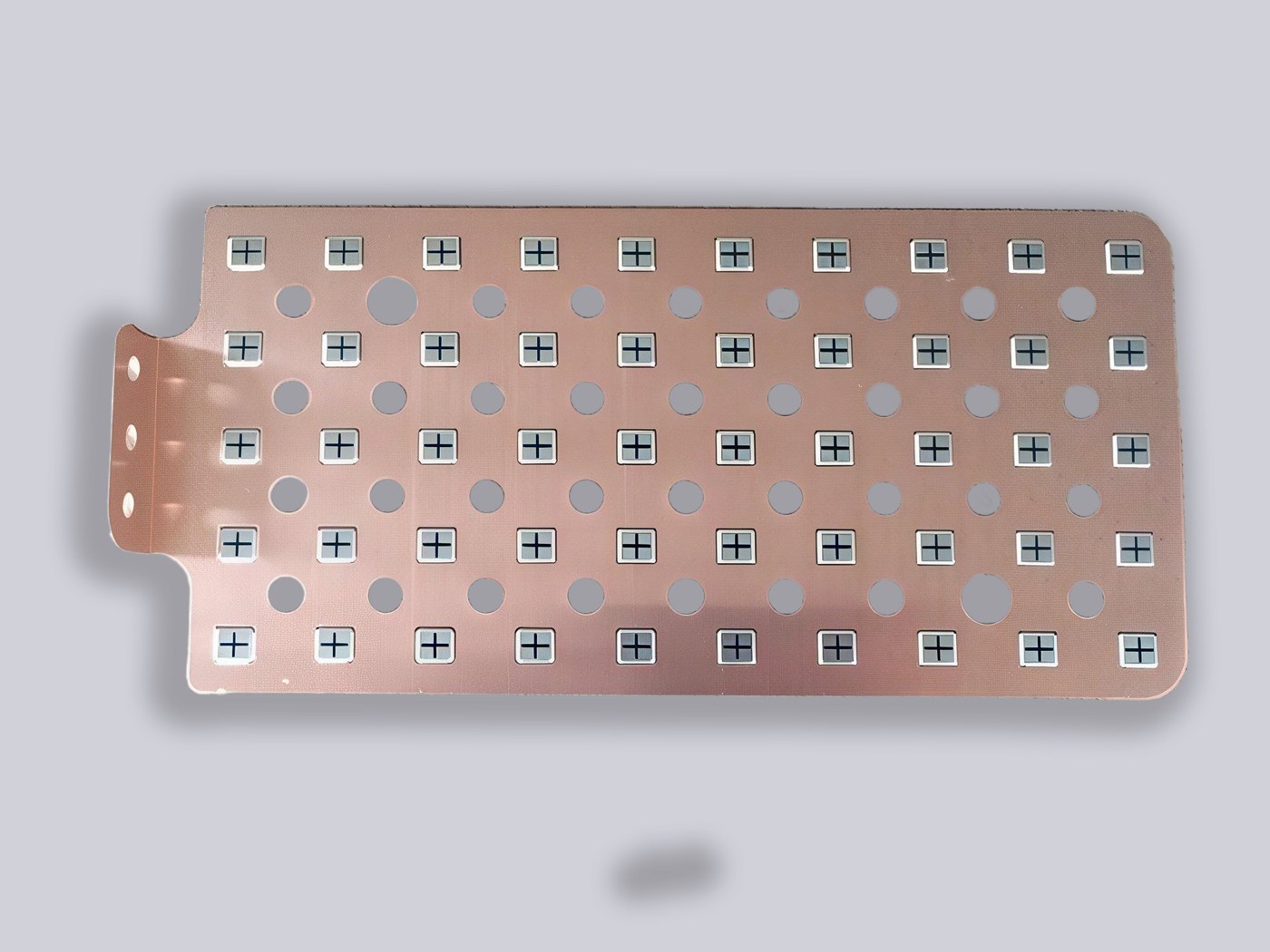
Aluminum's vulnerability is its surface oxide. Aluminum oxide forms instantly and is an electrical insulator; a bolted joint that does not manage the oxide film has high, unstable contact resistance that heats and drifts. Reliable aluminum joints therefore depend on three practices: (1) proper surface preparation at assembly — wire-brushing or chemical treatment immediately before torquing; (2) plated or bimetallic interfaces, typically tin, nickel or silver plating, or copper-to-aluminum transition washers; and (3) controlled contact pressure with Belleville or similar washers that maintain pressure as the joint cycles thermally.
At the copper-to-aluminum boundary — a battery pack connecting an aluminum bus to a copper terminal, for example — the same oxide problem plus galvanic corrosion risk require a bimetallic transition or a plated interface. These are documented, standard engineering practices, but they are exactly where a generic 'just use aluminum' decision fails in the field.
Laminated busbars are usually copper because the application — EV battery interconnects, inverter DC-links, power electronics — is space-constrained and current-dense, exactly where copper's higher conductivity and thinner laminates pay off. Aluminum laminates exist and are used in some energy storage and renewable applications where the stack is bigger and cost dominates.
The manufacturing constraints are real: aluminum's lower hardness means tooling, stamping and terminal attachment must be adapted; the tin plating required for contact performance adds process steps; and the dielectric lamination process must accommodate aluminum's thermal expansion coefficient, which is roughly double copper's. The result is that an aluminum laminate saves material cost but adds process cost, so the economic crossover is application-specific and should be evaluated per program rather than assumed.
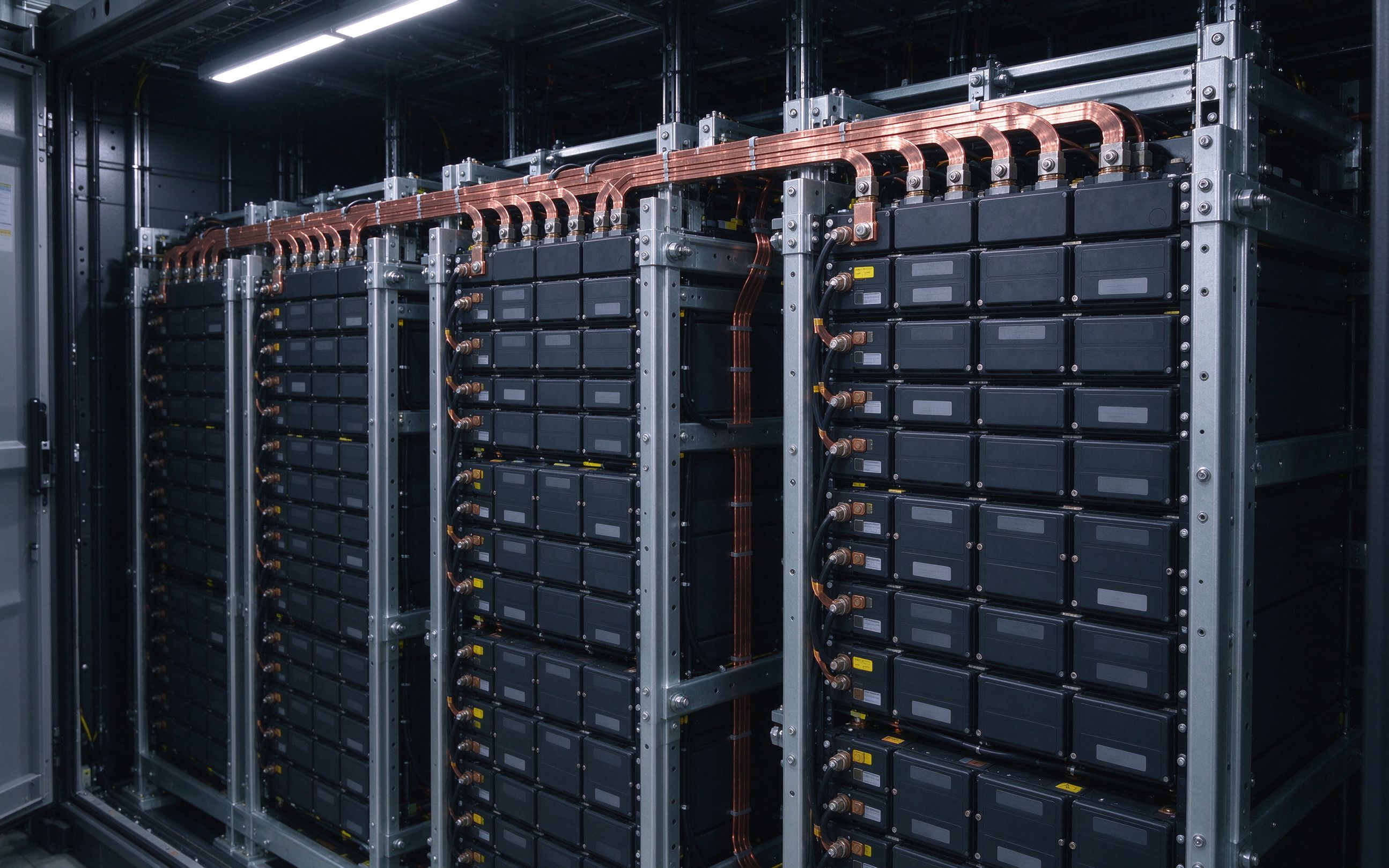
Copper retains the decisive position wherever the design is space-constrained, current-dense or transient-heavy. In an EV battery module, an inverter DC-link, a power electronics rack or an 800 VDC data center busway, the conductor runs alongside other components in a fixed envelope: the smaller copper cross-section is the one that fits, and the thinner laminate is the one that keeps loop inductance low for fast switching currents.
Copper's higher thermal conductivity (about 400 W/m·K versus 230 W/m·K for aluminum) also helps hot-spot management in dense assemblies, and C11000 ETP copper's consistent conductivity supports precise ampacity engineering. When the busbar is a voltage-class and inductance-critical component — as in the 800 VDC data center DC-links discussed this week — the substitution question rarely survives contact with the requirements.
The most practical 2026 answer is often neither pure copper nor pure aluminum but a hybrid: copper for the current-dense, inductance-critical sections — battery cell interconnects, converter DC-links, rack busways — and aluminum for the longer distribution runs where space and cooling permit the larger cross-section. The two metals meet at a designed bimetallic joint rather than an improvised one.
This approach captures the 70% material-cost saving on the bulk conductor while preserving electrical performance where it matters. It requires the supplier to hold both manufacturing capabilities and to engineer the transition joint — which is why the conversation usually starts with a custom design review rather than a catalog selection.
The practical difference shows up in temperature-rise engineering. Using the standard ampacity method — where temperature rise depends on current, cross-section and cooling — a copper bar operating at a given current density runs cooler than an equivalently sized aluminum bar because of the metal's lower resistivity and higher thermal conductivity.
When the aluminum bar is upsized 1.6× to match resistance, the surface area for heat rejection also grows, which partially compensates. The net result is that an aluminum busbar can match a copper rating in a well-ventilated enclosure with about 25–40% more physical volume, and with the 90 K versus 105 K rise-limit difference respected. Our ampacity calculation guide gives the full method so the comparison can be done with the actual enclosure and ambient.
Do not underestimate the weight story. A copper busbar weighs about 8.9 g per cubic centimeter; aluminum is 2.7 g/cm³. For a long distribution run — a solar plant DC combiner line, a shipboard distribution board, an electric bus battery circuit — the aluminum assembly can weigh less than half as much, reducing structure, shipping cost, and installation labor. On an offshore platform or a rooftop PV array, that saving is worth real money.
Installation also favors aluminum in field-made joints when crews are trained in the preparation discipline, though the opposite is true where crews are not: a copper joint tolerates sloppier assembly than an aluminum one. That field-reliability argument is why many operators keep copper in customer-touched, high-vibration joints even where aluminum would be economical.
The standards framework already accommodates aluminum busbars. IEC 61439-1 sets the 90 K rise limit for bare aluminum internal connections; UL 891 governs switchboard busbars with a 65 K rise limit that applies to both metals; and IEC 60228 and related conductor standards define aluminum grades including 6101 and 1350 for electrical duty. Insulation coordination per IEC 60664-1 is metal-independent — the voltage class, not the metal, sets the clearance and creepage — so a laminated aluminum assembly follows the same creepage and clearance rules as copper.
The one standard-level caution is the joint: many switchgear acceptance tests measure resistance or temperature rise at bolted joints, and aluminum joints must be designed and assembled to pass those tests repeatably, which is a process discipline as much as a design one.
Aluminum supply has its own vulnerabilities — energy costs dominate aluminum smelting, and geopolitics can move prices fast — but the 2026 copper situation is more acute: the market is structurally tight now, with record prices and demand growth from AI, grid and defense that no realistic mine pipeline can meet before 2028. BloombergNEF's warning that copper could become a shared bottleneck for the energy transition and AI expansion is widely quoted, including by the IEA.
For procurement, the implication is dual-sourcing discipline: qualify an aluminum design in parallel with the copper design so that a price spike or allocation squeeze does not stop production. The qualification work is engineering time spent once; the optionality it buys is valuable in a market that can move 10% in a month.
Regulatory pressure reinforces the material debate. The EU Battery Regulation's supply-chain due diligence covers cobalt, natural graphite, lithium and nickel — not copper directly — but the battery passport documentation chain will require material and sourcing information that makes conductor metal provenance a compliance input. Copper's recycled-content economics are also under scrutiny as the EU moves toward recycled-content reporting under the Battery Regulation and future Ecodesign rules; copper is infinitely recyclable, which is a compliance asset, and aluminum recycling carries the same benefit at lower energy cost.
For busbar buyers supplying EU markets, the practical step is to document the conductor material and its supply chain now, regardless of which metal is selected.
When a busbar application is under review for aluminum substitution, we apply this checklist: (1) Is space constrained? If the upsized aluminum section does not fit the envelope, copper stays. (2) Is cooling sufficient? Ventilated enclosure or airflow over the bar — yes; sealed dense stack — no. (3) Is the current transient-heavy? Fast-switching inverter or power rack duty favors copper's lower inductance and thermal conductivity. (4) Can the joints be engineered and assembled with oxide control? If the interface is field-made by crews without the discipline, prefer copper or plated transitions. (5) Is weight a design driver? Then aluminum wins even at equal cost. (6) Does the customer's qualification or listing constrain the metal? Standards accommodate both, but customer test matrices may not.
Working through this list with the actual drawing and load profile is the difference between a sound substitution and a field failure. It is also the substance of the DFM review that our engineers run on every inquiry.
SHANYUAN manufactures laminated busbars in C11000 copper and electrical-grade aluminum, with the surface treatment, plating and bimetallic transition capability that makes aluminum joints reliable. Our standard product range covers power electronics busbars, battery busbars and the aluminum busbar line, and our engineering team runs the ampacity and joint-resistance calculations on both metals before quoting.
The 2026 answer to 'aluminum or copper' is rarely a slogan — it is a calculation with your enclosure, your load and your joints. Send us the drawing and the current profile, and we will return the honest comparison: cost, temperature rise, weight and reliability, with the joint design specified either way.
The EU Battery Regulation (2023/1542) makes the battery passport mandatory on 18 February
Read article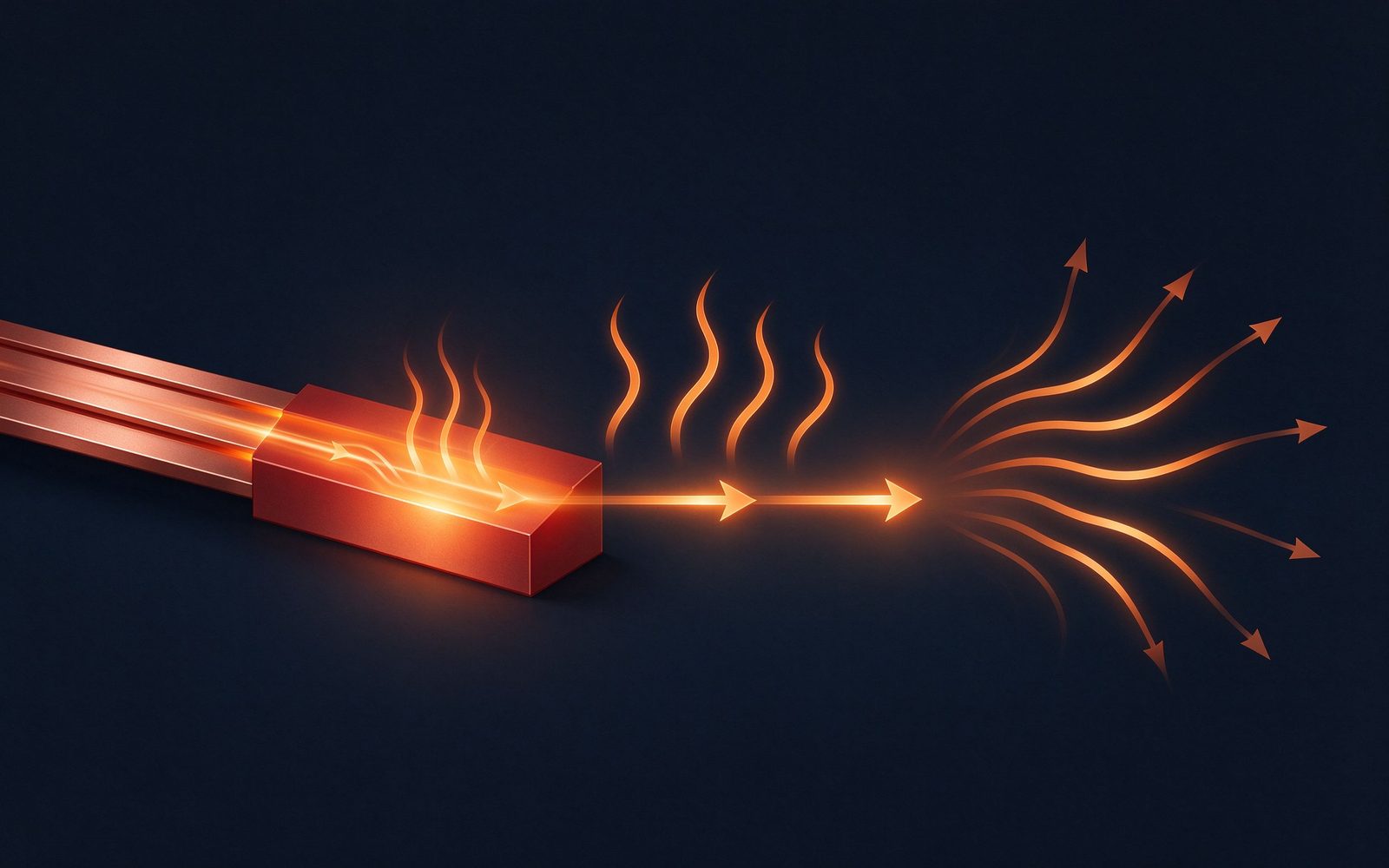
A busbar's rating is not a lookup — it is a calculation. Temperature rise is the real limi
Read article
A busbar's reliability is decided in the first 2 mm of the drawing: hole position, bend an
Read articleSend the current profile, voltage class and terminal types — our engineers reply within one business day.
Send drawings, current ratings and voltage class — DFM feedback and a quotation within one business day.