The laminated busbar market crossed the billion-dollar threshold just before 2026, and the forecasts published this year agree more than they disagree: the segment is compounding at 6-7% per year toward roughly USD 1.9 billion by 2035, while the high-power EV busbar slice alone is estimated near USD 1.45 billion in 2026. The interesting part is not the aggregate - it is where the growth is coming from: traction inverters and battery interconnects remain the base, grid storage has become the second engine, and megawatt-class charging is emerging as the third.
The laminated busbar market crossed the billion-dollar threshold just before 2026, and the forecasts published this year agree more than they disagree: the segment is compounding at 6-7% per year toward roughly USD 1.9 billion by 2035, while the high-power EV busbar slice alone is estimated near USD 1.45 billion in 2026. The interesting part is not the aggregate - it is where the growth is coming from: traction inverters and battery interconnects remain the base, grid storage has become the second engine, and megawatt-class charging is emerging as the third.
Market Research Future closes 2025 at USD 0.99 billion for laminated busbars and opens 2026 at USD 1.06 billion, climbing to USD 1.88 billion by 2035 at a 6.6% CAGR. Straits Research reports a similar 2026 value near USD 0.99 billion. The EV-focused slice behaves differently: Mobility Foresights estimates the high-power EV busbar market at approximately USD 1.45 billion in 2026, covering battery module interconnects, pack distribution, inverter power stages, power distribution units and on-board chargers. PW Consulting's EV laminated busbar study shows 2026 at roughly USD 1.22 billion, up from USD 1.01 billion in 2025.
These numbers are not contradictory - they use different scopes. The lesson for a buyer or a supplier is that the market splits into an EV core growing fastest, a storage and industrial body growing steadily, and a charging-infrastructure tail that is small today but compounding from a tiny base. Component suppliers therefore allocate engineering resources by segment growth rather than by aggregate market size.
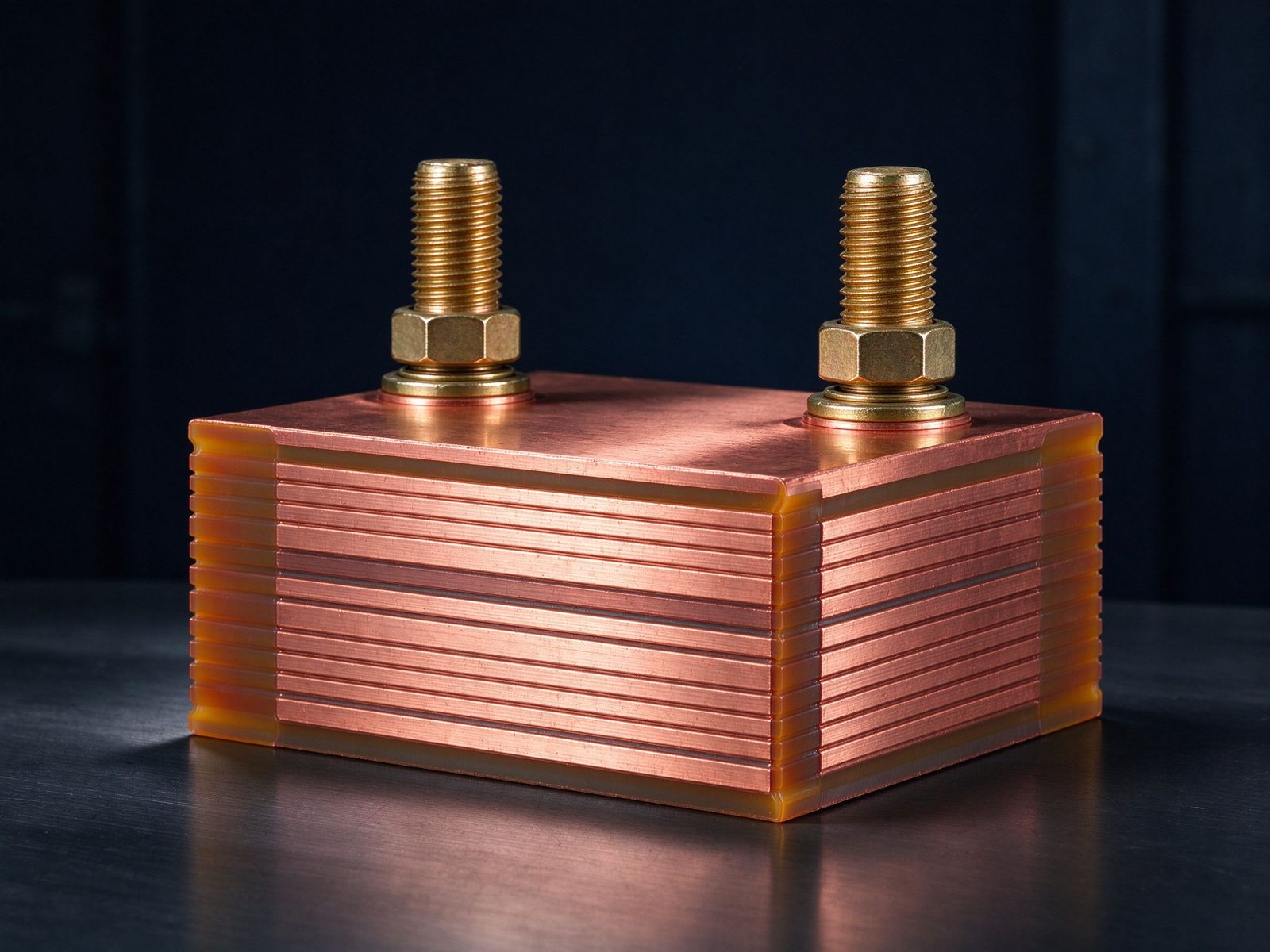
The EV share of the busbar market is driven by three structural factors that are still compounding in 2026. First, vehicle electrification itself: global EV sales keep climbing, and each electric vehicle contains laminated busbars in the battery pack, the inverter, the on-board charger and the power distribution unit. Second, pack architecture: cell-to-pack and cell-to-body designs move from module-level wiring to direct laminated interconnects, increasing busbar content per pack even as pack count matures. Third, voltage migration: 800 V platforms push insulation and PD requirements that favour engineered laminated stacks over simple bars.
China's EV laminated flexible busbar market is forecast to reach about USD 54 million in 2026, up 12.9% year on year, per industry analysis cited in 2026 reports - a useful reminder that even a single national sub-segment is large enough to sustain dedicated manufacturing capacity. For global suppliers, the combination of content-per-vehicle growth and market growth means the EV busbar business is expanding on both axes.
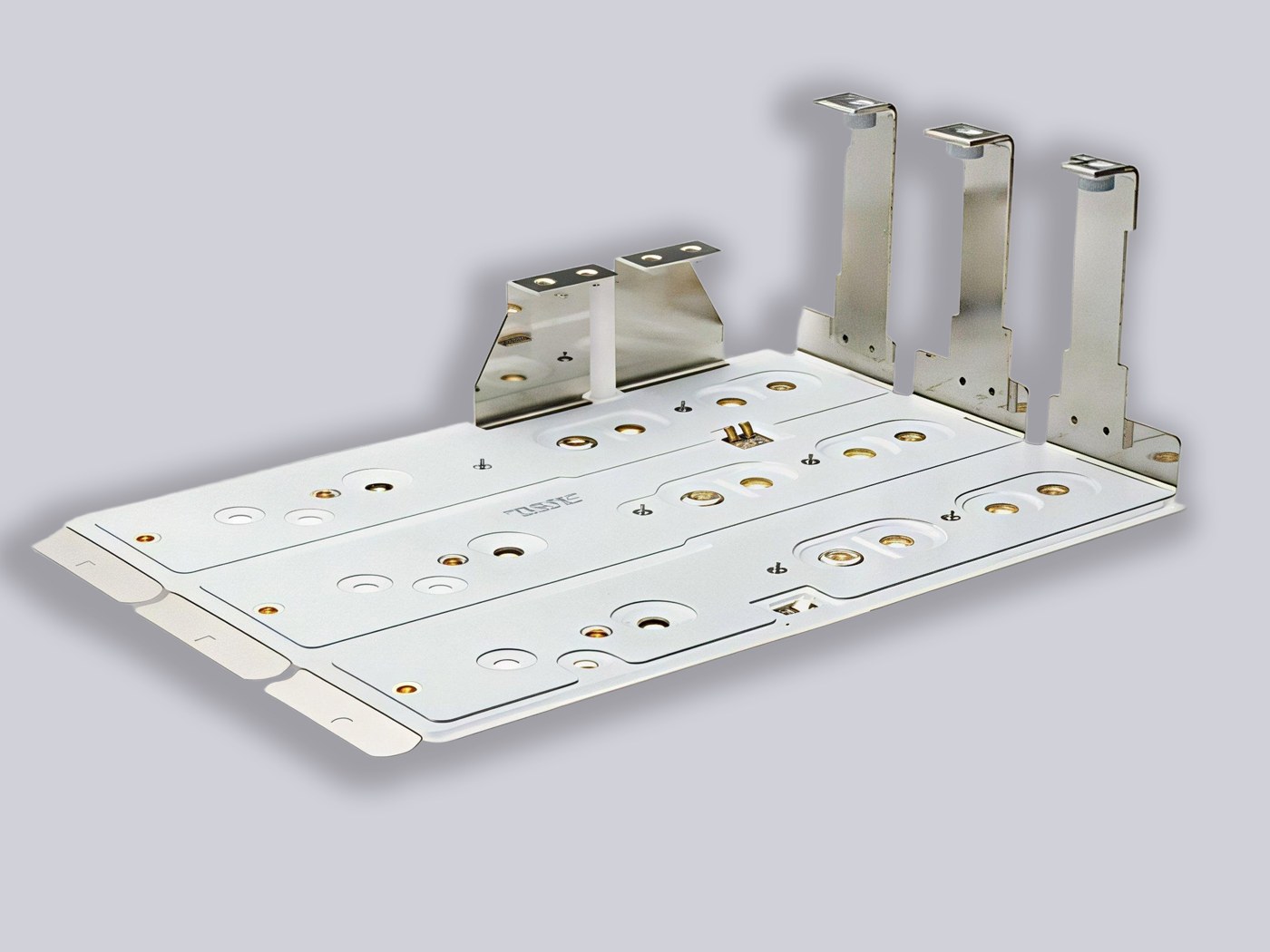
BloombergNEF's 2026 forecast of 188 GW / 535 GWh of new storage additions creates a second, industrial-scale demand pool for laminated busbars. Each gigawatt of storage needs hundreds of PCS modules and thousands of racks, and every PCS module carries a laminated DC link. The 1500 V architecture - and the emerging 2000 V platform - push those DC links toward verified low-inductance, PD-safe laminated assemblies rather than generic buswork.
The storage busbar is also a different commercial animal: it is sold on 20-year reliability assumptions, documented with PPAP-style test evidence, and procured by engineering teams who compare suppliers on test data rather than price alone. Suppliers with traction-grade quality systems are entering storage with a structural advantage. The overlap with the PCS and DC-link trends covered in this edition's storage article is direct.
Charging infrastructure is the smallest of the three engines in 2026 and the fastest compounding. The IEA reports more than 7 million public charging points worldwide at end-2025, with roughly 45% of new installations being fast or ultra-fast. Every ultra-fast charger is a power-electronics assembly with DC-link busbars; every megawatt-class MCS pedestal multiplies that content several times over. At 1 MW and 3,000 A class, the charging DC link is engineered with the same disciplines as a traction inverter - low inductance, liquid cooling interfaces, verified insulation - which is exactly the capability set of a laminated busbar specialist.
For market sizing, the charging tail is a call option: the busbar content per charging point is small, but the installed base is growing at double-digit rates and the power per point is climbing from 350 kW to 1 MW+. A decade of that compounding makes charging one of the largest busbar end-markets by 2035 - the same trajectory the EV inverter segment followed after 2018.
The busbar supply chain is regional in a way that matters for buyers. China hosts a dense cluster of laminated busbar manufacturers serving EV and storage OEMs with short lead times; Europe has strong capability in power electronics and industrial busbar systems; North America is building domestic capacity, partly catalysed by the IRA's more than USD 370 billion in energy incentives cited in market reports. The result is a fragmented supplier base with a few specialists at the top of each region - a structure that keeps pricing competitive and makes engineering capability the differentiator.
Buyers typically qualify two to three suppliers per program and use regional security of supply as a decision factor. For a manufacturer like SHANYUAN, operating from a 17,200 m² plant in Rizhao with 20+ export countries, the positioning is clear: serve global EV, storage and charging customers with the same laminated-busbar platform, differentiated on test evidence and custom design support rather than commodity pricing.
The next decade of busbar technology is being decided by the same forces that shape the power-electronics industry: higher voltage, higher power density, and thermal management as a first-class design variable. Expect to see broader adoption of liquid-cooled and cold-plate-attached busbar assemblies; dielectric systems engineered for discharge-free operation at 1500-2000 V; and integration - busbars absorbing capacitance, sensing and fuse functions into a single laminated part. The integration trend is already visible in power electronics laminated busbars that combine DC-link, gate-driver and distribution functions.
For suppliers, the roadmap implies heavier investment in testing capability (PD testers, thermal cycling chambers, hi-pot automation) and in design tools that predict inductance, temperature and field stress before the first prototype. Buyers should look for suppliers whose test reports demonstrate this capability, because it is the same capability that de-risks a 20-year storage warranty.
Laminated busbar manufacturing is a precision-stacking business, not a stamping business. The economics hinge on four capabilities: copper processing (cutting, stamping, plating), dielectric lamination (controlled temperature and pressure, void-free bonding), terminal joining (welding, stud attachment), and testing (hi-pot, PD, resistance, thermal cycling). Capital intensity is moderate, but engineering labour and test capacity dominate cost - which is why the market rewards specialists and why price competition is limited to commodity segments.
For buyers, the manufacturing economics explain two practical realities. First, prototype and low-volume parts are expensive relative to series parts because the engineering content does not scale with volume; engaging design support early reduces iterations. Second, test capacity is a genuine constraint: a supplier's PD tester and thermal cycling chambers are the real capacity limit, not the stamping press. When qualifying suppliers, ask about test equipment and throughput, not just capacity in tonnes of copper. The quality system page describes the testing pyramid SHANYUAN runs.
The laminated busbar market mixes global specialists (power-electronics focused manufacturers), regional producers serving local EV and industrial OEMs, and a long tail of metal-processing shops entering from stamping or cable backgrounds. The specialist advantage is test data and design depth: a PD-verified, low-inductance DC link is an engineered product, and the engineering is embedded in the stack-up, terminal map and test evidence rather than in the raw copper.
This is also why the market is consolidating around applications rather than commodities. Suppliers who can document 1500 V-class insulation coordination, thermal-cycling behaviour and PPAP-style traceability win the storage and charging programs; commodity suppliers compete for simple single-layer bars. SHANYUAN's position - a 17,200 m² plant, export to 20+ countries, and a product platform covering power electronics laminated busbars through battery busbars - sits on the engineering side of that divide.
Used this way, the 2026 reports converge on one clear message: the market is compounding at 6-7%, led by EV power electronics, with storage and charging adding the fastest growth rates from smaller bases.
The next five years will decide which suppliers own the high-value segments. Three positioning moves matter most. First, follow the voltage: capability at 800 V automotive, 1500 V storage and 1250 V charging platforms - including PD-verified insulation - becomes the qualification ticket for the fastest-growing programs. Second, follow the thermal: liquid-cooled and cold-plate-attached busbars move from specialty to mainstream as power density climbs, and suppliers with thermal design capability win the DC-link business. Third, follow the integration: busbars that absorb capacitance, sensing and protection functions reduce assembly cost for OEMs and raise the engineering barrier for competitors.
For buyers, the practical implication is to qualify suppliers against this roadmap: ask for PD test evidence, thermal simulation capability and integrated-assembly examples, not just unit price. The custom design service is the usual starting point for that evaluation, and the design guide provides the technical baseline for comparing proposals.
The EV busbar slice - the fastest-growing part of the market - decomposes into five sub-applications with distinct component requirements. Battery module interconnects: thin, high-density links carrying cell current with welded or bolted terminals, volume-driven and cost-sensitive. Pack distribution: the laminated assembly that sums module currents and feeds the contactor and fuse bus, rated for pack current with integrated sensing. Inverter power stage: the DC-link busbar between the DC bus and the IGBT/SiC bridge, where low inductance is the design driver. Power distribution unit (PDU): the central junction for loads, integrating fuses, contactors and current sensors on one laminated part. On-board charger: the AC/DC and DC/DC links, where isolation and EMI discipline matter more than raw ampacity.
Each sub-application is a different commercial conversation. The inverter DC link is sold on inductance and PD test data; the module interconnect is sold on process yield and cost per joint; the PDU is sold on integration and design service. A supplier covering all five - as SHANYUAN does with battery busbar, power electronics busbar and custom product lines - participates in the full EV slice rather than one corner of it.
The regional structure of busbar production is shifting under policy pressure. Market reports cite the US Inflation Reduction Act's more than USD 370 billion in energy incentives as a catalyst for domestic EV and storage supply chains, which is pulling busbar capacity toward North America alongside the existing clusters in China and Europe. For a buyer, the practical consequences are: more qualifying options regionally, different lead-time and tariff profiles, and a stronger argument for multi-source qualification with geographic redundancy.
For a manufacturer, the shift rewards exporters who can serve multiple regions from one engineering platform. SHANYUAN ships to 20+ countries from its 17,200 m² Rizhao plant, and the contact page is where regional procurement teams typically start the qualification conversation - the design guide and quality system pages provide the documentation baseline they ask for.
The 6-7% CAGR view through 2030 rests on drivers that are individually robust: EV penetration (and busbar content per vehicle rising with cell-to-pack and 800 V architectures), grid storage build-out (BNEF's 188 GW forecast for 2026 and 308 GW by 2036), and charging infrastructure power density (from 350 kW to megawatt class). The risks are equally specific: copper price volatility, which shifts both material cost and the aluminium-substitution argument; trade policy and tariffs, which reshuffle regional supply chains; and technology substitution - though no credible alternative to copper-laminated interconnects has emerged for high-current DC links, the relative share of welded versus bolted versus flexible interconnects will keep moving.
For planning purposes the message is stable: the market is growing, the content per system is growing, and the engineering requirements are tightening. A buyer or supplier that designs for 1500 V-plus insulation, thermal integration and test documentation is positioned on the right side of every driver and most of the risks. The copper supply outlook and the day's storage article cover the two most visible variables.
Market reports put the global market at roughly USD 0.99-1.06 billion in 2026, heading toward USD 1.88 billion by 2035 at a 6-7% CAGR.
The EV segment (estimated near USD 1.45 billion for high-power EV busbars in 2026), with grid storage and megawatt charging compounding fastest from smaller bases.
Cell-to-pack architectures, 800 V platforms and the spread of power electronics into every EV subsystem all increase laminated busbar content per vehicle.
Qualify on engineering capability and test evidence - ampacity method, PD data, thermal cycling - and use regional diversification for supply security.
Pair the market view with the technical articles in this edition: megawatt charging, storage PCS DC links, and the engineering guides on insulation testing, thermal management and welding and joining.
Read together, the 2026 market picture is one of healthy, engineering-driven growth: the billion-dollar base is real, the EV core is compounding fastest, storage adds a second industrial engine, and megawatt charging provides the call option on the next decade.
With those dynamics, the 2026 report card for laminated busbars is straightforward: a billion-dollar market growing on engineering content, where the winners are the specialists who combine manufacturing scale with test evidence and design depth.
For suppliers and buyers alike, the practical takeaway is the same: the market rewards documented engineering, and the qualification conversation starts with test evidence, design depth and regional supply security.
Forecasters, buyers and suppliers all land on the same conclusion: laminated busbars have become a foundational component of the electrification economy, and 2026 is the year the market's engineering character became its defining feature.
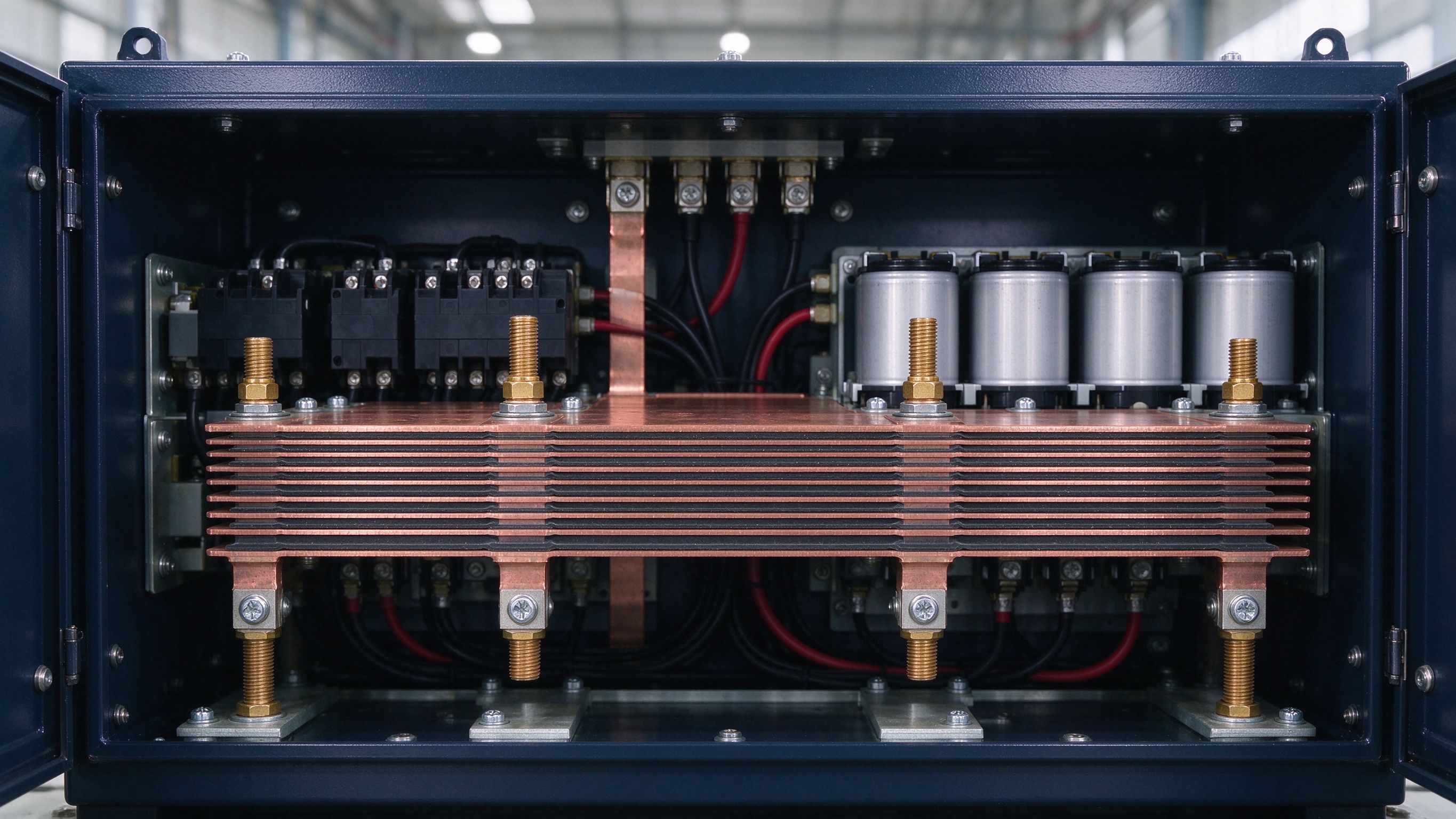
MCS moves from pilot to fleet scale in 2026: 1 MW+ charging at 1250 V and up to 3000 A mak
Read article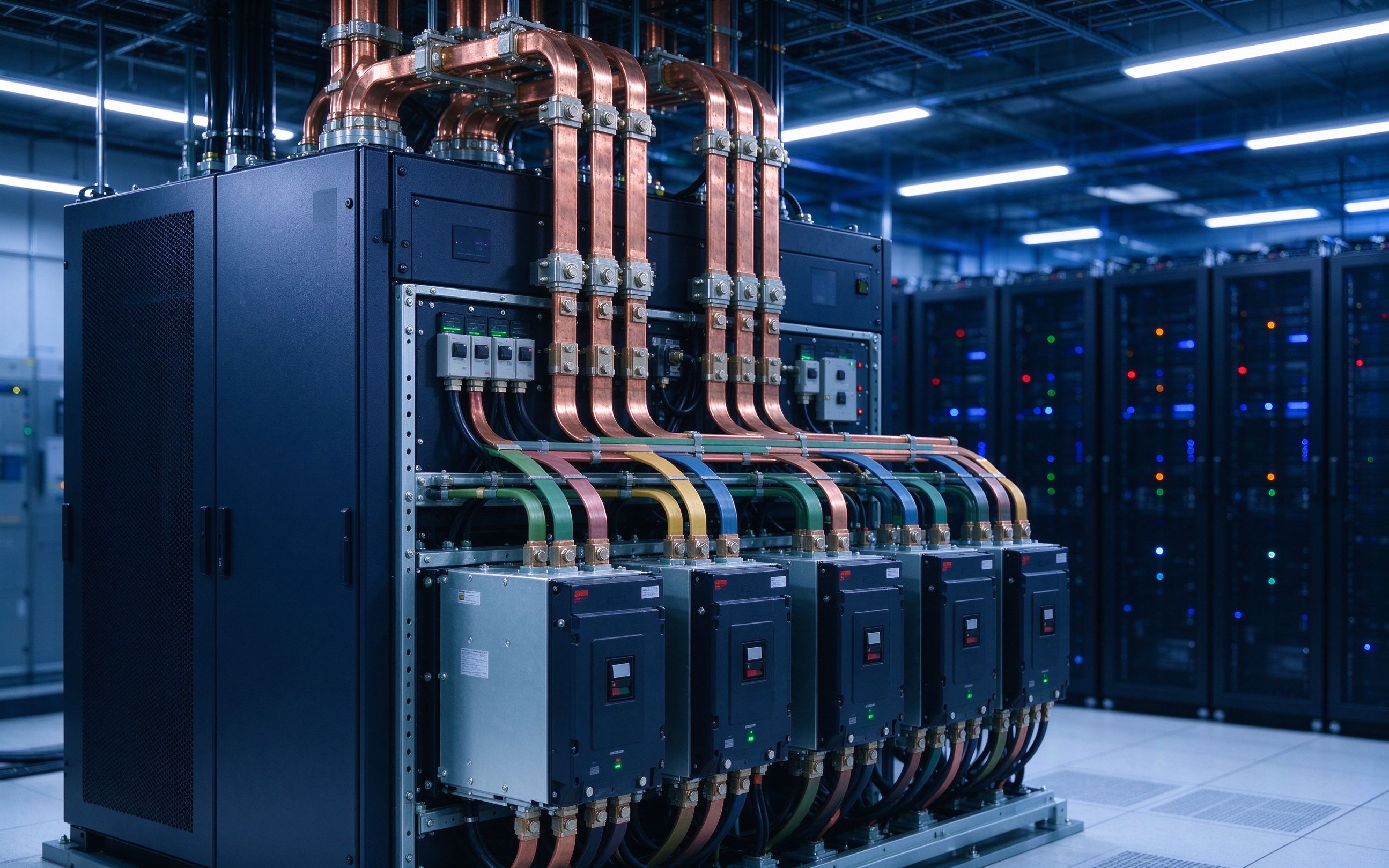
BloombergNEF sees 158-188 GW of new energy storage in 2026. PCS platforms are climbing fro
Read article
Insulation testing answers four questions: does it withstand rated voltage, does it discha
Read articleSend the current profile, voltage class and terminal types — our engineers reply within one business day.
Send drawings, current ratings and voltage class — DFM feedback and a quotation within one business day.