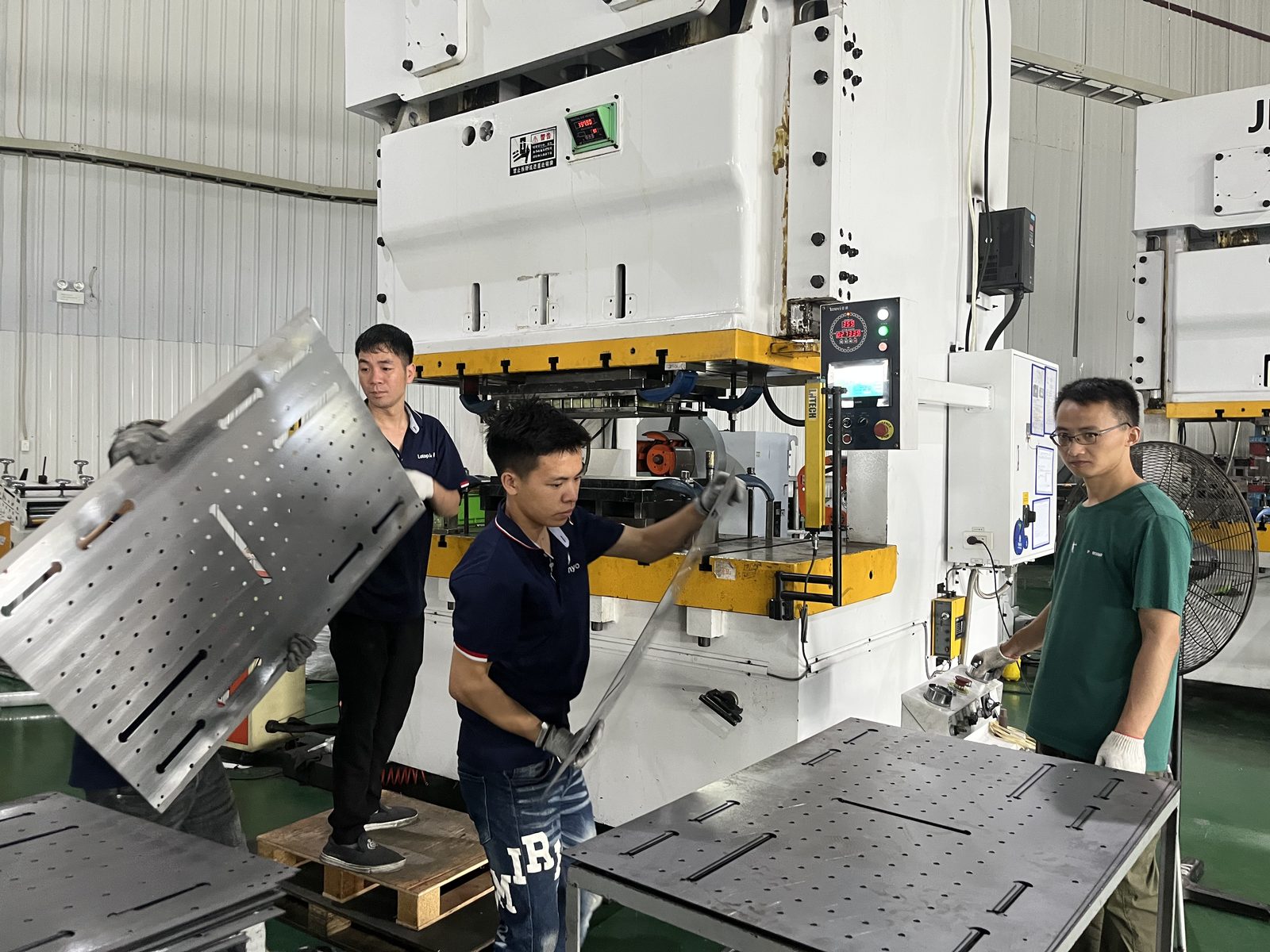
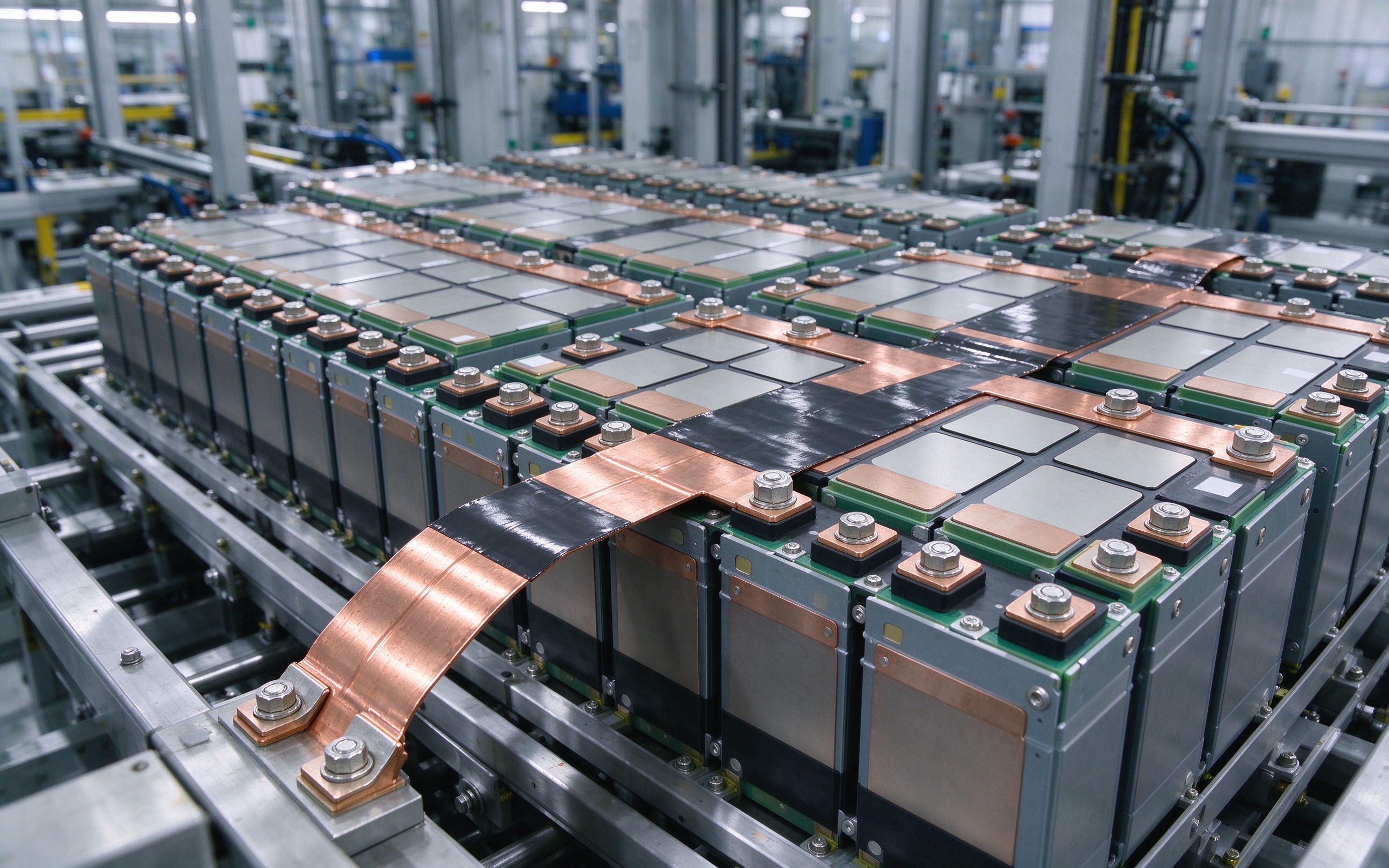
Electric vehicle battery packs run at 400–800 V and hundreds of amps. Laminated busbars keep those connections compact, low-inductance and reliable.
The four places busbars carry current in this application.
Mehrlagen-Laminate, die Zellgruppen parallel und in Serie verbinden.
Gepaarte Bolzenanschlüsse für konsistente Messpunkte der Zellüberwachung.
Hochstrom-Links zum Schützkasten und zum Leistungsverteilmodul.
Dünne Laminate mit integrierten Sicherheitselementen für Zellausgleichspfade.
Niederinduktive laminierte Verbindungen zwischen der Hochvoltbatterie und der DC/DC-Wandlerstufe.
Integrierte abgesicherte Links an der Pack-Servicetrennstelle für sichere Wartungstrennung.
Die Wahl des Dielektrikums richtet sich nach der Plattform-Spannungsklasse – nennen Sie uns 400 V oder 800 V bereits bei der Angebotsanfrage.
Der Leiterquerschnitt wird nach Dauer- und Spitzenstrom dimensioniert, nicht allein nach dem Nennstrom auf dem Typenschild.
Die Anschlüsse werden auf die Modulbolzen, Schütze und die zugehörige Verschaltung abgestimmt.
Thermalwechsel- und Schwingungsprofile werden vor dem Werkzeugbau geprüft.
Koppelt Ihr Traktionswechselrichter den DC-Zwischenkreis mit integrierten DC-link-Kondensatoren, teilen Sie uns den Kondensatoraufbau mit – der Kommutierungskreis wird darauf ausgelegt.
Sammelschienensysteme und Bolzenanschlüsse werden gemeinsam mit dem Batteriepack-Layout entworfen – M6/M8-Bolzen, geschweißte Laschen oder Steckverbindungen, abgestimmt auf das Stromprofil des Packs.
Electrification of the powertrain — from mild hybrid to full battery-electric vehicles — keeps adding electrical functions, which drives higher power demand. The main traction inverter must minimize switching losses and maximize thermal efficiency, because vehicle range is tied directly to inverter efficiency. Battery packs now run at 400–800 V and hundreds of amps, and the laminated busbar is the customized electrical link between the battery DC source and the power module stack in the inverter and DC/DC converter: the low-inductance DC-link backbone.
At pack and module level, laminated busbars provide the mechanical support, electrical interconnection and environmental interface between the energy source and the power electronics. Module-to-module links commonly use matched copper battery link busbar pairs — tin-plated, edge-sealed and tooled to repeat across every module in the pack; at cell level, power plus sense lines ride on one hybrid piece suited to prismatic and cylindrical cells — one piece per module cuts installation time and eliminates wiring errors. The under-hood environment makes long-term reliability under harsh conditions and vibration resistance mandatory, the same vibration-and-thermal-cycling discipline we apply to aerospace busbars built for airborne platforms.
The switching-speed trend toward SiC devices keeps raising the bar for loop inductance, and designs that integrate the inverter, DC/DC converter and ECU into one unit rely on the busbar to keep size, weight and cost down. In the 100–500 A band, reference designs turn to thick-copper hybrid construction (400–800 µm copper) where a normal PCB cannot carry current and a standard laminated bar is not wave-solderable in high volume. Standard insulation runs 105 °C continuous; high-temperature dielectric options reach 130 °C for designs that must push more current through the same copper section.
Compared with a hand-built cable harness, a tooled laminated assembly arrives with every connection pre-positioned — the trade-offs are the same ones we lay out in our notes on busbar vs cable harness decisions. Pack and module links across our battery busbars line, plus the DC/DC and traction links we cover alongside inverter busbars, give one accountable partner from pack to powertrain. Every pack-level bar ships with lot-by-lot hipot, continuity and dimensional test records your battery audit can trace. Send us the pack voltage and module layout — DFM review within one business day.
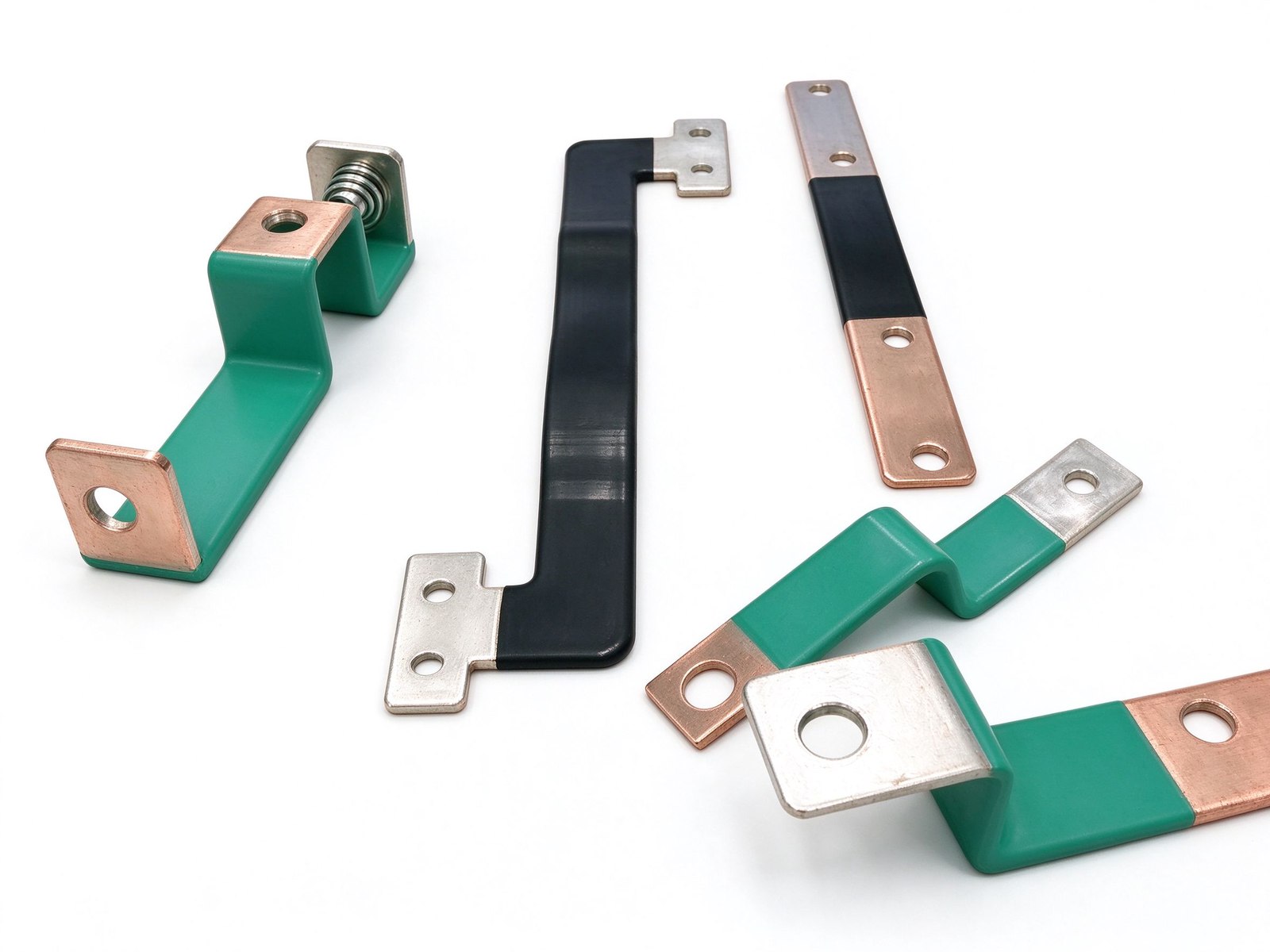
The part this application is built around — a SHANYUAN laminated busbar, factory direct.
Referenzfotos aus der SHANYUAN-Produktion und von versandten Baugruppen.
Ausgewählte Hinweise und Produktseiten, die die Design-Entscheidungen dieser Seite stützen.
Passende Stromschienen-Familien, die das Stromprofil dieser Anwendung tragen.
Abgestimmtes Paar Kupfer-Verbindungsstromschienen mit Montagefahnen für die Serien- und Parallelschaltung von
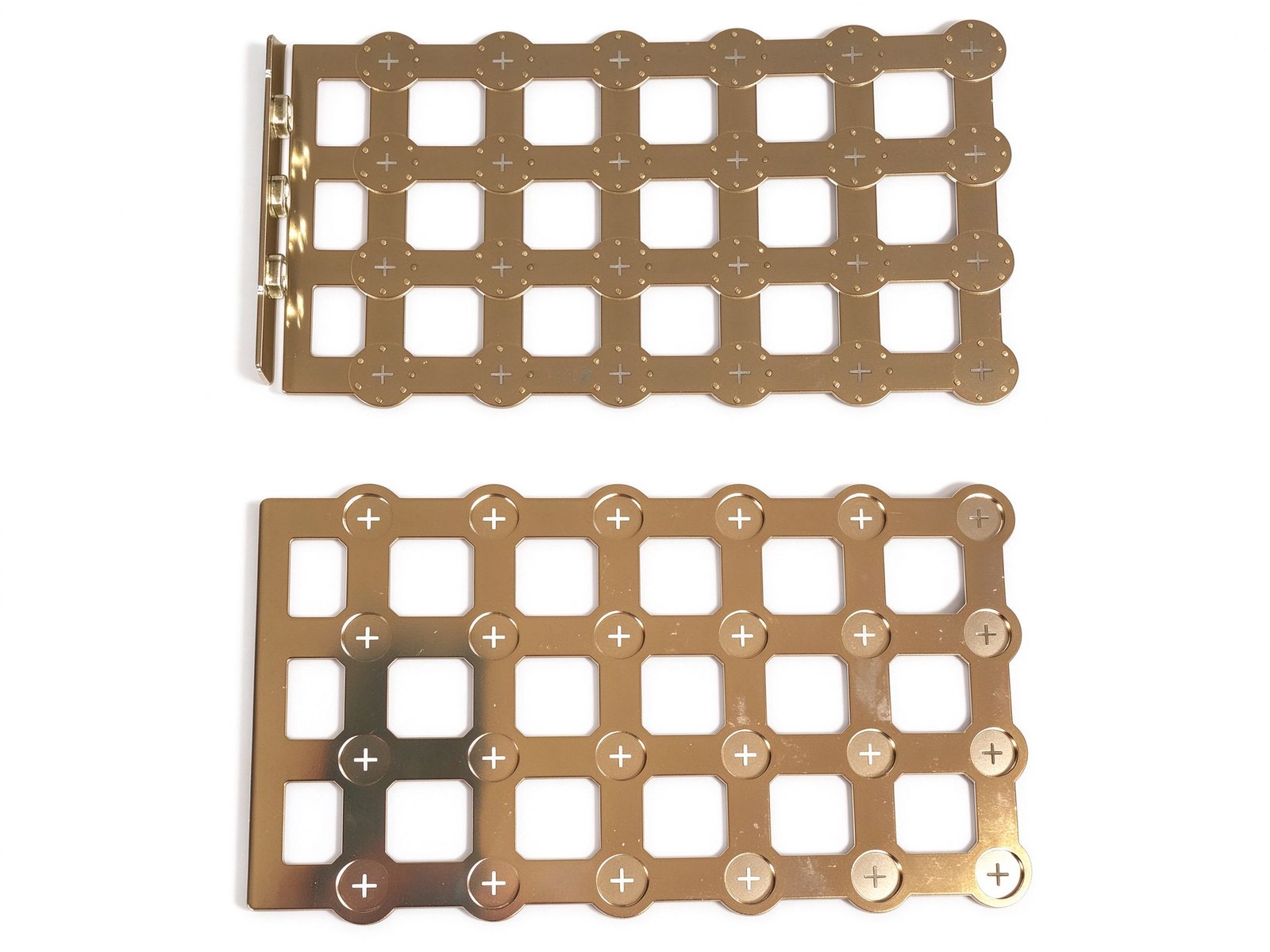
BMS-Stromschiene, die Leistungs- und Spannungsmessebenen mit Kupfer-Anschlussbolzen kombiniert.
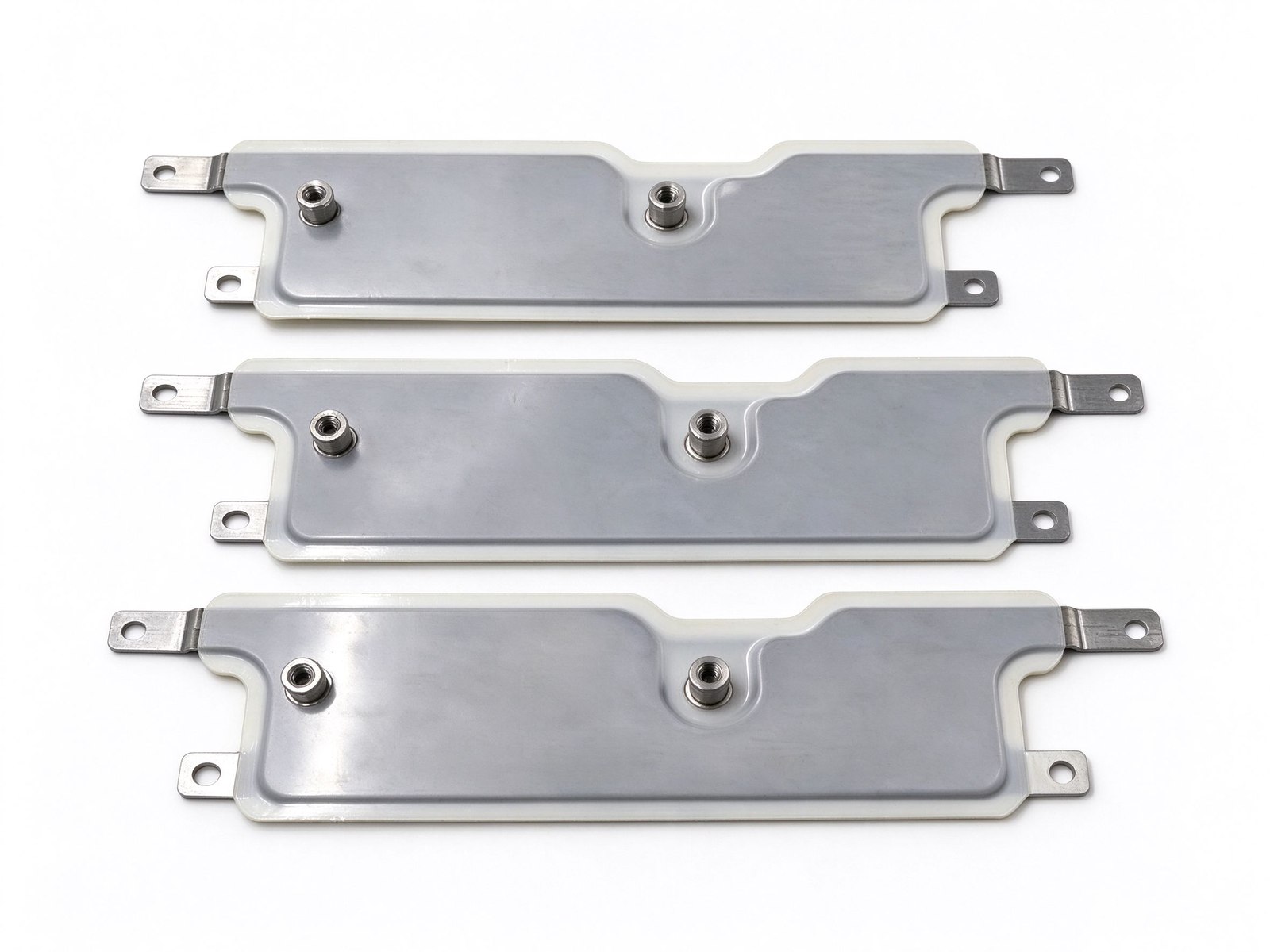
Mehrlagig isolierte laminierte Stromschiene mit gemischten Anschlussarten für komplexe Verteil-Layouts.
Von der Spezifikationsprüfung bis zu versandten, geprüften Teilen – ein verantwortlicher Lieferant.
| Material | Standard options |
|---|---|
| Conductors | C11000 copper as standard; aluminum available on request |
| Dielectrics | PET, Nomex and epoxy (DLF) films, selected by voltage class and operating temperature |
| Plating | Tin finish for corrosion protection and joint solderability |
Aufbau, Dielektrikum-Auswahl und Grundlagen der Stromtragfähigkeit.
Design-Leitfaden lesenVoltage class, current profile and terminal types — we will share reference configurations and DFM guidance.
Klare Antworten vom Engineering-Team.
Send the application, voltage class and current profile — we will share reference configurations and DFM guidance.