Mo–Fr 9:00–18:00 · MEZ (UTC+1) · Shandong, China
Custom Design Service

Built to Your Drawing

Send a drawing or specification — our engineers review it for manufacturability, quote it, and deliver tooled, tested laminated busbars. Every dimension, terminal and dielectric is configurable.

Warum kundenspezifisch zählt

Jede Stromschiene hat ihre eigene Geometrie

Eine laminierte Stromschiene wird um Ihr Gehäuse, Ihre Anschlüsse und Ihre Stromschleife herum konstruiert. Standardware erzwingt Kompromisse; eine kundenspezifische Stromschiene ist so getoolt, dass Schichtzahl, Leiterbreite, Dielektrikumdicke und Anschlusspositionen exakt Ihrer Zeichnung entsprechen – ein Teil, null Nacharbeit.
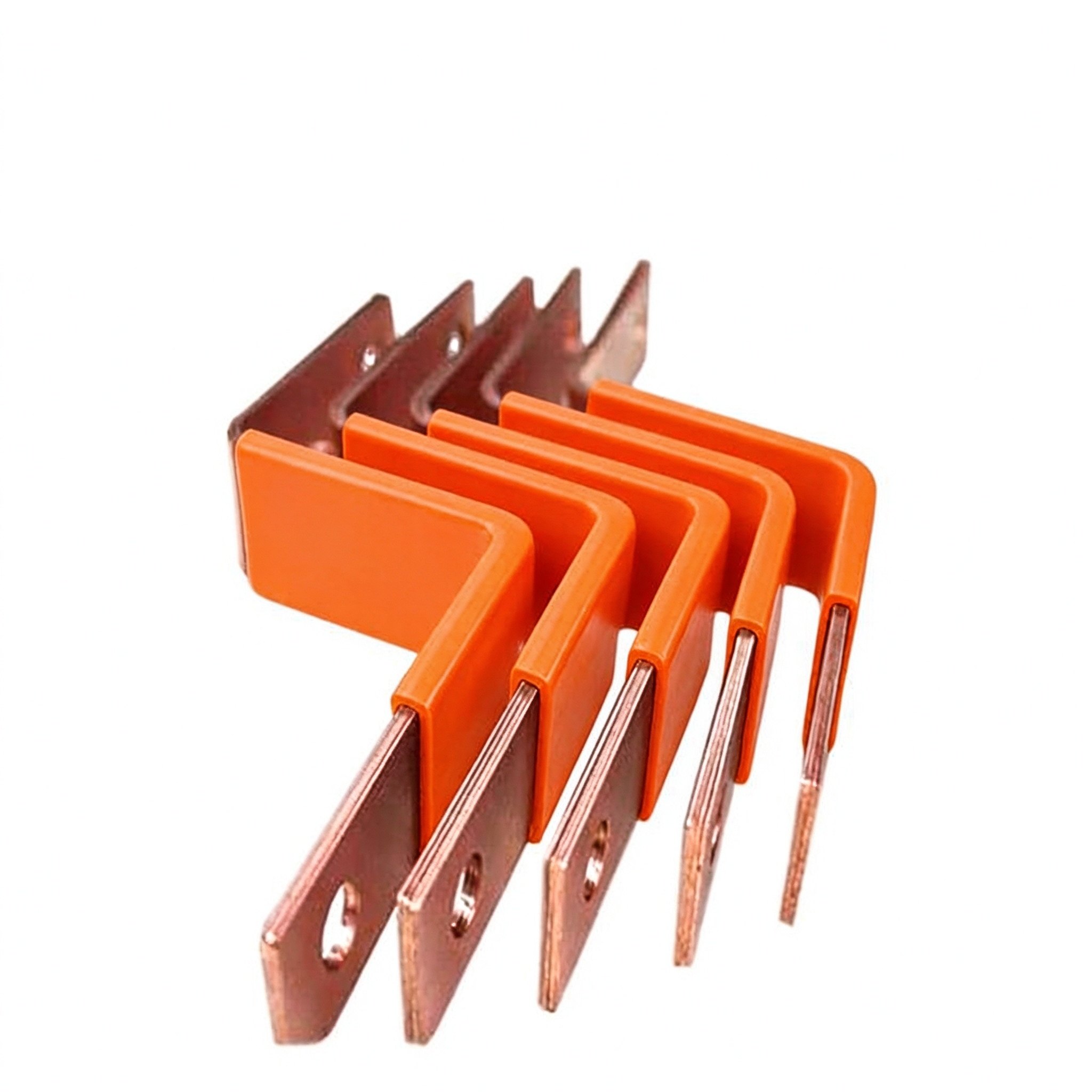
  • Layer stack matched to your voltage class and continuous current
  • Terminal positions tooled to your module and enclosure
  • Low-inductance layouts for IGBT, SiC and capacitor circuits
  • One DFM-reviewed part replaces dozens of cables and lugs
Custom laminated busbar engineered to the customer's drawing
Jedes Maß ist konfigurierbar

Acht Bereiche, die wir nach Ihrer Zeichnung konstruieren

Conductor Layers

1 to 6+ conductors in one insulated stack, tuned to your current path.

Conductor Material

C11000 copper as standard; aluminum available on request.

Dielectric Films

PET, Nomex or epoxy (DLF) selected by voltage class and temperature.

Surface Plating

Tin as standard for corrosion resistance and solderability.

Terminals

M6/M8 studs, blade tabs, screw and welded terminals, fused links.

Geometry & Tolerances

Length, width, thickness, cut-outs and terminal windows to your drawing.

Mounting Hardware

Integrated brackets, standoffs, edge seals and bolt-down ears.

Testing & Documentation

Hipot, insulation, continuity, dimensional records, CoC and PPAP.

Kundenspezifische Stromschienen-Spezifikationen

Der Bereich, auf den wir konstruieren

ParameterRange / Option
Conductor layers1 – 6+ (custom stack-ups)
Conductor materialC11000 copper (standard), aluminum on request
PlatingTin (standard); alternative finishes by request
DielectricsPET, Nomex, epoxy (DLF) — selected by voltage class
Voltage class48 V to 1,200 V+ per your insulation coordination
Rated currentUp to ~1000 A per design (see ampacity chart)
Terminal typesM6/M8 threaded studs, blade tabs, screw, welded, fused links
Temperature rise30 °C reference; derated for ambient and enclosure
MountingIntegrated brackets, standoffs, edge seals
DocumentationCoC, test records, PPAP-style on request

Reference values are design starting points. Final specifications are defined in the quotation and released drawing for your project. See the busbar ampacity chart for current ratings and derating factors.

How Custom Projects Run

Six steps, one accountable supplier

Send RequirementDrawing (PDF/DXF), current rating, layers, terminals, quantity
DFM ReviewEngineers flag edge distances, weld zones, dielectric clearances
QuotationTechnical and commercial quote within one business day
Sample BuildPrototypes for fit and electrical verification
ProductionTooled, controlled process with documented QC per lot
DeliveryPacked to your requirements, test records on request
Bauen Sie Ihre kundenspezifische Stromschiene

Ein geführter Spezifikationsbogen

Tragen Sie ein, was Sie wissen – den Rest überlassen Sie unseren Ingenieuren. Ihre Auswahl wird zu einer strukturierten Anfrage zusammengestellt und öffnet WhatsApp oder E-Mail vorausgefüllt. Kein Konto, kein Download nötig.

01 Product Family
02 Electrical Specification
03 Materials
04 Geometry & Dimensions (mm)
05 Terminals & Mounting
06 Environment & Application
07 Volume & Delivery
08 Quality & Documentation

Required testing (select all that apply)

Documentation (select all that apply)

09 Contact Details
Email Instead

Your specification is delivered straight to our engineering team and recorded in our inquiry system. Prefer WhatsApp? Use the secondary button — it opens a pre-filled chat. For drawings, email busbar@shanyo.com with your PDF/DXF reference.

Design-Support inklusive

Über das Angebot hinaus

A

Stack-up advice

Layer count recommendations for your voltage class and current.

B

Dielectric guidance

Thermal class vs. dielectric strength, matched to your environment.

C

Terminal review

Placement checked against your enclosure and mating parts.

D

Inductance layout

Inductance-oriented layout advice for switching circuits.

Design für Fertigbarkeit

Früh erkannt, günstig behoben

Bevor Werkzeuge geschnitten werden, führen unsere Ingenieure eine DFM-Prüfung Ihrer Zeichnung durch – Schichtzahl, Strompfade, Anschlussabstände, Kantenabstände und Dielektrikum-Spielräume. Eine knappe Kantenentfernung oder eine zu kleine Schweißzone ist in dieser Phase weit günstiger zu beheben als in der Produktion.

01

Layer count

Stack-up validated against voltage class and current.

02

Current paths

Cross-sections checked against continuous and peak current.

03

Terminal spacing

Pitch and weld zones matched to mating hardware.

04

Edge distances

Creepage and dielectric clearances verified before tooling.

Beyond the Bar: Integrated Subassemblies as One Delivered Part

The direction in high-current programs is that OEMs increasingly buy the laminated busbar not as a loose part but as part of a delivered subsystem — busbar plus connectors, flexible jumpers and cooling hardware integrated into one assembly. Reference market examples of this move are battery disconnect units (BDUs) for electrified powertrains and packaged power-conversion assemblies, where the supplier count shrinks and the line build becomes a drop-in installation rather than a harness build. For a custom laminated busbar design shop, this is the natural upward extension: the bar is already the backbone of the cabinet, so carrying terminals, jumpers and brackets along with it changes little at the drawing stage and a great deal on the customer’s floor.

The co-design principle behind it is that the busbar and its connector land are engineered together, not retrofitted. Industry datasheets specify the bar cross-section at every contact — for example a 38.1 × 4.8 mm copper land with an M6 thread at one frame size, and a 25.4 × 3.2 mm blade at another — and poles are paralleled in a single housing when a single contact cannot carry the current. Specifying the bar around the contact geometry is what makes blind-mate, hot-pluggable and service-friendly interfaces possible at all.

Four transferable design principles recur across this family of work:

  • Multi-finger parallel contact beams — many small contact junctions in parallel instead of one high-force joint: lower insertion force, lower contact resistance, lower temperature rise and long cycle life.
  • Open-side clip construction — taps anywhere along the bar, hot-pluggable under load, so modules can be swapped without rewiring.
  • Laminated, stacked conductors — low inductance, minimal voltage drop and controlled partial discharge in a compact envelope.
  • Modular rail concept — full power available at any tap position, n+1 redundant feeds, lengths built up from modular sections.

When the joint itself moves — vibration, thermal expansion between module and bar — a flexible laminated jumper between rigid ends carries the motion without fatiguing the bolted joint, as explained in flexible laminated busbars. Whether you start from a drawing or from a current-path sketch, our DFM review turns the same principles against your layout; the process is outlined in the laminated busbar design guide, and reference stacked builds are shown under multi-layer insulated busbars.

Kundenspezifische Stromschienen-Anwendungen

Wo maßgefertigte Stromschienen ihren Werkzeugbau rechtfertigen

EV- & Hybridplattformen

Modulverbindungen, BMS-Sensorabgriffe und Pack-Links für 400–800-V-Architekturen.

Energiespeicher

Rack- und Strang-DC-Verbindungen für Versorgungs-, C&I- und Heimspeicher.

Wechselrichter & USV

Niederinduktive DC-Links und IGBT-Phasenverbindungen für die Energiewandlung.

Industrieantriebe

Phasen- und DC-Zwischenkreis-Laminate für Frequenz- und Servoantriebe.

Stromversorgungen

Kondensatorbank-Verbindungen und Gleichrichter-Stromschienen für AC-DC-Wandlung.

Rechenzentrums-Stromversorgung

Hochstromverteilung für Racks, Stromschienen und Notstrom.

13+Jahre seit 2012
1–6+Leiterlagen
~1000 ANennstrom
1 TagTechnische Antwort
FAQ

Häufig gestellte Fragen

Klare Antworten vom Engineering-Team.

Welche Informationen benötigen Sie für ein Angebot für eine laminierte Stromschiene?
Eine Zeichnung (PDF oder DXF) oder ein Foto eines bestehenden Musters, die geforderte Nennstromstärke und Spannungsklasse, die Anzahl der Leiterlagen, die Anschlussarten, die geplante Jahresstückzahl sowie die Anwendung. Bei einer vollständigen Spezifikation antwortet unser Ingenieurteam in der Regel innerhalb eines Werktags.
Wie viele Leiterlagen können Sie aufbauen?
Wir fertigen kundenspezifische Stapel aus 1 bis 6+ Lagen. Lagenanzahl, Anschlusslayout und Montagekonfiguration werden vollständig durch Ihre Zeichnung definiert und vor dem Werkzeugbau im DFM geprüft.
Können Sie Dokumentation für unser Qualitätssystem bereitstellen?
Maßliche und elektrische Prüfprotokolle werden je Los geführt. Falls Ihr Qualitätssystem CoCs, bestimmte Formate oder eine PPAP-typische Dokumentation erfordert, teilen Sie uns dies bereits in der Angebotsphase mit – wir stimmen die Unterlagen auf Ihre Anforderungen ab.
Wo werden Ihre Produkte gefertigt?
Alle Stromschienen werden in unserem eigenen Werk in der Provinz Shandong, China, entwickelt, werkzeuggebunden gefertigt und produziert – ein verantwortlicher Engineering-Partner von der Zeichnung bis zum gelieferten Bauteil.
Wie ist Ihre typische Lieferzeit für Serienaufträge?
Muster werden innerhalb von 5–7 Werktagen versendet. Werkzeuggebundene Serienläufe dauern nach Musterfreigabe typischerweise 2–3 Wochen, je nach Stückzahl und Stapelkomplexität. Mit jedem Angebot bestätigen wir einen festen Termin.
Welches Qualitätssystem wenden Sie an?
Die Produktion folgt einer dokumentierten Prozesskette mit Chargenprotokollen: Wareneingangsprüfung, Maßkontrolle, hipot- und Isolationsprüfung, Durchgangsprüfung sowie abschließende Sichtprüfung. Prüfprotokolle werden je Los auf Anfrage ausgestellt.
Können Stromschienen mit vormontierten Anschlüssen, Bolzen oder Verbindern geliefert werden?
Ja. Bolzen, Messeranschlüsse, Schaltelemente und Verbinder-Sets können im Werk geschweißt oder montiert werden, sodass Sie einbaufertige Bauteile passend zu Ihrem Montageprozess erhalten.
Unterstützen Sie internationalen Versand und internationale Verpackung?
Ja. Die Bauteile werden mit Kantenschutz, antistatischer Folie und exportgerechten Kartons entsprechend Ihren Handling-Anforderungen verpackt und auf dem See- oder Luftweg versendet. Handelsdokumente (Rechnung, Packliste, Prüfprotokolle) liegen jeder Sendung bei.

Start your custom project today

Drawing or not — send the requirement and we will advise on the configuration.