Mo–Fr 9:00–18:00 · MEZ (UTC+1) · Shandong, China
Quality & Testing

Built, Inspected and Documented

Laminated busbar quality is determined long before the first electrical test — it is built into the layup, the lamination window and the terminal welding.

Manufacturing Process

Eight controlled steps from copper sheet to tested part

Material PreparationCopper (C11000) or aluminum inspected for thickness tolerance
Punching & Laser CuttingConductor profiles, holes and windows cut to drawing
Surface FinishingTin plating for corrosion resistance and joint solderability
Dielectric LayupPET, Nomex or epoxy films by voltage class
LaminationHeat and pressure held to recipe; dielectric thickness in tolerance
Edge SealingExposed dielectric layers cannot creep or arc
Terminal AssemblyStuds, blade tabs and fused links welded in position
CNC Trim & InspectionFinal dimensional verification against the released drawing
Eingangsmaterialien

Was in den Aufbau einfließt

MaterialStandard options
ConductorsC11000 copper as standard; aluminum available on request
DielectricsPET, Nomex and epoxy (DLF) films, selected by voltage class and operating temperature
PlatingTin finish for corrosion protection and joint solderability
13+Jahre seit 2012
1–6+Leiterlagen
~1000 ANennstrom
1 TagTechnische Antwort
Prüfung & Inspektion

Jede Produktionscharge vor dem Versand verifiziert

Dielectric Withstand (Hipot)

Per customer specification and applicable standard.

Insulation Resistance

Measured on sampled parts per lot.

Dimensional Inspection

Terminal positions, hole sizes and envelope vs drawing.

Visual Inspection

Plating coverage, edge sealing and weld quality.

Continuity Check

Electrical verification of each conductor path.

Dokumentation

Prüfprotokolle, die Sie auditieren können

Maß- und elektrische Prüfaufzeichnungen werden je Produktionscharge geführt und können der Lieferung auf Anfrage beiliegen.
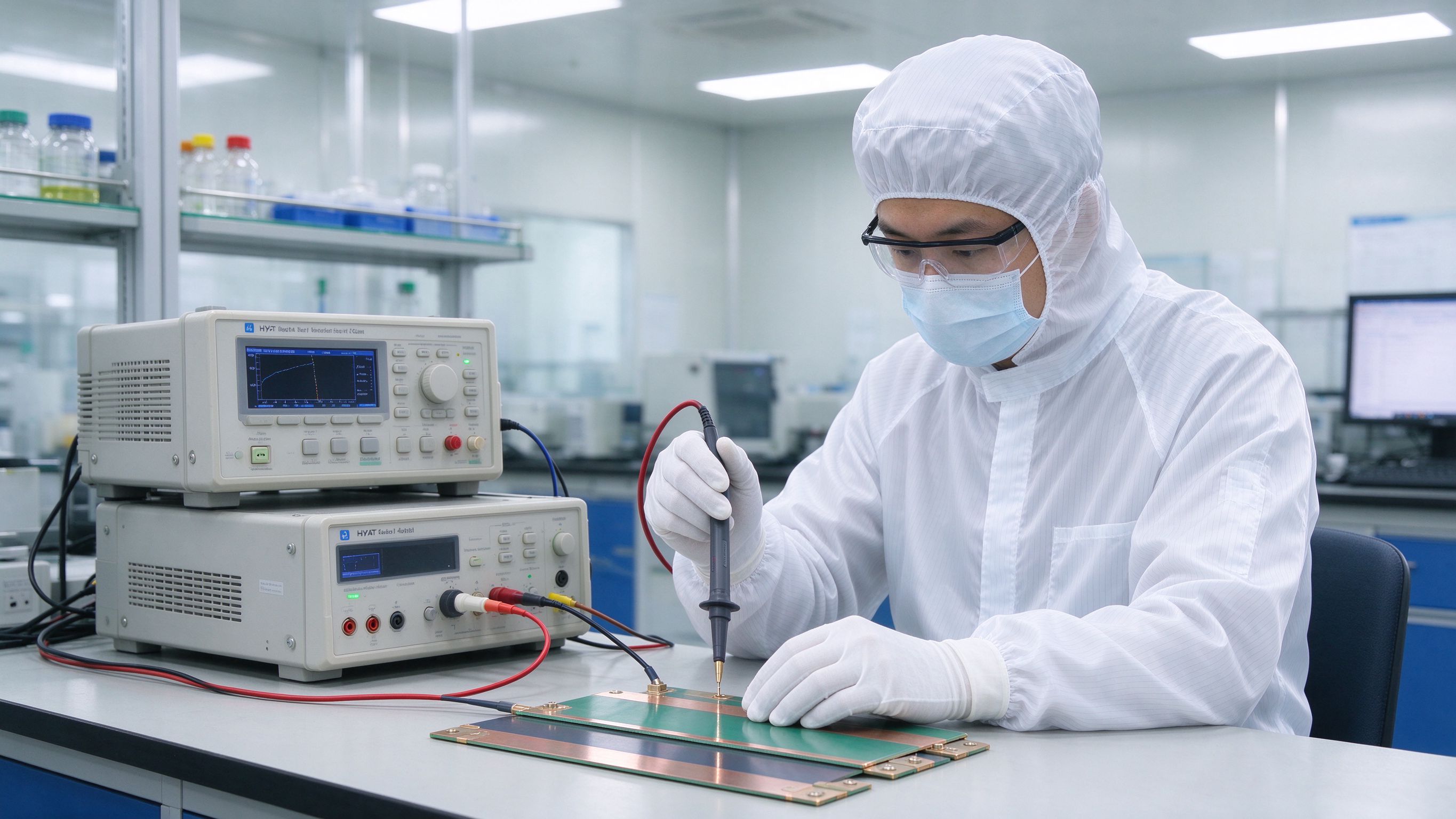
  • Batch test records per production lot
  • Certificates of Conformance (CoC) on request
  • PPAP-style documentation aligned at quotation
  • Test records aligned with your quality system
Inspection and test bench
Design für Fertigbarkeit

Früh erkannt, günstig behoben

Bevor Werkzeuge geschnitten werden, führen unsere Ingenieure eine DFM-Prüfung Ihrer Zeichnung durch – Schichtzahl, Strompfade, Anschlussabstände, Kantenabstände und Dielektrikum-Spielräume. Eine knappe Kantenentfernung oder eine zu kleine Schweißzone ist in dieser Phase weit günstiger zu beheben als in der Produktion.

01

Layer count

Stack-up validated against voltage class and current.

02

Current paths

Cross-sections checked against continuous and peak current.

03

Terminal spacing

Pitch and weld zones matched to mating hardware.

04

Edge distances

Creepage and dielectric clearances verified before tooling.

Standards Our Customers Reference: How They Shape the Design

Our in-house QC process — hipot, insulation resistance, dimensional, visual and continuity checks on every lot — is the internal half of quality. The external half is the standards landscape our customers design to, and it is worth being explicit about which standards apply to power-interconnect parts and how they show up in the drawings we build to.

POWER DISTRIBUTION
UL 1977

Component assemblies used in power distribution, including high-current connectors.

CANADIAN COUNTERPART
CSA C22.2 No. 182.3

Sits alongside UL 1977 on recognized connectorized power-distribution assemblies.

FLAMMABILITY
UL 94 V-0

Routine expectation for insulator housings and dielectric systems on shipped parts.

ENVIRONMENTAL
RoHS / REACH

Baseline on shipped product; halogen-free constructions available where the spec calls for it.

Application-level standards: SAE J1772 · EV charging couplersOpen-rack platform specs · in-rack busbar interfaces — these set the current-interruption, arcing and cycle-life tests the interconnect must pass.
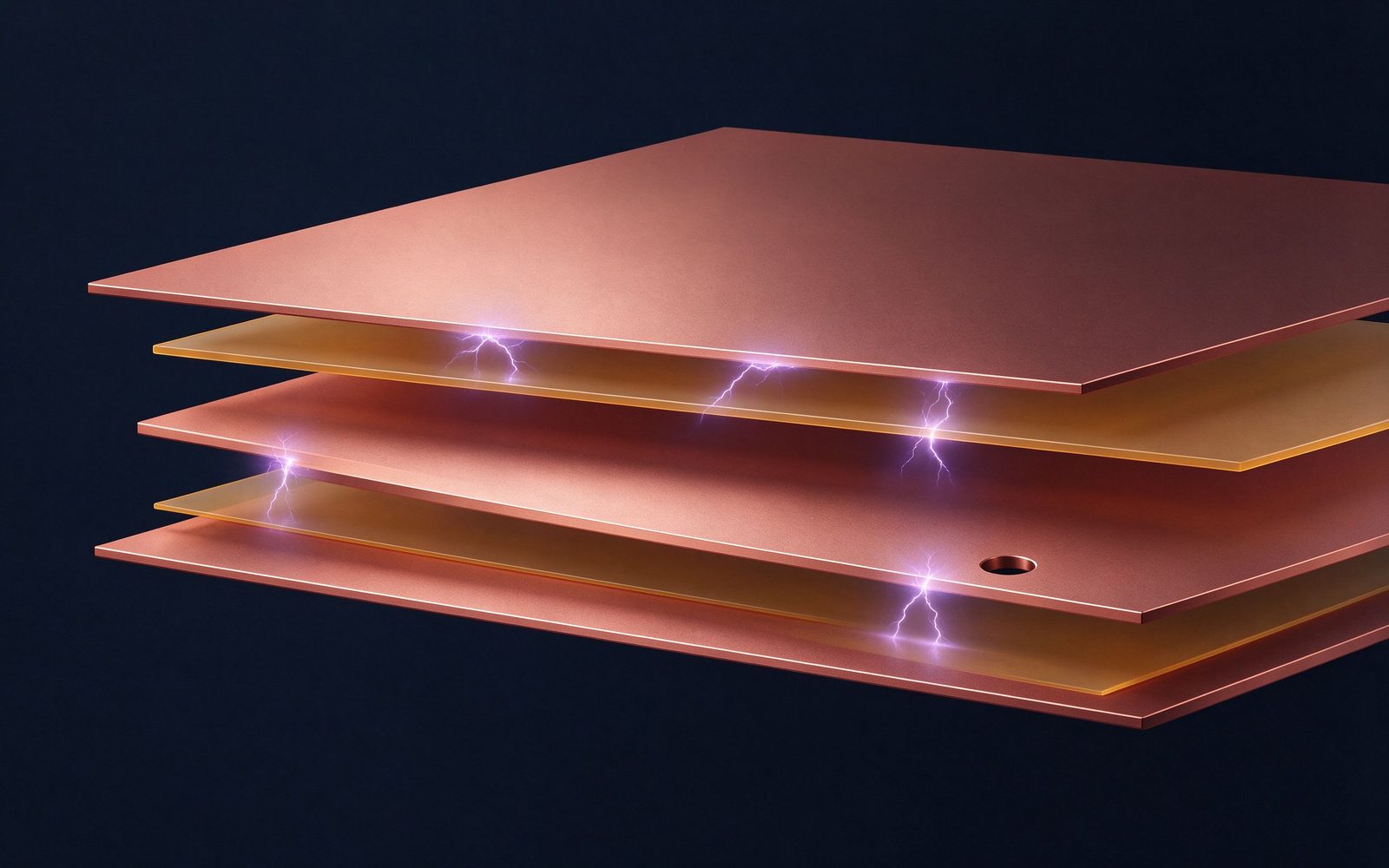
Partial discharge cutaway of a laminated busbar edge seal

What this means for a laminated busbar

  • Creepage & clearance follow the voltage class implied by the referenced standard.
  • Edge sealing & dielectric selection are driven by the partial-discharge expectations of the test specification.
  • Terminals & contact lands are sized against the standard’s temperature-rise and hot-swap requirements.

We do not hold aerospace or defense qualifications ourselves — and we do not claim to — but customers in those programs routinely flow down their own standards and special-process requirements to the parts we build.

These standards are frequently referenced by our customers. We build to the drawing and test specification provided, and every released batch ships with its own hipot, insulation-resistance and continuity records.

Two technical references explain the physics behind the tests we run:

Qualitätszusagen

Dokumentiert, Charge für Charge

Qualität entsteht im Aufbau, im Laminierfenster und im Anschlussschweißen – und wird anschließend verifiziert und protokolliert.

DFM-Prüfung vor dem WerkzeugbauInterne Qualitätssicherung pro FertigungslosChargenprüfprotokolle auf AnfrageCoC-/PPAP-typische Dokumentation
Ingenieur-Ressourcen

Mehr dazu

Design-Leitfaden für Laminat-Stromschienen

Aufbau, Dielektrikum-Auswahl und Grundlagen der Stromtragfähigkeit.

Design-Leitfaden lesen

Stromtragfähigkeits-Diagramm

Kupfer-Nennströme mit Derating-Hinweisen.

Kupfer-Diagramm ansehen

Documented, batch by batch.

Dimensional and electrical test records per lot — CoC and PPAP-style documentation aligned at quotation.

FAQ

Häufig gestellte Fragen

Klare Antworten vom Engineering-Team.

Welche Prüfungen werden an Fertigungslosen durchgeführt?
Die Prüfung richtet sich nach der beim Design-Freeze vereinbarten Spezifikation: dielektrische Stoßspannungsprüfung (hipot), Isolationswiderstand, Maßkontrolle, Sichtprüfung von Beschichtung und Kantenversiegelung sowie Durchgangsprüfung je Leiterpfad.
Können Sie Dokumentation für unser Qualitätssystem bereitstellen?
Maßliche und elektrische Prüfprotokolle werden je Los geführt. Falls Ihr Qualitätssystem CoCs, bestimmte Formate oder eine PPAP-typische Dokumentation erfordert, teilen Sie uns dies bereits in der Angebotsphase mit – wir stimmen die Unterlagen auf Ihre Anforderungen ab.
Unterstützen Sie Kleinserien-Prototypen vor der Serienproduktion?
Ja. Kundenspezifische Projekte durchlaufen typischerweise: Spezifikationsprüfung, DFM, Angebot, Musterbau für Passform und elektrische Verifikation, anschließend die werkzeuggebundene Produktion mit dokumentierter Qualitätssicherung je Los.
Welche Dateiformate akzeptieren Sie für Zeichnungen?
Wir akzeptieren PDF-, DXF- und STEP-Dateien sowie Fotos bestehender Bauteile. Für ein Angebot genügen 2D-Zeichnungen mit Maßen und Toleranzen; ein 3D-Modell beschleunigt die DFM-Prüfung und Werkzeugvorbereitung.
Gewähren Sie Garantie auf Ihre Stromschienen?
Ja. Die Bauteile sind für den im Kaufvertrag vereinbarten Garantiezeitraum gegen Material- und Verarbeitungsfehler abgedeckt. Nicht konforme Teile werden nachgearbeitet oder ersetzt; eine Fehleranalyse teilen wir auf Wunsch mit.
Unterstützen Sie internationalen Versand und internationale Verpackung?
Ja. Die Bauteile werden mit Kantenschutz, antistatischer Folie und exportgerechten Kartons entsprechend Ihren Handling-Anforderungen verpackt und auf dem See- oder Luftweg versendet. Handelsdokumente (Rechnung, Packliste, Prüfprotokolle) liegen jeder Sendung bei.

Need test records with your shipment?

Tell us at quotation stage — we align CoCs, PPAP-style documentation and test records with your quality system.