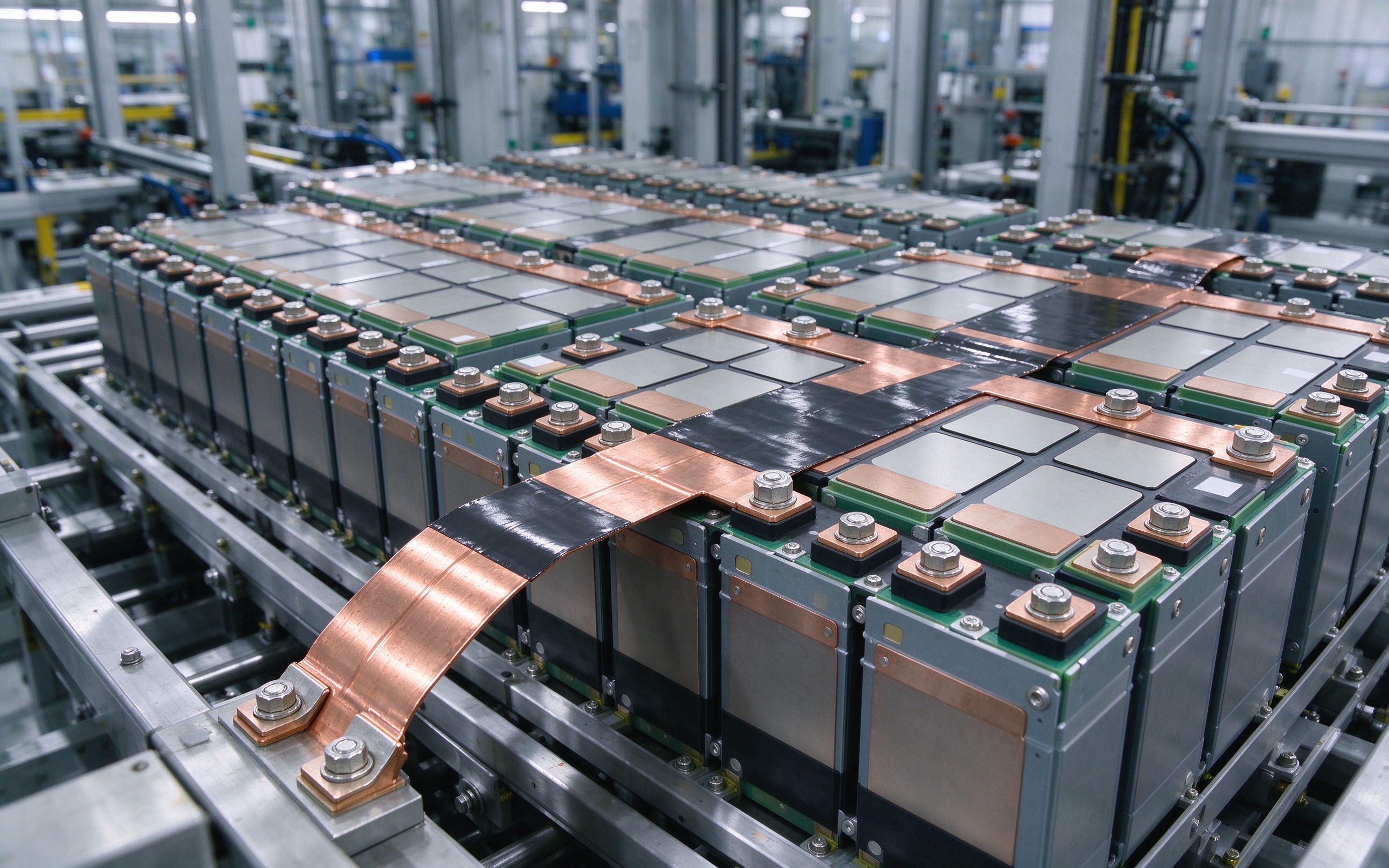
Electric vehicle battery packs run at 400–800 V and hundreds of amps. Laminated busbars keep those connections compact, low-inductance and reliable.
The four places busbars carry current in this application.
Multi-terminal laminates joining cell groups in parallel and series.
Paired stud terminals giving consistent measurement points for cell monitoring.
High-current links to the contactor box and power distribution unit.
Thin laminates with integrated fuse elements for cell balancing paths.
Low-inductance laminated connections between the high-voltage battery and the DC/DC converter stage.
Integrated fused links at the pack service disconnect for safe maintenance isolation.
Dielectric selection follows your platform voltage class — tell us 400 V or 800 V at quotation.
Conductor cross-section is sized against continuous and peak current, not nameplate current alone.
Terminals are matched to your module studs, contactors and mating buswork.
Thermal cycling and vibration profiles are reviewed before tooling.
If your traction inverter pairs the DC link with integrated DC-link capacitors, share the capacitor layout — the commutation loop is designed around it.
Busbar connectors and stud terminals are co-designed with the battery pack layout — M6/M8 studs, welded tabs or clip connections, matched to the pack's current profile.
Electrification of the powertrain — from mild hybrid to full battery-electric vehicles — keeps adding electrical functions, which drives higher power demand. The main traction inverter must minimize switching losses and maximize thermal efficiency, because vehicle range is tied directly to inverter efficiency. Battery packs now run at 400–800 V and hundreds of amps, and the laminated busbar is the customized electrical link between the battery DC source and the power module stack in the inverter and DC/DC converter: the low-inductance DC-link backbone.
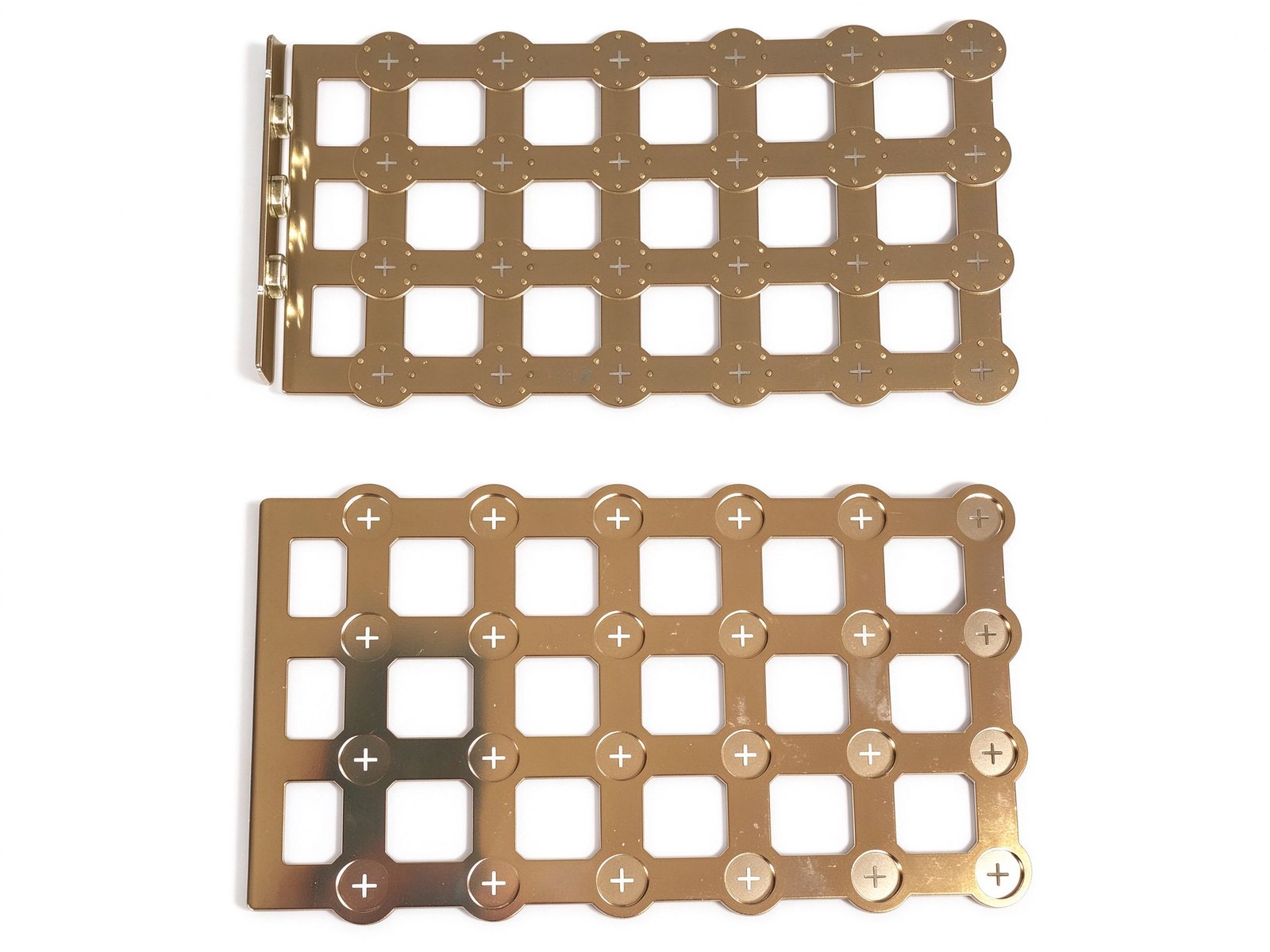
At pack and module level, laminated busbars provide the mechanical support, electrical interconnection and environmental interface between the energy source and the power electronics. Module-to-module links commonly use matched copper battery link busbar pairs — tin-plated, edge-sealed and tooled to repeat across every module in the pack; at cell level, power plus sense lines ride on one hybrid piece suited to prismatic and cylindrical cells — one piece per module cuts installation time and eliminates wiring errors. The under-hood environment makes long-term reliability under harsh conditions and vibration resistance mandatory, the same vibration-and-thermal-cycling discipline we apply to aerospace busbars built for airborne platforms.
The switching-speed trend toward SiC devices keeps raising the bar for loop inductance, and designs that integrate the inverter, DC/DC converter and ECU into one unit rely on the busbar to keep size, weight and cost down. In the 100–500 A band, reference designs turn to thick-copper hybrid construction (400–800 µm copper) where a normal PCB cannot carry current and a standard laminated bar is not wave-solderable in high volume. Standard insulation runs 105 °C continuous; high-temperature dielectric options reach 130 °C for designs that must push more current through the same copper section.
Compared with a hand-built cable harness, a tooled laminated assembly arrives with every connection pre-positioned — the trade-offs are the same ones we lay out in our notes on busbar vs cable harness decisions. Pack and module links across our battery busbars line, plus the DC/DC and traction links we cover alongside inverter busbars, give one accountable partner from pack to powertrain. Every pack-level bar ships with lot-by-lot hipot, continuity and dimensional test records your battery audit can trace. Send us the pack voltage and module layout — DFM review within one business day.
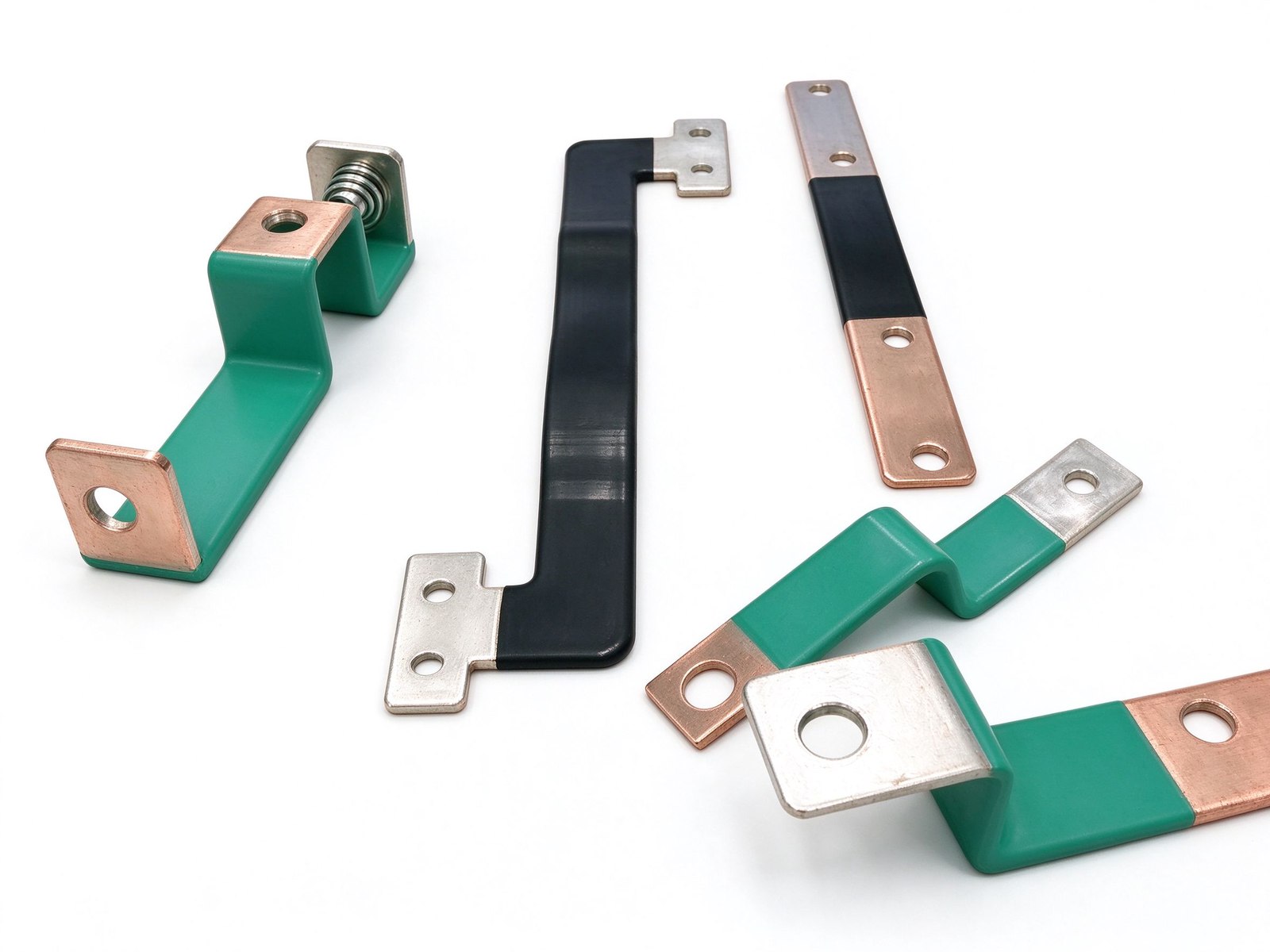
The part this application is built around — a SHANYUAN laminated busbar, factory direct.
Ảnh tham chiếu từ sản xuất SHANYUAN và các cụm lắp ráp đã xuất.
Các ghi chú và trang sản phẩm chọn lọc hỗ trợ các quyết định thiết kế trên trang này.
Các dòng thanh cái phù hợp đáp ứng biên độ dòng của ứng dụng này.
Cặp thanh nối đồng khớp nhau với chân gá để đấu nối nối tiếp và song song pin.
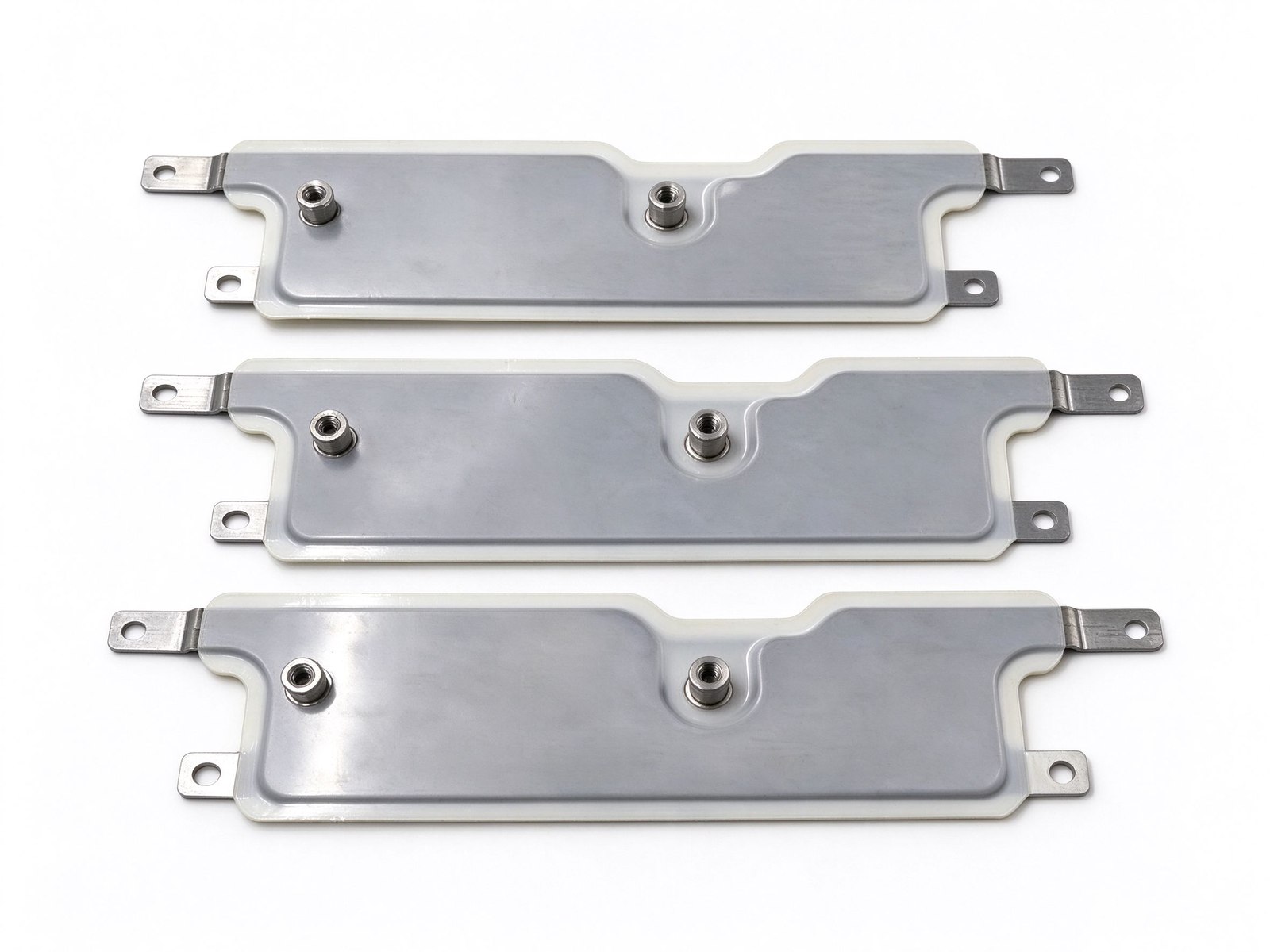
Thanh cái ép lớp cách điện đa lớp với nhiều loại đầu nối cho bố trí phân phối phức tạp.
Từ rà soát thông số đến linh kiện giao hàng và kiểm thử – một nhà cung cấp chịu trách nhiệm.
| Material | Standard options |
|---|---|
| Conductors | C11000 copper as standard; aluminum available on request |
| Dielectrics | PET, Nomex and epoxy (DLF) films, selected by voltage class and operating temperature |
| Plating | Tin finish for corrosion protection and joint solderability |
Cấu trúc, chọn điện môi và cơ bản về khả năng dòng.
Đọc hướng dẫn thiết kếVoltage class, current profile and terminal types — we will share reference configurations and DFM guidance.
Câu trả lời thẳng thắn từ đội kỹ thuật.
Send the application, voltage class and current profile — we will share reference configurations and DFM guidance.