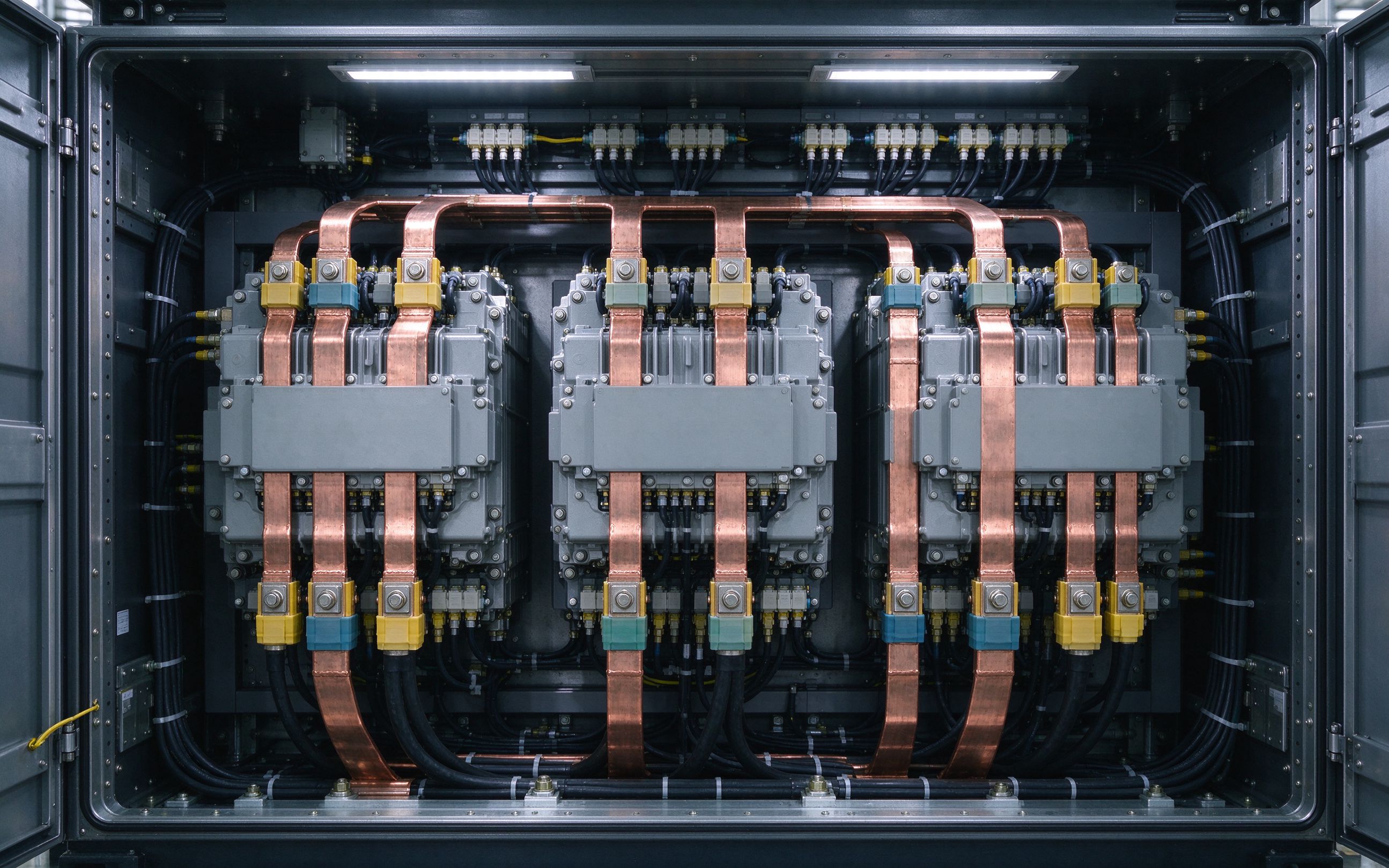
Propulsion converters for trains, trams and metros combine high voltage with high current and extreme environments. We engineer rail traction busbars that keep loop inductance and partial discharge under control where service continuity is non-negotiable.
The four places busbars carry current in this application.
Die laminierte Verbindung zwischen DC-Einspeisung (Oberleitung oder Bordnetz), DC-Link-Kondensatoren und dem IGBT-Stapel des Hauptantriebsumrichters.
Niederinduktive Verteilung für die Bordnetz-Wechselrichter, die Wechselspannung für Bordkompressoren, Bremsen und Beleuchtung stabilisieren.
Kompakte Verbindungen in Batterieladegeräten, die hochstabilen Gleichstrom zum Laden der Fahrzeugbatterien und für weitere DC-Lasten erzeugen.
Formangepasste Mehrlagen-Schienen, die Gleichstrom zwischen Netzumrichter, Bremschopper und Motorwechselrichter innerhalb eines Traktionsschaltschranks führen.
Kurze, starre Hochstrom-Links zu Bremswiderständen, die gepulste Fehlerenergie zuverlässig aushalten müssen.
Hybrid-Leistungs-/Signal-Layouts, die Gateregelung und Temperaturerfassung neben der Leistungsebene führen, wenn der Schaltschrankraum knapp ist.
Nennen Sie Netzspannung und DC-Link-Spannung sowie das geforderte Derating — Dielektrikumswahl und Kriech-/Luftstrecke folgen daraus.
Bord-Umgebungsbereich, Feuchteklasse sowie Höhen- oder Klimatisierungs-Derating bei Angebotserstellung.
Bahn-Vibrations- und Schockprofile erfordern flexible Lamellenabschnitte an Modulschnittstellen — teilen Sie Ihre Spezifikation mit.
Die DC-Link-Kondensatorlage bestimmt die Kommutierungsschleife; teilen Sie die Kondensatorposition für eine induktivitätsoptimierte Auslegung mit.
Wir richten Chargenprüfprotokolle, CoC und PPAP-artige Dokumentation auf Ihr Qualitätssystem aus — nennen Sie, was Ihr Audit verlangt.
Propulsion systems for trains, trams and metros require high power — high current and high voltage combined with wide temperature swings, humidity and constant vibration. Operational continuity is essential: any shutdown in a traction converter has severe operational and financial consequences, so enhanced reliability dominates every development decision. A rail traction busbar sits at the heart of this power chain as the customized link between the DC source — the overhead line feed or onboard DC bus — and the IGBT modules of the complete converter.
Under IGBT switching, stray inductance shows up as voltage overshoot, V = L × di/dt. A properly engineered laminated stack provides the lowest overall system inductance and the most balanced, distributed capacitance, which is why the DC-link loop is designed around the busbar geometry rather than around bolted hardware. We build these assemblies as part of our power electronics busbars family: 1–6+ layers of C11000 copper, tin-plated and edge-sealed, sized up to ~1000 A per assembly with you.
On-board traction equipment runs hot and humid. Reference traction designs specify high-temperature dielectric systems rated up to 130 °C continuous versus 105 °C standard grades — the dielectric choice is the differentiator. Sealed edges, tight layer alignment and controlled creepage distances keep partial discharge below the industry reference level of 10 pC, the same PD discipline we explain in our laminated busbar design guide. Where vibration and thermal expansion meet the modules, flexible lamella sections absorb the stress that rigid bars would transfer into bolted joints. Auxiliary converters and on-board battery chargers use the same low-loss, low-inductance design at lower power, stabilizing AC for compressors, brakes and lighting. The same reliability-first, PD-controlled, derated long-life discipline carries over to military & aerospace busbars when our customers extend their converter platforms to defense or airborne programs.
Replacing hand-built buswork and cable harnesses with one tooled assembly removes wiring errors, shortens cabinet build time and raises short-circuit withstand. Conductor sizing starts from the reference current ratings in our busbar ampacity chart, then is derated for your actual ambient and enclosure. If you are designing a traction or auxiliary converter, start with the same DFM review process we use for every custom busbar program.
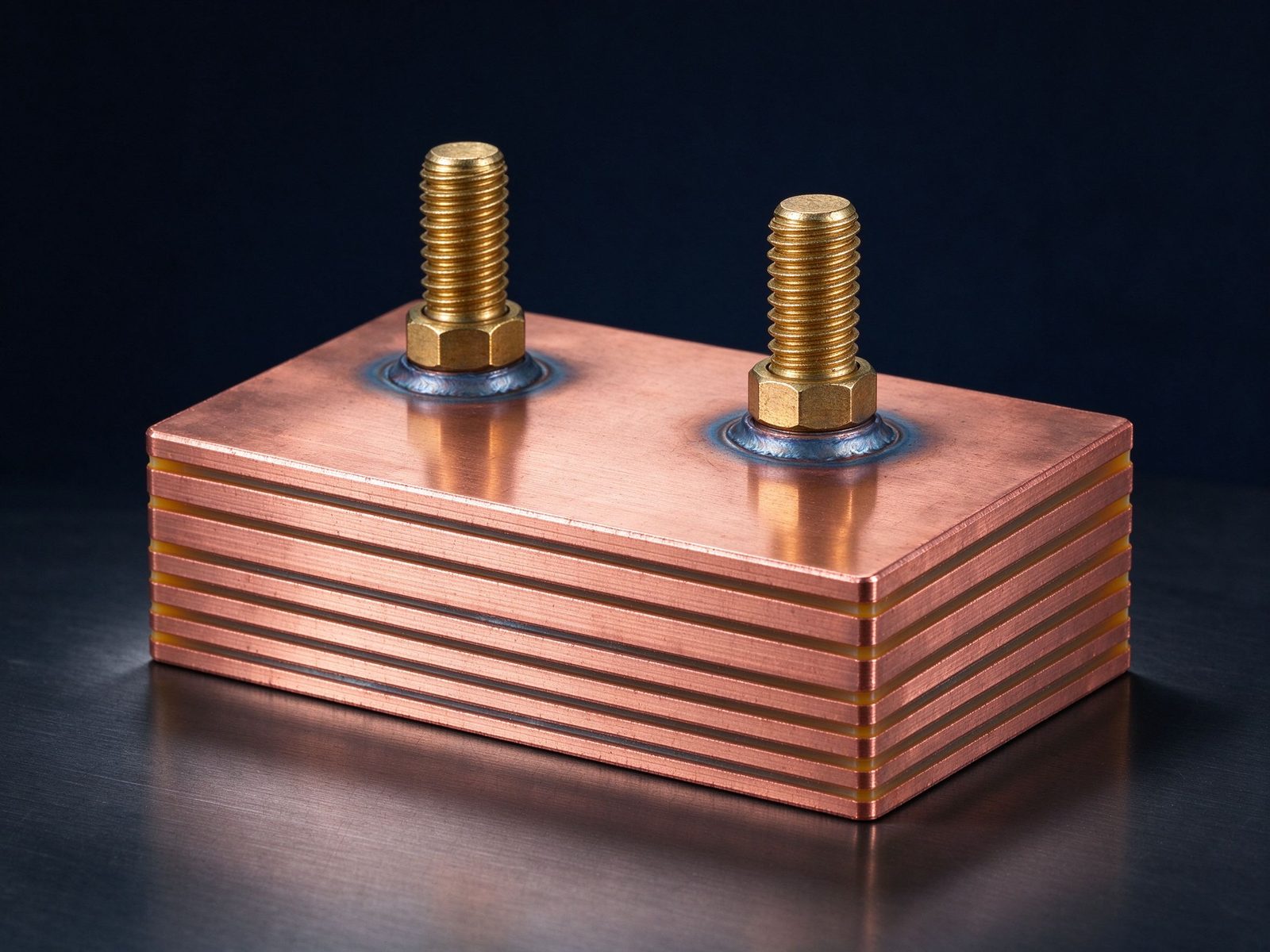
The part this application is built around — a SHANYUAN laminated busbar, factory direct.
Referenzfotos aus der SHANYUAN-Produktion und von versandten Baugruppen.
Ausgewählte Hinweise und Produktseiten, die die Design-Entscheidungen dieser Seite stützen.
Passende Stromschienen-Familien, die das Stromprofil dieser Anwendung tragen.
Geschweißte laminierte Stromschienen-Baugruppe für die Hochstrom-Leistungsverteilung mit vormontierten Anschlu
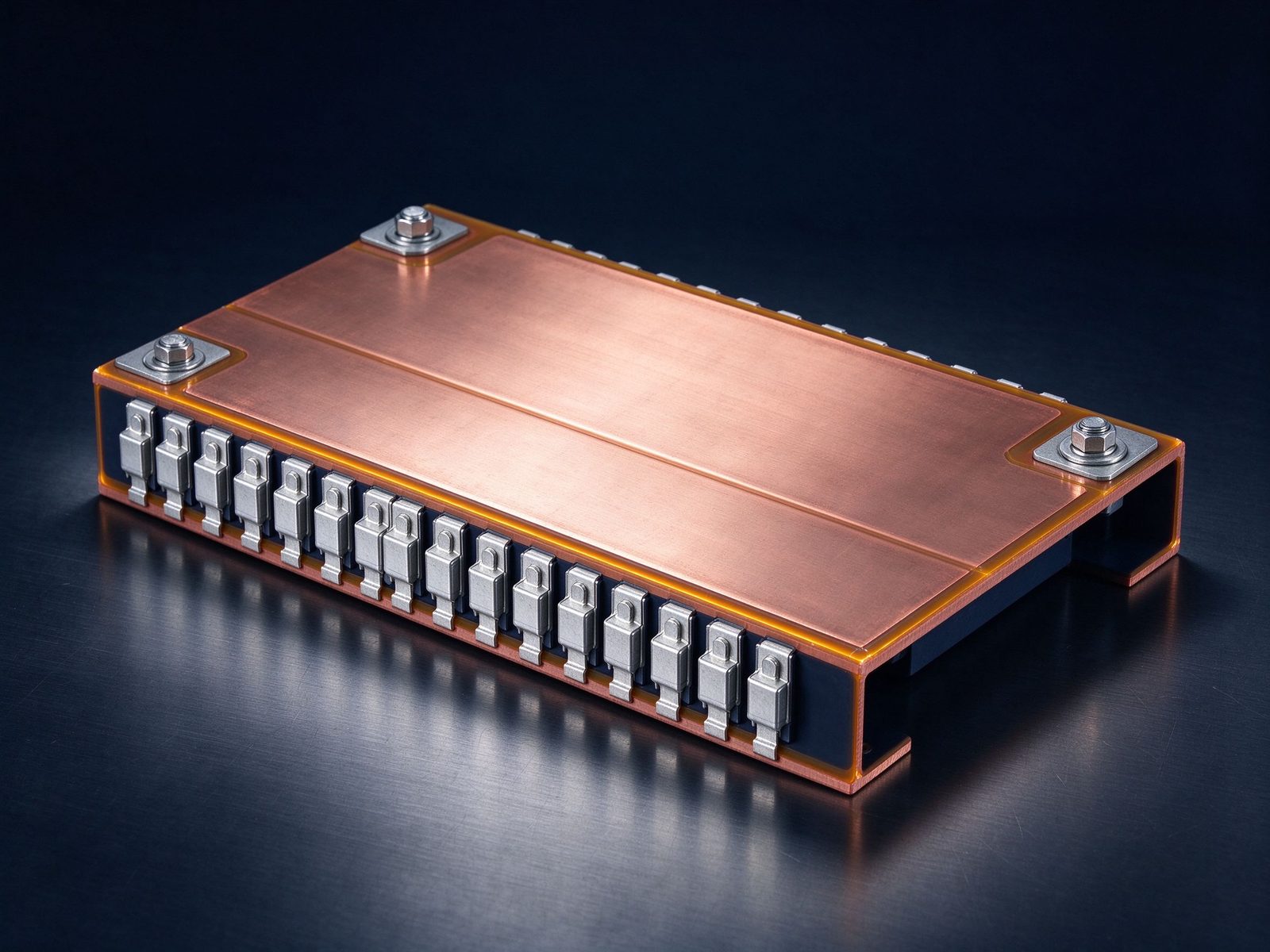
Laminierte Stromschiene für EV-Traktionsumrichter mit Messeranschlüssen für Hochspannungs-Architekturen.
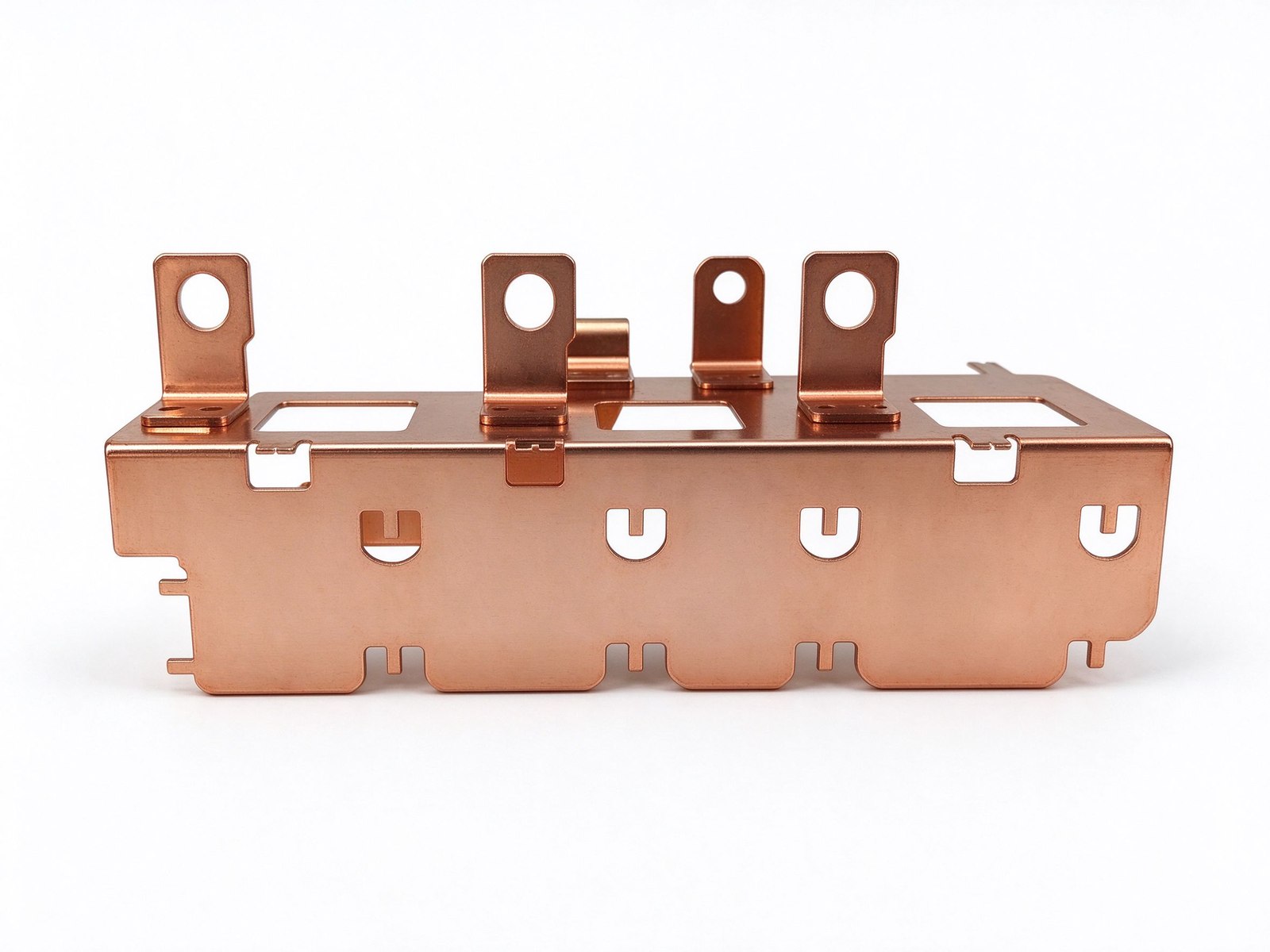
Mehrfach-abgezweigte laminierte Stromschiene für Kondensatorbank-Verbindungen in Leistungswandlern.
Von der Spezifikationsprüfung bis zu versandten, geprüften Teilen – ein verantwortlicher Lieferant.
| Material | Standard options |
|---|---|
| Conductors | C11000 copper as standard; aluminum available on request |
| Dielectrics | PET, Nomex and epoxy (DLF) films, selected by voltage class and operating temperature |
| Plating | Tin finish for corrosion protection and joint solderability |
Aufbau, Dielektrikum-Auswahl und Grundlagen der Stromtragfähigkeit.
Design-Leitfaden lesenVoltage class, current profile and terminal types — we will share reference configurations and DFM guidance.
Klare Antworten vom Engineering-Team.
Send the application, voltage class and current profile — we will share reference configurations and DFM guidance.