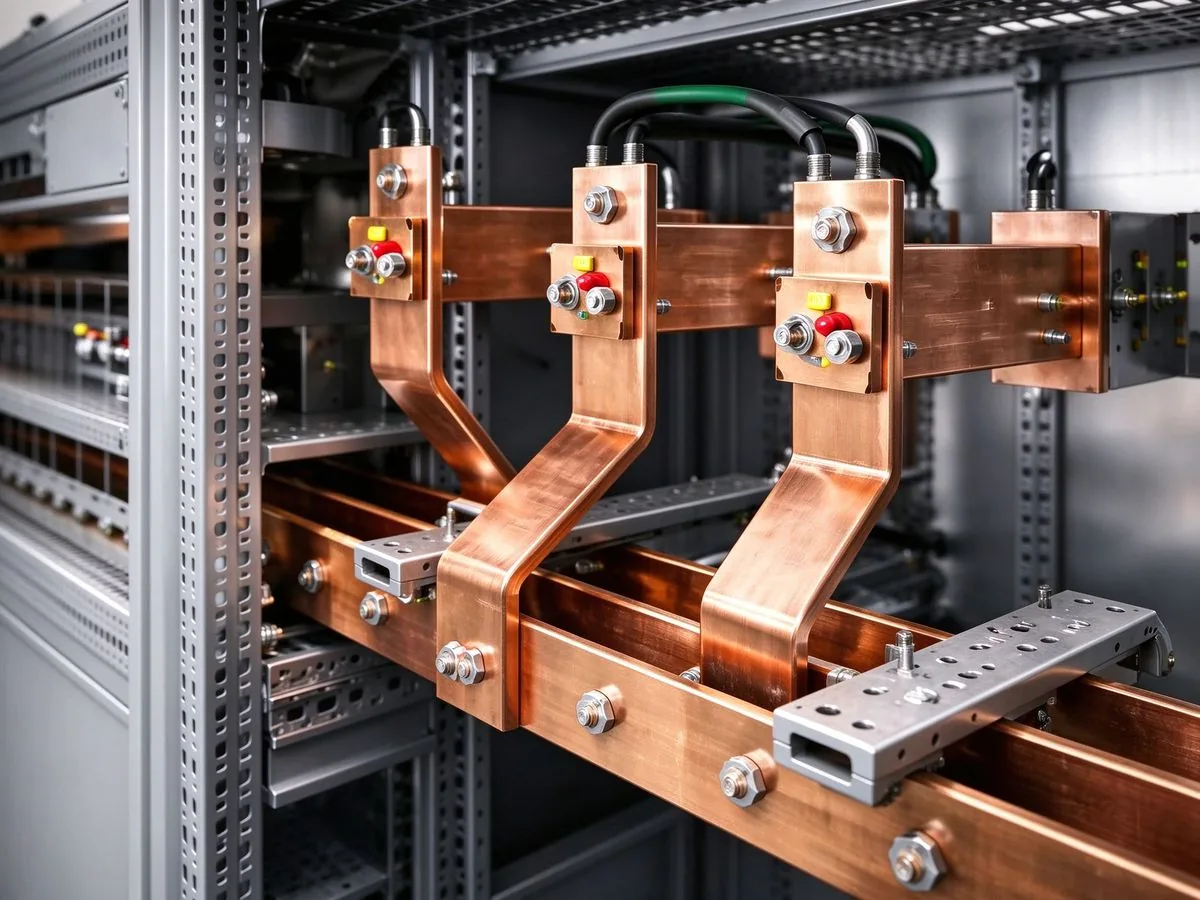
BlueNode Data Power, a US colocation and hyperscale operator, engaged SHANYUAN in 2025 for the three-phase UPS feed busbar at a new 20 MW data center campus. The 2000 A-per-phase laminated system delivered 0.8 mΩ tap joints, hot-swap PDU taps and a 12-week production cycle across 96 distribution frames shipped in 2026.
This case study is published as a representative engineering project. The product photograph and released drawing are illustrative of the delivered part; exact dimensions are covered by the customer's non-disclosure agreement.
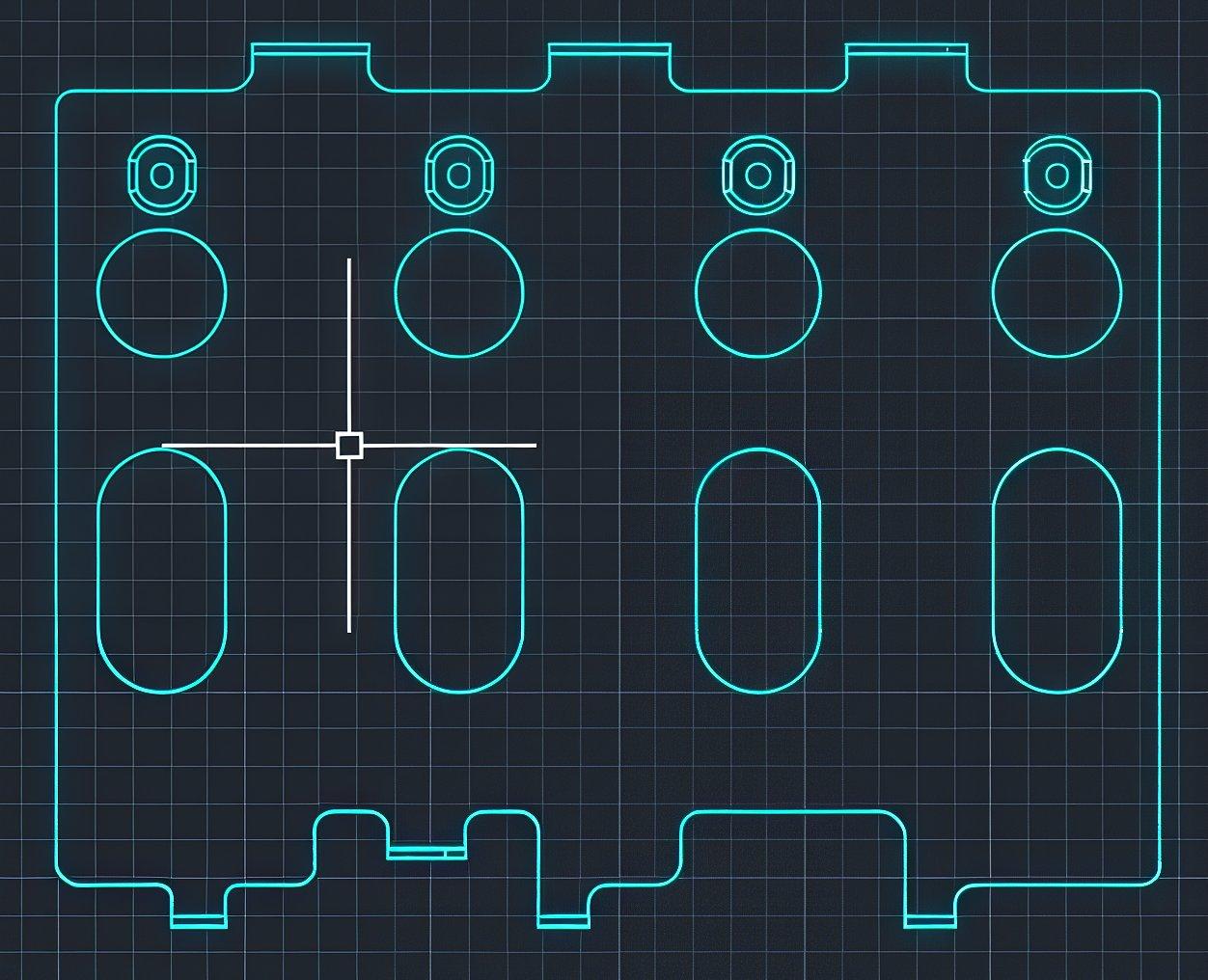
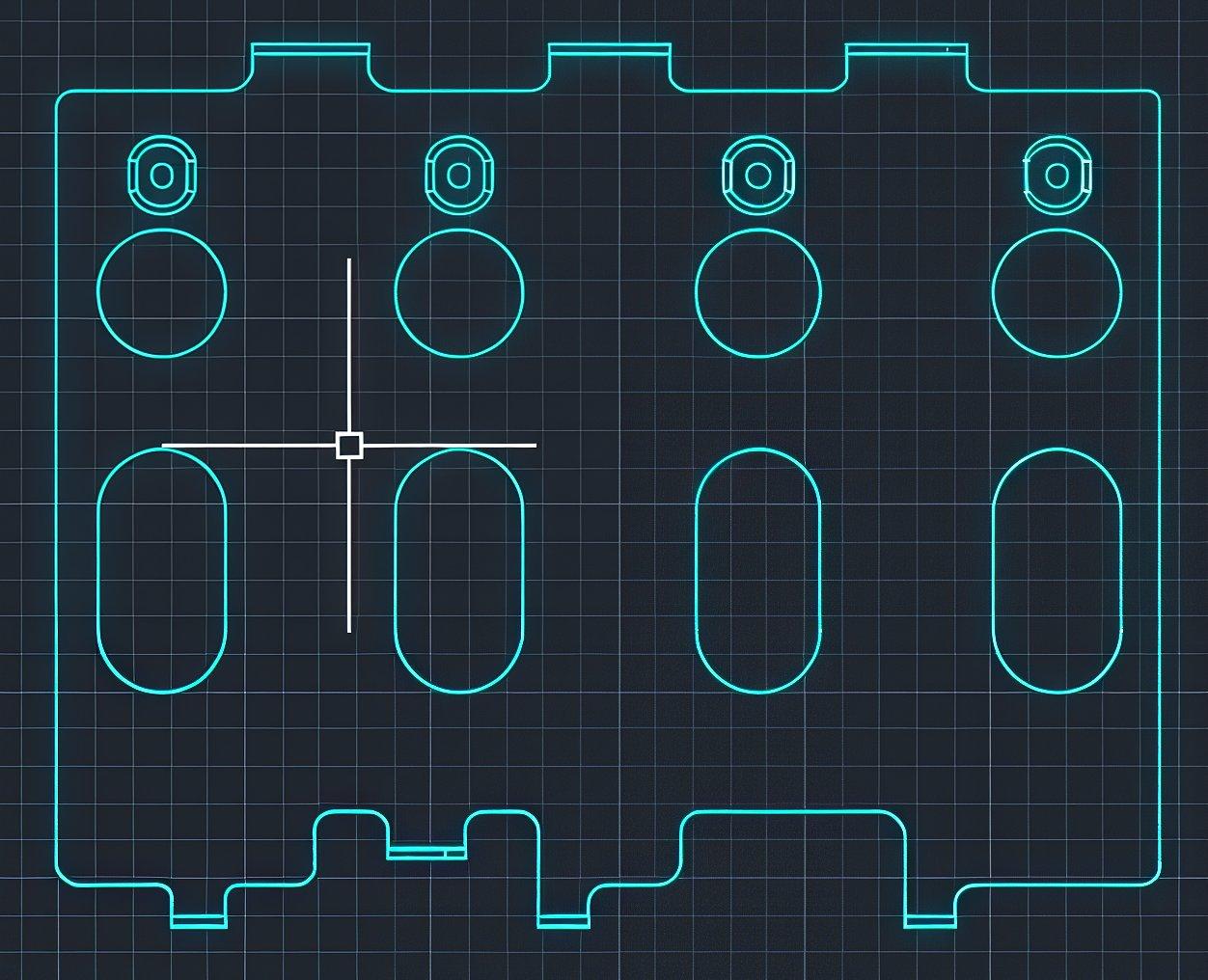
Customer drawings are treated as confidential; excerpts shown here are provided with permission and illustrate the layer stack, terminal layout and dielectric boundaries of the delivered part.
| Customer & platform | BlueNode Data Power 20 MW colocation campus, 480 V three-phase UPS feed |
|---|---|
| Busbar type | Laminated three-phase feed busbar, C11000 copper, 3 conductors + neutral |
| Dielectric system | PET film wrap + insulated supports, 1.5 kV hi-pot per phase |
| Tap joints | 0.8 mΩ per PDU tap, hot-swap rated |
| 정격 전류 | 2000 A per phase continuous, 2500 A 60 s |
| 온도 상승 | ΔT 27 °C at rated current, 40 °C ambient |
| Terminals | Bolted taps with M10 studs, tin-plated contact faces |
| Delivery | 12-week production cycle, 96 distribution frames in 2026 |
| Quantified result | 0.8 mΩ taps, 27 °C ΔT, 2000 A/phase, hot-swap verified |
BlueNode Data Power, a US colocation and hyperscale operator, engaged SHANYUAN in 2025 for the three-phase UPS feed busbar at a new 20 MW data center campus. The 2000 A-per-phase laminated system delivered 0.8 mΩ tap joints, hot-swap PDU taps and a 12-week production cycle across 96 distribution frames shipped in 2026.
BlueNode's 20 MW campus distributes UPS power through distribution frames where PDU cabinets connect via taps that must be added or moved while the bus is live — a hot-swap requirement driven by the colocation leasing model. Their previous copper-bar system could not meet the 0.8 mΩ tap-joint budget consistently, and tap changes required a full frame outage.
The customer specified a three-phase laminated feed busbar rated 2000 A per phase, with tap positions that accept their standard PDU connectors and a 12-week delivery cycle to match the construction schedule. SHANYUAN's selection team worked from the power distribution guide, which covers hard-wired versus modular rail versus laminated distribution for n+1 and hot-swap architectures.
The application fits the data center application page profile; our data center power busbar article summarises the market drivers behind this project.
Each distribution frame carries a laminated three-phase busbar — phase conductors plus neutral — with the conductors separated by PET film and supported on insulated standoffs. Tap locations are drilled and tapped on a 100 mm grid, so PDU connections can be placed anywhere along the frame without cutting the bus.
Hot-swap capability comes from the bolted tap design: M10 studs with a torque-stripe, tin-plated faces and a spring-washer stack that maintains contact pressure across thermal cycles. The measured tap-joint resistance is 0.8 mΩ, verified with a four-wire micro-ohm meter during frame assembly. The busbar connections guide explains the multi-point contact physics behind this joint design.
For the neutral path, the same laminated construction carries full phase current; grounding is handled by the ground bar kits supplied with each frame.
Temperature-rise testing at 2000 A per phase in a 40 °C ambient chamber measured 27 °C rise with the hot spot at the bus-bar-to-connector transition — inside the 30 °C budget. Convection assumptions match the thermal management guide; the frames are fan-assisted in the row.
Mechanical qualification included 500 hot-swap plug/unplug cycles at full current on the prototype taps, plus seismic rack testing per the local building code (IBC zone D equivalent). The vibration and bolted-joint guide documents the preload retention method used.
Creepage follows the 480 V system with generous margin: 6 mm clearance and 10 mm creepage across the insulated surfaces, verified at the 1.5 kV hi-pot test per phase.
Production runs in frame kits: 96 distribution frames shipped through 2026, each with its own hi-pot certificate, tap-joint resistance map and installation torque card. The quality laboratory retains the batch dossiers for the campus commissioning team.
The 12-week production cycle was held from the first frame batch to the last, using the standard lamination and hi-pot line shown on the factory tour. Field installation time per frame averaged 1.5 days, including tap placement and torque audit.
After one year of operation, the customer's thermography survey showed no tap above ambient+15 °C, confirming the joint design. Procurement details behind the award are covered in the supplier evaluation guide.
All targets were met: 2000 A per phase with 27 °C rise in 40 °C ambient, 0.8 mΩ tap joints, hot-swap verified over 500 cycles at full current, and 12-week delivery across all 96 frames.
PDU reconfiguration time dropped from a scheduled outage (typically several hours with a maintenance window) to a live 30-minute tap move, which the customer estimates recovered roughly one rack-hour of uptime per reconfiguration in a 20 MW campus.
For critical-power designers, the inverter and UPS application page, the busbar components range and the engineering contact form are the entry points we recommend.

David Osei는 SHANYUAN 적층 버스바 제품 라인을 담당하는 제품 마케팅 엔지니어입니다. 전기 부품 테크니컬 마케팅에 9년 경력을 보유하며 응용 요구사항을 제품 정의, 선정 가이드, 기술 콘텐츠로 변환합니다. KNUST에서 전기전자공학 학사 학위를 취득했습니다. 버스바 제품 선정과 응용 기반 구매 결정에 대해 집필합니다.