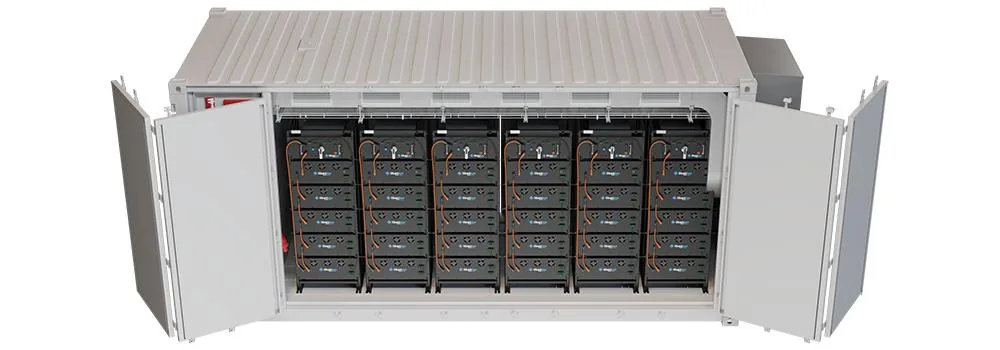
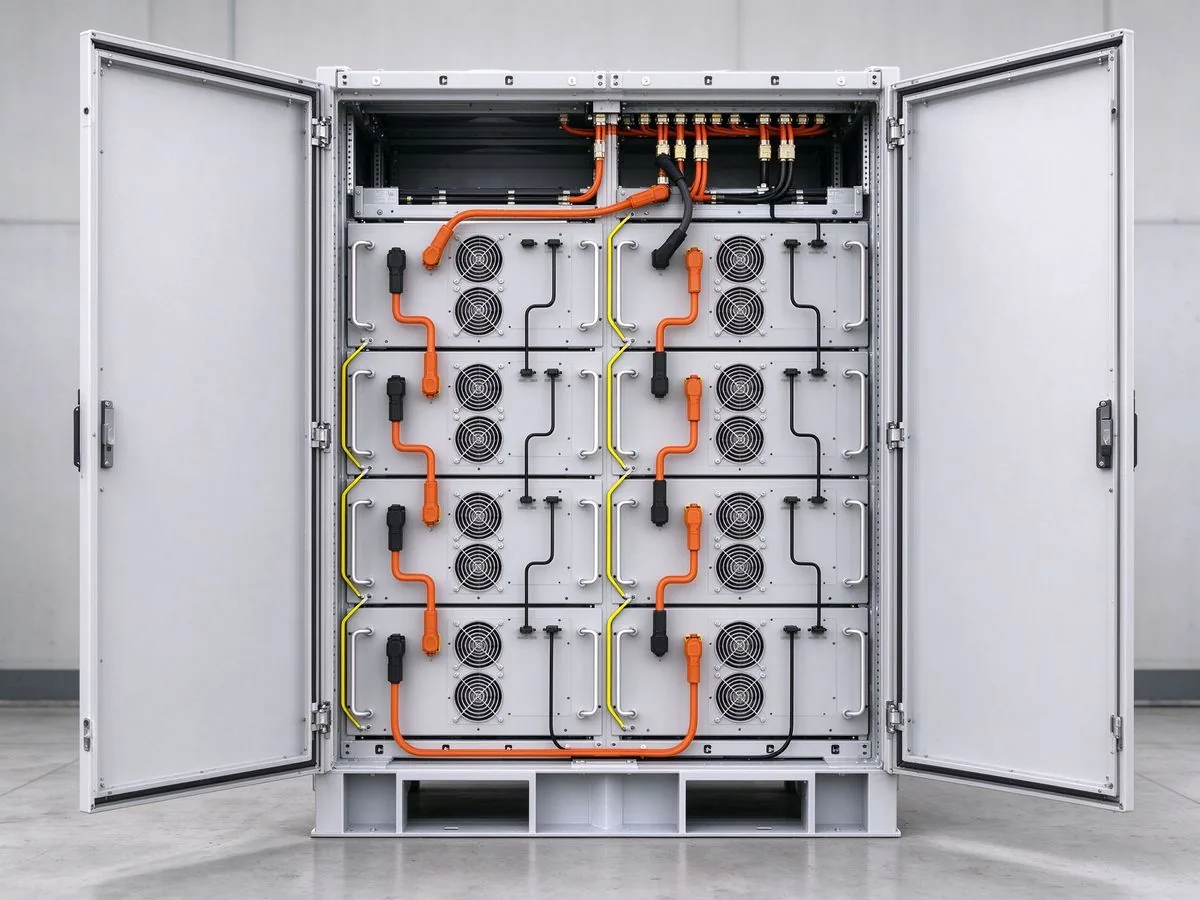
PacificGrid Micro, an Australian integrator of remote and island microgrids, engaged SHANYUAN in 2025 for the battery-stack interconnects and PCS DC-link busbars of its 5 MWh-class storage containers. The flexible laminated stack interconnect — 800 A per string with 2% thermal balance across parallel strings — shipped with the first 3.2 MWh island project delivered on schedule in 2026.
This case study is published as a representative engineering project. The product photograph and released drawing are illustrative of the delivered part; exact dimensions are covered by the customer's non-disclosure agreement.
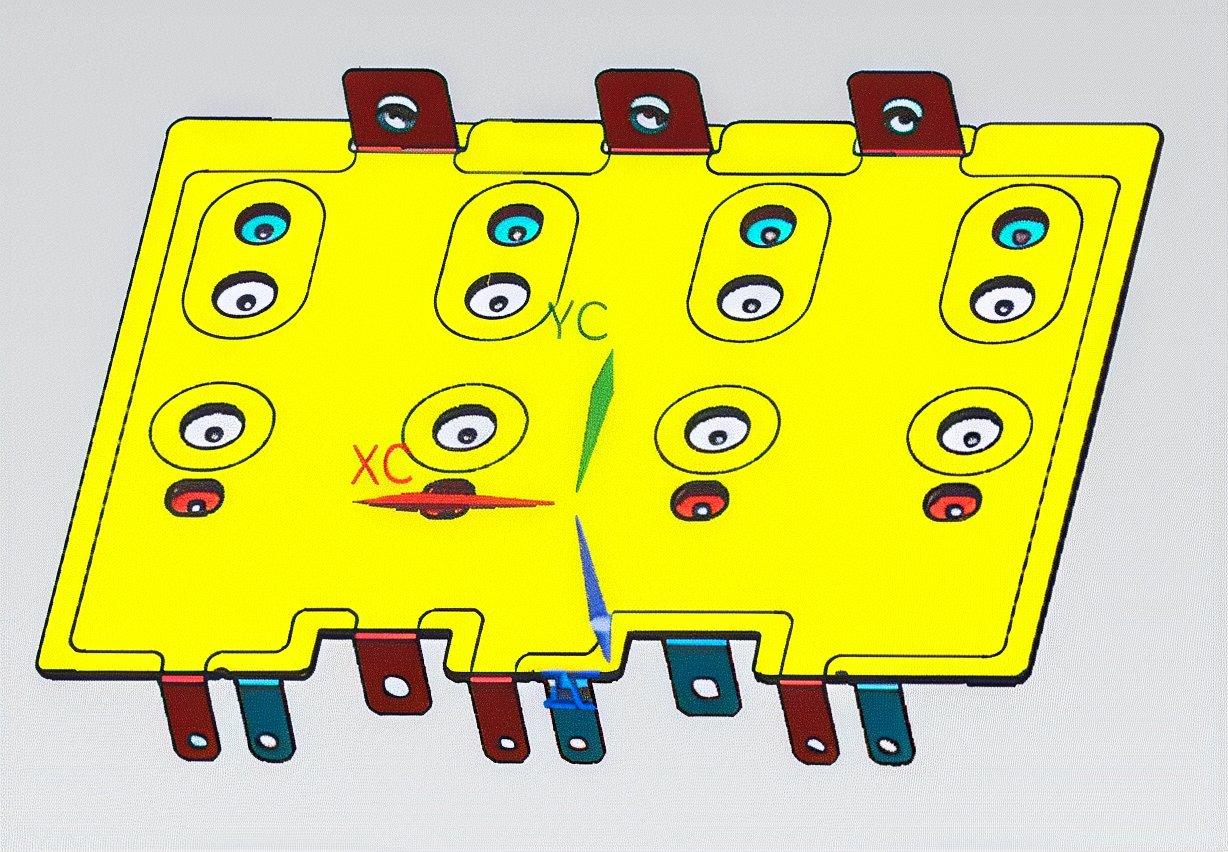
Customer drawings are treated as confidential; excerpts shown here are provided with permission and illustrate the layer stack, terminal layout and dielectric boundaries of the delivered part.
| Customer & platform | PacificGrid Micro 5 MWh-class storage container, 800 V DC bus |
|---|---|
| Busbar type | Flexible laminated stack interconnect + rigid PCS DC-link busbar |
| Dielectric system | PET film + flexible insulation, 2.0 kV hi-pot |
| 定格電流 | 800 A per string, 1000 A 30 min |
| Thermal balance | 2% current balance across parallel strings, verified by IR imaging |
| 温度上昇 | ΔT 25 °C at rated current, 50 °C ambient |
| Terminals | M8 studs, flexible laminations at interconnect ends |
| Delivery | First 3.2 MWh island project on schedule |
| Quantified result | 800 A, 2% thermal balance, 25 °C ΔT, on-schedule island delivery |
PacificGrid Micro, an Australian integrator of remote and island microgrids, engaged SHANYUAN in 2025 for the battery-stack interconnects and PCS DC-link busbars of its 5 MWh-class storage containers. The flexible laminated stack interconnect — 800 A per string with 2% thermal balance across parallel strings — shipped with the first 3.2 MWh island project delivered on schedule in 2026.
PacificGrid's 5 MWh-class containers series up to 18 battery strings in parallel on an 800 V DC bus. The previous interconnect — bolted copper bars plus flexible cable links — produced visible hot strings in thermal imaging: resistance differences between joints caused some strings to carry more than their share of current, accelerating degradation of those modules.
The customer specified a stack interconnect with controlled joint resistance per string (target 2% current imbalance at full load), a flexible section to absorb module expansion, and a PCS-side DC-link busbar that keeps the inverter's commutation loop tight. Current-sharing design guidance from our resources set the joint-resistance budget.
The project profile matches the energy storage application page and the microgrid busbar article.
Each string interconnect uses a flexible laminated stack — copper laminations insulated with PET film and bonded at both ends — so the interconnect flexes with the battery module's thermal expansion while keeping a rigid bolted connection at the bus. The flexible insulated busbar product family carries this construction.
Joint resistance is matched per string during production: each interconnect is trimmed to hit a 0.45 mΩ ± 5% target, verified with a four-wire meter. The result is a 2% current balance across the 18 strings, confirmed by IR imaging at full load on the first container.
The PCS DC-link busbar uses the interleaved stack from the inverter DC-link busbar range, keeping the inverter commutation loop at 9 nH for the SiC power stage.
Temperature-rise testing at 800 A in a 50 °C container ambient measured 25 °C rise with the hot spot at the string terminations — inside the 28 °C budget. The thermal management guide documents the container airflow assumptions.
Mechanical qualification covered the container's road and sea transport to the island site: vibration per IEC 60721-3-2, plus 2000 thermal cycles −20 °C to +60 °C on the flexible section. The flexible vs rigid selection guide explains when the flexible construction is the right choice.
Because the site is a remote island, every interconnect shipped pre-torqued with a torque-stripe audit and a per-part hi-pot certificate — no field torque decisions. The long-duration storage article covers the system context.
The first 3.2 MWh island project received all stack interconnects and PCS busbars in a single shipment, commissioned on schedule in 2026. The quality laboratory issued per-batch dossiers covering joint resistance, hi-pot and thermal-rise data, which the project's independent commissioning engineer accepted without additional testing.
Commissioning IR imaging at full load confirmed the 2% thermal balance across all 18 strings — the first container in the customer's fleet to meet the target without field rework. The factory tour shows the flexible lamination station used for these interconnects.
The second container project is now in production, sized at the full 5 MWh with the same interconnect platform.
The delivered interconnects met every target: 800 A per string with 25 °C rise in 50 °C ambient, 2% current balance across 18 parallel strings, 2000 thermal cycles on the flexible section, and on-schedule commissioning of the island project.
The customer reports that the matched-resistance interconnect eliminated the hot-string issue entirely, and the pre-torqued delivery removed field torque decisions on a site with limited tooling access. The global storage market article and the supplier evaluation guide give the procurement context behind this long-term award.
For microgrid and ESS integrators, the energy storage application page, the high-current battery module busbar and the engineering contact form are the practical entry points.

Aiko TanakaはSHANYUANのアプリケーションエンジニアリングマネージャーで、積層バスバーをデータセンター、エネルギー貯蔵、新エネルギーシステムに適用した経験が11年あります。アプリケーション選定、カスタムプロファイル開発、プロジェクト納品を統括しています。東京大学で電気工学の学士号を取得。UPS、BESS、データセンター配電向けバスバー選定について執筆しています。