HelioVolt Inverters, a Spanish manufacturer of utility-scale PV inverters, engaged SHANYUAN in 2026 for the DC-link busbar of its 1500 V platform. The laminated design is partial-discharge-free to 1.5 kV, carries 1200 A continuous with 30 °C rise in 60 °C ambient, and handles the ripple of 1100 V MPPT operation across two PV string sections.
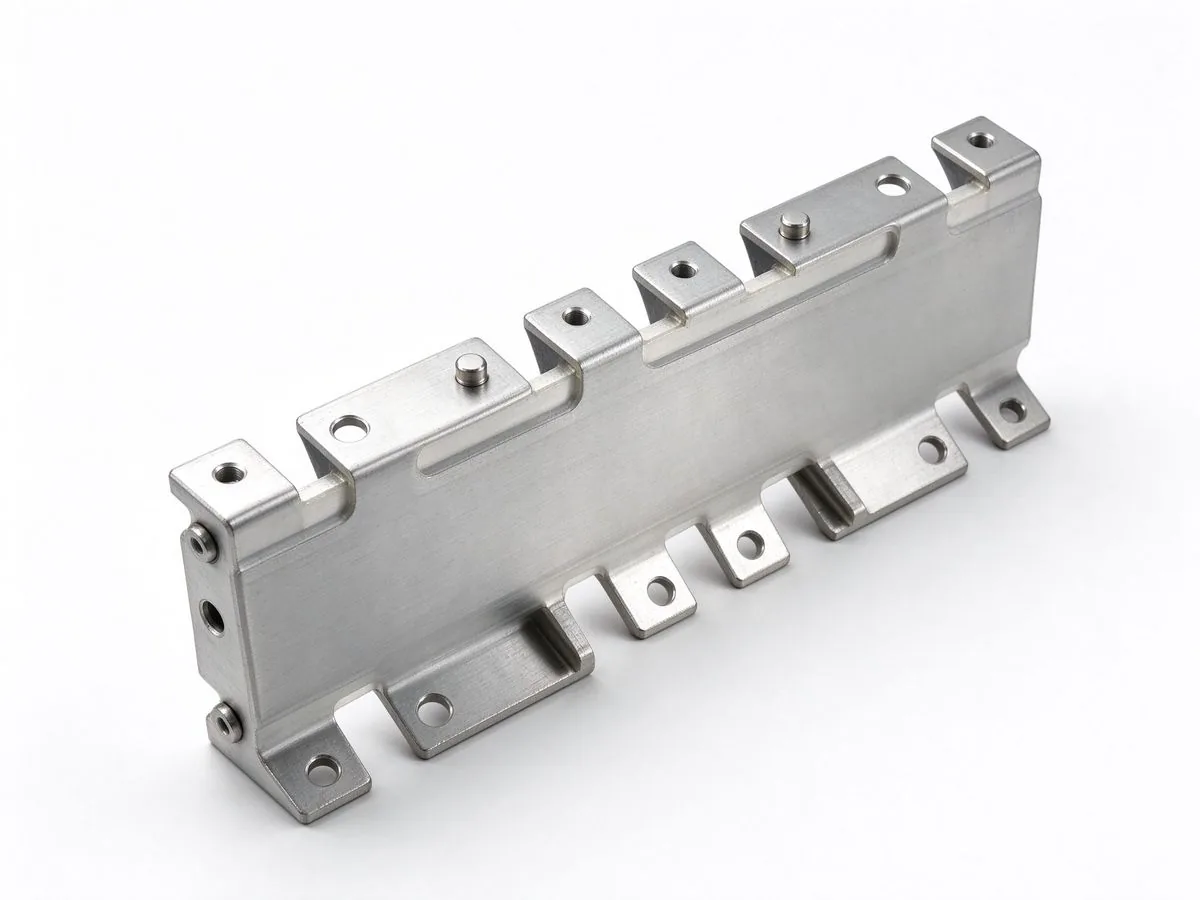
This case study is published as a representative engineering project. The product photograph and released drawing are illustrative of the delivered part; exact dimensions are covered by the customer's non-disclosure agreement.
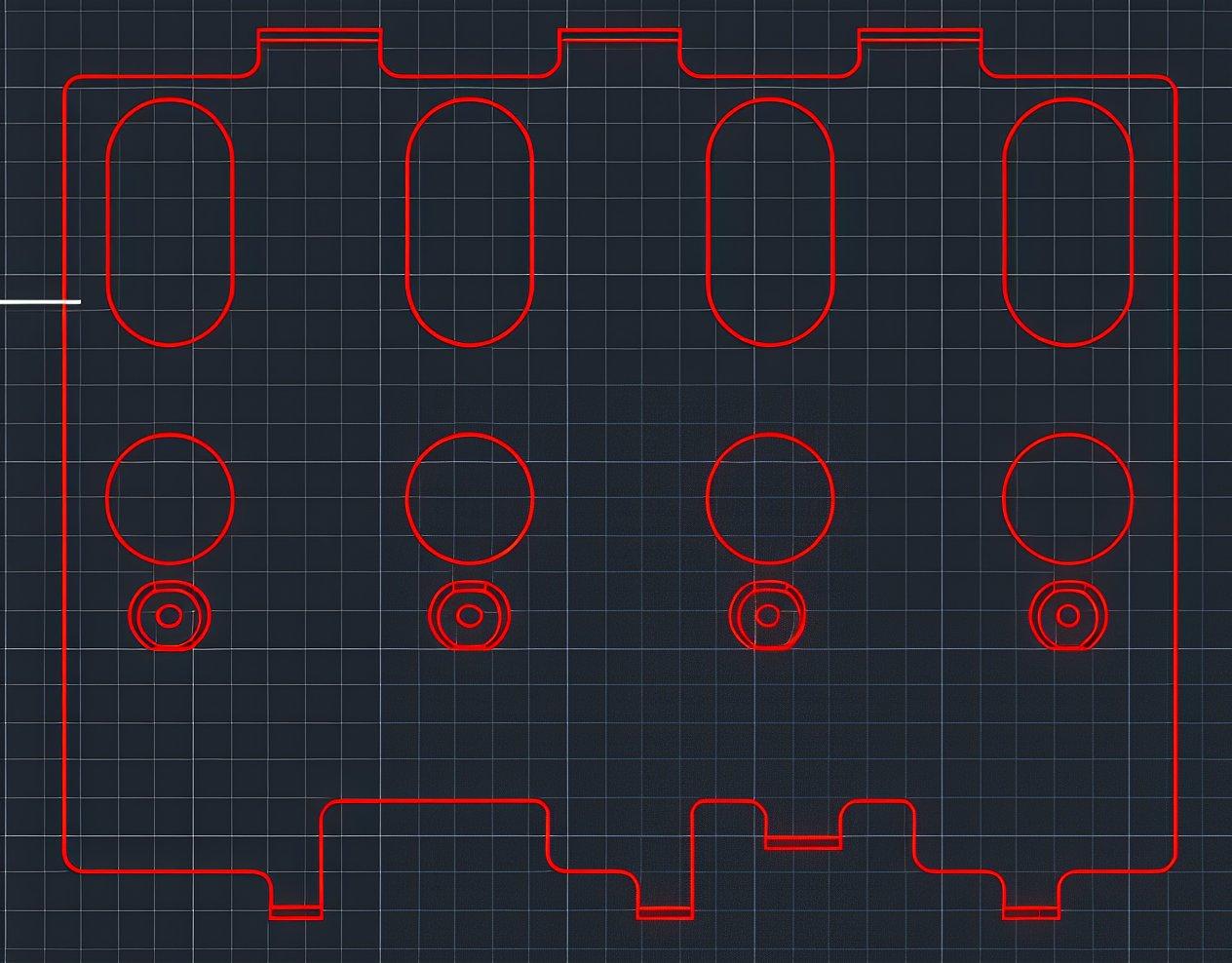
Customer drawings are treated as confidential; excerpts shown here are provided with permission and illustrate the layer stack, terminal layout and dielectric boundaries of the delivered part.
| Customer & platform | HelioVolt 1500 V utility-scale PV inverter, 1200 A DC-link |
|---|---|
| Busbar type | Multi-layer laminated DC-link busbar, C11000 copper |
| Dielectric system | PET + epoxy edge, PD-free to 1.5 kV, 3.6 kV hi-pot |
| Corrente nominale | 1200 A continuous, dual MPPT string inputs |
| Elevazione di temperatura | ΔT 30 °C at rated current, 60 °C ambient |
| PD performance | PD-free to 1.5 kV at 50 pC sensitivity |
| Terminals | Blade terminals for IGBT modules, M8 studs for DC inputs |
| Production | 2-week sample cycle, 100% hi-pot and PD spot test per batch |
| Quantified result | PD-free 1.5 kV, 30 °C ΔT, 1200 A, 3.6 kV hi-pot |
HelioVolt Inverters, a Spanish manufacturer of utility-scale PV inverters, engaged SHANYUAN in 2026 for the DC-link busbar of its 1500 V platform. The laminated design is partial-discharge-free to 1.5 kV, carries 1200 A continuous with 30 °C rise in 60 °C ambient, and handles the ripple of 1100 V MPPT operation across two PV string sections.
Utility-scale PV strings now run at 1500 V nominal, and HelioVolt's new inverter platform operates two MPPT sections at up to 1100 V each. At these voltages, partial discharge on the DC-link busbar becomes the limiting factor for insulation life — a cable assembly or a bare copper bar with an air gap can PD at normal operating voltage, and PD erosion eventually degrades the dielectric.
The customer specified a DC-link busbar that must be PD-free to 1.5 kV at 50 pC sensitivity, carry 1200 A continuous, and fit the platform's existing mechanical envelope. Their test lab runs a full PD campaign on every prototype, so the insulation system had to be right the first time.
SHANYUAN's dielectric team designed the stack-up following the partial-discharge guide and the design guide voltage-class rules; the layer and conductor sizing used the ampacity chart for the 1200 A rating.
The delivered busbar uses PET film between every conductor pair, with a continuous epoxy edge seal that eliminates the air gaps where PD normally starts. Every layer-to-layer boundary is bonded, and the terminal faces are the only exposed copper. This construction is the same family as our inverter DC-link busbar product.
PD testing on the first prototype passed at 1.5 kV with 50 pC sensitivity — no PD inception below the spec limit. The customer's own laboratory repeated the test on ten samples and confirmed the same result. The design principle — eliminate air gaps, not just increase creepage — is documented in the surface insulation coating guide.
Two MPPT string inputs are terminated on M8 studs with separate blade connections to the IGBT section, keeping the two string loops independent as the platform's control scheme requires.
At 1200 A continuous in a 60 °C ambient chamber, temperature rise reached 30 °C with the hot spot at the DC-input studs — inside the 32 °C budget. The thermal management guide documents the convection assumptions; the platform's forced-air cooling holds the busbar well inside the PET rating.
Ripple current from the two MPPT sections was analysed against the copper section and joint design; the laminated construction carries both string currents without exceeding the joint temperature limits. Current-sharing guidance from our resources explains the parallel-path analysis used here.
Creepage across the epoxy edge is 20 mm minimum for the 1500 V system, per IEC 60664-1 pollution degree 2 — double the nominal requirement, which is why the PD margin held at the customer's test voltage.
Qualification covered a 3.6 kV hi-pot (1 minute), PD-free verification to 1.5 kV on every prototype batch, 500 thermal cycles from −40 °C to +85 °C, and humidity exposure per IEC 60068-2-30. All passed on the first submission.
The quality laboratory runs the PD test in-house, so every production batch receives a PD spot test certificate alongside the 100% hi-pot record. Series production is aligned with the solar inverter busbar trends article's market outlook, with monthly batches sized to the customer's inverter build plan.
The sample cycle was held at two weeks from drawing release, which let the customer freeze the mechanical design before the PV project season started.
The final part met every requirement: PD-free to 1.5 kV at 50 pC sensitivity, 1200 A continuous with 30 °C rise in 60 °C ambient, 3.6 kV hi-pot, and 1100 V MPPT ripple handled without joint temperature excursions.
HelioVolt's inverter passed type testing in one attempt, and the customer reports that the PD-free result removed a planned derating step for the 1500 V variant. Field installations in southern Spain and North Africa are running with zero busbar-related issues in the first year.
For PV inverter designers, the solar and wind application page, the power electronics busbar range and the engineering contact form are the practical starting points.
L'inverter che ha dominato le gare solari del 2026 non è più un contenitore picc
Leggi l’articoloVelocità di commutazione più elevate dai MOSFET SiC e dagli IGBT moderni stanno
Leggi l’articolo
Sofia Lindqvist è ingegnere di prove ad alta tensione e scariche parziali con 8 anni di esperienza nella qualificazione dielettrica delle sbarre laminate. Conduce misure di scariche parziali secondo IEC 60270, prove di tenuta e diagnostica dell'isolamento, e ha contribuito a costruire il labora
Inviate profilo di corrente, classe di tensione e tipi di terminali — i nostri ingegneri rispondono entro un giorno lavorativo.