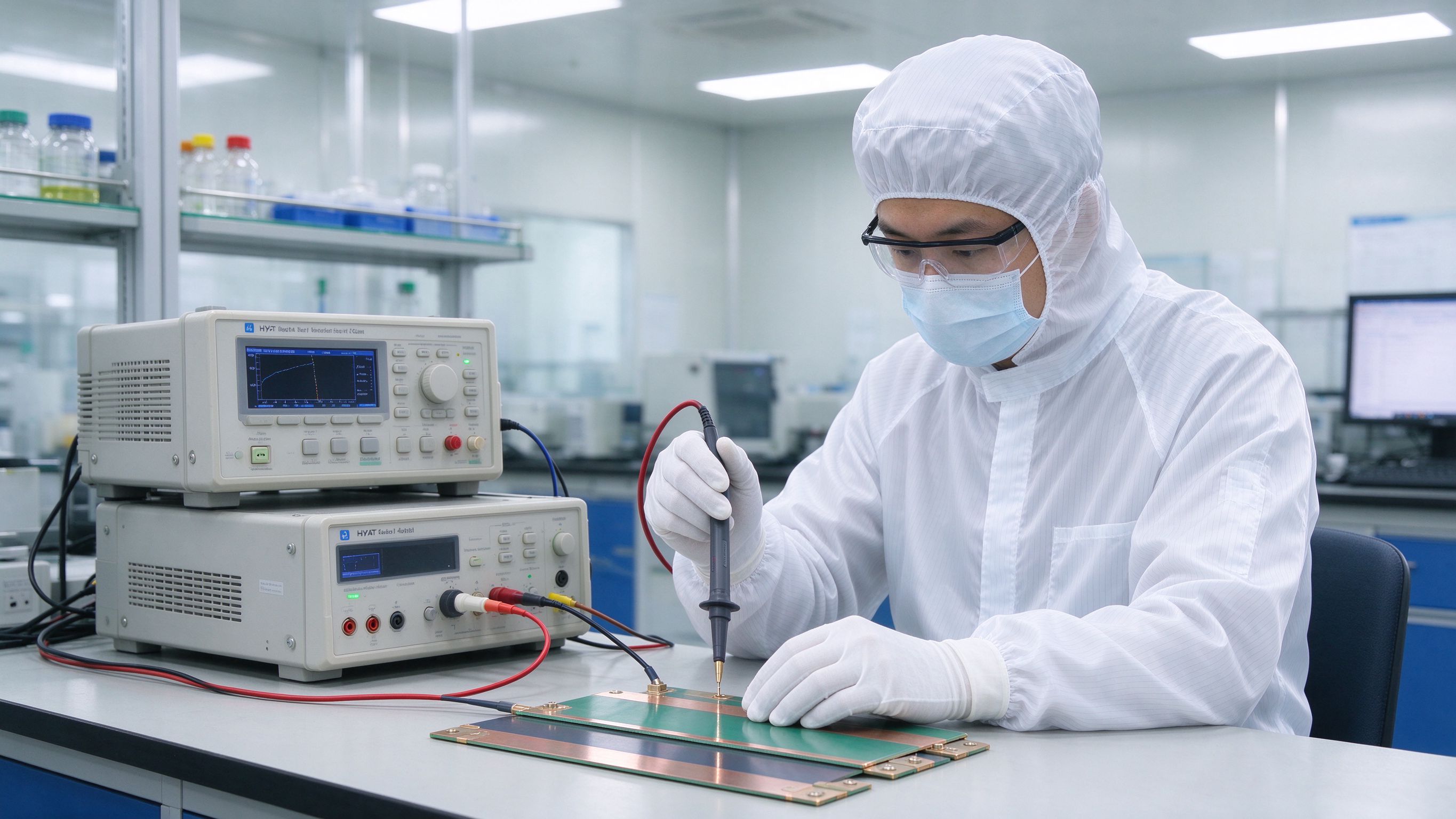
Servers, routers and switches need continuous, low-noise power. We build low-profile data center busbars that distribute DC inside racks with controlled impedance, minimized EMI and hot-swap-friendly service.
The four places busbars carry current in this application.
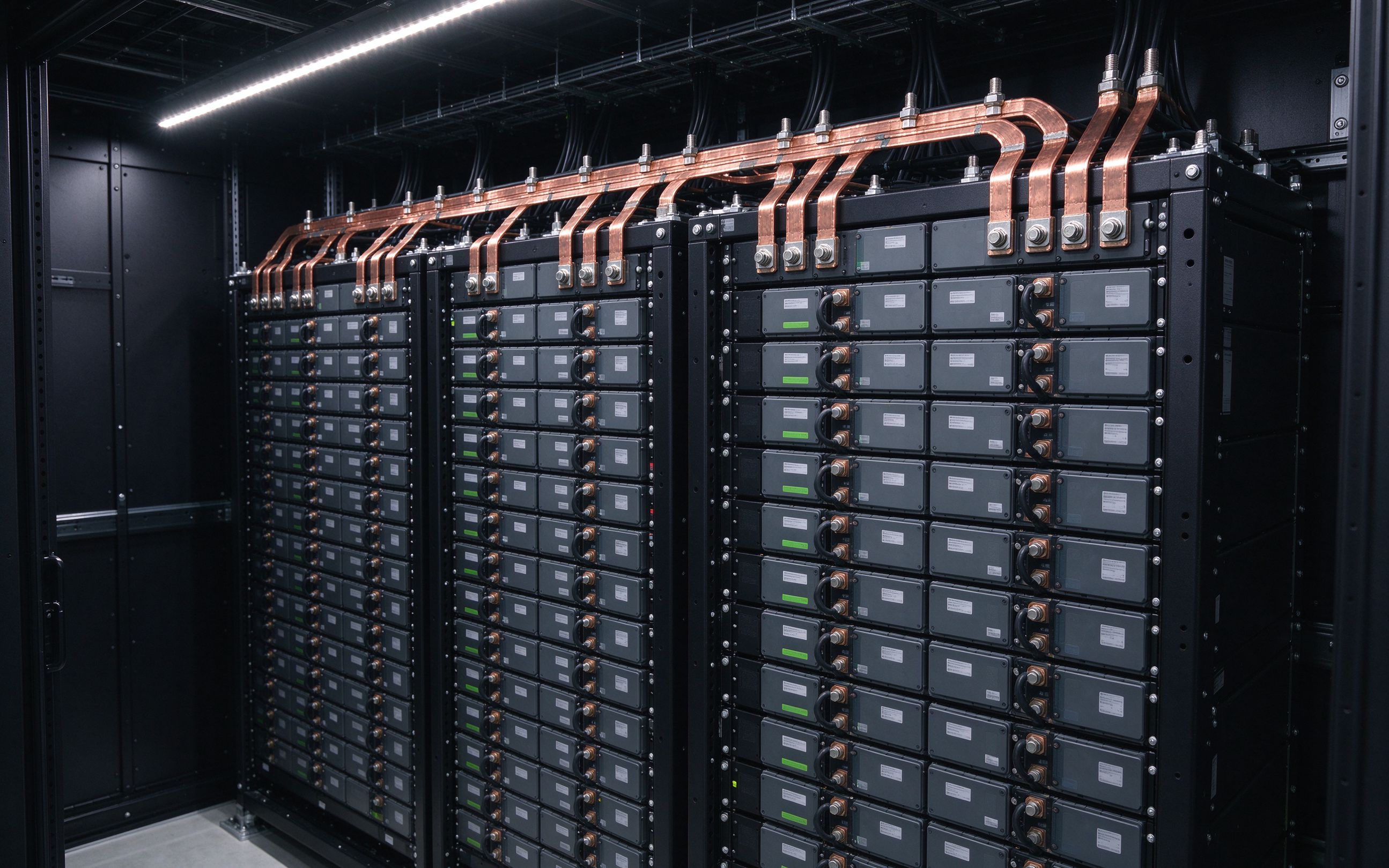
Low-profile multilayer bars routing the DC supply from the shelf backplane to power modules across server slots.
The laminated DC link between the battery string, the DC bus and the IGBT inverter stage of the UPS.
Compact feeder buswork between the UPS output and the cabinet distribution blocks.
Form-fitting bars inside power shelves feeding multiple power stages with even current sharing.
One-piece laminates carrying power and gate/sense lines where interconnect density is the binding constraint.
Tooled connectors on the busbar enabling plug-in power shelves without shutting down operations.
DC bus voltage and current per rail sets conductor sizing and dielectric choice.
Target impedance or noise budget for the shelf — layer spacing and routing follow from it.
Connector types and blind-mate interface definitions, at quotation.
Height budget and airflow direction — the profile geometry is shaped around both.
Data hall ambient, plus any extended temperature or humidity requirements for edge deployments.
Data centers need continuous power, with retrofits and upgrades that cannot interrupt operations. Preventing thermal and voltage fluctuations is critical for high-performance servers and storage, and telecom/datacom designers must deliver very high interconnect density while minimizing noise and voltage drop — all while supporting hot-swappable boards and subsystems.
Laminated data center busbars become the power-distribution paths inside servers, routers, switches and network cabinets — between the supply and the capacitors, IGBTs or power stages on each shelf. Their multilayer construction brings opposing current fractions extremely close: reference designs hold dielectric spacing under 100 µm between opposing layers, which is what makes the impedance low enough for fast-switching point-of-load regulators. Lower inductance and lower impedance mean less EMI, less RFI, less crosstalk, and tighter voltage regulation at the load.
The UPS that protects the hall uses the same physics on a bigger scale. Modern UPS systems switch IGBT/MOSFET stages at higher frequencies for higher voltage ratings and lower conduction losses; replacing cables with laminated busbars simplifies installation, eliminates incorrect wiring, saves space and increases short-circuit withstand. These UPS busbar designs follow the same inductance-minimization rules as the rest of our power electronics busbars — the loop geometry, not the copper cross-section alone, sets the overshoot at switch-off. The same always-available, no-shutdown reliability mindset carries over to military & aerospace busbars when defense and airborne platforms share the converter architecture.
Cost and reliability follow from the one-piece design: fewer parts, no assembly errors, and a structure that also spreads heat. We build 1–6+ layers of C11000 copper, tin-plated and edge-sealed, with tooled terminals matched to your shelf connectors. If you are sizing a distribution bar, start from the reference numbers in our busbar ampacity chart, or send the shelf layout for a DFM review — we reply within one business day.
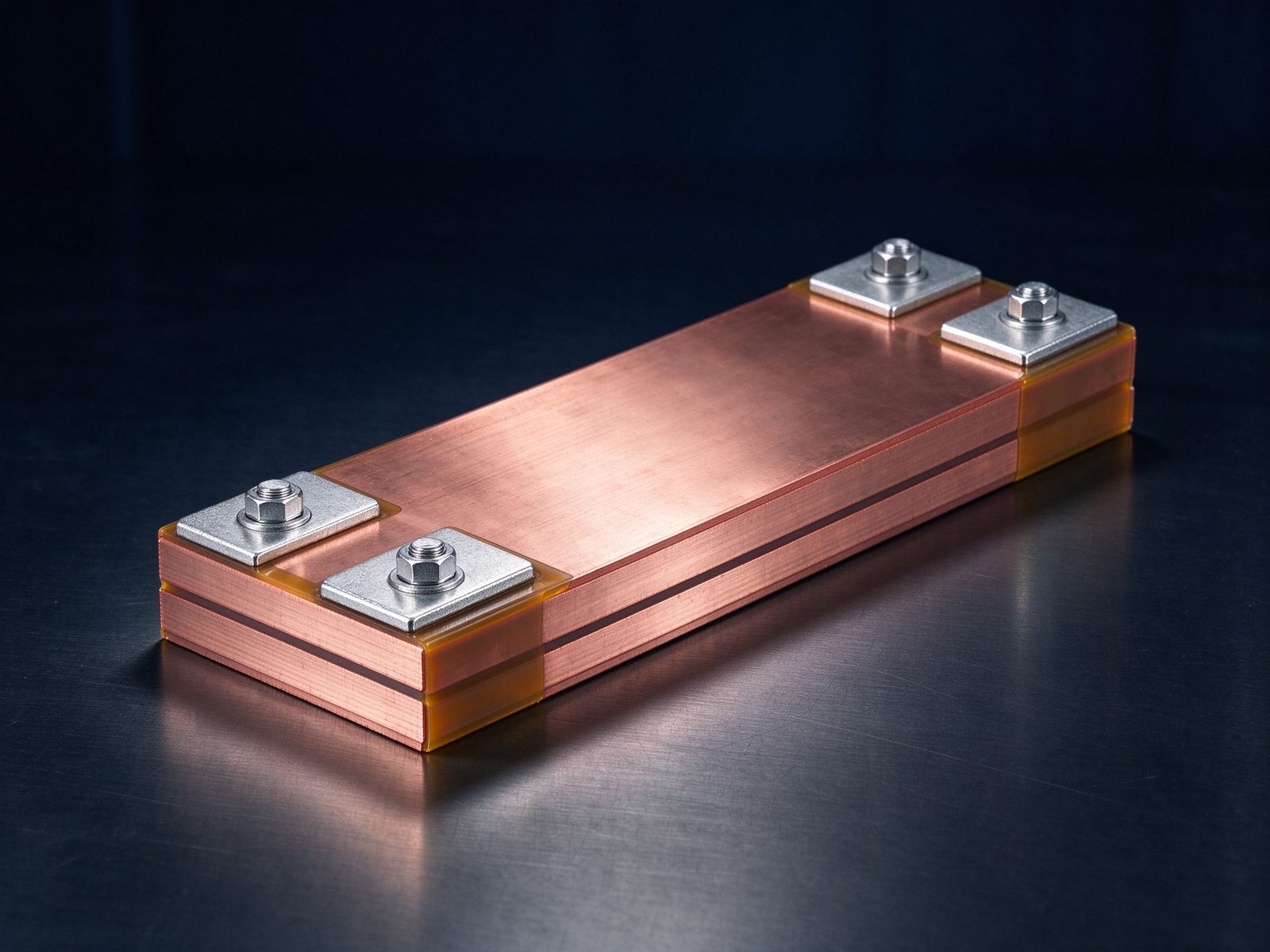
The part this application is built around — a SHANYUAN laminated busbar, factory direct.
Các giá hyperscale dựng trên nền tảng giá mở phân phối nguồn DC dọc theo các thanh cái đứng lắp bên trong tủ, và các tray hoặc blade lấy nguồn từ bất cứ đâu chúng nằm. Giao diện enable là một đầu nối mở hông, blind-mate kẹp lên thanh cái giá: vì kẹp không có điểm chặn đầu, nó có thể định vị ở bất kỳ chiều cao U nào dọc thanh, và các kẹp cực đơn được dùng theo cặp — mỗi cực một cái — để hoàn tất vòng dây dòng.
Các định mức tham chi cho lớp giao diện trong giá này, rút từ các bảng dữ liệu ngành: tối đa đến 130 A, khoảng 105 A ở mức tăng nhiệt 30 °C, rơi xuống khoảng 85 A khi giao diện cấp một cáp 6 AWG đơn. Cách điện thường là 600 VAC / 850 VDC, và đầu nối có thể rút khi đang tải — định mức cho ngắt hot-swap có kiểm soát ở mạch hở 24 V — đó là yếu tố cho phép các tray được thêm hoặc rút ra mà không tắt nguồn giá. Lực cắm thấp, khoảng 12 N điển hình, và kẹp ngồi qua một chậu nổi hấp thụ lệch tủ trong lúc cắm blind. Bề mặt ghép là một thanh đồng mạ niken gần 3 × 38 mm, đầu cực vào dây 6 AWG; các thế hệ đầu ra cao hơn đến như một mô-đun hai cực mang ba cáp high-flex 8 AWG mỗi cực.
Một câu hỏi thiết kế thứ hai bên trong giá là nhiễu. Các bộ chỉnh lưu đóng cắt tại mặt phẳng giữa bơm ringing lên đường lực, và phân phối cáp ghép nó thẳng lên các mặt dữ liệu nhạy cảm. Một thanh cái ép lớp đa lớp xen kẽ các mặt phẳng đất giữa các vật dẫn lực; điện dung giữa các mặt thêm vào shunt nhiễu đóng cắt đi trước khi nó đến backplane. Cơ chế giảm EMI là cùng nguyên lý ghép mặt phẳng được giải thích trong bài viết thiết kế thanh cái tự cảm thấp của chúng tôi, nơi chồng lên mặt phẳng tới-hồi được phủ chi tiết.
Các thiết kế tham chiếu phía máy chủ minh họa phần còn lại của gói: các thanh blade và receptacle được cách điện bằng sơn bột đạt yêu cầu điện môi 500 VDC đối chiếu kim loại tủ gần đó; các tiếp điểm dẫn vào nổi dẫn dắt ghép blind, với mạ bạc giữ sụt áp và mòn chu kỳ cắm thấp; và các tiết diện đồng chọn lọc được đùn chứ không gia công để cắt chi phí. Một bản định tuyến 43U phân phối mười hai vật dẫn rời từ thanh ép đến các đầu ra mặt phẳng giữa, với các đuôi cáp linh hoạt đi ra vào các đầu nối blind-mate nổi ghép trực tiếp với các bộ chỉnh lưu. Nơi dòng liên tục bên trong các giá kín leo lên, thay thế dây rời bằng phân phối ép lớp là yếu tố giữ mức tăng nhiệt xuống — hướng dẫn tính cỡ cho đánh đổi đó nằm trong bảng dòng định mức thanh cái, và chính hình học chồng lớp được thể hiện dưới các thanh cách điện đa lớp.
Ảnh tham chiếu từ sản xuất SHANYUAN và các cụm lắp ráp đã xuất.
Các ghi chú và trang sản phẩm chọn lọc hỗ trợ các quyết định thiết kế trên trang này.
Các dòng thanh cái phù hợp đáp ứng biên độ dòng của ứng dụng này.
Thanh cái DC link ép lớp dài với đầu nối chân phẳng cho thiết kế biến tần độ tự cảm thấp.
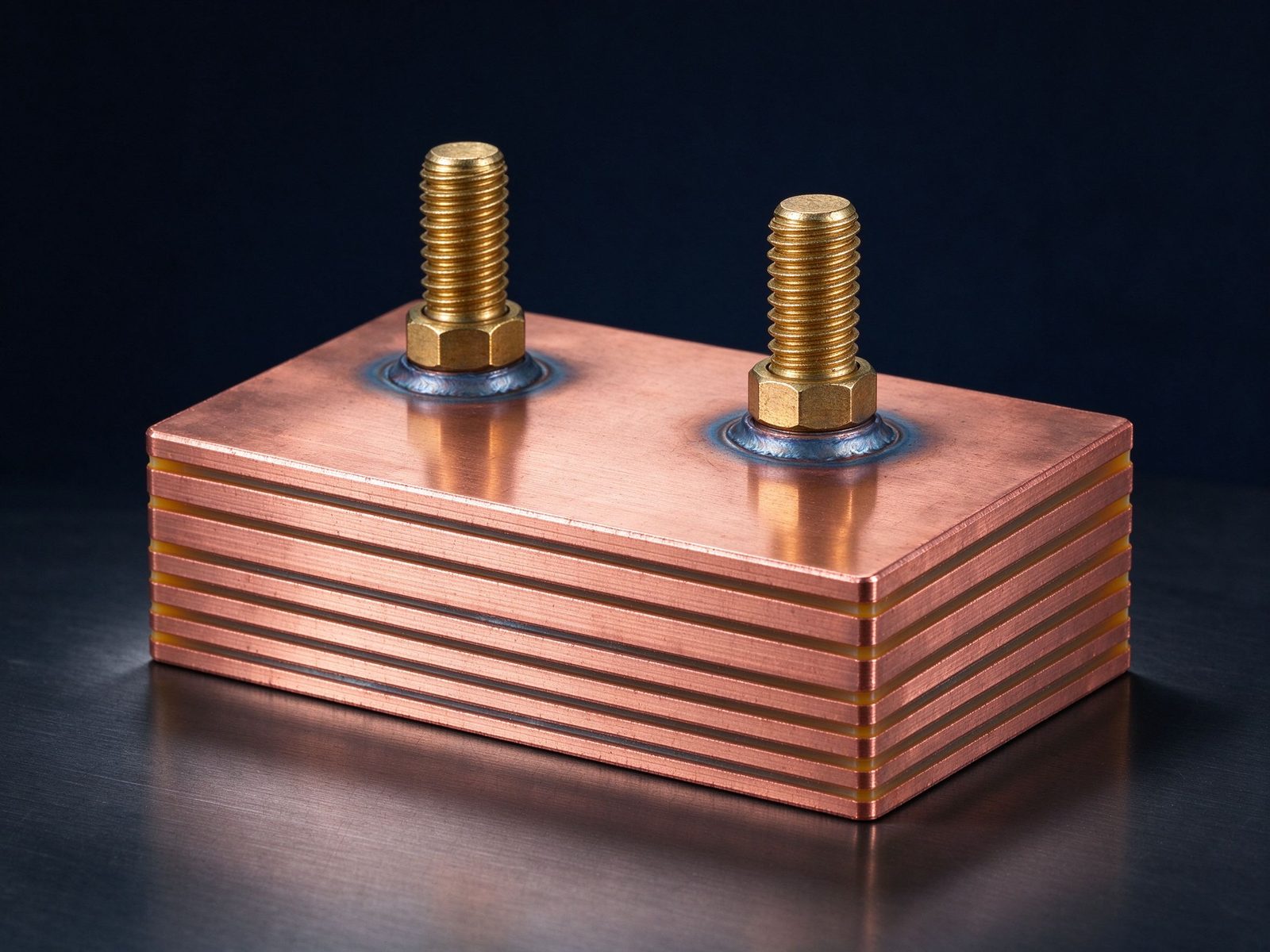
Cụm thanh cái ép lớp hàn để phân phối điện dòng cao với các chân đã hàn sẵn.
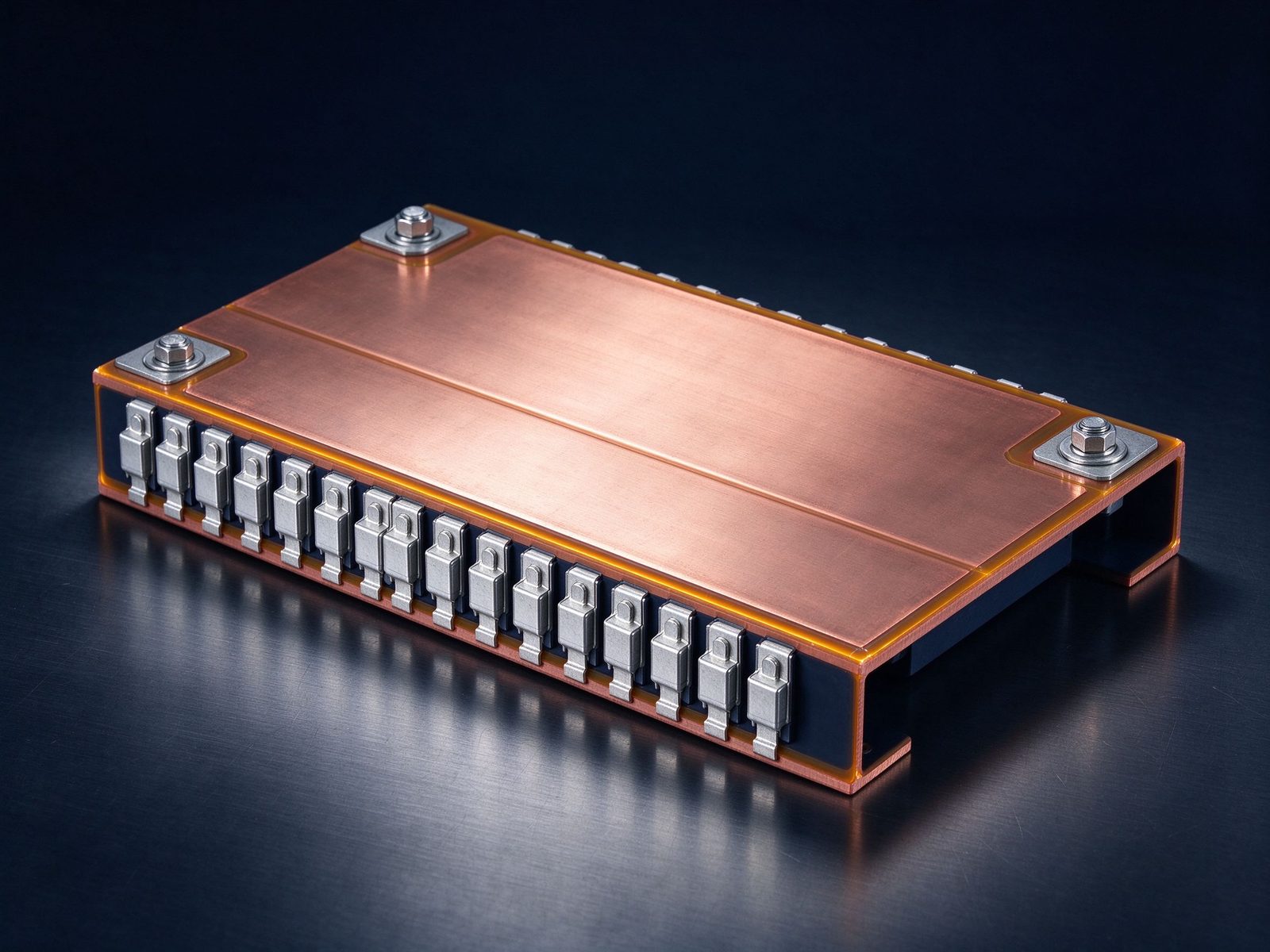
Thanh cái ép lớp cho biến tần truyền lực EV với đầu nối chân phẳng cho kiến trúc cao áp.
Từ rà soát thông số đến linh kiện giao hàng và kiểm thử – một nhà cung cấp chịu trách nhiệm.
| Material | Standard options |
|---|---|
| Conductors | C11000 copper as standard; aluminum available on request |
| Dielectrics | PET, Nomex and epoxy (DLF) films, selected by voltage class and operating temperature |
| Plating | Tin finish for corrosion protection and joint solderability |
Cấu trúc, chọn điện môi và cơ bản về khả năng dòng.
Đọc hướng dẫn thiết kếVoltage class, current profile and terminal types — we will share reference configurations and DFM guidance.
Câu trả lời thẳng thắn từ đội kỹ thuật.
Send the application, voltage class and current profile — we will share reference configurations and DFM guidance.