Velos Automotive, a German supplier of traction inverters for electric passenger vehicles, awarded SHANYUAN the DC-link busbar for its 800 V SiC inverter in early 2026. The part — rated 900 A continuous with 10.2 nH loop inductance — passed automotive PPAP, creepage and PD qualification in a 480 000-part-per-year production envelope, and every unit ships with an inductance scan record.
This case study is published as a representative engineering project. The product photograph and released drawing are illustrative of the delivered part; exact dimensions are covered by the customer's non-disclosure agreement.
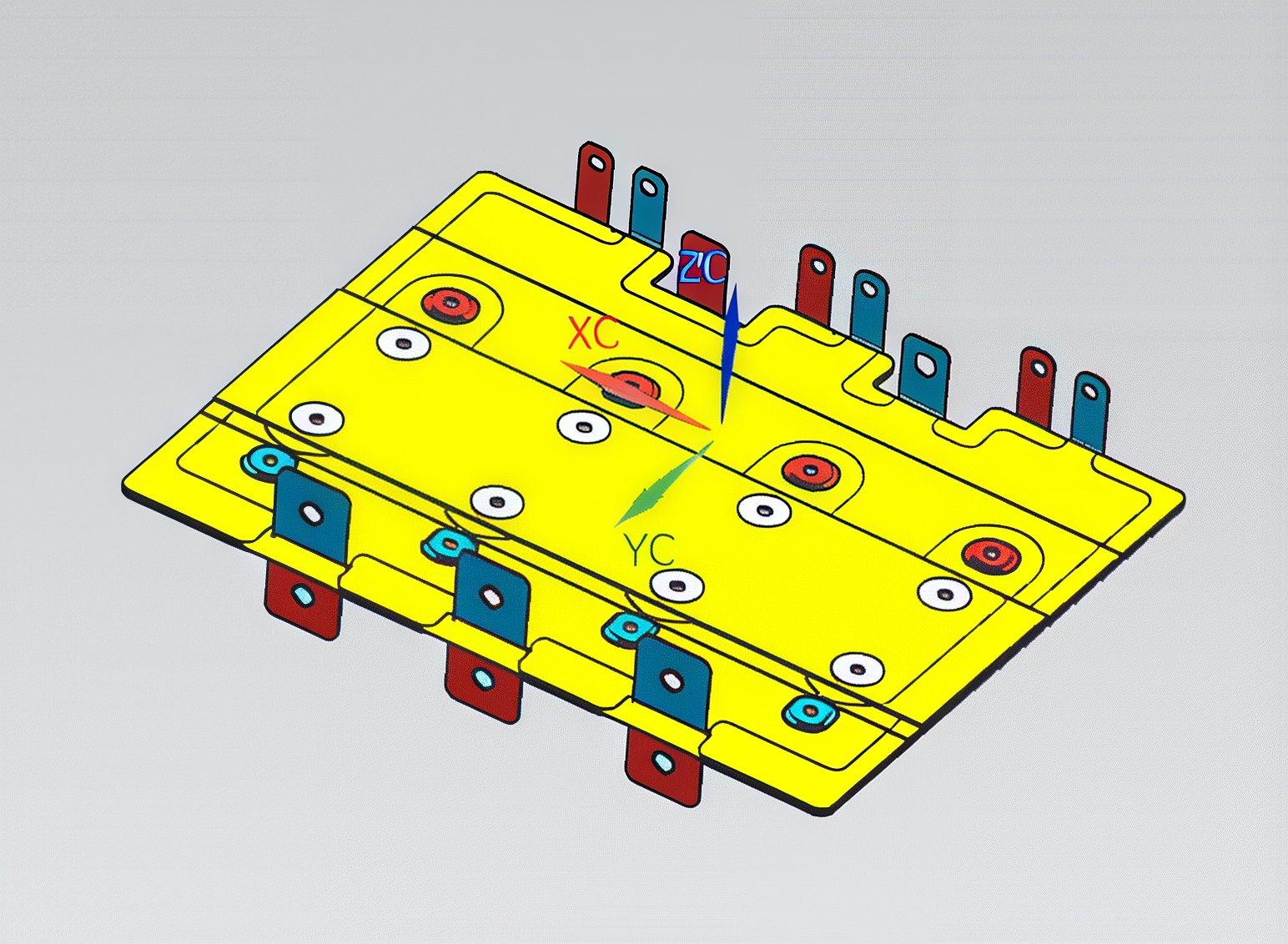
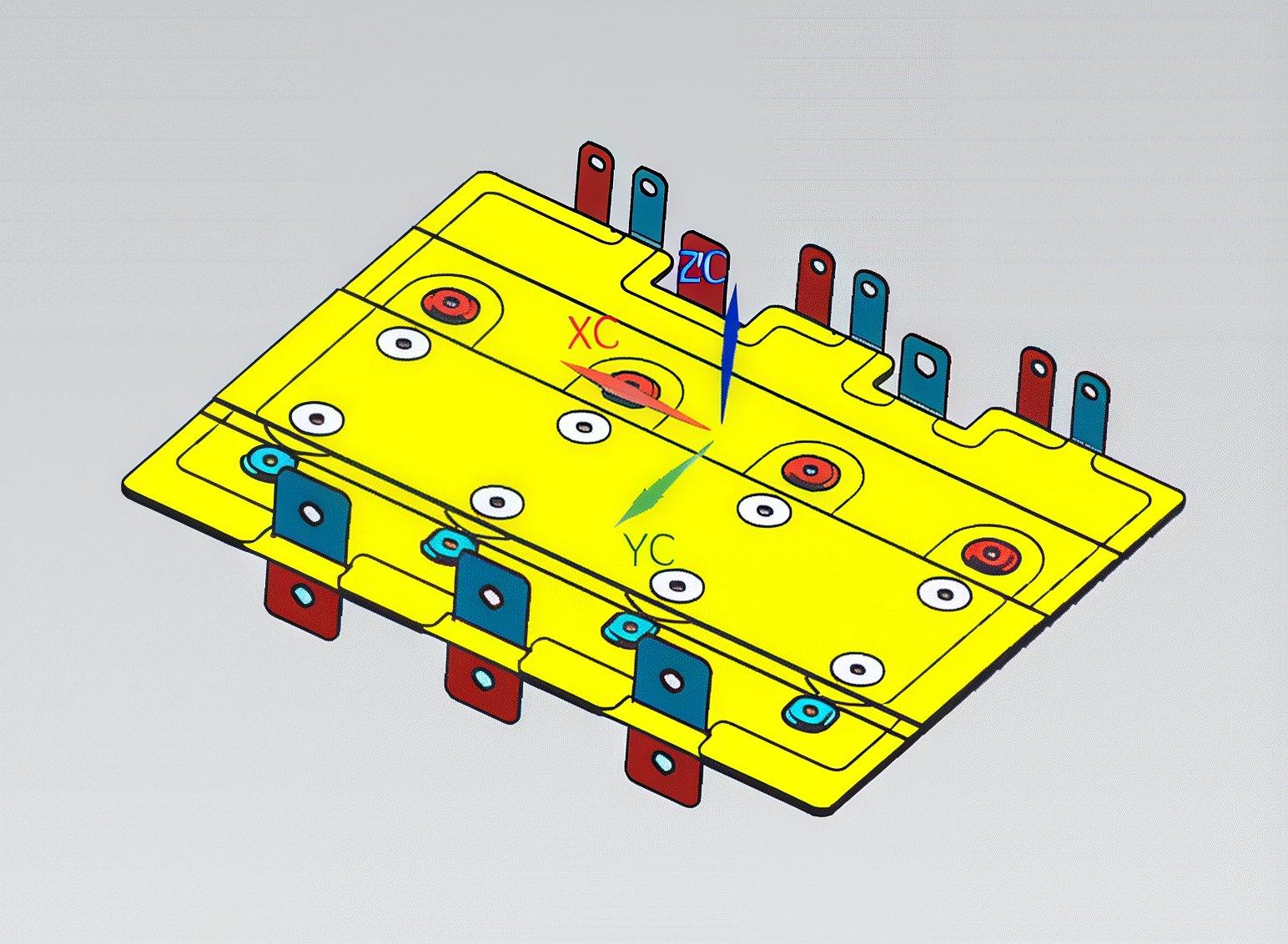
Customer drawings are treated as confidential; excerpts shown here are provided with permission and illustrate the layer stack, terminal layout and dielectric boundaries of the delivered part.
| Customer & platform | Velos Automotive 800 V SiC traction inverter, 900 A continuous |
|---|---|
| Busbar type | 4-layer laminated DC-link busbar, C11000 copper, 1.5 mm conductors |
| Dielectric system | PET film, 2.8 kV hi-pot, creepage per IEC 60664-1 PD2 |
| Loop inductance | 10.2 nH measured at module terminals |
| Corriente nominal | 900 A continuous, 1250 A for 30 s peak |
| Elevación de temperatura | ΔT 22 °C at rated current, 85 °C ambient |
| Terminals | M6 studs for SiC modules, welded blade for DC bus connector, tin-plated |
| Production | 480 000 parts/year capacity, 0.3% scrap target, 100% inductance scan |
| Quantified result | 10.2 nH, 22 °C ΔT, 2.8 kV hi-pot, 480k pcs/yr capacity |
Velos Automotive, a German supplier of traction inverters for electric passenger vehicles, awarded SHANYUAN the DC-link busbar for its 800 V SiC inverter in early 2026. The part — rated 900 A continuous with 10.2 nH loop inductance — passed automotive PPAP, creepage and PD qualification in a 480 000-part-per-year production envelope, and every unit ships with an inductance scan record.
Velos's new traction inverter switches SiC modules at up to 1500 A/μs dI/dt. At that edge rate, every nanohenry of loop inductance becomes voltage overshoot across the module terminals, and the OEM's EMC specification left almost no margin for interconnect inductance. The previous generation used a two-layer copper plate with a measured 21 nH loop — too high for the new 800 V platform.
The customer's request was precise: deliver a DC-link busbar with loop inductance below 12 nH, rated 900 A continuous at 85 °C ambient, qualified to automotive PPAP with 480 000 parts per year capacity. They also specified insulation for a 2.8 kV hi-pot test, driven by their 800 V battery-pack isolation requirements.
SHANYUAN's dielectric team reviewed the creepage requirements against design-guide rules and IEC 60664-1 pollution degree 2 before fixing the insulation stack-up; the same reference data is published in the partial-discharge resource.
The delivered busbar stacks two positive and two negative copper layers in a mirrored pair, so the net commutation loop encloses only the thin dielectric gap — the mechanism documented in the low-inductance design guide. M6 studs connect all six SiC modules on a single rail, and the DC bus connector is a welded blade that plugs into the inverter's sealed connector system.
Measured loop inductance on production parts is 10.2 nH, comfortably inside the 12 nH budget. The design reuses the EV inverter laminated busbar product pattern, and the layer count selection logic is explained in the layer-count selection guide.
Because the part sits in a sealed inverter housing, the customer specified no exposed copper: the entire busbar except terminal faces is covered by PET film and epoxy edge sealing, giving a 2.8 kV hi-pot margin and PD-free operation to 1.4 kV.
For 800 V battery systems, creepage across the insulated surface follows IEC 60664-1 pollution degree 2: 14 mm minimum creepage with the epoxy edge profile, and 6 mm clearance under the M6 stud heads. The terminal machining guide covers the stud flatness and torque control (9 N·m ± 4%) used here.
Thermal validation ran at 900 A continuous in an 85 °C ambient chamber: temperature rise reached 22 °C on the module tabs, within the 25 °C budget. Joint resistance per stud is below 25 μΩ, verified with a four-wire micro-ohm meter on every sample during PPAP and on a statistical sample in series production.
Bolt-tightening and plating choices — tin over nickel on C11000 — follow the plating and corrosion guide; the customer's salt-spray requirement (48 h, no red rust on terminal faces) passed on the first batch.
PPAP ran over 14 weeks with 300 samples: hi-pot 2.8 kV, insulation resistance > 10 GΩ, 600 thermal cycles −40 °C to +150 °C, vibration per ISO 16750-3, and salt-spray exposure on terminal faces. All tests passed on the first submission, and the customer released the tooling for series production.
The line runs three shifts at a 4.6-minute cycle per part, giving the 480 000-part annual capacity the program required. Scrap in the first two production months was 0.3%, driven by pre-tooling DFM that eliminated a die-springback conflict on the DC-connector blade. Production details follow the automated lines documented in the automated production article.
Each part ships with an individual inductance-scan certificate; the quality laboratory retains the full traceability record per VIN-program batch, satisfying the OEM's IATF 16949 audit trail.
The final part met all targets: 10.2 nH loop inductance (from 21 nH on the previous generation), 22 °C temperature rise at 900 A continuous in 85 °C ambient, 2.8 kV hi-pot with PD-free operation to 1.4 kV, and 480 000 parts per year capacity at 0.3% scrap.
Inverter efficiency at rated power improved 0.15 percentage points in the customer's dyno testing, and the EMC test passed on the first attempt — the customer attributed both to the tighter commutation loop. The same busbar platform is now being qualified for a 1000 A derivative.
Engineers specifying 800 V inverter busbars can start from the EV application page, the power electronics busbar range and our engineering contact form; the EV busbar trends article summarises where the 800 V platform is heading.
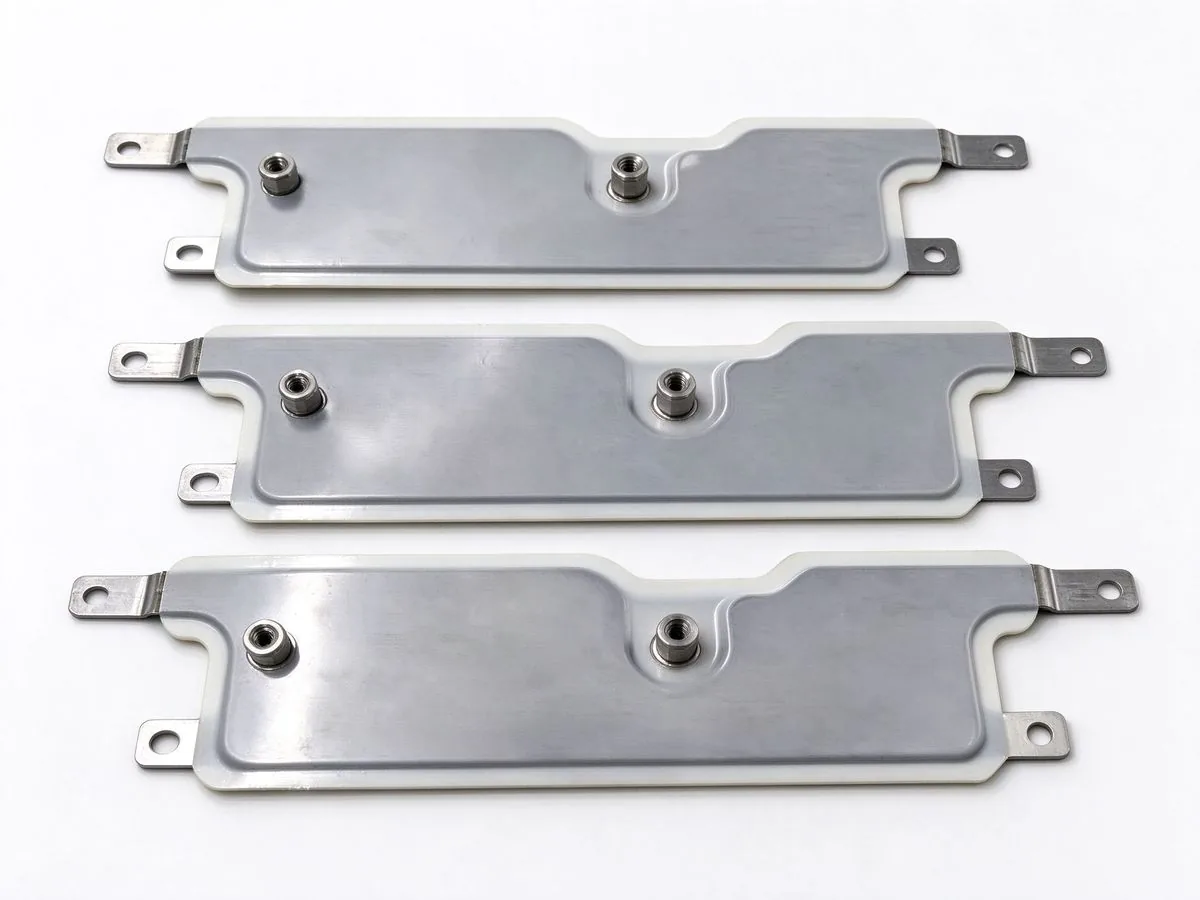
El paso de arquitecturas de vehículo de 400V a 800V está reescribiendo el diseño
Leer artículo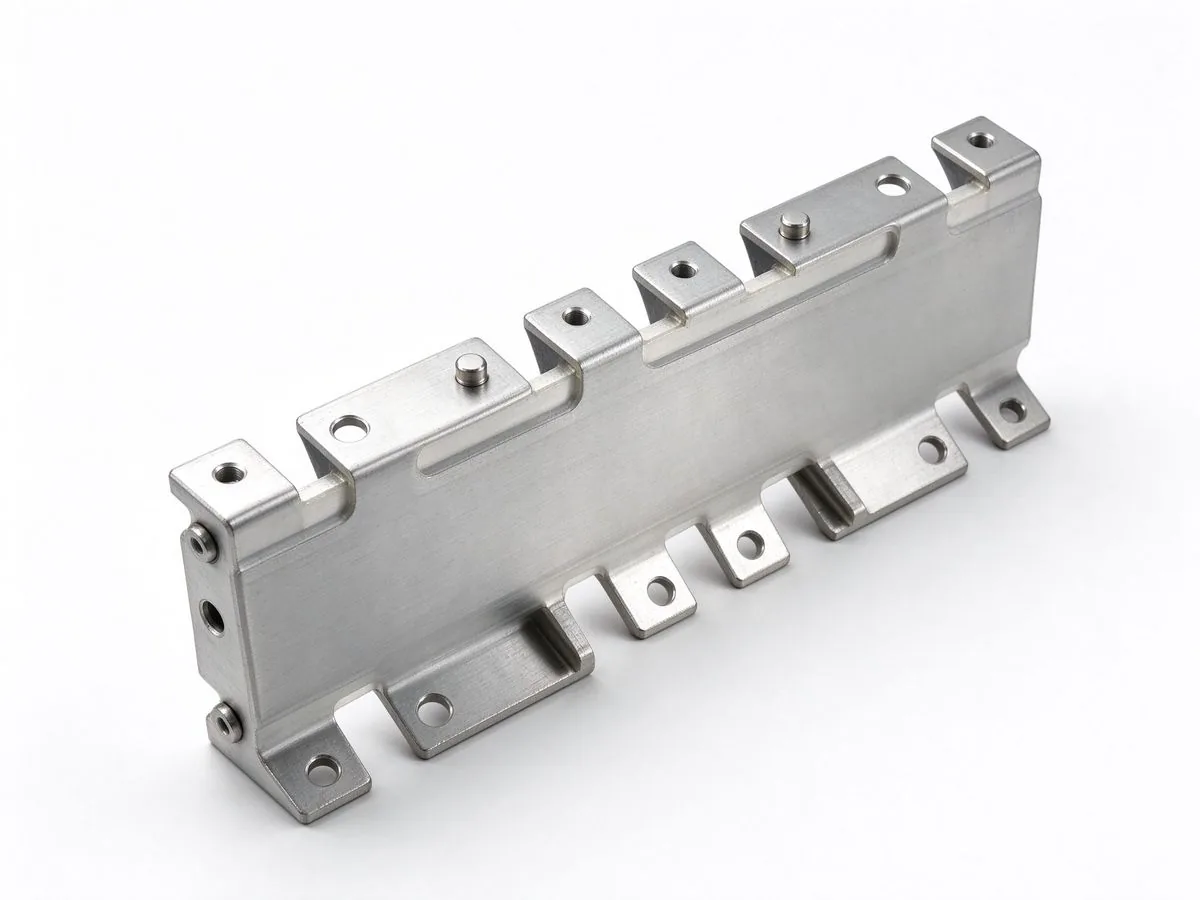
Las mayores velocidades de conmutación de los MOSFET SiC y los IGBT modernos est
Leer artículo
Wei Chen es especialista en dieléctricos y aislamiento de SHANYUAN, con 12 años de experiencia en sistemas de aislamiento para barras colectoras laminadas. Su trabajo cubre aislamiento de PET, Nomex y polvo epoxi, diseño de líneas de fuga y distancias, y coordinación de aislamiento orientada a desca
Envíe el perfil de corriente, la clase de tensión y los tipos de terminales: nuestros ingenieros responden en un día hábil.